


 效果预览
效果预览
 切换至手工绘画版
 分享
分享 分享
分享
 详情
详情

 下载
下载
 相似作品
相似作品 X射线
X射线 幻灯片播放
幻灯片播放Watermill

 展开详情
展开详情




































从与原作比例一致的预设尺寸中进行选择。

您可以输入自定义尺寸,以适配特定的画框或空间。如果您选择的尺寸与原图比例不符,我们将对作品进行裁剪,或通过镜像填充/纯色填充边缘的方式来扩展图像。在开始制作之前,我们会向您发送一份数字效果图供您确认。
请注意,屏幕上的预览并不能反映实际的裁剪或扩展效果。只有效果图才能准确展示最终的构图。
虽然我们提供定制尺寸,但为了保持原图比例,我们建议您从预设列表中选择尺寸。


 玻璃选项仅适用于110厘米以下的尺寸。

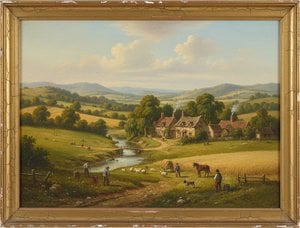
Watermill
艺术微喷/版画
复制品尺寸
-


最终总价
$ 62


艺术家简介
The Quiet Majesty of the Haarlem Landscape
In the golden light of the seventeenth century, amidst the bustling canals and thriving commerce of Haarlem, a master of subtle atmosphere was quietly at work. Cornelis Gerritsz Decker, born in 1618, did not seek the thunderous fame of Rembrandt or the sweeping drama of Rubens; instead, he dedicated his brush to the delicate, often overlooked nuances of the Dutch countryside. His life and work serve as a profound window into the soul of the Dutch Golden Age, capturing a world where the shifting clouds and the gentle sway of rural life were worthy of eternal preservation. As a member of the prestigious Haarlem Guild of St. Luke since 1643, Decker was deeply embedded in the very fabric of his city's artistic excellence, contributing to a legacy that celebrates the serene beauty of the Netherlands.
The essence of Decker’s artistry lies in his profound ability to translate the ephemeral into the enduring. His canvases are not merely depictions of land and sky, but emotional landscapes that breathe with the moisture of the Low Countries. To look upon a Decker landscape is to experience the weight of a heavy mist or the sudden, piercing clarity of sunlight breaking through a storm. This mastery of tonal modulation allowed him to create an incredible sense of depth, guiding the viewer's eye from the textured foreground into the hazy, infinite horizons of the distance. His work often features a sophisticated use of staffage—small, lively figures that populate his scenes—which lend a human pulse to the vastness of nature.
A Lineage of Light and Influence
The development of Decker’s style was far from an isolated endeavor; it was a continuation of a grander tradition. He was deeply influenced by the monumental landscapes of Jacob van Ruisdael, whose dramatic approach to nature provided a foundational blueprint for Decker's own explorations. While Ruisdael often leaned toward the heroic and the turbulent, Decker found his strength in a more restrained, atmospheric elegance. He also drew inspiration from the works of Jan Wynants and Philips Wouwerman, integrating their meticulous attention to detail and lively characterizations into his broader vistas. This synthesis of influences allowed him to create works that felt both grounded in local tradition and elevated by a sophisticated painterly technique.
There is also a fascinating layer of familial connection within his biography that hints at the interconnected nature of the Haarlem art scene. It has been suggested that Decker may have been related to David Decker, a fellow pupil of Gerrit Claesz Bleker. This shared lineage of training under the same guild masters suggests a cohesive artistic community where techniques and aesthetic values were passed down like precious heirlooms. Through these connections, Decker’s work became part of a larger dialogue regarding how light, shadow, and landscape could be used to express the prosperity and the quiet piety of the Dutch people.
Legacy in the Golden Age
Though his name may not resonate with the same immediate recognition as the titans of his era, the historical significance of Cornelis Gerritsz Decker remains undeniable. His contribution to the genre of landscape painting helped define the visual identity of a nation. He mastered the art of the subtle transition, proving that greatness could be found in the softest gradations of grey and green. His paintings remain vital pieces of cultural heritage, held in esteemed collections such as the British Museum, where they continue to offer scholars and art lovers alike a glimpse into the meticulous observation of a bygone era.
The enduring appeal of Decker’s work lies in its honesty. He did not need to invent grand allegories; he found enough wonder in the way light hit a muddy path or how a distant tree silhouetted against a twilight sky. His life's work stands as a testament to the power of the landscape to reflect the human condition—a quiet, persistent observation of the world that continues to captivate the modern imagination.

Cornelis Gerritsz Decker
1615 - 1678 , Netherlands
艺术家简介
- Artistic Movement Or Style: Jacob van Ruysdael-inspired landscape painting
- Artists Or Movements Influenced By This Artist: ['Dutch Golden Age']
- Artists Who Influenced This Artist: ['Jacob van Ruisdael']
- Date Of Birth: Haarlem, Netherlands (1618)
- Date Of Death: Haarlem (1678)
- Full Name: Cornelis Gerritsz Decker
- Nationality: Dutch
- Notable Artworks:
- Landscape With A Mill
- A Sluice, Wooded Landscape With Figures On A Path
- Place Of Birth: Haarlem
相关文章

Cultivating Visions: A Historical Exploration of Rural Life in Painting
Explore the rich history of rural life in painting! Discover masterpieces from Dutch Masters to Courbet & Watteau. Uncover the artistic and social significance of idyllic landscapes and peasant scenes.

Evoking Arcadia: A Historical & Aesthetic Exploration of Rural Landscape Art
Explore the rich history of pastoral landscape art, from classical Arcadia to Impressionism & beyond. Discover key artists, movements, and how to collect serene rural scenes for your home. Expert insights at ArtsDot.

Brian Hatton: A Study in Early 20th-Century British Landscape Painting & Rural Identity
Explore the captivating landscapes & portraits of Brian Hatton (1887-1916), a promising British artist lost too soon. Discover his unique style, Herefordshire roots, and lasting legacy in early 20th-century art.

John Augustus Atkinson: Romantic Visions of Rural England & Genre Painting's Evolution
Explore the captivating world of John Augustus Atkinson (1775-1830), a key figure in British Romanticism and genre painting. Discover his stunning Russian history scenes, naval art & delicate watercolors. Learn about his legacy at ArtsDot.
Evocations of Rural Life: A Historical Journey Through Landscape Painting
Explore the rich history of rural life in painting! Discover Impressionist masterpieces, Italian Macchiaioli scenes & the enduring appeal of pastoral landscapes. Find your perfect artwork at ArtsDot.

