


 实景预览
实景预览
 发送
发送 分享
分享
 详情
详情 指南
指南

 下载图片
下载图片
 相似作品
相似作品 X射线
X射线 幻灯片播放
幻灯片播放 统计数据
统计数据A.158
 Acrylic On Canvas
- WallArt
- Abstract Expressionism
 100.0 x 100.0 cm
 MAGA - Museo Arte Gallarate
 阅读全文
阅读全文
手工油画复制品
由我们的艺术家按需定制,为您提供您所选尺寸及画框的布面手工油画。 ( 切换至版画销售渠道 切换至数字图像销售渠道)




P118B ¥10

P118H ¥10

P118W ¥10

P438Z ¥10

P508JH ¥12

P508YH ¥12

P805H ¥10

P805Z ¥10

P919BZ ¥10

P919G ¥10

P919XJ ¥10

P959ZH ¥10

P968JZ ¥12

W106C ¥8

W218G ¥10

W218JH ¥8

W218Y ¥10

W307PJ ¥10

W316G ¥10

W316PJ ¥8

W316Y ¥10

W398PJ ¥8

W4111J ¥10

W500HY ¥15

W500JH ¥15

W692G ¥12

W849H ¥8

W940BG ¥15

W953PJ ¥8




您可以从与原作比例一致的预设尺寸中进行选择。

请输入您需要的宽度和高度,以适配您的画框或墙面。由于作品为手工绘制,若您选择不同的尺寸比例,艺术家可能会在画面边缘多画一些或稍作裁剪 —— 由您决定。在开始绘画之前,我们会为您发送一份数字效果图供您确认。本页面上展示的图片并非最终实物 —— 只有效果图才能反映真实结果。
下单后,ArtsDot.com 团队将通过电子邮件联系客户获取具体要求,并提供效果预览图


 玻璃选项仅适用于110厘米以下的尺寸。

A.158
复制品材质
复刻品尺寸说明
-


总计金额
¥ 1767
The Luminous Path: An Exploration of A.158
To stand before A.158 is to encounter a moment suspended between vibrant energy and serene contemplation. Claudio Verna’s canvas presents an immediate, arresting visual dialogue—a field of soft, enveloping pink bisected by a decisive, radiant yellow line. This is not merely decoration; it is a carefully orchestrated optical experience. The background itself seems imbued with the warmth of a blush-toned dawn, suggesting emotional resonance and gentle expanse. Yet, this softness is challenged, guided, and ultimately elevated by that singular streak of yellow. It draws the eye with an almost magnetic force, inviting the viewer into its luminous passage.
Technique and Compositional Flow
Verna’s mastery in this piece lies in his handling of acrylic on canvas. The application appears fluid yet controlled, allowing the pink ground to breathe while maintaining a palpable depth. The yellow line functions as more than just a compositional element; it is a vector, an invisible current guiding the viewer's gaze across the 100 x 100 cm square. While there is a subtle human presence anchored in the lower left corner, its relative quietude allows the abstract interplay of color and line to dominate the narrative. The technique speaks to a modern sensibility—one that values graphic clarity alongside atmospheric wash.
Symbolism of Color and Line
In art history, color choices are rarely accidental. Here, the pairing of soft pink with brilliant yellow evokes themes of optimism, transition, and illumination. Pink often symbolizes tenderness or nascent emotion, providing a receptive emotional field. Against this, the sharp, bright yellow acts as a conduit—a path toward understanding or breakthrough. The line itself suggests journey, connection, or perhaps even the passage of time viewed through an optimistic lens. It is the visible manifestation of an idea moving from one state to another.
Integrating Art into Living Space
For the discerning collector or interior designer, A.158 offers unparalleled versatility. Its abstract nature means it complements a vast array of décor styles, from minimalist modernism to richly textured bohemian spaces. Imagine this piece anchoring a room—the soft pink echoing blush textiles or pale wood tones, while the yellow line provides the necessary jolt of curated energy against deep jewel-toned furniture. It is a focal point that whispers rather than shouts, adding intellectual depth without overwhelming the domestic harmony.
The Enduring Resonance of Modern Abstraction
Claudio Verna’s work situates itself within a lineage of post-war Italian abstractionism, yet it possesses a distinctly contemporary lightness. It speaks to an era where academic rigor met emotional freedom. Owning this reproduction is acquiring a piece that honors the journey of modern art—a dialogue between structure and feeling. It invites daily contemplation, suggesting that even in the most structured environments, there remains room for a luminous, guiding path.
问答详情
"A.158" 的作者是谁?属于哪种艺术流派?
Claudio Verna 在 Abstract Expressionism 运动时期创作了《A.158》。
在哪里可以观赏到 Claudio Verna 的《A.158》 的原作?
Claudio Verna 的《A.158》 的原作收藏于 MAGA - Museo Arte Gallarate, Gallarate, Italy。通过复制品,您也可以在居家环境中欣赏这部杰作。
在哪里可以下载Claudio Verna 的《A.158》?
您可以在作品的下载页面下载Claudio Verna 的《A.158》的图像:高分辨率数字图像下载。


艺术家简介
Early Life and Artistic Foundations
Claudio Verna, born in the picturesque town of Guardiagrele, Italy, in 1937, embarked on an artistic journey that would establish him as a pivotal figure in Italian post-war painting. His early life, marked by a family relocation to Foligno in Umbria, instilled within him a deep appreciation for the region’s rich cultural heritage and landscape—elements that subtly permeate his later work despite its abstract nature. Verna's formal education began with studies in Umbria before he pursued a degree in political science at the University of Florence, graduating in 1961 with a thesis exploring the complex relationship between “Figurative Arts in Industrial Civilization.” This academic grounding proved crucial, providing him with a framework for understanding art’s evolving role within a rapidly changing society. It was during his time in Florence that Verna first engaged with the currents of classical abstractionism and began exhibiting his work, laying the initial foundations for a career defined by rigorous exploration and independent thought.The Birth of Pittura Analitica
Following his move to Rome in 1961, Verna deliberately withdrew from the public art scene for several years. This period wasn’t one of inactivity but rather intense self-examination—a crucial phase where he sought to define a unique artistic language and methodology. By 1967, when he re-emerged, it was with a clear vision that would give rise to *Pittura Analitica* (Analytical Painting). This movement, born from Verna’s conviction in the “ancient and indispensable reasons” of painting, represented a profound reflection on the very act of creation and its connection to artistic tradition. Pittura Analitica wasn't merely about what was depicted but *how* it was depicted—a focus on the fundamental elements of color, form, and surface. It became an Italian response to the prevailing minimalism, yet distinguished itself through a heightened sensitivity to chromatic intensity and emotional resonance.A Language of Color and Rigor
Verna’s paintings are characterized by their striking simplicity and essentiality. He strips away extraneous detail, focusing instead on the pure expressive power of color. His canvases become arenas where hues interact, vibrate, and define space—often employing vertical lines and muted tones that create a sense of contemplative calm. The artist doesn't simply apply color; he investigates its qualities, exploring saturation, light, and texture with meticulous precision. This pursuit isn’t cold or detached, however. Verna describes his work as existing “between the polarity of extreme rigor and intense emotional abandon,” suggesting a dynamic tension between intellectual control and visceral feeling. His works from the 1970s demonstrate this shift towards greater freedom of expression after an initial period of austerity linked to the principles of Analytical Painting, revealing a pulsating relationship between geometry and color.Exhibitions, Recognition, and Lasting Influence
Throughout his prolific career, Claudio Verna has held over one hundred solo exhibitions in Italy and abroad, cementing his reputation as a leading figure in contemporary Italian art. His work has been showcased at prestigious venues including the Venice Biennale (1970 and 1980), and retrospectives have graced museums in Gibellina, Spoleto, Ferrara, Conegliano, Treviso, L’Aquila, and Milan's Mudima Foundation. He has also participated in numerous group exhibitions across Europe and beyond—from Düsseldorf to London, Philadelphia to Moscow—further expanding his international reach. In 2008, Verna received the esteemed “Antonio Feltrinelli” Prize for painting from the National Academy of the Lincei, a testament to his significant contributions to the art world. His appointment as a National Academician of the Accademia di San Luca further solidified his position within Italy’s artistic establishment.A Legacy of Reflection and Innovation
Claudio Verna's enduring legacy lies in his unwavering commitment to exploring the fundamental principles of painting. He challenged conventional notions of representation, prompting viewers to engage with art on a deeper, more intellectual level. The publication of the Catalogue Raisonné of his work in 2010, curated by Volker W. Feierabend and Marco Meneguzzo, serves as a comprehensive testament to his artistic journey and its profound impact on contemporary art discourse. Verna’s influence extends beyond his own canvases; he inspired generations of artists to question the nature of their practice and to seek new ways of expressing themselves through color, form, and texture. He remains an active artist today, continuing to refine his unique vision and contribute to the ongoing evolution of abstract painting.
Claudio Verna
1937 - , Italy
快速概览
- Full Name: Claudio Verna
- Nationality: Italian
- Date Of Birth: 1937
- Place Of Birth: Guardia Grele, Italy
- Notable Artworks:
- Pittura
- Deriva
- Costellazione
- Artistic Movement Or Style: Pittura Analitica, Minimalism
相关文章

几何抽象艺术十大杰作:定义现代家居装饰的经典之作
探索几何抽象艺术的十大杰作!康定斯基、蒙德里安等大师作品,色彩构成与非具象之美。ArtsDot.com提供博物馆级艺术复制品,为您的家居带来现代艺术灵感。立即在线探索完整系列!

Kandinsky's Masterpieces: 25 Paintings That Define Abstract Art | ArtsDot
Journey through Wassily Kandinsky's 25 most iconic abstract paintings. Explore his revolutionary use of color, form & spiritual expressionism. Find museum-quality Kandinsky reproductions and elevate your home decor with ArtsDot.com. Discover all masterpieces on ArtsDot.com!

抽象表现主义:十幅定义艺术史的杰作
探索抽象表现主义的十幅经典杰作!波洛克、罗斯科等大师作品,揭秘艺术史上的重要瞬间。ArtsDot.com为您呈现高品质艺术品复制和精选家居装饰方案,感受现代艺术的力量与魅力。立即浏览全系列!
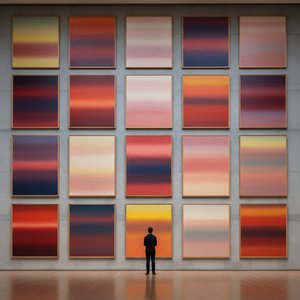
马克·罗斯科25幅杰作:色彩与情感的深度之旅 | ArtsDot
探索马克·罗斯科25幅杰作,感受抽象表现主义的色彩力量与深刻情感。从经典色域绘画到无题系列,了解艺术史上的大师及其作品背后的故事。ArtsDot.com提供博物馆级高质量复制品,为您的家居装饰带来艺术灵感!立即探索完整收藏。

Blush & Brilliance: 10 Iconic Paintings Dominated by Light Pink Tones |
Explore 10 iconic paintings bathed in captivating light pink tones! From Monet's Impressionism to Renoir’s romance, discover the stories behind these blush-hued masterpieces. Find museum-quality art reproductions & decor inspiration at .