


 实景预览
实景预览
 发送
发送 分享
分享
 详情
详情 指南
指南

 下载图片
下载图片
 相似作品
相似作品 X射线
X射线 幻灯片播放
幻灯片播放 Q&A
Q&A 统计数据
统计数据Montesquieu


 阅读全文
阅读全文
艺术微喷/版画
博物馆级艺术微喷或帆布版画,制作高效,并提供多种饰面选择。 ( 订购此收藏品的纯手工复刻画作 切换至数字图像销售渠道)




P118B ¥10

P118H ¥10

P118W ¥10

P438Z ¥10

P508JH ¥12

P508YH ¥12

P805H ¥10

P805Z ¥10

P919BZ ¥10

P919G ¥10

P919XJ ¥10

P959ZH ¥10

P968JZ ¥12

W106C ¥8

W218G ¥10

W218JH ¥8

W218Y ¥10

W307PJ ¥10

W316G ¥10

W316PJ ¥8

W316Y ¥10

W398PJ ¥8

W4111J ¥10

W500HY ¥15

W500JH ¥15

W692G ¥12

W849H ¥8

W940BG ¥15

W953PJ ¥8




您可以从与原作比例一致的预设尺寸中进行选择。

请输入您所需的宽度和高度,以适配您的画框或墙面。由于印刷品只能进行裁剪,无法超出原图尺寸,因此若比例不一致,画面的一部分将会被裁切。在正式印刷之前,我们会为您发送一份数字效果图供您确认。本页面显示的图片并非最终裁剪后的效果——只有效果图才能展示真实的裁剪情况。


 玻璃选项仅适用于110厘米以下的尺寸。

Montesquieu
艺术微喷/版画
复刻品尺寸说明
-


总计金额
¥ 417
The Stoic Scholar: An Encounter with Claude Michel (Clodion)’s “Montesquieu”
Standing before Claude Michel’s (Clodion) marble statue of Montesquieu, one is immediately struck by the profound stillness and contemplative power emanating from the figure. This isn't merely a portrait; it’s an embodiment of Enlightenment thought, a frozen moment of intellectual rigor captured in exquisitely polished white marble. The sculpture, created in 1783, resides within a museum setting, its reflective surface mirroring the surrounding space and subtly expanding the sense of grandeur. Clodion, a master sculptor working primarily in Paris during this period, expertly rendered the likeness of the influential French philosopher, Jean-Jacques Rousseau’s friend and political theorist, Charles de Montesquieu. The statue invites quiet observation, prompting reflection on the nature of reason, justice, and the complexities of governance – themes central to Montesquieu's groundbreaking work, *The Spirit of Laws*.
Neoclassical Form and Subtractive Technique
Clodion’s style firmly anchors this piece within the Neoclassical tradition. This movement, which flourished in Europe during the late 18th and early 19th centuries, sought to revive the artistic ideals of ancient Greece and Rome. The statue's composition—the seated figure, the draped garment, the carefully modeled musculature—all echo classical forms. However, Clodion’s approach transcends mere imitation; he imbues the sculpture with a distinctly modern sensibility. The technique itself is crucial to understanding the work’s impact. Marble carving is an inherently subtractive process – the sculptor begins with a massive block of stone and meticulously removes material until the desired form emerges. This painstaking method, combined with Clodion's masterful control of light and shadow, results in surfaces that appear almost impossibly smooth and luminous. The subtle variations in tone within the marble—a hint of grey near the folds of the robe, a brighter sheen on the exposed flesh—create an illusion of depth and texture, mimicking the tactile qualities of the stone itself.
Symbolism Within the Pose: Authority and Reflection
The pose of Montesquieu is deliberately powerful yet restrained. He’s seated in a classical chair, his posture erect, suggesting authority and intellectual strength. His hands rest upon a book – a clear reference to his extensive writings on law and political philosophy. However, it's not a gesture of triumphant pronouncements; rather, it conveys a sense of thoughtful deliberation. The gaze is directed slightly downward, as if lost in contemplation, inviting the viewer to join him in a shared intellectual journey. The mirrored wall behind the statue further amplifies this effect, creating an echo of the figure and suggesting a deeper level of introspection. It’s a visual metaphor for Montesquieu's own ideas – reflecting back upon society and offering insights into its structure and function.
A Legacy in Stone: Clodion’s Artistic Voice
Claude Michel (Clodion), born Benjamin West in 1738, was a pivotal figure in the transition between Neoclassicism and Romanticism. His early career in America, where he honed his skills painting portraits of prominent figures, provided him with a strong foundation in realism and observation. Later, he moved to Paris, embracing the challenges and opportunities of the European art scene. Clodion’s work is characterized by its dramatic lighting, dynamic compositions, and often theatrical flair. While “Montesquieu” represents his more restrained and contemplative side, it nonetheless showcases his exceptional technical skill and his ability to capture the essence of his subject. Reproductions of this statue offer a remarkable opportunity to experience the enduring power of Neoclassical sculpture – a testament to the artist’s vision and the timeless relevance of Enlightenment ideals. The piece stands as a powerful reminder that art can not only reflect history but also invite us to engage with its profound questions.
问答详情
在购买之前,我可以在自己的墙上预览 克洛迪翁 的《Montesquieu》 吗?
通过兼容设备访问 克洛迪翁 的《Montesquieu》 的 AR 预览 页面,即可利用增强现实技术将艺术品呈现在您自己的空间中。
“Montesquieu”这一Neoclassicism背后蕴含着怎样的国族渊源?
通过创作者的出生地,《Montesquieu》将Neoclassicism运动与France紧密联系在了一起。
"Montesquieu"创作于哪一年,属于哪种艺术流派?
克洛迪翁 的《Montesquieu》创作于1783年,属于Neoclassicism流派。
相关艺术品


相关文章

The Enduring Form: Sculpture Across History, Technique & Emotional Resonance
Explore the rich history of sculpture with ArtsDot. Discover key techniques, influential artists & investment potential for discerning collectors. Expert insights into valuing and collecting timeless masterpieces.

Bronze Age to Modern Masters: 10 Sculptures That Redefined Art | ArtsDot
Journey through art history with 10 legendary bronze sculptures – from Michelangelo's David to Rodin’s Thinker. Explore the stories, techniques & timeless beauty of these masterpieces. Find museum-quality reproductions & elevate your home decor on ArtsDot.com.

Bronze Sculptures That Defined Art History | ArtsDot
Journey through art history with our Top 10 bronze sculptures! Explore masterpieces by Rodin, Michelangelo & more. Discover stories behind iconic statues and find museum-quality reproductions for your home decor at ArtsDot.com.
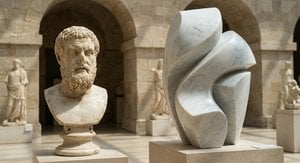
The Enduring Allure of Marble in Art History: From Classical Sculpture to Modern Abstraction
Explore the captivating history of marble sculpture from ancient Greece to modern art. Discover renowned artists like Canova & Michelangelo, carving techniques, and investment insights at ArtsDot.

The Enduring Form: Exploring Themes & Techniques in Sculpture Across Historical Periods
Explore the rich history of sculpture from ancient masterpieces to contemporary innovations. Discover key techniques, influential artists & investment potential for discerning art collectors.