

 实景预览
实景预览
 分享
分享 分享
分享
 详情
详情 指南
指南

 下载作品
下载作品
 相似作品
相似作品 X射线
X射线 幻灯片播放
幻灯片播放 Q&A
Q&A 统计数据
统计数据Crucifix

- 350.0 x 690.0 cm


 展开全文
展开全文
艺术微喷/版画
博物馆级艺术微喷或帆布版画,制作高效,并提供多种饰面选择。 ( 订购纯手工绘制画作 切换至数字图像销售渠道)




P118B ¥10

P118H ¥10

P118W ¥10

P438Z ¥10

P508JH ¥12

P508YH ¥12

P805H ¥10

P805Z ¥10

P919BZ ¥10

P919G ¥10

P919XJ ¥10

P959ZH ¥10

P968JZ ¥12

W106C ¥8

W218G ¥10

W218JH ¥8

W218Y ¥10

W307PJ ¥10

W316G ¥10

W316PJ ¥8

W316Y ¥10

W398PJ ¥8

W4111J ¥10

W500HY ¥15

W500JH ¥15

W692G ¥12

W849H ¥8

W940BG ¥15

W953PJ ¥8




您可以从与原作比例一致的预设尺寸中进行选择。

请输入您所需的宽度和高度,以适配您的画框或墙面。由于印刷品只能进行裁剪,无法超出原图尺寸,因此若比例不一致,画面的一部分将会被裁切。在正式印刷之前,我们会为您发送一份数字效果图供您确认。本页面显示的图片并非最终裁剪后的效果——只有效果图才能展示真实的裁剪情况。


 玻璃选项仅适用于110厘米以下的尺寸。

Crucifix
艺术微喷/版画
复刻品尺寸
-


最终结算价
¥ 416
A Bridge Between Worlds: Cimabue’s ‘Crucifix’
Cimabue's “Crucifix,” painted around 1283 in Florence, stands as a pivotal work not merely for its artistic merit but for its profound role in marking the transition from the rigid formality of Byzantine art to the burgeoning naturalism that would define the Italian Renaissance. More than just a depiction of Christ’s suffering, this painting embodies a courageous shift—a subtle yet decisive challenge to established conventions, laying the groundwork for the revolutionary changes that were about to reshape Western art. Born Cenni di Pepo around 1240 in Florence, Cimabue wasn't simply a painter; he was an innovator who dared to experiment with form and expression, a figure whose legacy resonates powerfully even today.
The painting immediately draws the eye with its monumental scale – measuring over three by two meters – reflecting the Byzantine tradition of imposing religious imagery. Yet, Cimabue’s genius lies in his ability to infuse this grandeur with a nascent sense of humanity. The Christ figure, rendered in tempera and gold on wood, is undeniably rooted in the iconography of the East: he is depicted as *Christus patiens*, or deceased, flanked by the Virgin Mary and St. John the Evangelist, both figures enveloped in sorrowful contemplation. However, subtle innovations distinguish Cimabue’s work from its Byzantine predecessors. The Christ's pose, while still conveying a sense of stillness, possesses a greater physicality—a suggestion of weight and vulnerability that hints at the human drama unfolding before us.
The Language of Symbolism
Beyond the immediate depiction of the crucifixion, “Crucifix” is rich in symbolic meaning. The inscription "HIC EST IESUS NAZARENUS REX IUDEORUM" – “Here is Jesus Christ, King of the Jews” – anchors the scene within its religious context, asserting both his divinity and his earthly sacrifice. The carefully chosen details—the draped cloth, the outstretched limbs, the sorrowful faces of the witnesses—all contribute to a powerful narrative of suffering, redemption, and hope. The use of gold leaf, particularly in highlighting Christ’s figure, further elevates the scene, connecting it to the opulent traditions of Byzantine mosaics and illuminating the divine nature of the subject.
Technique and Innovation
Cimabue's mastery is evident in his skillful manipulation of tempera paint. He employs a technique known as *distemper*, mixing pigments with a binding medium, creating rich colors and subtle gradations of tone. The painting’s monumental scale demanded careful planning and execution; the panel itself was constructed from five timber boards, meticulously joined to create a stable support for the vibrant imagery. Notably, Cimabue moved away from the purely abstract representation favored in Byzantine art, introducing a greater degree of naturalism into his depiction of Christ's body—a subtle shift that would become increasingly pronounced in the work of his successors, particularly Giotto.
A Legacy Forged in Florence
“Crucifix”’s journey through history is inextricably linked to the artistic landscape of Florence. Originally intended for “Santa Croce II,” a significant church project, it eventually found its home within the Basilica di Santa Croce, where it has remained a treasured masterpiece. The painting's survival—despite being partially damaged during the devastating 1966 flood that ravaged Florence – is itself a testament to its enduring value and the dedication of those who have preserved it. Today, this powerful image continues to inspire awe and reflection, serving as a poignant reminder of faith, sacrifice, and the transformative power of art.
相似作品


![Scrovegni - [23] - Baptism Of Christ — 乔托, Early Renaissance](/media/artworks/images-thumb/17/af/17af47626cb93b2000ad3d13e045f189.jpg)


艺术家简介
Giovanni Cimabue:拜占庭与文艺复兴的桥梁
Giovanni Cimabue,约公元1240年生于佛罗伦萨,是一位具有里程碑意义的人物——他是拜占庭艺术传统与意大利文艺复兴新兴发展之间连接的关键人物。 关于他的生活,虽然大部分时间已经消失在历史尘埃中,并且受到乔治·瓦萨里等人的浪漫化叙述影响——这些叙述发生在几百年之后——但他无疑是西方艺术史上一个重要的转折点。 Cimabue不仅仅是一位画家;他是勇敢的创新者,大胆地挑战了艺术传统规范,为随后席卷意大利的革命性变革奠定了基础。 他甚至他的昵称——据说意思是“牛头犟人”,暗示着一种坚定的意志和也许一种叛逆精神——这与他对形式和表达的勇于尝试相符。 他代表着艺术开始从单纯的神圣图像转向更人性化和情感丰富的时刻。早期影响与艺术发展
Cimabue最初沉浸在佛罗伦萨流行的意大利拜占庭风格中,他的早期作品严格遵循了已确立的美学原则:扁平的人物装饰着闪耀的金箔,象征意义大于现实主义的描绘空间以及对宗教图标的深刻关注。 然而,即使在这些限制内,一种新兴的自然主义渴望也开始萌芽。 他并不满足于简单地复制现有形式;他寻求为绘画注入更强的生命力和情感深度。 关于他的早期训练的具体信息尚有争议,但很可能他在佛罗伦萨工作室中磨练技能,吸收当时的技术和影响,同时发展自己的独特艺术声音。 作为拜占庭风格的基石,它为即将到来的文艺复兴提供了坚实的基础,但Cimabue开始以微妙的方式挑战传统规范——对体积、面部特征以及空间关系的关注都得到了加强。 这不是一次彻底的突破传统,而是一种逐渐的发展过程,一种平衡传统与新机遇的精妙平衡。 他并非仅仅是复制现有形式;他寻求为绘画注入更强的生命力和情感深度。大师作品与艺术创新
Cimabue的遗产通过一系列令人叹为观止的作品得到巩固,这些作品展现了他不断发展的风格。 马埃斯塔(卢浮宫)是他最著名的杰作之一,最初为意大利比萨圣弗朗西斯教堂创作的。 这件宏伟的圣坛画体现了他的构图和色彩运用技巧,同时暗示着对拜占庭规范的逐渐摆脱。 这些人物虽然仍然具有一定的形式性,但他们展现出一种新的存在感和力度——这与早期宗教艺术中常常呈现的距离形成鲜明对比。 对基督钉十字架(阿雷佐圣多米尼克教堂)的创作时间约为1270年,它尤其具有重要意义,因为它作为他突破拜占庭规范的早期示范,展现出对创造更具沉浸感和真实感的场景日益增长的兴趣。 这不是一次彻底的突破传统,而是一种逐渐的发展过程,一种平衡传统与新机遇的精妙平衡。 他挑战了当时艺术规范,证明艺术可以超越单纯的神圣象征;它也可以反映人类情感和经验。 他勇于尝试形式、比例和表达,为文艺复兴时期艺术的创新铺平了道路,确立了他作为西方艺术史上一个关键过渡人物地位。对艺术影响与学生们的影响
Cimabue最持久的遗产在于他对乔托·迪·邦多内的教学作用。 关于他们关系的具体信息尚有争议,但普遍认为乔托在Cimabue的指导下获得了重要的训练。 然而,乔托最终超越了他的老师,通过更彻底地拥抱自然主义和情感现实主义来革新意大利绘画。 这证明了Cimabue作为教师的技巧,他培养了如此才华,即使知道它可能会超过他的成就。 关于他的艺术影响以及对其他艺术家的影响,历史学家们仍在争论。 他挑战了当时艺术规范,证明艺术可以超越单纯的神圣象征;它也可以反映人类情感和经验。 他勇于尝试形式、比例和表达,为文艺复兴时期艺术的创新铺平了道路,确立了他作为西方艺术史上一个关键过渡人物地位。 这不是一次彻底的突破传统,而是一种逐渐的发展过程,一种平衡传统与新机遇的精妙平衡。历史意义与永恒价值
Cimabue于1302年去世于比萨,留下了一系列作品,这些作品继续吸引着和激励着人们。 关于他的晚生生活的信息很少见,但他的艺术遗产通过他的学生以及意大利艺术的发展而产生共鸣。 他是西方绘画发展中的一个关键人物,摆脱了拜占庭时代的风格规范,拥抱了文艺复兴时期更人性化和自然主义的趋势。 他是一位创新者、一位先驱,他敢于挑战传统规范并为艺术创造家们开辟了新的道路。 他提醒我们,即使在传统中也存在创新空间,真正的艺术在于勇气去突破界限和探索新视野。 他是西方艺术史上一个关键过渡人物,确立了他作为西方艺术史上一个关键过渡人物地位。 这不是一次彻底的突破传统,而是一种逐渐的发展过程,一种平衡传统与新机遇的精妙平衡。
西美仏
1240 - 1302 , 意大利
艺术家简介
- Artistic Movement Or Style: 拜占庭与文艺复兴风格
- Artists Or Movements Influenced By This Artist: ['乔托·迪·邦东尼']
- Artists Who Influenced This Artist:
- 朱尔塔·皮萨诺
- 科普多·德·马可瓦尔多
- Date Of Birth: c. 1240
- Date Of Death: 1302
- Full Name: Giovanni Cimabue
- Nationality: 意大利人
- Notable Artworks:
- 圣弗朗西斯教堂圣母玛塔达拉圣像
- 阿雷佐圣 domenico 十字架
- 圣 domenico 十字架洗礼圣坛
- Place Of Birth: Florence, Italy
相关文章

情感共鸣:定制室内壁画的力量与艺术史维度 (Qínggǎn gòngmíng: Dìngzhì nèishì bìhuà de lìliàng yǔ yìshǐ wéidù)
探索定制室内壁画的力量,从文艺复兴艺术史到现代空间设计。ArtsDot提供专业艺术家手绘、个性化定制服务,打造独一无二的艺术品,提升家居品味与文化价值。

The Enduring Legacy of Fresco: Technique, History & Artistic Expression Across Cultures
Explore the rich history & enduring legacy of fresco painting! Discover ancient techniques, Giotto's masterpieces, and modern applications. Expert insights for art lovers & professionals.

The Enduring Legacy of Fresco: Technique, History & Artistic Expression
Explore the rich history & enduring artistry of fresco painting. Discover techniques from Giotto to Michelangelo, conservation efforts, & modern applications. Learn how ArtsDot brings this timeless art form to your home.
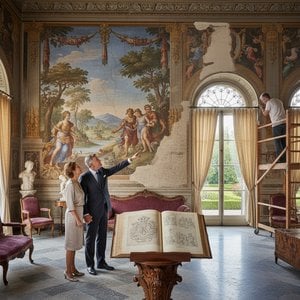
The Fresco as Family Legacy: Preserving Heritage Through Wall Art
Explore the rich history & enduring legacy of fresco painting. Discover how to preserve family heritage through stunning wall art. Expert insights & restoration guidance.

The Enduring Legacy of Fresco Painting: Techniques, History & Contemporary Relevance
Explore the rich history & enduring artistry of fresco painting – from Giotto to Michelangelo! Discover techniques, conservation efforts, & modern applications. Learn how ArtsDot brings this timeless art form to your home.


