

 实景预览
实景预览
 分享
分享 分享
分享
 详情
详情 指南
指南

 下载作品
下载作品
 相似作品
相似作品 X射线
X射线 幻灯片播放
幻灯片播放 问答
问答 统计数据
统计数据neubrandenburg

 展开全文
展开全文
艺术微喷/版画
博物馆级艺术微喷或帆布版画,制作高效,并提供多种饰面选择。 ( 订购纯手工绘制画作 切换至数字图像销售渠道)




P118B ¥10

P118H ¥10

P118W ¥10

P438Z ¥10

P508JH ¥12

P508YH ¥12

P805H ¥10

P805Z ¥10

P919BZ ¥10

P919G ¥10

P919XJ ¥10

P959ZH ¥10

P968JZ ¥12

W106C ¥8

W218G ¥10

W218JH ¥8

W218Y ¥10

W307PJ ¥10

W316G ¥10

W316PJ ¥8

W316Y ¥10

W398PJ ¥8

W4111J ¥10

W500HY ¥15

W500JH ¥15

W692G ¥12

W849H ¥8

W940BG ¥15

W953PJ ¥8




您可以从与原作比例一致的预设尺寸中进行选择。

请输入您所需的宽度和高度,以适配您的画框或墙面。由于印刷品只能进行裁剪,无法超出原图尺寸,因此若比例不一致,画面的一部分将会被裁切。在正式印刷之前,我们会为您发送一份数字效果图供您确认。本页面显示的图片并非最终裁剪后的效果——只有效果图才能展示真实的裁剪情况。


 玻璃选项仅适用于110厘米以下的尺寸。

neubrandenburg
艺术微喷/版画
复刻品尺寸
-


最终结算价
¥ 423
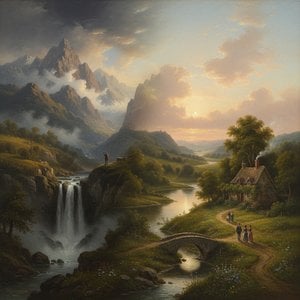
A Vista of Quietude: Exploring Caspar David Friedrich’s *neubrandenburg*
This evocative landscape by Caspar David Friedrich transports viewers to a serene yet subtly melancholic world. *neubrandenburg* is not merely a depiction of a town and its cathedral; it's an exploration of humanity’s place within the vastness of nature, a hallmark of the Romantic era. The painting presents a distant view of Neubrandenburg, dominated by the imposing spire of its cathedral, set against a dramatic skyscape.Style & Historical Context
Friedrich was a pivotal figure in the German Romantic movement (early 19th century), a period characterized by an emphasis on emotion, individualism, and the sublime power of nature. Rejecting the Enlightenment’s focus on reason, Romantics sought spiritual truth through experiencing the natural world. *neubrandenburg* exemplifies this ethos. The painting's style leans heavily into Romantic ideals – it isn’t a precise topographical rendering but rather an emotional response to the landscape. This was a time of significant societal shifts; the rise of industrialization and urbanization led many to yearn for a connection with the unspoiled beauty of nature, which Friedrich masterfully captures. His work often served as a counterpoint to the increasingly materialistic world.Composition & Technique
The composition is powerfully structured around horizontal lines – the horizon dividing the scene into foreground, middle ground and background. This reinforces the sense of expansive space. The small figures in the lower right corner are crucial; they provide a scale reference, emphasizing the immensity of the landscape and subtly suggesting human insignificance within it. Friedrich’s technique is characterized by loose brushstrokes and a muted color palette. He expertly employs atmospheric perspective – colors become paler and less saturated with distance – to create a convincing illusion of depth. The oil on canvas medium allows for rich texture and nuanced tonal variations, particularly in the swirling clouds that dominate the sky.Symbolism & Interpretation
The cathedral spire is arguably the focal point, rising above the town as a symbol of faith and spiritual aspiration. However, its distance and relative smallness within the vast landscape suggest a questioning of traditional religious authority. The dramatic sky, transitioning from dark greys to golden hues, can be interpreted as representing both hope and uncertainty – the transient nature of life itself. The figures in the foreground, seemingly lost in contemplation, invite viewers to share their quiet introspection. Friedrich frequently used landscapes not just as representations of places but as mirrors reflecting inner emotional states.Emotional Impact & Legacy
*neubrandenburg* evokes a sense of peaceful solitude and contemplative melancholy. It’s a painting that encourages viewers to pause, reflect, and connect with the natural world on a deeper level. The work's enduring appeal lies in its ability to tap into universal human emotions – awe, wonder, and a longing for something beyond the material realm. Friedrich’s influence can be seen in subsequent artistic movements, including Symbolism and Expressionism, and his landscapes continue to inspire artists and viewers alike today. A reproduction of this painting would bring a sense of tranquility and intellectual depth to any interior space.常见问题与解答
卡斯帕·弗里德里希 的《neubrandenburg》中的主导色调是什么?
卡斯帕·弗里德里希 的《neubrandenburg》 的主导色调为 Ochre to Sepia,这一色调构成了整个色板的基调。
卡斯帕·弗里德里希 的《neubrandenburg》 的亮度如何?
"neubrandenburg" 的色彩呈现出 Gentle Luminance 的亮度。
卡斯帕·弗里德里希 的《neubrandenburg》 是人像、风景还是方形构图?
卡斯帕·弗里德里希 的《neubrandenburg》 是一幅 Portrait 构图的作品。在选择打印尺寸之前,建议先确认其比例。
相似作品


艺术家简介
孤独的远见
1774年,卡斯帕·大卫·弗里德里希出生于波罗的海沿岸的港口城市格赖夫斯瓦尔德,他的早年生活被一种深刻的丧失感所塑造。母亲与兄弟姐妹的相继离世,为他的青春蒙上了一层长久的阴影,这种对死亡的敏锐感知,最终成为了他艺术创作的核心主题。他最初在哥哥克里斯蒂安的指导下开始接受艺术训练,随后在莱比锡大学追求艺术与神学。尽管他并未完成这两项学位,但这种对视觉艺术与精神领域的双重兴趣,却定义了他独特的创作路径。在哥本哈根,他的绘画技巧得到了进一步磨炼,在那里,他接触到了北欧风景画的传统,并最终将其转化为表达内心情感状态的媒介。
他处理风景画的方式,背离了前辈们所推崇的细致入微的写实风格。相反,他试图赋予风景以象征意义,利用自然元素来代表人类的灵魂。他经常运用Rückenfiguren——即背影人物——来邀请观者共同参与到一种沉思的体验之中。他的色调常由柔和的蓝色、灰色和棕色组成,增强了贯穿其作品始终的内省与庄严感。他不仅仅是在描绘所见之物,他更是在描绘人类精神的内在气候。
崇高的语言
弗里德里希的作品强调“崇高”之美,试图通过宏大的自然尺度寻求一种精神上的连接。他的构图经常将孤独的人物置于广阔、甚至令人感到压倒性的景观之中。在《迷雾之上的漫游者》(约1818年)中,那个剪影般的人物面对着翻腾的云海,体现了人类存在与无限宇宙之间的张力。《冰海》(1824年)则呈现了一片寒冷的北极荒原,描绘了自然巨大的力量及其对人类命运的冷漠。这些作品反映了他对生命脆弱性的关注,以及在景观中寻找意义的渴望。
他的画作经常利用特定的元素来传达这些内在状态:
- "橡树林中的修道院"(1809-1810年),画面中的废弃教堂墓地与枯树暗示着死亡与精神的衰败。
- "吕根岛的粉色崖"(1818年),利用大气光影来勾勒海岸的轮廓。
- "瓦茨曼山",对山岳壮丽景象的描绘。
- "两个男人的黄昏风景"(1830年),一幅宁静的暮色沉思图景。
遗产与重新发现
弗里德里希的艺术生涯并非一帆风顺。虽然他在生前获得了一定的认可,但随着艺术品味转向其他流派,他的名声逐渐式微。他于1840年在德累斯顿去世,在一段时间内,他的名字淡出了艺术界的前沿。直到20世纪后期,随着他被公认为德国浪漫主义的核心人物,他的艺术声誉经历了重大的重新发现。他对主观经验和情感表达的强调,为后来的象征主义和超现实主义等运动铺平了道路。
他的影响力延伸到了那些试图通过视觉手段探索内心世界的艺术家。通过拒绝启蒙运动的理性主义,转而追求情感与想象力,他捕捉到了一个时代的精神。在德国政治分裂的时期,他的风景画曾作为民族认同的象征。时至今日,他的作品依然能引发共鸣,提醒着观众人类与自然世界之间那份深邃的联系。

卡斯帕·弗里德里希
1774 - 1840 , 德國
艺术家简介
- Artistic Movement Or Style: 浪漫主义
- Artists Or Movements Influenced By This Artist:
- 象征主义者
- 超现实主义者
- Artists Who Influenced This Artist:
- 荷兰大师
- J.C. Dahl
- Date Of Birth: 1774
- Date Of Death: 1840
- Full Name: 卡斯帕·大卫·弗里德里希
- Nationality: 德国
- Notable Artworks:
- 橡树林中的修道院
- 雾海上的漫游者
- 吕根岛的粉色崖
- 冰海
- Place Of Birth: 德国,格赖夫斯瓦尔德
相关文章

Evoking Nature's Sublime: A Comprehensive Exploration of 19th-Century Landscape Painting
Explore the captivating world of 19th-century landscape painting! Discover renowned artists like Friedrich & Monet, key movements, and find the perfect artwork to bring nature's serenity into your home. Expert insights at ArtsDot.

浪漫主义风景画:情感、自然与宇宙的探索
探索浪漫主义风景画的深刻内涵,深入了解卡斯帕·大卫·弗里德里希等大师的作品。ArtsDot提供精美复制品、定制服务及专业艺术咨询,助您收藏经典,打造专属艺术空间。

浪漫主义画派的十部巨作:定义风景画的艺术传奇
探索浪漫主义风景画的巅峰!本文精选十部经典名作,带您领略莫奈、库尔贝等大师的艺术魅力。感受色彩与光影的诗意,重温自然风光的震撼。ArtsDot.com为您提供博物馆级别的艺术复制品和个性化家居装饰方案。尽在ArtsDot.com!
浪漫主义风景画中的崇高与绮丽:探索情感与自然之美
深入探索浪漫主义风景画中的崇高与绮丽之美!解读卡斯帕·大卫·弗里德里希、威廉·特纳等大师作品,分析19世纪绘画的社会背景与艺术影响。ArtsDot.com为您提供专业的艺术评论与收藏建议。

Caspar David Friedrich: Romanticism's Master of Landscape & the Sublimity of Inner Experience
Explore the profound landscapes of Caspar David Friedrich, a master of German Romanticism. Discover the symbolism, themes & enduring influence of this iconic artist. A deep dive into his life and work.


