


 实景预览
实景预览
 分享
分享 分享
分享
 详情
详情 指南
指南

 下载作品
下载作品
 相似作品
相似作品 X射线
X射线 幻灯片播放
幻灯片播放 Q&A
Q&A 统计数据
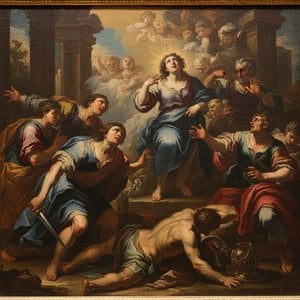
统计数据The Crowning with Thorns
 Acrylic On Canvas
- WallArt
- Baroque Dramatic Intensity
 1604
1604 1655.0 x 1270.0 cm
 Kunsthistorisches Museum
 展开全文
展开全文
艺术微喷/版画
博物馆级艺术微喷或帆布版画,制作高效,并提供多种饰面选择。 ( 订购纯手工绘制画作 切换至数字图像销售渠道)




P118B ¥10

P118H ¥10

P118W ¥10

P438Z ¥10

P508JH ¥12

P508YH ¥12

P805H ¥10

P805Z ¥10

P919BZ ¥10

P919G ¥10

P919XJ ¥10

P959ZH ¥10

P968JZ ¥12

W106C ¥8

W218G ¥10

W218JH ¥8

W218Y ¥10

W307PJ ¥10

W316G ¥10

W316PJ ¥8

W316Y ¥10

W398PJ ¥8

W4111J ¥10

W500HY ¥15

W500JH ¥15

W692G ¥12

W849H ¥8

W940BG ¥15

W953PJ ¥8




您可以从与原作比例一致的预设尺寸中进行选择。

请输入您所需的宽度和高度,以适配您的画框或墙面。由于印刷品只能进行裁剪,无法超出原图尺寸,因此若比例不一致,画面的一部分将会被裁切。在正式印刷之前,我们会为您发送一份数字效果图供您确认。本页面显示的图片并非最终裁剪后的效果——只有效果图才能展示真实的裁剪情况。


 玻璃选项仅适用于110厘米以下的尺寸。

The Crowning with Thorns
艺术微喷/版画
复刻品尺寸
-


最终结算价
¥ 416
A Testament to Suffering: Caravaggio’s “The Crowning with Thorns”
Michelangelo Merisi da Caravaggio, a name synonymous with the dramatic intensity of Baroque painting, was born in Milan in 1571, a period steeped in both artistic flourishing and societal upheaval. His early life was marked by loss; plague ravaged his hometown, claiming the lives of his father and grandfather when he was just six years old. Raised amidst relative poverty, young Michelangelo’s formative years instilled within him a keen awareness of human suffering and resilience—themes that would later become central to his artistic vision. He began his artistic training in Milan under Simone Peterzano, absorbing the fundamentals of Renaissance technique but already hinting at a rebellious spirit that would soon shatter conventional norms. This apprenticeship provided a solid foundation, yet it was in Rome, arriving around 1592, that Caravaggio truly found his voice, though not without initial struggle and hardship. The city, a vibrant hub of artistic patronage and intellectual debate, welcomed him with open arms—and challenged him to forge a path unlike any seen before.The Canvas of Darkness: Style and Technique
Caravaggio’s revolutionary approach to painting distinguished him from his contemporaries. He eschewed idealized beauty, favoring instead unflinching realism that captured the gritty textures of everyday life. His signature technique, known as tenebrism—Italian for “darkness”—employed stark contrasts between light and shadow to create a palpable sense of drama and heighten emotional impact. This masterful manipulation of illumination wasn’t merely stylistic; it served as a deliberate tool to draw the viewer's eye directly to the focal point – Christ’s head, crowned with thorns – emphasizing his vulnerability and suffering. The artist famously utilized incision, meticulously etching outlines onto paper before applying paint, ensuring precise contours and maximizing the expressive power of each brushstroke. This painstaking process underscored Caravaggio’s commitment to capturing every nuance of human anatomy and emotion.A Dialogue With Antiquity: Influences and Inspiration
Caravaggio's artistic sensibilities were profoundly shaped by his fascination with classical sculpture, particularly the Belvedere Torso—a marble torso discovered in Rome around 1530 that captivated artists and intellectuals alike. He meticulously studied this model, mirroring its posture and conveying a similar sense of dignified sorrow within his depictions of biblical figures. This connection to antiquity wasn’t simply aesthetic; it reflected Caravaggio's belief in the enduring power of human form and emotion across time periods—a conviction that fueled his artistic explorations and cemented his place as one of history’s most influential painters.Symbolism Beneath the Surface: Narrative Depth
“The Crowning with Thorns” transcends mere visual representation; it embodies a complex tapestry of symbolic meaning. The positioning of Christ, bent forward under the weight of the thorns and surrounded by menacing figures—soldiers and onlookers alike—underscores the brutality of his ordeal and highlights the sacrifice he willingly endured for humanity’s salvation. Caravaggio's deliberate portrayal of Christ’s skin tone – pale and luminous – juxtaposed against the bronzed complexion of his tormentors serves as a powerful visual metaphor for purity versus corruption, innocence versus transgression. The artist’s masterful use of light and shadow amplifies these symbolic resonances, immersing the viewer in an atmosphere of palpable tension and conveying the profound emotional weight of the scene.Emotional Resonance: Legacy and Inspiration
Caravaggio's enduring legacy lies not only in his groundbreaking technique but also in his ability to evoke visceral emotion within the viewer. “The Crowning with Thorns” continues to captivate audiences today, prompting contemplation on themes of faith, suffering, and redemption. Its dramatic composition and masterful execution serve as an inspiration for artists seeking to convey profound psychological depth—a testament to Caravaggio’s unparalleled skill in capturing the human condition at its most vulnerable yet resolute. Explore a stunning reproduction of this masterpiece at Preston Crown Court and discover similar artworks at ArtsDot.com!常见问题与解答
哪种尺寸的 卡拉瓦乔 的《The Crowning with Thorns》 打印件更适合推荐的房间?
针对 Living Room,建议将 卡拉瓦乔 的《The Crowning with Thorns》 打印为 Large。
如何描述 卡拉瓦乔 的《The Crowning with Thorns》 的意境?
卡拉瓦乔 的《The Crowning with Thorns》 的整体基调为 Dramatic,这种基调传达了作品的整体氛围。
什么样的摆放方式最适合 卡拉瓦乔 的《The Crowning with Thorns》 的画幅?
关于 卡拉瓦乔 的《The Crowning with Thorns》,记录了其规格 (Landscape) 与建议摆放空间 (Living Room) 这两项陈列信息。
相似作品


艺术家简介
光与影的锻造:卡拉瓦乔的一生
米开朗琪罗·梅里西·达·卡拉瓦乔,一个与巴洛克绘画戏剧性的张力如出一辙的名字,于1571年出生在米兰,正值艺术蓬勃发展和社会动荡不安的时代。他早年的生活充满了失去;瘟疫席卷了他的家乡,在他仅仅六岁时夺走了他的父亲和祖父的生命。在相对贫困的环境中长大,年轻的米开朗琪罗内心深处对人类苦难与韧性有着敏锐的认识——这些主题后来将主宰他的画布。他在米兰跟随西蒙·彼得扎诺接受艺术训练,后者是提香的前学生,掌握了文艺复兴时期的基本技巧,但已经暗示着一种即将打破传统规范的反叛精神。这段学徒期为他奠定了坚实的基础,然而真正让他找到了自己的声音,却是在1592年左右抵达罗马之后——尽管这个过程并非没有最初的挣扎和困苦。这座城市,一个艺术赞助人和宗教狂热的繁荣中心,既吸引着他又令他难以承受,这位有抱负的年轻画家面临着机遇与挑战并存的环境。革命性的视觉:技巧与风格
卡拉瓦乔的到来标志着意大利艺术领域发生了剧变。他摒弃了盛行于当时的时髦派(Mannerism)风格——其特点是人工的优雅和细长的形式——转而采用一种毫不妥协的现实主义,这既震惊又吸引了观众。他最具创新性的运用莫过于他对明暗对比(chiaroscuro)的大师级掌握,将这种技巧提升到了前所未有的表现力高度。这种技术,通常被称为tenebrism(遮蔽主义),不仅仅是一种美学选择;它更是一种加剧情感冲击、将观众拉入场景中心、并赋予其人物一种切实存在感的手段。他摒弃了理想化的描绘,而是从罗马街头选取普通人作为宗教人物的模特。这种激进的方法挑战了传统的美丽和神圣观念,使神圣变得平易近人和深刻的人性化。他的构图往往简洁而直接,专注于剧烈情感爆发的关键时刻,无论是“无辜者之死”中残酷的现实主义,还是“圣弗朗西斯狂喜症”中的安静沉思。关键作品与持久影响
在相对短暂的职业生涯中,卡拉瓦乔创作了许多至今仍能引起观众共鸣的作品。“算命女” (1594) 展示了他捕捉现实细节和心理细微差别的蓬勃才华。 伦敦国家美术馆收藏的“上十字山的晚餐”(1601-1602)完美地体现了他的明暗对比技巧以及在圣经叙事中传达深刻情感的能力。“大卫与歌利亚” (约1610) 尤其令人不安,通常被解读为卡拉瓦乔自己内心动荡的自画像。他的影响远远超出了意大利,激励了一代被称为Caravaggisti(“阴影主义者”)的艺术家,他们将他的风格传播到整个欧洲。著名的追随者包括彼得·保罗·鲁本斯、何塞·德·里贝拉和格列尔·范·洪托斯特,每个人都将卡拉瓦乔的技术融入到自己独特的艺术视野中。动荡的一生与不朽的遗产
卡拉瓦乔的生活和他所创作的艺术一样戏剧性和动荡不安。他暴躁的性格和喜欢打架导致他经常惹上麻烦,最终在1606年因谋杀罪被判处死刑,迫使他逃离罗马。此后四年,他在那不勒斯、马耳他、西西里等地游荡,继续绘画的同时,也在拼命寻求教皇的赦免。尽管如此,他仍然是一个通缉犯,内心受到过去的困扰,并遭受着个人冲突的折磨。1610年,他在意大利波托埃尔科尔去世,死因成谜——他的死因众说纷纭,有发烧、中毒等说法。虽然他的生命被过早地终结,但卡拉瓦乔的艺术遗产仍然证明了他革命性的视野和对现实主义的不懈承诺。他挑战了时代的惯例,为一种更现代的绘画方法铺平了道路,并在西方艺术史的进程中留下了不可磨灭的印记。他的作品至今仍能激发敬畏之情并引发人们的思考,提醒我们艺术的力量能够照亮人类经验中最黑暗的角落。卡拉瓦乔的影响与追随者
- 奥塔维奥·莱昂尼 (1578-1630)
- 巴托洛梅奥·帕索罗蒂 (1529–1592)
- 皮埃尔·弗朗西斯科·马祖切利 (1573–1626)
- 安杰洛·卡罗塞利 (1585–1652)
- 多梅尼科·费蒂 (约 1589-1623)
- 瓦伦丁·德·布隆 (约 1591 – 1632)
- 格列尔·范·洪托斯特
- 乔阿基诺·阿塞雷托 (1600-1649)
- 乔瓦尼·安德烈亚·德·费拉里 (1598–1669)
- 迪尔克·范·巴布伦 (约 1595 – 21 February 1624)
- 马蒂亚斯·斯托默 (约 1600 – 约 1653)

卡拉瓦乔
1571 - 1610 , 西班牙
艺术家简介
- Artistic Movement Or Style: 巴洛克, 提灯主义
- Artists Or Movements Influenced By This Artist:
- 鲁本斯
- 何塞·德·里贝拉
- 卡拉瓦乔主义者
- Artists Who Influenced This Artist:
- 提香
- 列奥纳多·达·芬奇
- 米开朗琪罗
- Date Of Birth: 1571年9月29日
- Date Of Death: 1610年7月18日
- Full Name: 米开朗琪罗·梅里西·达·卡拉瓦乔
- Nationality: 意大利人
- Notable Artworks:
- 占卜师
- 上客来时
- 大卫与歌利亚
- 圣方济各的狂喜
- Place Of Birth: 意大利,米兰
相关文章

The Visceral Stage: Exploring Dramatic Narratives & Emotional Intensity in Baroque Art
Explore the dramatic world of Baroque art! Discover iconic masters like Caravaggio & Rembrandt, their techniques, and the movement's lasting impact. Expert insights for collectors & enthusiasts at ArtsDot.
光影交织的戏剧性:探索巴洛克绘画的情感强度与艺术创新
深入探索巴洛克绘画的辉煌时代!本文解读伦勃朗、卡拉瓦乔等大师的光影技巧与情感表达,揭示宗教改革对艺术风格的影响。ArtsDot提供精美手绘复制品及专业艺术咨询。

巴洛克艺术的戏剧性辉煌:历史背景、风格特征与持久影响
深入探索巴洛克艺术的辉煌历史、独特风格与持久影响。了解卡拉瓦乔、贝尼尼等大师的作品,洞悉反宗教改革运动下的艺术变革。ArtsDot.com为您提供专业的艺术解读与高清画作欣赏。

Caravaggio's Revolutionary Realism: A Study of Light, Shadow, and the Human Condition
Explore the revolutionary realism of Caravaggio! Discover his mastery of light & shadow (tenebrism), dramatic religious scenes, and lasting influence on Baroque art history. A comprehensive guide for art enthusiasts.

巴洛克艺术巅峰:十部巨作定义时代,点亮您的臻品格调
探索巴洛克艺术的辉煌!本文精选十部巨作,带您领略卡拉瓦乔、伦勃朗等大师的光影魔法与戏剧张力。从黄金时代到宗教绘画,感受奢华与精致。ArtsDot.com为您提供博物馆品质的艺术复制品和家居装饰灵感。尽在ArtsDot.com!


