

 效果预览
效果预览
 购买印刷品
购买印刷品 分享
分享 分享
分享
 详情
详情

 下载
下载
 相似作品
相似作品 X射线
X射线 幻灯片播放
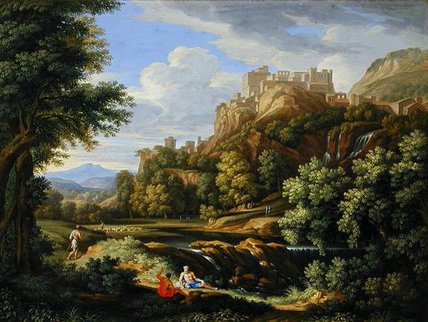
幻灯片播放Classical Landscape,

 展开详情
展开详情




































从与原作比例一致的预设尺寸中进行选择。

您可以输入自定义尺寸,以适配特定的画框或空间。如果所选尺寸与原图比例不符,我们将通过裁剪作品或添加手绘元素来扩展画面。数字样稿将在制作开始前发送给您确认。
请注意,屏幕预览无法准确反映实际的裁剪或扩展效果,只有样稿才能真实呈现最终的构图。
虽然我们提供定制尺寸服务,但为了保留原作比例,建议您从预设列表中选择尺寸。
下单后,ArtsDot.com 团队将通过电子邮件联系客户获取具体要求,并提供效果预览图。


 玻璃选项仅适用于110厘米以下的尺寸。

Classical Landscape,
复制材质
复制品尺寸
-


最终总价
$ 263
相似艺术品


艺术家简介
A Legacy of Miniature Brilliance: The Life of Bernard III Lens
In the golden age of British portraiture, few names evoke the delicate intimacy and technical mastery of Bernard III Lens. Born in London in 1682, Lens was not merely an artist but a scion of a profound artistic dynasty. He descended from a lineage of creators, the grandson of the Dutch painter Bernard Lens I and the son of the talented engraver Bernard Lens II. This familial heritage provided him with more than just a name; it offered a deep-rooted connection to the very evolution of miniature painting in England. Growing up amidst the tools of the trade, Lens was destined to become a central figure in the visual culture of the reigns of George I and George II, carving out a reputation that blended courtly elegance with unparalleled precision.
The formative years of Lens’s career were shaped by the rigorous traditions of apprenticeship and the influence of contemporary masters. His training under figures such as Jonathan Richardson Sr. instilled in him a profound understanding of psychological depth. While many miniature painters of his era focused solely on the superficial likeness, Lens sought to capture the very essence of his subjects. Influenced by Richardson’s theatrical approach, he learned to weave character and emotion into the small, precious surfaces of his work. This ability to breathe life into tiny portraits allowed him to transcend the boundaries of mere documentation, turning each miniature into a nuanced exploration of the human soul.
Innovation in Medium and Technique
Perhaps the most significant contribution Lens made to the history of art was his role as a pioneer of new materials. In 1707, he achieved a landmark feat by becoming one of the first British artists to replace the traditional use of vellum with ivory as a substrate for miniatures. This transition revolutionized the medium; the luminous, translucent quality of ivory allowed for a brilliance that vellum simply could not replicate. While his style remained somewhat conservative—often utilizing heavier paints and pencil sketches that provided a solid, almost oil-like texture to drapery—his ability to manipulate light on this new surface was nothing short of transformative.
Beyond the delicate world of portrait miniatures, Lens demonstrated a remarkable versatility through his mastery of enamel painting. This laborious process, involving the fusing of powdered glass onto metal, demanded an extraordinary level of patience and precision. Through the careful layering of translucent pigments, he produced works of ethereal beauty that seemed to glow from within. His repertoire also extended into the realm of landscapes, where he displayed a keen appreciation for the natural world, proving that his technical prowess was as effective in capturing the vastness of nature as it was in the intimate details of a face.
Courtly Influence and Historical Significance
The prestige of Bernard III Lens was cemented by his proximity to the highest echelons of British society. He served as the official miniature painter at the courts of Kings George I and George II, a position that required not only immense skill but also a sophisticated understanding of aristocratic taste. His influence even extended to the education of royalty, as he acted as an instructor in the art of limning for Prince William and the princesses Mary and Louise. This role as a consultant in fine arts to upper-class families ensured that his aesthetic sensibilities helped shape the visual identity of the British elite during the early 18th century.
As we reflect on his life, the significance of Lens lies in his ability to bridge the gap between tradition and innovation. He carried forward the techniques of his ancestors while embracing the technological shifts that would define the future of portraiture. His works remain a testament to an era of refinement, where the smallest of canvases could hold the greatest of human stories. Through his dedication to craftsmanship, Bernard III Lens ensured that his name—and the luminous beauty of his art—would endure in the annals of art history.

bernard iii lens
1682 - 1740 , United Kingdom
艺术家简介
- Artistic Movement Or Style: Portrait Miniatures; Enamel Painting
- Date Of Birth: 1682
- Full Name: Bernard III Lens
- Nationality: British
- Notable Artworks:
- The Reverend Dr. Harris
- Mars Introduced By Minerva
- Place Of Birth: London, United Kingdom

