


 购买印刷品
购买印刷品 分享
分享 分享
分享
 详情
详情

 下载
下载
 相似作品
相似作品 幻灯片播放
幻灯片播放Totem


 展开详情
展开详情




































从与原作比例一致的预设尺寸中进行选择。

您可以输入自定义尺寸,以适配特定的画框或空间。如果所选尺寸与原图比例不符,我们将通过裁剪作品或添加手绘元素来扩展画面。数字样稿将在制作开始前发送给您确认。
请注意,屏幕预览无法准确反映实际的裁剪或扩展效果,只有样稿才能真实呈现最终的构图。
虽然我们提供定制尺寸服务,但为了保留原作比例,建议您从预设列表中选择尺寸。
下单后,ArtsDot.com 团队将通过电子邮件联系客户获取具体要求,并提供效果预览图。


 玻璃选项仅适用于110厘米以下的尺寸。

Totem
复制材质
复制品尺寸
-


最终总价
$ 263
作品详情
Barbara Hepworth’s ‘Totem’: A Silent Dialogue with Form and Space
Barbara Hepworth's “Totem,” created in 1960-62, is more than just a sculpture; it’s an invitation to contemplate the fundamental elements of form, space, and human experience. This remarkable piece, crafted from alabaster or marble – materials chosen for their inherent luminosity and tactile quality – stands as a testament to Hepworth's pioneering role in British modernism. The work immediately commands attention with its strikingly vertical orientation, a deliberate choice that draws the eye upwards, suggesting an aspiration towards something beyond the earthly realm. The contrast between this upward thrust and the grounded, angularity of the base creates a dynamic tension, inviting viewers to consider the interplay of stability and movement within the sculpture’s composition.
A Biomorphic Embrace: Form and Technique
Hepworth's signature style is powerfully evident in “Totem.” The form itself is profoundly biomorphic – an organic echo translated into stone. It eschews representational imagery, instead focusing on pure abstraction, exploring the inherent qualities of the material. The sculpture’s surface is remarkably smooth, achieved through a subtractive sculpting technique: Hepworth began with a larger block of stone and meticulously removed material to reveal the desired shape. This process isn't merely about creating an image; it’s about coaxing forth the form already latent within the stone itself. The subtle tonal shifts in the polished surface – from bright highlights to shadowed recesses – are not accidental; they are carefully orchestrated to emphasize the sculpture’s three-dimensionality and create a sense of depth and volume. The precision of the carving, combined with the inherent texture of the alabaster or marble, results in a piece that feels both solid and ethereal.
Symbolic Resonance: Ancestry and Spiritual Connection
The title “Totem” immediately evokes associations with ancient tribal cultures and ancestral figures. While Hepworth herself resisted overly literal interpretations, the sculpture undeniably carries a potent symbolic weight. The vertical element can be seen as representing a connection to the heavens or a spiritual ascent, mirroring the traditional role of totems as guardians and symbols of lineage. The pierced openings within the form aren’t simply decorative; they invite contemplation, creating pockets of negative space that seem to breathe with an inner light. These voids suggest a sense of openness, inviting viewers to project their own interpretations onto the sculpture – perhaps reflecting on personal journeys or universal themes of connection and belonging.
Historical Context: Modernism and Abstraction
“Totem” was created during a pivotal period in Hepworth’s career, aligning with her exploration of abstraction-creation. This movement sought to move beyond representational art, focusing instead on the intrinsic qualities of materials and the fundamental principles of form and space. Hepworth's work, alongside that of artists like Ben Nicholson and Paul Nash, challenged conventional notions of sculpture, embracing a more elemental and expressive approach. The piece reflects the broader shift within 20th-century art towards a rejection of traditional styles and a celebration of modern materials and techniques. It’s a powerful example of how abstraction could be used to convey profound emotional and spiritual ideas.
A Timeless Presence: Emotional Impact and Artistic Legacy
Looking at “Totem” is an experience that transcends mere visual appreciation. There's a quiet serenity, a sense of contemplative stillness that permeates the sculpture’s form. It evokes a feeling of calm, inviting viewers to slow down, breathe deeply, and connect with their own inner landscape. Hepworth’s ability to imbue stone with such emotional resonance is a testament to her extraordinary artistic vision. “Totem” remains a powerful symbol of modernism's enduring legacy – a silent dialogue between form, space, and the human spirit, offering a timeless invitation to contemplation.
相似艺术品


艺术家简介
早年生活与教育
芭芭拉·海普沃斯女爵 (Dame Barbara Hepworth) 是一位享誉世界的英国艺术家与雕塑家,于1903年1月10日出生于约克郡的威克菲尔德。她的艺术启蒙始于1920年的利兹艺术学院,随后凭借优异的成绩获得郡奖学金,前往伦敦皇家艺术学院 (RCA) 深造,并于1924年正式获得学位。艺术生涯
- 芭芭拉·海普沃斯女爵 的作品是现代主义,尤其是现代雕塑的典范。在那个时代,她是极少数能够获得国际声望的女性艺术家之一。
- 1933年,她与 本·尼科尔森、保罗·纳什 等人共同创立了“一号单元”(Unit One) 艺术运动,旨在将超现实主义与抽象主义融入英国艺术之中。
- 海普沃斯早期的创作以抽象风格为特征,并积极参与了总部位于巴黎的“抽象创造”(Abstraction-Création) 艺术运动。
代表作品与展览
- 青铜雕塑作品《椭圆形式 (Trezion)》 (Oval Form (Trezion)) 目前收藏于美国沃斯堡的肯贝尔艺术博物馆。(在 ArtsDot 查看)
- 雕塑作品《两种形式》 (Two Forms) 正在英国威克菲尔德的 海普沃斯威克菲尔德美术馆 进行展出。(在 ArtsDot 查看)
- 大理石雕塑《图腾》 (Totem) 同样被收录于 海普沃斯威克菲尔德美术馆 的馆藏中。(在 ArtsDot 查看)
艺术遗产与博物馆收藏
芭芭拉·海普沃斯 的作品得到了广泛的认可,她的雕塑与绘画作品已成为全球各大博物馆的重要馆藏。以艺术家本人命名的 海普沃斯威克菲尔德美术馆 收藏了众多艺术大师的杰作,其中也包括海普沃斯本人的传世之作。(在 ArtsDot 探索更多关于海普沃斯威克菲尔德美术馆的信息)结语
芭芭拉·海普沃斯女爵 在现代英国雕塑领域的开拓性工作,已在艺术史上留下了不可磨灭的印记。她的艺术遗产持续激励着艺术家与艺术爱好者,她的作品至今仍是其创新精神与艺术天才的永恒见证。在维基百科了解更多关于芭芭拉·海普沃斯的信息
芭芭拉·海沃斯
1903 - 1975 , 英国
艺术家简介
- Artistic Movement Or Style: 现代主义, 抽象主义
- Artists Or Movements Influenced By This Artist:
- 抽象创作 (Abstraction-Création)
- 一号小组 (Unit One)
- Artists Who Influenced This Artist:
- 亨利·摩尔 (Henry Moore)
- 本·尼科尔森 (Ben Nicholson)
- Date Of Birth: 1903-01-10
- Date Of Death: 1975-05-20
- Full Name: 芭芭拉·海沃斯 (Barbara Hepworth)
- Nationality: 英国
- Notable Artworks:
- 椭圆形式 (Trezion)
- 两种形式
- 图腾
- Place Of Birth: 英国,威克菲尔德
相关文章

Barbara Hepworth: A Sculptural Dialogue with Form, Space & the Human Condition
Explore the profound world of Barbara Hepworth's sculpture. Discover her artistic evolution, iconic forms, and lasting influence on modern art. A guide for collectors & enthusiasts.
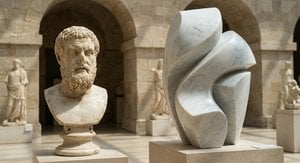
The Enduring Allure of Marble in Art History: From Classical Sculpture to Modern Abstraction
Explore the captivating history of marble sculpture from ancient Greece to modern art. Discover renowned artists like Canova & Michelangelo, carving techniques, and investment insights at ArtsDot.

Bronze Sculptures That Defined Art History | ArtsDot
Journey through art history with our Top 10 bronze sculptures! Explore masterpieces by Rodin, Michelangelo & more. Discover stories behind iconic statues and find museum-quality reproductions for your home decor at ArtsDot.com.

The Enduring Form: Exploring Themes & Techniques in Sculpture Across Historical Periods
Explore the rich history of sculpture from ancient masterpieces to contemporary innovations. Discover key techniques, influential artists & investment potential for discerning art collectors.

The Enduring Form: Sculpture Across History, Technique & Emotional Resonance
Explore the rich history of sculpture with ArtsDot. Discover key techniques, influential artists & investment potential for discerning collectors. Expert insights into valuing and collecting timeless masterpieces.


