


 效果预览
效果预览
 购买手绘画作
 分享
分享 分享
分享
 详情
详情

 下载
下载
 相似作品
相似作品 X射线
X射线 幻灯片播放
幻灯片播放Triptych
 Baroque Art
 1604
1604 37.0 x 24.0 cm
 国家美术馆
国家美术馆
 展开详情
展开详情




P118B $10

P118H $10

P118W $10

P438Z $10

P508JH $12

P508YH $12

P805H $10

P805Z $10

P919BZ $10

P919G $10

P919XJ $10

P959ZH $10

P968JZ $12

W106C $8

W218G $10

W218JH $8

W218Y $10

W307PJ $10

W316G $10

W316PJ $8

W316Y $10

W398PJ $8

W4111J $10

W500HY $15

W500JH $15

W692G $12

W849H $8

W940BG $15

W953PJ $8




从与原作比例一致的预设尺寸中进行选择。

您可以输入自定义尺寸,以适配特定的画框或空间。如果您选择的尺寸与原图比例不符,我们将对作品进行裁剪,或通过镜像填充/纯色填充边缘的方式来扩展图像。在开始制作之前,我们会向您发送一份数字效果图供您确认。
请注意,屏幕上的预览并不能反映实际的裁剪或扩展效果。只有效果图才能准确展示最终的构图。
虽然我们提供定制尺寸,但为了保持原图比例,我们建议您从预设列表中选择尺寸。


 玻璃选项仅适用于110厘米以下的尺寸。

Triptych
艺术微喷/版画
复制品尺寸
-


最终总价
$ 62
藏品详情
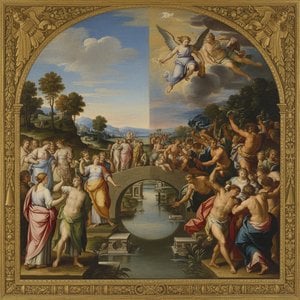
Annibale Carracci’s Triptych: A Baroque Masterpiece of Light, Faith, and Divine Order
Annibale Carracci's 1604 Triptych, currently housed within the Galleria Nazionale d'Arte Antica in Rome, stands as a pivotal example of the burgeoning Baroque style. More than simply a religious depiction, it’s a carefully orchestrated symphony of light, color, and symbolism—a testament to the artist’s mastery of composition and his deep understanding of both classical ideals and emerging emotional expression. This oil-on-copper painting, measuring 37 x 24 cm, invites viewers into a world where earthly beauty intertwines with divine grace, offering a profound meditation on faith, knowledge, and the very nature of existence.
Composition and Symbolism: A Dance of Allegory and Divine Presence
The triptych format itself is deeply rooted in religious tradition, allowing for a layered narrative to unfold. The central panel immediately draws the eye to an angelic figure, radiating serenity and holding aloft a book—a potent symbol of both Holy Scripture and the pursuit of divine knowledge. Surrounding this central emblem are cherubs, their youthful innocence adding a touch of ethereal joy to the scene. The left and right panels introduce allegorical figures engaged in distinct activities: one grasping a scroll or document, representing wisdom and law, while the other holds an object suggestive of power and authority. These flanking scenes aren’t merely decorative; they serve as crucial contextual elements, enriching the central theme with layers of meaning and inviting contemplation on the foundations of faith and governance.
Technique and Artistic Innovation: A Synthesis of Renaissance and Baroque
Carracci's skill is evident in every meticulously rendered detail. The use of light and shadow—a hallmark of Baroque art—is particularly striking, creating a dynamic sense of movement and emotion within the painted space. Notice how the light seems to emanate from an unseen source, illuminating the figures with a radiant glow while simultaneously casting deep shadows that heighten their three-dimensionality. The artist’s mastery extends beyond mere technique; he seamlessly blends elements of Florentine linear draftsmanship—inherited from his artistic lineage—with Venetian color and atmospheric effects, creating a unique style that revitalized Italian painting. The copper panel itself contributes to the work's luminosity, reflecting light in subtle ways that enhance its visual impact. The intricate details – the folds of the garments, the texture of hair, the play of light on skin – demonstrate an extraordinary level of observation and artistic control.
Historical Context and Artistic Legacy: A Bridge Between Eras
Annibale Carracci emerged from a vibrant artistic community in Bologna during the late 16th century, a period marked by a desire to move beyond the constraints of Mannerism. Alongside his brother Agostino and cousin Ludovico, he spearheaded the Accademia degli Incamminati, an institution dedicated to reviving High Renaissance ideals while embracing a more naturalistic approach. This ambitious project aimed to re-establish Italy as a leading force in European art. Carracci’s Triptych exemplifies this spirit of innovation, bridging the gap between the classical past and the emerging Baroque style. His work profoundly influenced subsequent generations of artists, shaping the course of Italian painting for decades to come, and continues to inspire awe and admiration today. As a masterpiece of Italian art, it stands as a powerful reminder of the enduring beauty and spiritual depth that can be achieved through masterful artistic skill.
Further Information: Explore more works by Annibale Carracci on ArtsDot.com, delve into the history of the Galleria Nazionale d'Arte Antica at ArtsDot.com, and discover other Baroque masterpieces such as Caravaggio’s *Crucifixion of Saint Peter* on WGA.hu.
相似艺术品


艺术家简介
早期生活与博洛尼亚的艺术根基
安尼巴莱·卡拉奇,1560年11月3日出生于博洛尼亚,出身于一个深耕艺术传统的家庭。他的初步训练很可能在家族工作室这个滋养的环境中展开,为他日后深刻重塑意大利绘画格局的职业生涯奠定了基础。当时的博洛尼亚是一个充满活力、思想和艺术激荡的中心,但它与罗马和威尼斯散发出的主流潮流有些距离。这种地方性特征激发了一群年轻艺术家——安尼巴莱、他的兄弟阿戈斯蒂诺以及表弟路多维科——渴望开辟一条新道路,这条道路将通过借鉴文艺复兴大师的同时,拥抱一种更自然主义的方法来振兴意大利艺术。
1582年,这种雄心在建立*Incaminati学院*中得以实现,最初被称为Desiderosi学院。这不仅仅是一个工作室;它是一个艺术创新的熔炉,一个致力于严格的素描、热烈的辩论和集体追求卓越的空间。学院的名字本身——“进步者”——表明了他们的意图:超越风格复杂的矫饰主义,开辟一条通往更扎实、情感共鸣的表现形式的新途径。Incaminati成为欧洲各地艺术学院的典范,强调以生活观察作为艺术训练的基石。
风格融合与影响
卡拉奇的艺术愿景并非凭空产生;它通过对过去大师遗产的深入参与而精心打造。他具有综合各种影响的能力,创造出一种既根植于传统又极具原创性的风格。 他钦佩拉斐尔和安德烈亚·索托作品中清晰的线条和构图平衡,力求模仿他们的优雅与和谐。 然而,他也认识到威尼斯画家提香所倡导的色彩和氛围效果的力量,将自己的作品注入充满活力、情感深度的光辉。
科雷乔的影响尤为深刻,体现在卡拉奇的动态构图和幻觉技巧中——尤其是在他的壁画中。 他并非简单地复制这些大师;他是在吸收他们的优点并将它们锻造成新的东西。这种折衷融合成为博洛尼亚学派的标志,是巴洛克艺术的一个重要分支,它强调古典理想与自然主义观察。卡拉奇的天才在于他协调看似不同的元素的能力,创造出一种既具有智力严谨性又充满情感力量的和声整体。
罗马的辉煌:法尔内斯宫及其他
受邀装饰罗马法尔内斯宫标志着安尼巴莱·卡拉奇职业生涯中的一个关键时刻。这项纪念性的委托——一个描绘神话场景的大型壁画周期——为他提供了一个无与伦比的机会来展示他的艺术实力并在宏伟的规模上确立他的声誉。《酒神和阿里阿德涅的胜利》,可以说是他的杰作,是对幻觉技巧、动态构图和鲜艳色彩的惊人展示。 壁画似乎消除了绘画与现实之间的界限,将观众带入一个充满神话壮丽的世界。
除了《胜利》之外,卡拉奇还在法尔内斯宫完成了《诸神的爱情》,进一步探索了神话和爱的 themes,融合了古典理想主义和敏锐的观察力。 这些作品不仅仅是装饰性的;它们是对艺术提升人类精神和庆祝自然世界之美的声明。他在罗马的成功巩固了他作为同时代领先艺术家的地位,吸引了一批委托并影响了几代画家。
遗产与历史意义
安尼巴莱·卡拉奇对艺术史的影响是巨大的。 他在文艺复兴后期和巴洛克时期之间发挥了关键作用,摆脱了矫饰主义的风格复杂性,转向一种更动态、情感化的美学。他强调自然主义——以解剖精确度和心理深度描绘人物——为卡拉瓦乔铺平了道路,卡拉瓦乔将通过其戏剧性的光影效果进一步革新意大利绘画。
由卡拉奇及其同事创立的Incaminati学院成为欧洲各地艺术学院的典范,倡导基于观察和古典原则的艺术训练。他在法尔内斯宫的壁画仍然是巴洛克幻觉主义和艺术壮丽的标志性例子,几个世纪以来继续激励着人们的敬畏和钦佩。卡拉奇家族——安尼巴莱、阿戈斯蒂诺和路多维科——的集体遗产是深刻创新和持久影响的遗产,确立了博洛尼亚作为主要的艺术创作中心。
卡拉奇的作品不仅仅是技术技巧;它是关于传达情感、讲述故事和庆祝人类经验。他力求创造既美丽又有意义的艺术作品,能够激发惊叹并引发思考。他的遗产不仅体现在他宏伟的绘画中,还体现在他倡导的持久原则中:对观察的承诺、对传统的尊重以及对艺术改变世界力量的不懈信念。

安尼巴莱·卡拉奇 (Ānníbālái·Kǎlāqì)
1560 - 1609 , 意大利
艺术家简介
- 代表作品:
- 酒神节庆
- 诸神的爱情
- 加布里埃利肖像
- 出生地: 意大利博洛尼亚
- 出生日期: 1560年11月3日
- 受此艺术家影响的艺术家或运动:
- 卡拉瓦乔
- 博洛尼亚画派
- 国籍: 意大利
- 姓名: 安尼巴莱·卡拉奇
- 影响此艺术家的艺术家:
- 拉斐尔
- 安德烈亚·索尔托
- 提香
- 科雷乔
- 艺术运动或风格: 巴洛克
- 逝世日期: 1609年7月15日
相关文章
Annibale Carracci: Bridging Renaissance Ideals & Baroque Innovation
Explore the life & art of Annibale Carracci, a pivotal figure bridging Renaissance ideals with Baroque innovation. Discover his masterpieces and lasting influence on Italian painting.

巴洛克戏剧性:将辉煌与情感融入当代室内设计
探索巴洛克艺术的辉煌与奢华!ArtsDot提供精湛的手工油画复制、定制服务和专业艺术咨询,助您将经典作品融入当代室内设计,提升家居品味。投资艺术,传承价值。

巴洛克艺术巅峰:十部巨作定义时代,点亮您的臻品格调
探索巴洛克艺术的辉煌!本文精选十部巨作,带您领略卡拉瓦乔、伦勃朗等大师的光影魔法与戏剧张力。从黄金时代到宗教绘画,感受奢华与精致。ArtsDot.com为您提供博物馆品质的艺术复制品和家居装饰灵感。尽在ArtsDot.com!

Simon Vouet: A Baroque Master's Journey from Italian Influence to French Classicism
Explore the life & art of Simon Vouet, a pivotal French Baroque painter who introduced Italian styles to France. Discover his masterpieces and lasting influence on 17th-century art.

巴洛克艺术的戏剧性辉煌:历史背景、风格特征与持久影响
深入探索巴洛克艺术的辉煌历史、独特风格与持久影响。了解卡拉瓦乔、贝尼尼等大师的作品,洞悉反宗教改革运动下的艺术变革。ArtsDot.com为您提供专业的艺术解读与高清画作欣赏。



