


 效果预览
效果预览
 购买手绘画作
 分享
分享 分享
分享
 详情
详情

 下载
下载
 相似作品
相似作品 X射线
X射线 幻灯片播放
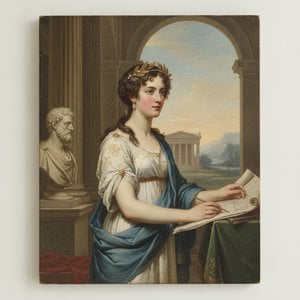
幻灯片播放Nymph
 Oil On Canvas
- WallArt
- Romanticism
 1800
1800 157.0 x 112.0 cm
 Museo de Arte de Ponce
 展开详情
展开详情




P118B $10

P118H $10

P118W $10

P438Z $10

P508JH $12

P508YH $12

P805H $10

P805Z $10

P919BZ $10

P919G $10

P919XJ $10

P959ZH $10

P968JZ $12

W106C $8

W218G $10

W218JH $8

W218Y $10

W307PJ $10

W316G $10

W316PJ $8

W316Y $10

W398PJ $8

W4111J $10

W500HY $15

W500JH $15

W692G $12

W849H $8

W940BG $15

W953PJ $8




从与原作比例一致的预设尺寸中进行选择。

您可以输入自定义尺寸,以适配特定的画框或空间。如果您选择的尺寸与原图比例不符,我们将对作品进行裁剪,或通过镜像填充/纯色填充边缘的方式来扩展图像。在开始制作之前,我们会向您发送一份数字效果图供您确认。
请注意,屏幕上的预览并不能反映实际的裁剪或扩展效果。只有效果图才能准确展示最终的构图。
虽然我们提供定制尺寸,但为了保持原图比例,我们建议您从预设列表中选择尺寸。


 玻璃选项仅适用于110厘米以下的尺寸。

Nymph
艺术微喷/版画
复制品尺寸
-


最终总价
$ 62
A Vision of Romantic Mystery: Anne-Louis Girodet’s “Nymph”
Anne-Louis Girodet de Roussy-Trioson's "Nymph," painted in 1800, isn’t merely a depiction of a beautiful woman; it’s a carefully constructed tableau brimming with the anxieties and aspirations of early Romanticism. Born into a world shaped by loss – orphaned at a young age and raised under the watchful eye of his physician guardian – Girodet's artistic journey was marked by a profound sensitivity to emotion, a trait he would later fuse with the rigorous training instilled in him by Jacques-Louis David. This painting, housed within the Louvre’s collection, stands as a pivotal bridge between the formality of Neoclassicism and the burgeoning emotionalism that defined the Romantic era, offering a glimpse into a world where nature, beauty, and melancholy intertwine.
The subject herself is presented with an arresting blend of vulnerability and power. A nude female figure, identified as a Nymph – a creature deeply rooted in Greek mythology, associated with springs, rivers, and the wildness of nature – occupies the central space of the composition. She’s positioned slightly off-center, lending a sense of quiet contemplation to her posture. Her gaze is directed downwards, almost lost in the shadowed depths of the forest, inviting the viewer into an intimate, introspective experience. The lighting, dramatically employed by Girodet, sculpts her form with stark contrasts – pools of light illuminating her skin while leaving much of the background shrouded in darkness. This masterful use of chiaroscuro not only emphasizes the figure’s physicality but also contributes to the painting's overall mood of mystery and longing.
The Language of the Forest: Technique and Composition
Girodet’s technical skill is immediately apparent in the meticulous detail with which he renders both the human form and the surrounding landscape. The oil paint technique, executed with a rich layering of glazes and scumbling, creates an astonishingly tactile surface – one that invites close inspection. The brushstrokes themselves are visible, contributing to a sense of volume and realism, yet never sacrificing the painting’s ethereal quality. Notice particularly the careful rendering of the drapery; it flows organically around the figure, suggesting both movement and restraint. The composition is carefully balanced, utilizing atmospheric perspective – the gradual fading of detail in the distance – to create an illusion of depth that pulls the viewer into the heart of the forest.
The background isn’t simply a backdrop; it's an active participant in the narrative. Dense foliage, rendered with remarkable precision, dominates the scene, creating a sense of enclosure and isolation. The trees themselves seem to lean inwards, almost as if guarding the Nymph within her secluded realm. This deliberate use of landscape reinforces the painting’s themes of nature, solitude, and perhaps even vulnerability – suggesting that she is both embraced by and threatened by the wildness surrounding her.
Symbolism and Romantic Ideals
“Nymph” resonates deeply with the core tenets of Romanticism. The nude figure itself represents a rejection of the rigid moral constraints of Neoclassicism, embracing instead an idealized vision of beauty and sensuality. The forest, often associated with the subconscious and the untamed spirit, symbolizes freedom, mystery, and the power of nature. The Nymph’s downward gaze speaks to introspection and perhaps even melancholy – a common theme in Romantic art, reflecting a heightened awareness of human emotion and the complexities of the inner world.
Furthermore, the painting can be interpreted as an exploration of the relationship between humanity and nature. The Nymph is not simply a beautiful woman; she’s a manifestation of the natural world itself – a symbol of its beauty, its power, and its inherent mystery. Girodet's work reflects a shift away from the rationalism of the Enlightenment towards a more intuitive and emotional understanding of the human experience.
A Timeless Masterpiece: Reproduction and Legacy
“Nymph” remains a captivating artwork, offering viewers a glimpse into the artistic sensibilities of early 19th-century France. Its evocative imagery, masterful technique, and profound symbolism continue to resonate today. ArtsDot offers high-quality reproductions that faithfully capture the painting’s rich textures, dramatic lighting, and emotional depth, allowing you to bring this timeless masterpiece into your home or office. Whether you are an art collector, a design enthusiast, or simply someone seeking inspiration, “Nymph” is a testament to the enduring power of Romantic art.
相似艺术品


艺术家简介
安娜-路易·吉罗德:连接新古典主义与浪漫主义的桥梁
安娜-路易·吉罗德·鲁西-特里奥松(Anne-Louis Girodet de Roussy-Trioson),这个名字或许不如他的老师雅克-路易·大卫那样广为人知,但他却在从新古典主义向浪漫主义过渡时期占据着举足轻重的地位。1767年出生于法国蒙塔吉斯,吉罗德的艺术之旅既有严谨的学院派训练,也有蓬勃的情感表达——这种微妙的平衡定义了他独特的风格,并确保了他成为法国艺术史上一个重要的人物。他的早年生活充满了丧失;父母双亡后,由一位名叫贝努瓦-弗朗索瓦·特里奥松的监护人抚养长大,这位医生后来成为了他的养父,他的影响贯穿了吉罗德整个职业生涯。这种家庭联系最终导致艺术家在1806年将“特里奥松”作为他名字的一部分,象征着深厚的个人情感与艺术身份的结合。最初对建筑感兴趣,吉罗德很快被绘画所吸引,进入大卫的工作室,沉浸在新古典主义盛行的美学中——强调清晰、精确和道德庄严。这种基础至关重要,在他身上培养了一种形式和构图的掌握能力,即使他的作品开始偏离严格的古典原则,这一点也依然显而易见。他22岁时凭借约瑟夫及其兄弟们的故事在罗马奖赛中获胜,预示着光明的未来,随后他在意大利(1789-1793)的几年里具有形成意义,创作了《希波克拉底拒绝阿塔克塞斯赠礼》和《安迪米翁-沉睡者》等杰作。从新古典主义的严谨到浪漫主义的敏感
吉罗德的艺术演变并非与过去的突然决裂,而是将新的感性逐渐融入到既定的新古典主义框架中。虽然他保留了大卫学派的清晰和精确,但他的作品越来越多地拥抱情感强度,并探索以前被认为非常规的主题。这种转变在《洪水场景》(The Deluge)等作品中尤为明显,这幅巨大的画布展示了戏剧性的动作和原始的情感,以及《阿塔拉墓前》——一个深刻描绘悲剧美的作品,与浪漫主义对病态和异国情调日益增长的迷恋产生了共鸣。然而,也许是《皮格马利翁与伽拉忒亚》,一项耗时八年的雄心勃勃的项目,最充分地体现了吉罗德的艺术愿景。现在收藏在卢浮宫,这部作品不仅展示了对细节一丝不苟的关注,还表现出愿意以一种增强的心理复杂性和感性来探索神话主题。《皮格马利翁与伽拉忒亚》是吉罗德才华的巅峰之作,他将古典主义的精确线条和浪漫主义的情感张力完美地结合在一起。他的才能延伸到神话和文学题材之外;他受到波拿巴家族成员委托创作肖像画,在这些肖像画中,他巧妙地平衡了新古典主义的形式与捕捉个人性格的尝试。描绘历史事件的《开罗起义》进一步展示了他传达动态动作和情感深度的能力。先锋的色情暗示与文学灵感
真正将吉罗德与他的同时代艺术家区分开来的是他愿意在他的绘画中融入色情元素——这一大胆举动挑战了艺术规范,为后来的艺术家探索类似主题提供了更大的自由。这并非单纯的耸人听闻;相反,它反映了浪漫主义对激情、欲望和人类经验复杂性的更广泛兴趣。他对文学的热爱也深刻地影响了他的艺术。他不仅仅是插图故事;他试图捕捉它们的情感核心,经常选择能够带来戏剧性表达和心理探索的主题。夏托布里安等作家的影响尤为明显,如在他的作品中可以看到,这些作品受到作者作品的启发。这种文学倾向使他与仅仅关注历史或神话叙事的艺术家区分开来,为他的创作增添了另一层智力深度。吉罗德的《奥西安和法国将军》是他融合文学与艺术的证明,将麦克弗森的奥西安诗歌中的意象与已故英雄的肖像相结合——一种独特的、富有表现力的作品,捕捉了那个时代的精神。遗产与持久的影响
尽管有时被更具政治影响力的同时代艺术家(如大卫)所掩盖,但安娜-路易·吉罗德在艺术世界留下了不可磨灭的印记。他对早期浪漫主义运动的贡献是毋庸置疑的;他帮助弥合了新古典主义的理性秩序与浪漫主义的情感强度之间的差距。他是绘画学院和法国研究所受人尊敬的成员,获得了荣誉勋章——对他艺术价值和社会地位的认可。他的作品继续因其技术辉煌、戏剧力量和心理洞察力而受到赞赏。它们可以在蒙塔吉斯(他家乡)专门用于他生活和工作的吉罗德博物馆以及巴黎卢浮宫等著名博物馆中找到,确保了他的遗产世代相传。吉罗德挑战传统并探索新艺术领地的意愿使他成为一个引人入胜的人物——一位真正的先锋人物,帮助塑造了法国绘画的进程。 他仍然是两种定义艺术历史运动之间的重要纽带,证明创新通常源于对传统和实验的周到综合。
安托万-路易·吉罗德 (Ān Tuō Wàn - Lù Yì - Jī Luó Dé)
1767 - 1824 , 法国
艺术家简介
- Artistic Movement Or Style: 新古典主义与浪漫主义
- Artists Or Movements Influenced By This Artist: ['早期浪漫主义']
- Artists Who Influenced This Artist: ['雅克-路易·大卫']
- Date Of Birth: 1767年
- Date Of Death: 1824年
- Full Name: 安娜-路易·吉罗德·鲁西-特里奥松
- Nationality: 法国国籍
- Notable Artworks (List Of Titles):
- 《洪水场面》
- 《阿塔拉墓前》
- 《皮格马利翁和伽拉忒亚》
- Place Of Birth (City And Country): 法国蒙塔吉斯
相关文章

Anne-Louis Girodet: Bridging Neoclassicism & Romanticism with Emotional Truth
Explore the captivating world of Anne-Louis Girodet, a pivotal figure bridging Neoclassicism & Romanticism. Discover his masterpieces and unique artistic vision with ArtsDot.

Romantic Realism's Finest: 10 Masterpieces for Your Home | ArtsDot
Explore 10 defining masterpieces of Romantic Realism! Discover Courbet, Millet & Daumier's powerful paintings—capturing emotion and social realities. Find museum-quality reproductions for your home at ArtsDot.com.

19th Century Masterpieces: 10 Paintings That Defined an Era | ArtsDot
Journey through 19th century art with ArtsDot! Explore 10 iconic paintings – from Monet & Renoir to Courbet – and discover the stories behind Romanticism, Realism & Impressionism. Find museum-quality reproductions for your home decor. Explore the full collection online!

The Enduring Legacy of Neoclassical Art: Order, Reason & Antiquity's Revival
Explore the enduring legacy of Neoclassical art! Discover masterpieces by David, Girodet & Garnier. Expert analysis, custom reproductions & art appraisal at ArtsDot.


