


 效果预览
效果预览
 分享
分享 分享
分享
 详情
详情 指南
指南

 下载
下载
 相似作品
相似作品 X射线
X射线 幻灯片播放
幻灯片播放 统计数据
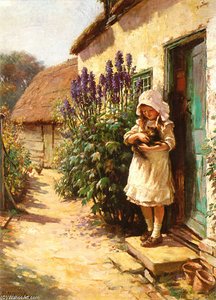
统计数据Hansel and Gretel
 展开详情
展开详情
艺术微喷/版画
博物馆级艺术微喷或帆布版画,制作高效,并提供多种饰面选择。 ( 购买手绘画作 切换至数字图像销售渠道)




































从与原作比例一致的预设尺寸中进行选择。

您可以输入自定义尺寸,以适配特定的画框或空间。如果您选择的尺寸与原图比例不符,我们将对作品进行裁剪,或通过镜像填充/纯色填充边缘的方式来扩展图像。在开始制作之前,我们会向您发送一份数字效果图供您确认。
请注意,屏幕上的预览并不能反映实际的裁剪或扩展效果。只有效果图才能准确展示最终的构图。
虽然我们提供定制尺寸,但为了保持原图比例,我们建议您从预设列表中选择尺寸。


 玻璃选项仅适用于110厘米以下的尺寸。

Hansel and Gretel
艺术微喷/版画
复制品尺寸
-


最终总价
$ 62
相似艺术品


艺术家简介
Pierre Bonnard: A Painter of Intimate Light
Born in Fontenay-aux-Roses, a suburb just outside Paris, on October 3rd, 1867, Pierre Bonnard was not initially destined for the art world. His father, Eugène Bonnard, held a position within the French Ministry of War, and young Pierre was steered towards a legal career – he even earned a license in law. However, a deep-seated passion for drawing and watercolor, nurtured during his childhood and further encouraged by his family’s appreciation for artistic pursuits, ultimately led him to abandon his legal aspirations and embrace painting as his true vocation. This shift wasn't immediate; Bonnard spent several years working as a typesetter and decorator before dedicating himself fully to art in the late 1880s.
Early influences on Bonnard’s work were profoundly shaped by the Impressionists, particularly Claude Monet and Camille Pissarro. He initially sought to emulate their techniques of capturing fleeting moments of light and color, evident in his early landscapes and scenes of Parisian life. Yet, he quickly moved beyond mere imitation, developing a distinctive style characterized by bold, flattened forms, vibrant yet muted colors, and an emphasis on the subjective experience of perception rather than objective reality. This trajectory was significantly influenced by Paul Gauguin’s exploration of symbolism and emotional intensity in his paintings, as well as the decorative prints of Hokusai, whose masterful use of line and color captivated Bonnard's imagination.
The Nabis and a Revolutionary Palette
Bonnard’s artistic journey truly took shape with his involvement in the *Nabis* (meaning “prophets”), a group of avant-garde painters formed in 1888. The Nabis, including figures like Édouard Vuillard and Suzanne Valadon, sought to create a new form of art that transcended mere representation, aiming instead for an evocative expression of mood and feeling. They drew inspiration from Japanese prints, particularly the bold compositions and flattened perspectives of Hiroshige and Hokusai, incorporating these elements into their own work. Bonnard’s membership in the Nabis marked a crucial turning point, solidifying his commitment to exploring subjective experience and pushing the boundaries of traditional painting techniques.
A defining characteristic of Bonnard's style was his masterful manipulation of color. He eschewed the conventional use of complementary colors, instead employing a carefully orchestrated palette of muted tones—ochres, blues, greens, and pinks—to create a sense of atmosphere and intimacy. His paintings often depict domestic scenes – interiors filled with furniture, bathers, and family members – rendered in a dreamlike quality where background elements frequently dominate the foreground, creating a layered and complex visual experience. He wasn’t interested in depicting reality as it appeared; instead, he sought to capture the *feeling* of a space or moment.
Themes of Domesticity and Intimacy
Bonnard's oeuvre is overwhelmingly focused on intimate subjects—domestic interiors, portraits of family members, and scenes of everyday life. He frequently depicted his wife, Marthe, and their children in a series of paintings that offer glimpses into the quiet rhythms of their lives. These works are not characterized by grand narratives or dramatic events; rather, they capture fleeting moments of tenderness, humor, and shared experience. His approach was deeply personal, reflecting his own observations and emotions. He famously stated, "I paint what I see—not necessarily what is there.”
Despite the seemingly simple subject matter, Bonnard’s paintings are imbued with a remarkable sense of subtlety and nuance. His use of light and shadow creates a luminous quality that enhances the emotional impact of each scene. He often employed a technique known as *décomposition*, breaking down forms into their constituent parts and rearranging them in unexpected ways, creating a sense of disorientation and ambiguity. This approach challenged traditional notions of perspective and spatial representation, paving the way for later developments in modern art.
Legacy and Influence
Pierre Bonnard’s influence on 20th-century painting is considerable. His innovative use of color, his exploration of subjective experience, and his rejection of academic conventions paved the way for movements such as Fauvism and Expressionism. Artists like Henri Matisse and André Derain were deeply influenced by Bonnard's bold palette and expressive brushwork. His work continues to be celebrated for its beauty, intimacy, and profound emotional resonance.
Bonnard died in La Route de Serra Capeou on January 23rd, 1947, at the age of 79. His paintings remain a testament to his unique artistic vision—a celebration of light, color, and the quiet joys of everyday life. His legacy endures as one of the most important and beloved figures in French art.

ambrose dudley
1867 - 1951 , United Kingdom
艺术家简介
- Artistic Movement Or Style: Post-Impressionism, Nabis
- Artists Or Movements Influenced By This Artist:
- Henri Matisse
- Modernism
- Artists Who Influenced This Artist:
- Paul Gauguin
- Hokusai
- Date Of Birth: 1867-10-03
- Date Of Death: 1947-01-23
- Full Name: Pierre Bonnard
- Nationality: French
- Notable Artworks:
- La Route de Serra Capeou
- Mont Sainte-Victoire
- The Large Format
- Place Of Birth: Fontenay-aux-Roses, France