
- 首页

- 油画复制品
- alexandre rene veron
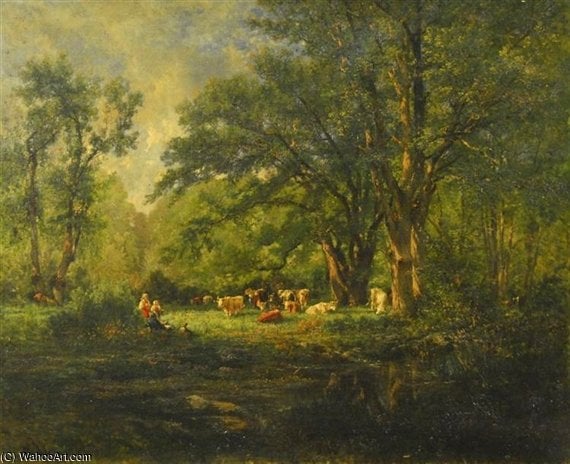
- Cows And Figures In A Landscape
 购买版画
购买版画 分享
分享 分享
分享
 Details

 下载
下载
 相似作品
相似作品 X-Ray
X-Ray 幻灯片播放
幻灯片播放Cows And Figures In A Landscape





































 了解更多
了解更多从与原作比例一致的预设尺寸中进行选择。

您可以输入自定义尺寸,以适配特定的画框或空间。如果所选尺寸与原图比例不符,我们将通过裁剪作品或添加手绘元素来扩展画面。数字样稿将在制作开始前发送给您确认。
请注意,屏幕预览无法准确反映实际的裁剪或扩展效果,只有样稿才能真实呈现最终的构图。
虽然我们提供定制尺寸服务,但为了保留原作比例,建议您从预设列表中选择尺寸。
下单后,ArtsDot.com 团队将通过电子邮件联系客户获取具体要求,并提供效果预览图。


 玻璃选项仅适用于110厘米以下的尺寸。

Cows And Figures In A Landscape
复制材质
复制品尺寸
-


最终总价
-
相似艺术品


艺术家简介
A Life Immersed in Light and the Orient
Alexandre Rene Veron, born in France in 1826 and passing away in 1897, was a painter whose career blossomed during a period of intense artistic change and burgeoning European fascination with the “Orient.” While not as widely celebrated as some of his contemporaries, Veron carved a distinct niche for himself through evocative depictions of Middle Eastern scenes, imbued with a romantic sensibility and meticulous attention to detail. His life story, though somewhat obscured by time, reveals an artist deeply connected to the aesthetic currents of 19th-century France, particularly the rise of Orientalism and its complex interplay between observation, imagination, and cultural exchange. Veron’s paintings weren't simply reproductions of faraway lands; they were carefully constructed visions reflecting both a genuine interest in other cultures and the prevailing artistic tastes of his era.Early Training and Artistic Development
Details regarding Veron’s early training remain scarce, but it is known he received instruction in traditional academic painting techniques. This foundation is evident in the realism that characterizes much of his work – the precise rendering of architecture, fabrics, and figures. However, Veron quickly moved beyond strict adherence to academic conventions, embracing a more atmospheric approach influenced by the Barbizon school’s emphasis on landscape and direct observation of nature. He exhibited regularly at the Paris Salon beginning in 1857, initially showcasing scenes of French life – landscapes like “On The Seine” and genre paintings such as “Paris, The Outlying Boulevards,” demonstrating a skill for capturing everyday moments with subtle emotional depth. These early works reveal a talent for light and shadow, foreshadowing the luminous quality that would become a hallmark of his later Orientalist compositions. It was around the 1860s that Veron began to focus increasingly on subjects drawn from North Africa and the Middle East, marking a significant shift in his artistic direction.The Allure of the Orient: A Painterly Journey
Veron’s embrace of Orientalism coincided with France's growing colonial presence in North Africa and its broader engagement with Eastern cultures. He likely never traveled extensively within these regions himself; instead, he relied on sketches made by travelers, photographs, and descriptions from contemporary accounts to inform his work. This reliance on secondary sources is a crucial aspect of understanding his paintings – they are not direct reportage but rather *interpretations* of the Orient filtered through a European lens. His canvases depict bustling marketplaces, serene courtyards, intimate domestic scenes, and grand architectural vistas, often populated with figures engaged in daily life. Paintings like those featuring fruit harvests showcase a mastery of Impressionistic techniques blended with Orientalist themes, creating works that are both visually captivating and historically revealing. Veron’s skill lay in his ability to create an atmosphere of exoticism through the use of rich colors, dramatic lighting, and carefully composed scenes.Technique and Style: Blending Realism and Romanticism
Veron's technique is characterized by a delicate balance between realism and romanticism. He possessed a remarkable ability to render intricate details – the patterns on carpets, the textures of fabrics, the architectural nuances of mosques and palaces – yet he never sacrificed atmosphere for precision. His use of light is particularly noteworthy; it’s often diffused and golden, creating a sense of warmth and intimacy. He employed a muted palette, favoring earth tones and subtle gradations of color that contribute to the overall mood of his paintings. While influenced by Impressionism in his handling of light and brushwork, Veron's compositions are generally more carefully structured than those of many of his Impressionist contemporaries. He often incorporated elements of Art Deco into his architectural depictions, hinting at a forward-looking sensibility within his Orientalist framework. His works stand as testaments to the power of artistic interpretation and the enduring allure of distant lands.Legacy and Historical Significance
Though not a household name today, Alexandre Rene Veron played a significant role in popularizing Orientalist art during the 19th century. His paintings offered European audiences a glimpse into cultures that were often shrouded in mystery and romanticized through literature and travel accounts. He contributed to shaping perceptions of the Middle East and North Africa, albeit within the context of colonial power dynamics and Western artistic conventions. Veron’s work reflects the complex relationship between observation, imagination, and cultural appropriation that characterized Orientalism as a whole. His paintings continue to be appreciated for their technical skill, atmospheric beauty, and historical significance, offering valuable insights into the aesthetic tastes and cultural preoccupations of 19th-century France. His legacy lies in his ability to transport viewers to another world through carefully crafted visions of light, color, and exotic detail.
alexandre rene veron
1826 - 1897 , France
艺术家简介
- Artistic Movement Or Style: Orientalism, Impressionism
- Date Of Birth: 1826
- Date Of Death: 1897
- Full Name: Alexandre Rene Veron
- Nationality: French
- Notable Artworks:
- Paris, The Outlying Boulevards
- Fruit Harvest
- On The Seine
- Place Of Birth: France
相关文章

十九世纪法国巴比松画派:现实主义与田园牧歌的开创者
深入了解十九世纪法国巴比松画派:探索其对现实主义和风景油画的开创性贡献,主要画家作品赏析、艺术风格解析及收藏鉴赏指南。ArtsDot提供高质量的手绘复制品与专业艺术咨询。

Eugène Lami: A Study in Academic Eclecticism & the Rise of 19th-Century Decorative Art
Explore the captivating world of Eugène Lami, a pivotal 19th-century French painter. Discover his eclectic style blending Romanticism & Academic traditions in history, fashion, and literary illustrations. Learn about his legacy today!

Evoking Emotion & Transcendence: Romantic Landscape Painting (18th-19th Century)
Explore the emotional depth of Romantic landscape painting (18th-19th century). Discover key artists like Friedrich & Cole, and the concepts of the sublime. Expert insights for art lovers & collectors.

浪漫主义画派的十部巨作:定义风景画的艺术传奇
探索浪漫主义风景画的巅峰!本文精选十部经典名作,带您领略莫奈、库尔贝等大师的艺术魅力。感受色彩与光影的诗意,重温自然风光的震撼。ArtsDot.com为您提供博物馆级别的艺术复制品和个性化家居装饰方案。尽在ArtsDot.com!

世纪的艺术回响:浪漫主义与现实主义——社会镜像与艺术革新
探索19世纪浪漫主义与现实主义艺术!ArtsDot提供高品质手工油画复制品,专业艺术咨询,助您收藏经典。值得信赖的平台,打造您的专属艺术空间。

