


 定制手绘复刻品
 分享
分享 分享
分享
 详情
详情

 下载
下载
 相似作品
相似作品 X射线
X射线 幻灯片播放
幻灯片播放Evening

 展开详情
展开详情




P118B $10

P118H $10

P118W $10

P438Z $10

P508JH $12

P508YH $12

P805H $10

P805Z $10

P919BZ $10

P919G $10

P919XJ $10

P959ZH $10

P968JZ $12

W106C $8

W218G $10

W218JH $8

W218Y $10

W307PJ $10

W316G $10

W316PJ $8

W316Y $10

W398PJ $8

W4111J $10

W500HY $15

W500JH $15

W692G $12

W849H $8

W940BG $15

W953PJ $8




从与原作比例一致的预设尺寸中进行选择。

您可以输入自定义尺寸,以适配特定的画框或空间。如果您选择的尺寸与原图比例不符,我们将对作品进行裁剪,或通过镜像填充/纯色填充边缘的方式来扩展图像。在开始制作之前,我们会向您发送一份数字效果图供您确认。
请注意,屏幕上的预览并不能反映实际的裁剪或扩展效果。只有效果图才能准确展示最终的构图。
虽然我们提供定制尺寸,但为了保持原图比例,我们建议您从预设列表中选择尺寸。


 玻璃选项仅适用于110厘米以下的尺寸。

Evening
艺术微喷/版画
复制品尺寸
-


最终总价
-
藏品详情
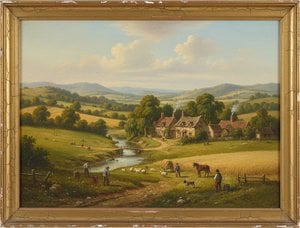
A Glimpse into Rural Life: Aleksandr Deyneka’s “Evening”
Aleksandr Deyneka's "Evening" (1934) offers a serene and evocative depiction of rural Russia, capturing a moment of quiet industry as the day draws to a close. The painting portrays two figures – a man and a woman – guiding a small herd of cows along a path. A horse grazes nearby, while in the distance, a subtle inclusion of a car hints at the encroaching modern world. Deyneka masterfully balances realism with impressionistic touches, creating an atmosphere that is both grounded and dreamlike. The composition isn’t about dramatic action; it's about the rhythm of daily life, the connection between people and animals, and the peaceful beauty of the countryside.Style & Technique: Socialist Realism Infused with Modern Sensibility
Deyneka was a pivotal figure in Socialist Realism, an artistic style favored by the Soviet regime that aimed to depict everyday life and celebrate the working class. However, Deyneka’s approach wasn't simply propagandistic. He infused this prescribed style with elements of modernism – particularly a dynamic sense of form and a bold use of color. The figures in “Evening” are rendered with a solidity and monumentality characteristic of Socialist Realism, yet the brushwork is loose and expressive, suggesting movement and atmosphere. His technique blends careful observation with artistic license, resulting in a work that feels both authentic and idealized. The painting’s palette is muted but warm, dominated by earthy tones that evoke the feeling of dusk settling over the landscape.Historical Context & Symbolism: A Changing Russia
Created during a period of rapid industrialization and collectivization in the Soviet Union, “Evening” can be interpreted as a representation of a nation undergoing profound transformation. The cows symbolize traditional rural life, while the distant car represents the advance of technology and modernization. The figures leading the cattle could be seen as embodying the spirit of progress – guiding Russia towards a new future. However, Deyneka avoids overt political messaging; instead, he focuses on the human element, presenting a scene that is both timeless and specific to its era.- The painting reflects the Soviet emphasis on labor and agriculture.
- It subtly acknowledges the changing landscape of rural Russia.
- The peaceful atmosphere suggests a harmonious relationship between people and nature, even amidst societal shifts.
Emotional Impact & Interior Design Considerations
“Evening” evokes a sense of tranquility, nostalgia, and quiet dignity. It’s a painting that invites contemplation and offers a respite from the frenetic pace of modern life. The artwork's subdued color palette and balanced composition make it incredibly versatile for interior design. It would complement a variety of styles, including farmhouse chic, mid-century modern, or even minimalist spaces seeking a touch of warmth and character. A high-quality reproduction of “Evening” could serve as a focal point in a living room, dining room, or bedroom, adding a layer of sophistication and cultural depth to any space. The painting’s themes of nature and simplicity also make it an ideal choice for creating a calming and inviting atmosphere.


艺术家简介
革命熔炉中的一生:亚历山大·代尼卡艺术之旅
亚历山大·亚历山德罗维奇·代尼卡,1899年出生于俄罗斯腹地城市库尔斯克,是一位与二十世纪动荡的时代紧密相连的艺术家。他的生命和作品映射了其国家剧烈的转变——从沙皇俄国衰落到革命的热情,苏联时代的工业化以及战争的阴影。代尼卡不仅仅是这些事件的记录者;他还是一个积极的参与者,塑造并被席卷而来的意识形态力量所塑造。他早期的生活似乎预示不了未来的艺术成就。最初,他曾在铁路学院学习,同时又参加了艺术工作坊——这种务实的背景后来为他的作品构图中的活力和结构清晰度提供了基础。这段经历因1917年的动荡而被中断,促使他前往莫斯科并在Vkhutemas(高等国家美术技术研讨会)注册入学,这是一个前卫思想和实验的熔炉。在弗拉迪米尔·法沃斯基的指导下,代尼卡磨练了他的版画和平面艺术技能,吸收了构成主义原则,并培养了对形式和空间的敏锐理解。社会主义现实主义的崛起与时代的定义
代尼卡的艺术发展与苏联国家不断演变的审美需求紧密交织。最初他与OST( easel 艺术家协会)等团体结盟,拥抱现代主义原则,探索动态构图和大胆的视觉语言。然而,随着斯大林巩固权力和社会主义现实主义成为官方认可的风格,代尼卡进行了调整——并非完全放弃他的艺术愿景,而是将其转化为适合政权形式的方式。这不仅仅是屈服;相反,这是一种战略性的谈判,使他能够在政治上充满挑战的环境中继续创作出有影响力的作品。 1930年代的作品,如《自行车上的集体农民》(1935),成为了苏联理想的标志性代表——颂扬劳动、运动和新社会主义社会的承诺。 这幅画不仅仅是对农村生活的描绘;它体现了前进的动力,是进步和乐观的视觉宣言。这一时期也见证了他参与 *罗斯塔窗口* 项目,创作出强大的宣传海报,将革命信息传播到全国各地。他不仅在绘画,还在积极构建新的文化叙事。超越宣传:纪念性与马赛克精湛
虽然代尼卡通常被归类为社会主义现实主义画家,但仅仅用这个标签来限制他的艺术才华是忽略了他艺术广度的。 他的抱负超越了油画,延伸到大型作品和公共艺术领域。他创作了描绘历史事件的大型画布——《保卫彼得格勒》(1928)就是一个很好的例子——充满了戏剧性的强度和史诗般的规模感。 这些不仅仅是战斗的插图; 它们试图捕捉革命斗争的精神,将历史时刻转化为神话叙事。 鲜为人知但同样重要的,是他马赛克的作品。代尼卡为莫斯科“马雅可夫斯基”地铁站设计的作品是公共艺术与建筑完美融合的惊人典范。这些充满活力、动态的构图——描绘了苏联的生活和抱负——将一个实用的空间变成了一个人民的宫殿,展示了他的多才多艺和对不同艺术媒介的大师级掌握。这些马赛克是其能够将日常主题提升为宏伟视觉声明的持久见证。遗产与持久的影响
亚历山大·代尼卡于1969年去世,留下了一大批作品,至今仍在回响。他的画作、马赛克和平面设计为我们提供了一个引人入胜的窗口,了解苏联的经历——它的抱负、矛盾和艺术成就。 尽管他与社会主义现实主义的关系有时会导致批判性反思,但他的技术技能、构图活力以及捕捉时代精神的能力仍然不可否认。 他被评为“世界著名艺术家”中的1A级,证明了他持久的国际认可。 专门为他举办的展览,如伦敦俄罗斯艺术和设计画廊举办的展览,继续向新的观众介绍他的作品。代尼卡的风格影响了后世寻求通过强大的视觉图像参与社会和政治主题的艺术家。 他将现代主义技巧与具有社会意识的主题相结合的能力使他在二十世纪艺术史上成为一个独特的重要人物,他是一位金童,其作品继续引发思考并激发敬畏。复杂的艺术身份
最终,亚历山大·代尼卡的艺术身份是一种引人入胜的复杂性。 他是一位在不断变化的政治环境中既务实又充满激情的艺术家,调整了他的风格同时保持着独特的视觉声音。 他的作品不仅仅是宣传;它是反映一个国家经历剧烈转变的希望和焦虑的写照。- 他拥抱了现代主义,但也试图与俄罗斯艺术的传统建立联系。
- 他颂扬集体理想,但同时也保留了个人的艺术表达意识。
- 他的作品继续引发关于艺术、政治和意识形态之间关系的辩论。

亚历山大·德依涅卡
1899 - 1969 , 俄罗斯
艺术家简介
- Artistic Movement Or Style: 社会主义现实主义
- Date Of Birth: 1899年5月20日
- Date Of Death: 1969年6月12日
- Full Name: 亚历山大·德耶内卡
- Nationality: 俄罗斯人
- Notable Artworks:
- 集体农民骑自行车
- 保卫彼得格勒
- 篮球运动
- 塞瓦斯托波尔战役
- Place Of Birth: 库尔斯克, 俄罗斯
相关文章

Cultivating Visions: A Historical Exploration of Rural Life in Painting
Explore the rich history of rural life in painting! Discover masterpieces from Dutch Masters to Courbet & Watteau. Uncover the artistic and social significance of idyllic landscapes and peasant scenes.

Evoking Arcadia: A Historical & Aesthetic Exploration of Rural Landscape Art
Explore the rich history of pastoral landscape art, from classical Arcadia to Impressionism & beyond. Discover key artists, movements, and how to collect serene rural scenes for your home. Expert insights at ArtsDot.

Sir Alfred Munnings' Masterpieces: 25 Paintings That Define Equine Art | ArtsDot
Explore 25 iconic Sir Alfred Munnings paintings! Discover the beauty of British Impressionism, equine art & rural England. Find museum-quality reproductions and elevate your home decor with ArtsDot. Explore the full collection online.

Echoes of Rural Life: Nostalgia, Labor & Identity in Art History
Explore the rich history of rural life in art! Discover how Realism captured labor & identity through masterpieces by Van Gogh, Millet & more. Expert analysis for collectors and enthusiasts.
Evocations of Rural Life: A Historical Journey Through Landscape Painting
Explore the rich history of rural life in painting! Discover Impressionist masterpieces, Italian Macchiaioli scenes & the enduring appeal of pastoral landscapes. Find your perfect artwork at ArtsDot.


