


 实景预览
实景预览
 发送
发送 分享
分享
 详情
详情 指南
指南

 下载图片
下载图片
 相似作品
相似作品 X射线
X射线 幻灯片播放
幻灯片播放 统计数据
统计数据Royal Engineers' Dump
 Contemporary Realism
 56.0 x 76.0 cm
 阅读全文
阅读全文
手工油画复制品
由我们的艺术家按需定制,为您提供您所选尺寸及画框的布面手工油画。 ( 切换至版画销售渠道 切换至数字图像销售渠道)




































您可以从与原作比例一致的预设尺寸中进行选择。

请输入您需要的宽度和高度,以适配您的画框或墙面。由于作品为手工绘制,若您选择不同的尺寸比例,艺术家可能会在画面边缘多画一些或稍作裁剪 —— 由您决定。在开始绘画之前,我们会为您发送一份数字效果图供您确认。本页面上展示的图片并非最终实物 —— 只有效果图才能反映真实结果。
下单后,ArtsDot.com 团队将通过电子邮件联系客户获取具体要求,并提供效果预览图


 玻璃选项仅适用于110厘米以下的尺寸。

Royal Engineers' Dump
复制品材质
复刻品尺寸说明
-


总计金额
¥ 1766
相关艺术品


艺术家简介
A Soldier Painter’s Vision of War
The life of Albert Richards was a poignant intersection of artistic devotion and the brutal realities of mid-twentieth-century conflict. Born in Liverpool on December 13, 1919, to Hannah Beatty and George Richards, his early years were shaped by the quiet strength of a working-class household in Wallasey, Cheshire. His father, a veteran of the Great War, instilled in him a profound sense of duty and resilience—virtues that would later define both his military service and his approach to the canvas. From a young age, Richards found solace and inspiration in the landscapes surrounding his home, developing an eye for the subtle nuances of light and terrain that would eventually become the hallmark of his wartime documentation.
His formal journey into the world of fine art began at Wallasey Central School, leading him to the prestigious Wallasey School of Art and Crafts. His talent was so undeniable that he secured a scholarship from the Borough of and Wallasey to attend the Royal College of Art, beginning his studies in early 1940. It was within these hallowed halls that Richards was exposed to the cutting-edge movements of the era, including Cubism and Surrealism. These modernist influences provided him with an experimental toolkit, allowing him to move beyond mere representation toward a more visceral, textured way of capturing the world around him.
The Canvas of Conflict
The outbreak of World War II fundamentally redirected the trajectory of Richards’s life, transforming him from a student of art into a chronicler of combat. In May 1941, the War Artists Advisory Committee (WAAC) recognized his unique ability to merge technical skill with the raw immediacy of a soldier's perspective and recruited him for a commission. Though he initially found great fulfillment in the Parachute Regiment—a role that offered both physical challenge and artistic stimulation—he ultimately accepted the call to document the unfolding struggle. This period saw him translating the adrenaline of airborne operations into enduring works of art.
Richards’s work from this era is characterized by a remarkable ability to capture movement and atmosphere. During his extensive parachute training at RAF Ringway, he produced evocative pieces such as “Kilkenny’s Circus” and “Parachute Training Over Tatton Park,” which meticulously detail the physicality of the descent. His later commissions took him into the heart of major military operations, including Operation Mush, where he participated in large-scale parachute drops over Gloucestershire. Whether depicting the chaotic energy of a sky filled with silk or the somber stillness of a frozen trench, his paintings possess an emotional weight that transcends simple reportage.
Legacy and Artistic Mastery
The technical breadth of Richards’s oeuvre is nothing short of extraordinary, ranging from the expressionistic to the deeply realistic. In works like “Take Off and Landing Field,” one can witness his use of impasto textures and dramatic sunset hues to convey a sense of cinematic grandeur. Conversely, his more somber compositions, such as “Sappers Erecting Pickets in the Snow” or “Royal Engineers’ Dump,” utilize geometric forms and a muted palette to evoke the stark, often harrowing reality of life on the front lines. His ability to find beauty within the grim machinery of war remains his most significant contribution to the history of British art.
Tragically, Richards’s life was cut short in 1945, making him the youngest of the three British official war artists killed during the conflict. Yet, through his surviving works, his vision remains undimmed. He left behind a legacy that serves as both a historical record and a profound meditation on human endurance. His paintings do more than just show us what the war looked like; they allow us to feel the tension of the drop, the chill of the winter trenches, and the unwavering spirit of those who served.

Albert Richards
1919 - 1945
快速概览
- Full Name: Albert Richards
- Nationality: British
- Date Of Birth: 1919
- Date Of Death: 1945
- Place Of Birth: Liverpool, England
- Notable Artworks:
- A Covering for a Gun Site
- The Drop
- Take off and Landing Field
- Artistic Movement Or Style: Expressionism
- Artists Who Influenced This Artist:
- Turner
- Ruskin
- Artists Or Movements Influenced By This Artist: ['Luminism']
相关文章

Evocations of Place: A Historical Journey Through Landscape Art
Explore the rich history of landscape art with ArtsDot. Discover renowned artists, movements like Impressionism & Romanticism, and expert guidance for collecting timeless pieces. Find your perfect serene escape today!

康斯塔布尔大师之作:25幅传世风景画赏析 | ArtsDot
探索康斯塔布尔的25幅传世杰作!沉浸于英国田园风光,感受浪漫主义绘画大师的光影与色彩。高清油画复制、艺术品购买尽在ArtsDot.com,为您的家居增添经典之美。立即在线探索完整系列!

Evocations of Place: A Historical Journey Through Landscape Art
Explore the rich history of landscape art with ArtsDot. Discover renowned artists, movements like Impressionism & tonalism, and expert guidance for collecting timeless pieces. Find your perfect serene escape today!

浪漫主义画派的十部巨作:定义风景画的艺术传奇
探索浪漫主义风景画的巅峰!本文精选十部经典名作,带您领略莫奈、库尔贝等大师的艺术魅力。感受色彩与光影的诗意,重温自然风光的震撼。ArtsDot.com为您提供博物馆级别的艺术复制品和个性化家居装饰方案。尽在ArtsDot.com!
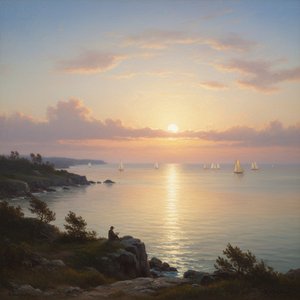
William Trost Richards: Luminism, Spirituality & the American Landscape Tradition
Explore the captivating landscapes of William Trost Richards, a master of Luminism associated with both the Hudson River School & American Pre-Raphaelite movements. Discover his spiritual connection to nature and lasting influence on American art.