


 实景预览
实景预览
 发送
发送 分享
分享
 详情
详情 指南
指南

 下载图片
下载图片
 相似作品
相似作品 X射线
X射线 幻灯片播放
幻灯片播放 统计数据
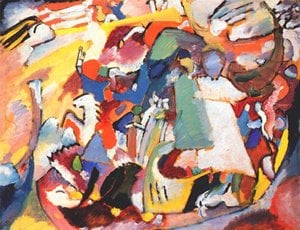
统计数据Landscape with Figures

 阅读全文
阅读全文
艺术微喷/版画
博物馆级艺术微喷或帆布版画,制作高效,并提供多种饰面选择。 ( 订购此收藏品的纯手工复刻画作 切换至数字图像销售渠道)




































您可以从与原作比例一致的预设尺寸中进行选择。

请输入您所需的宽度和高度,以适配您的画框或墙面。由于印刷品只能进行裁剪,无法超出原图尺寸,因此若比例不一致,画面的一部分将会被裁切。在正式印刷之前,我们会为您发送一份数字效果图供您确认。本页面显示的图片并非最终裁剪后的效果——只有效果图才能展示真实的裁剪情况。


 玻璃选项仅适用于110厘米以下的尺寸。

Landscape with Figures
艺术微喷/版画
复刻品尺寸说明
-


总计金额
¥ 417
相关艺术品




艺术家简介
The Architect of Color: The Life and Legacy of Adolf Hölzel
In the grand tapestry of modern art, few threads are as vital yet subtly woven as those left by Adolf Richard Hölzel. Born in 1853 in the historic city of Olmütz, Hölzel’s journey was one of profound transformation, moving from the structured precision of a typesetter to the ethereal realms of abstraction. His early years were steeped in the world of print and publishing, thanks to his father, Eduard Hölzel. This foundational exposure to the mechanics of ink, paper, and layout would later manifest in a unique artistic sensibility—one that viewed the canvas not merely as a window to reality, but as a carefully balanced composition of form and weight.
Hölzel’s formal education began in Vienna, but it was his move to Munich in 1876 that truly ignited his creative spirit. Studying under the esteemed Wilhelm von Diez, he initially embraced the tenets of Realism. However, the late nineteenth century was a period of immense artistic upheaval, and Hölzel possessed the rare foresight to ride the waves of change. Through his acquaintance with Fritz von Uhde, he was introduced to the shimmering light of Impressionism, an encounter that began to dissolve the rigid outlines of his early work and replaced them with a fascination for the fleeting qualities of atmosphere and color.
The Dachau Colony and the Dawn of Abstraction
One of the most enchanting chapters of Hölzel’s career unfolded in the picturesque village of Dachau. Alongside visionaries like Fritz von Uhde, Ludwig Dill, and Arthur Langhammer, he co-founded the Dachauer Malschule. This was more than just a school; it was a vibrant crucible of experimentation that became the heart of the Dachau Art Colony. Here, Hölulent’s pedagogical approach was as revolutionary as his brushwork. He moved away from traditional mimicry of nature, instead encouraging his students to explore the intrinsic power of color and shape.
During this prolific period between 1888 and 1905, Hölzel’s work underwent a metamorphosis. While he continued to receive commissions for religious subjects from the Deutscher Werkbund, his internal compass was pointing toward the avant-garde. He began to integrate scientific and philosophical inquiries into his art, drawing heavily from Goethe’s Theory of Colors and the color studies of Wilhelm von Bezold. His fascination with the "golden section" and the mathematical distribution of mass led him to develop a sophisticated color theory based on musical principles—utilizing terms like "diatonic" and "chromatic" to describe the relationships between hues. This intellectual rigor allowed him to bridge the gap between the visible world and the abstract essence of light.
A Lasting Impression on Modernism
The true historical significance of Adolf Hölzel lies in his role as a progenitor of the movements that would define the twentieth century. As a professor at the State Academy of Fine Arts in Stuttgart, he became a mentor to a generation of artists who would go on to shape the Bauhaus and German Expressionism. His influence can be traced through the works of his students, including:
- Johannes Itten, whose color theories became foundational to modern design education;
- Oskar Schlemmer, a master of form and movement;
- Willi Baumeister, who carried the torch of abstraction into the mid-century.
Though his name may not always command the immediate recognition of names like Picasso or Kandinsky, Hölzel’s fingerprints are everywhere in the DNA of modernism. His seminal essay, "Über Formen und Massenvertheilung" (On Shapes and Mass Distribution), published in Ver Sacrum, provided a theoretical framework for an art that prioritized structural harmony over narrative content. He taught the world that color could sing and that shape could possess its own spiritual weight. When he passed away in 1934, he left behind a legacy of innovation—a testament to a man who looked at the chaos of the modern world and found within it a beautiful, balanced, and abstract order.

Adolf Hölzel
1853 - 1934
快速概览
- Full Name: Adolf Richard Hölzel
- Nationality: German
- Date Of Birth: 1853
- Date Of Death: 1934
- Place Of Birth: Olomouc, Bohemia
- Notable Artworks: ['Landscape with Figures']
- Artistic Movement Or Style: Expressionism
- Artists Who Influenced This Artist: ['Wilhelm von Diez']
- Artists Or Movements Influenced By This Artist: ['Vienna Secession']