


 Переглянути в інтер'єрі
 Надіслати
 Поділитися
 Деталі
 Посібник

 Завантажити
 Схожі предмети колекціонування
 Рентгенівське дослідження
 Слайд-шоу
 Статистика переглядів
Julia Reading


 Читати далі
Придбайте цифрову копію високої роздільної здатності з покращеною якістю, що значно перевершує онлайн-перегляд.
Кожен файл ретельно підготовлений нашими фахівцями за допомогою сучасних інструментів та професійної ручної ретуші. Ми гарантуємо виняткову чіткість, точну передачу кольору та високу деталізацію кожного зображення.
Фінальний файл надсилається електронною поштою протягом 72 годин і оптимізований для негайного використання у професійних виданнях та друкованих матеріалах. Таку якість обирають провідні дизайнерські студії, видавництва та галереї.
Цифрове зображення
Завантажте файл високої роздільної здатності для особистого використання, друку та творчих проєктів. ( Перейти до друку Купити картину ручної роботи)
Що входить у кожне замовлення цифрових зображень
Експертна цифрова доставка з гарантією якості
Обираючи ArtsDot.com, ви отримуєте не просто зображення — ви отримуєте професійно вдосконалений цифровий витвір мистецтва, створений з надзвичайною точністю та підкріплений гарантією задоволення. Ось усе, що автоматично додається до вашого замовлення:

Швидка доставка на email
Ваш цифровий файл із зображенням високої роздільної здатності буде надісланий вам електронною поштою протягом 72 годин після оформлення замовлення — він буде готовий до негайного використання.

Цифровий файл із покращенням ШІ
Ваш витвір мистецтва професійно оптимізовано за допомогою передових інструментів штучного інтелекту та ручної корекції, що забезпечує максимальну деталізацію, чіткість і точність передачі кольорів.

Безкоштовне повторне завантаження назавжди
Випадково видалили або втратили файл? Не хвилюйтеся — ми надішлемо його вам повторно в будь-який час безкоштовно.

Без митних зборів — завжди
Насолоджуйтесь вашим витвором мистецтва миттєво без жодних мит, зборів або плати за доставку — цифрові завантаження завжди не оподатковуються.

Гарантія точності кольорів
Ми гарантуємо максимально точне відтворення оригінальних кольорів на вашому цифровому зображенні завдяки використанню професійних інструментів та систем управління кольором.

100-денна гарантія задоволення клієнта
Якщо ви не задоволені придбаним цифровим зображенням, ми внесемо правки або повернемо 100% вартості протягом 100 днів — без зайвих запитань.

Гарантія повернення 100% коштів
Незадоволені покупкою? Отримайте повне повернення коштів протягом 100 днів після отримання цифрового файлу — без зайвих запитань.

Знижки на оптові замовлення
Купуйте 3 зображення — заощаджуйте 10% — Купуйте 5 — заощаджуйте 15% — Купуйте 10+ — заощаджуйте 20%. Чудово підходить для творчих проєктів, галерей та агентств.
A Snapshot of Urban Life: Unveiling "Julia Reading"
William James Glackens’ “Julia Reading,” painted in 1916, isn't merely a portrait; it’s a meticulously crafted window into the burgeoning dynamism and subtle social currents of early 20th-century New York City. Born during the height of the Ashcan School movement, Glackens rejected the idealized depictions favored by the National Academy of Design, instead choosing to capture the gritty reality of everyday life – the bustling streets, the casual interactions, and the quiet moments within a rapidly changing metropolis. “Julia Reading” exemplifies this approach, offering a glimpse into a specific scene that simultaneously feels intimate and profoundly connected to the larger urban narrative.
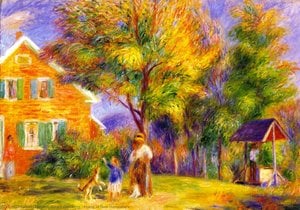
The painting immediately draws the eye to its central figure, a woman engrossed in a book. Her posture – slightly turned towards the viewer, her hand resting delicately on the page – conveys a sense of quiet contemplation amidst the implied activity around her. Glackens’ masterful use of light and shadow establishes a strong focal point, directing our gaze to Julia's face and highlighting the subtle details of her expression. The inclusion of two other individuals—a man standing behind her and another seated further back—adds layers of narrative complexity without disrupting the primary focus. These figures, though less defined, contribute to the sense of a shared space, a moment captured within the larger tapestry of urban life.
The Ashcan School: A Rejection of Tradition
Glackens was a key figure in the Ashcan School, a movement that challenged the established norms of American art. Rejecting the polished surfaces and grand narratives of academic painting, the Ashcan artists sought to depict the realities of urban life with honesty and immediacy. They favored working-class subjects, unvarnished scenes, and often employed a darker palette—a deliberate choice reflecting the sometimes bleak conditions of city living. “Julia Reading” embodies this spirit perfectly; it’s not a romanticized vision of New York, but rather a realistic portrayal of a woman finding solace in literature within its crowded streets.
The painting's style is characterized by loose brushstrokes and an emphasis on capturing the essence of the scene. Glackens employed a technique reminiscent of Impressionism, using broken color and subtle gradations to create a sense of movement and atmosphere. The composition itself—a slightly off-center arrangement with overlapping planes—adds to the painting’s dynamism and invites the viewer to become part of the scene.
Symbolism and Context: A Moment in Time
The book Julia is reading likely symbolizes escape, knowledge, or perhaps simply a moment of respite from the demands of city life. It's a small detail that speaks volumes about the human desire for intellectual stimulation amidst the chaos of urban existence. The setting itself—a public space filled with implied activity—suggests a sense of anonymity and connection within a large population. “Julia Reading” was painted during a period of rapid industrialization and urbanization in America, a time of significant social and economic change. The painting reflects this transformation, capturing the spirit of a city grappling with modernity while still retaining its inherent human qualities.
A Legacy of Realism: Glackens' Enduring Influence
William James Glackens’ work continues to resonate today because it offers a powerful and honest portrayal of American life. “Julia Reading” stands as a testament to his skill as an artist and his commitment to capturing the realities of the urban experience. His legacy extends beyond individual paintings; he helped pave the way for future generations of artists who sought to depict America with greater authenticity and social awareness. Reproductions of this evocative piece offer a valuable window into a bygone era, inviting viewers to contemplate the timeless themes of human connection, solitude, and the enduring power of art.
Запитання та відповіді
До якого етапу кар'єри Вілліям Джеймс Глаккенс належить твір "Julia Reading" (1916)?
«Julia Reading», створена у 1916, належить до Early Period творчості Вілліям Джеймс Глаккенс.
Як мені знайти твори мистецтва, подібні до «Julia Reading» Вілліям Джеймс Глаккенс?
Схожі твори мистецтва зібрані на сторінці Схожі твори для роботи «Julia Reading» Вілліям Джеймс Глаккенс.
Яка техніка була використана для «Julia Reading» Вілліям Джеймс Глаккенс?
Для створення «Julia Reading» Вілліям Джеймс Глаккенс використав(ла) техніку Acrylic On Canvas. Саме ця техніка визначає матеріальну природу оригінального твору.
Схожі твори мистецтва


Біографія митця
A Pioneer of Ashcan Realism
William James Glackens (March 13, 1870 – May 22, 1938) stands as a cornerstone figure in American art history, particularly recognized for his unwavering dedication to portraying the gritty realities of urban life through masterful realist paintings. Born in Philadelphia, Pennsylvania, he descended from a family steeped in artistic tradition—his father, Samuel Glackens, served as a clerk for the Pennsylvania Railroad, fostering an early appreciation for visual expression within his upbringing. Alongside his brother, Louis Glackens, William demonstrated exceptional talent from youth, enrolling at the Pennsylvania Academy of Fine Arts where he honed his skills under the guidance of Thomas Anshutz, a prominent realist painter who profoundly shaped his artistic vision.The Ashcan School and Its Influence
Glackens’ formative years coincided with the emergence of the Ashcan School—a movement that irrevocably altered the landscape of American art. Rejecting the idealized aesthetics championed by academic institutions, the Ashcan School sought to capture the unfiltered essence of New York City life during its burgeoning industrial era. Influenced deeply by Anshutz's commitment to portraying everyday subjects with unflinching honesty, Glackens joined forces with fellow artists like George Caleb Bingham and Robert Henri to establish this groundbreaking collective. The school’s ethos—to depict urban scenes without embellishment or sentimentality—challenged prevailing artistic conventions and paved the way for a more truthful representation of American society.Glackens' Artistic Style and Technique
Glackens’ distinctive style is characterized by its subdued color palettes, often dominated by earthy tones that effectively convey the atmosphere of his subjects. He meticulously rendered urban environments – bustling streets, tenement buildings, and dimly lit interiors—with remarkable detail, capturing textures and nuances that would have been absent from more polished artistic endeavors. His brushstrokes were deliberate and expressive, conveying a palpable sense of immediacy and observation. Notably, Glackens drew inspiration from Impressionist painters like Pierre Auguste Renoir, incorporating techniques such as broken color and atmospheric perspective to imbue his canvases with luminosity and depth.Notable Works and Collections
Glackens’ artistic legacy is cemented by several iconic paintings that continue to resonate with audiences today. “The Shoppers” (1913), housed in the Chrysler Museum of Art, exemplifies his masterful ability to distill complex urban narratives into compelling visual compositions—a testament to his dedication to capturing the spirit of the era. Similarly, “View of Haarlem with Bleaching Grounds” (circa 1895), now residing at Forzo Castle in Milan, Italy, showcases Glackens’ meticulous attention to detail and his masterful command of color and light. Furthermore, he played a crucial role in bolstering Albert C. Barnes' collection by securing European paintings—a contribution that significantly enriched American art history.A Lasting Impact on American Art
William James Glackens’ unwavering commitment to realism and his pioneering role within the Ashcan School solidified his position as one of America’s foremost artists of the early 20th century. His unflinching portrayal of urban life served as a catalyst for artistic innovation, prompting subsequent generations of painters to confront social realities with courage and conviction. Glackens' enduring influence can be seen in the continued appreciation for gritty realism—a stylistic hallmark that continues to captivate viewers and scholars alike.
Вілліям Джеймс Глаккенс
1870 - 1938 , США
Коротко про автора
- Artistic Movement Or Style: Ашканська школа
- Artists Or Movements Influenced By This Artist: ['Пір Ауґюст Реноар']
- Artists Who Influenced This Artist: ['Томас Аншутц']
- Date Of Birth: Філадельфія, США (1870)
- Date Of Death: Вестпорт, Кентуккі (1938)
- Full Name: William James Glackens
- Nationality: Американський
- Notable Artworks:
- «Спостерігач»
- Вид Хаарлема з білилами
- Place Of Birth: Філадельфія, Пенсільванія