


 Переглянути в інтер'єрі
 Надіслати
 Поділитися
 Деталі
 Посібник

 Завантажити
 Схожі предмети колекціонування
 Рентгенівське дослідження
 Слайд-шоу
 Статистика переглядів
Hakone


 Читати далі
Гікле / Художній принт
Музейна якість друку جيкле або на полотні з оперативним виготовленням та різноманітними варіантами фінішної обробки. ( Купити картину ручної роботи Перейти до цифрових зображень)




P118B ₴10

P118H ₴10

P118W ₴10

P438Z ₴10

P508JH ₴12

P508YH ₴12

P805H ₴10

P805Z ₴10

P919BZ ₴10

P919G ₴10

P919XJ ₴10

P959ZH ₴10

P968JZ ₴12

W106C ₴8

W218G ₴10

W218JH ₴8

W218Y ₴10

W307PJ ₴10

W316G ₴10

W316PJ ₴8

W316Y ₴10

W398PJ ₴8

W4111J ₴10

W500HY ₴15

W500JH ₴15

W692G ₴12

W849H ₴8

W940BG ₴15

W953PJ ₴8




Обирайте з наших стандартних розмірів, що відповідають оригінальним пропорціям твору мистецтва.

Введіть необхідну ширину та висоту, щоб принт ідеально підійшов до вашої рами або стіни. Принт можна лише обрізати, але не можна зробити більшим за оригінал, тому при зміні пропорцій частина зображення буде втрачена. Перед друком ми надсилаємо вам цифровий макет для затвердження. Зображення на цій сторінці не відображає реальну обрізку — її можна побачити лише на макеті.
Доставка по всьому світу () за 2 тижні замість стандартних 4/5 тижнів. (22 Жовтень)

Безкоштовна експрес-доставка по всьому світу

Високоякісне лляне полотно

Повне страхове покриття доставки

Гарантія повернення митних зборів

Гарантія точного відтворення кольорів

Політика повернення протягом 100 днів (лише у разі виявлення дефектів)

Гарантія повернення 100% коштів

Знижка на оптові замовлення
 Скляний варіант доступний лише для розмірів до 110 см

Hakone
Гікле / Художній принт
Розмір репродукції
-


Загальна вартість
₴ 2779
A Glimpse of Tranquility: Utagawa Hiroshige's "Hakone"
Utagawa Hiroshige’s “Hakone,” created in 1834, is more than just a landscape; it's a poetic meditation on the beauty and transience of nature within Edo-period Japan. This woodblock print, part of his renowned series "The Fifty-three Stations of the Tōkaidō," captures a specific moment along the vital trade route connecting Tokyo (then Edo) with Kyoto. However, Hiroshige elevates this seemingly simple depiction of a mountain pass into something profoundly evocative, inviting viewers to share in the quiet contemplation of a traveler pausing amidst breathtaking scenery.
The Artist and His Vision
Hiroshige (1797-1858), considered the last great master of *ukiyo-e*, possessed an unparalleled ability to translate the essence of a place onto paper. Born in Tokyo, his early life was steeped in samurai tradition before he embraced art under Utagawa Toyohiro. Hiroshige’s genius lay not merely in replicating what he saw but in imbuing it with emotion and atmosphere. He moved beyond the typical *ukiyo-e* focus on portraits of actors or courtesans, choosing instead to celebrate the natural world—the mountains, rivers, and roads that shaped Japanese life. His travels along the Tōkaidō provided him with a wealth of inspiration, allowing him to meticulously document the changing landscapes and capture the spirit of each station.
A Composition of Harmony: Technique and Symbolism
“Hakone” exemplifies Hiroshige’s masterful technique in woodblock printing. The print showcases a layered approach, using multiple blocks for different colors and tones to create depth and nuance. Notice how the snow-capped peaks recede into the distance, rendered with subtle gradations of blue and grey that convey atmospheric perspective. The trees, scattered across the hillside, are not merely decorative elements but contribute to the overall sense of scale and tranquility. The body of water reflects the sky, creating a mirror image that doubles the beauty of the scene. A lone figure stands near the center, seemingly absorbed in the grandeur before them—a silent participant in this serene vista. This inclusion is significant; it humanizes the landscape, reminding us of our place within nature's vastness and inviting viewers to imagine themselves experiencing this moment firsthand.
Historical Context and Enduring Legacy
The Tōkaidō was a vital artery for commerce and communication in Edo-period Japan. Hiroshige’s series documenting its stations served not only as visual guides for travelers but also as celebrations of the nation's geography and culture. “Hakone,” with its challenging terrain and stunning views, represents a moment of respite along this arduous journey. The print reflects a broader cultural appreciation for nature in Edo Japan, where landscapes were increasingly valued for their aesthetic qualities. Hiroshige’s work had a profound impact on Western art, particularly influencing the Impressionist movement. Artists like Monet and Van Gogh drew inspiration from his compositions and color palettes, recognizing the power of capturing fleeting moments of beauty.
An Invitation to Contemplation
“Hakone” is more than just a beautiful image; it’s an invitation to pause, reflect, and appreciate the simple wonders of the natural world. The print's quiet elegance and subtle details create a sense of peace and tranquility that transcends time and culture. Whether you are an art enthusiast, a collector seeking a piece of Japanese heritage, or simply someone looking for a calming presence in your home, Hiroshige’s “Hakone” offers a timeless glimpse into the beauty of Edo-period Japan.
Запитання та відповіді
Яка яскравість твору «Hakone» Утагава Гірошіге?
«Hakone» Утагава Гірошіге має рівень яскравості Gentle Luminance. Яскравість описує, скільки світла відбивають кольори.
Який художник та який стиль стоять за "Hakone"?
За творінням "Hakone" стоять Утагава Гірошіге та течія Ukiyo-e Woodblock.
Чи є путівник для «Hakone» Утагава Гірошіге?
Сторінка Посібник для твору «Hakone» Утагава Гірошіге пропонує двосторінковий інформаційний лист для друку: зображення твору з таблицею ідентифікації, часову шкалу, що розміщує його в межах життя митця, інші роботи автора, виміряну палітру кольорів та готові до копіювання цитати у чотирьох стилях.
Схожі твори мистецтва


Біографія митця
A Poetic Vision of Edo Japan: The Life and Art of Utagawa Hiroshige
Utagawa Hiroshige, born Andō Tokutarō in 1797 in the bustling city of Edo (modern Tokyo), stands as a pivotal figure in the world of *ukiyo-e*, or “pictures of the floating world.” Though deeply rooted in the traditions of Japanese woodblock printing, Hiroshige transcended mere replication, imbuing his landscapes with a poetic sensibility that resonated profoundly both within Japan and, later, across the Western art world. His life unfolded during a period of relative peace and prosperity under the Tokugawa shogunate, yet also one marked by increasing social change and eventual westernization – forces that would ultimately contribute to the decline of *ukiyo-e* even as they amplified Hiroshige’s enduring legacy. Initially destined for a more conventional path within a samurai family—his father served as a fire warden—Hiroshige's artistic inclinations led him to apprenticeship under Utagawa Toyohiro, a master of the Utagawa school. This proved a crucial turning point, steering him away from the popular depictions of courtesans and actors favored by many *ukiyo-e* artists toward a focus on landscape, a genre he would ultimately redefine.From Genre Scenes to Evocative Landscapes
Hiroshige’s early work adhered to the conventions of his school, featuring portraits and scenes from daily life. However, it was his embrace of landscape that truly distinguished him. Influenced by earlier masters like Hokusai—whose *Thirty-six Views of Mount Fuji* had already captivated audiences—Hiroshige developed a unique style characterized by atmospheric perspective, subtle color palettes, and a profound sensitivity to the changing seasons. He didn’t merely depict places; he evoked their mood, capturing the essence of a particular moment in time. The series *The Fifty-three Stations of the Tōkaidō* (1833–1834), perhaps his most celebrated achievement, exemplifies this approach. This monumental work documented the journey along the Tōkaidō road, the main route connecting Edo to Kyoto, not as a straightforward travelogue but as a series of evocative vignettes—a sudden rain shower at Shono, a distant view of Mount Fuji from Kanaya, the bustling activity at Odawara. Each print is imbued with a sense of transience and quiet beauty, inviting viewers to experience the journey alongside the travelers. He masterfully employed *bokashi*, a technique involving multiple impressions to create subtle gradations of color, adding depth and atmosphere to his compositions. The prints often feature a delicate balance between foreground detail and distant haze, creating a powerful illusion of space and drawing the viewer into the scene.A Master of Atmosphere and Technique
Hiroshige’s technical skill was as remarkable as his artistic vision. He wasn't simply interested in accurate representation; he sought to capture the *feeling* of a place. His use of color, though often restrained compared to some of his contemporaries, was crucial in achieving this effect. He frequently employed multiple blocks for a single color, allowing him to create nuanced shades and atmospheric effects that were incredibly difficult to replicate. The delicate washes of blue in his depictions of rain or mist, the warm hues of autumn foliage—these weren’t accidental; they were carefully considered elements designed to evoke specific emotions and sensations. Beyond *bokashi*, Hiroshige was adept at utilizing blank space – *ma* – a concept central to Japanese aesthetics, allowing areas of the print to “breathe” and enhancing the overall sense of tranquility. His series *One Hundred Famous Views of Edo* (1856–1858) further showcased his mastery, offering intimate glimpses into the life and landscapes of his beloved city. These prints are not simply depictions of buildings and streets; they are carefully constructed compositions that capture the energy and dynamism of Edo’s urban sprawl.Influence and Legacy
Hiroshige's work profoundly influenced both Japanese and Western art. His innovative use of color, composition, and atmospheric perspective paved the way for later generations of landscape artists. The *Fifty-three Stations of the Tōkaidō* series, in particular, became a model for subsequent travel prints. Furthermore, Hiroshige’s work played a significant role in the development of *Japonisme*, the craze for Japanese art that swept through Europe in the late 19th century. Artists like Monet, Degas, and Van Gogh were deeply inspired by his prints, incorporating elements of his style—particularly his use of color and atmospheric perspective—into their own paintings. Vincent van Gogh, in particular, created a series of copies of Hiroshige’s *Plum Park in Kameido*, demonstrating his profound admiration for the Japanese master's ability to capture the fleeting beauty of nature. Hiroshige’s legacy extends beyond individual artists; he helped to elevate landscape prints from mere illustrations to respected forms of artistic expression, shaping the course of Japanese art history and influencing the aesthetic sensibilities of a global audience.Notable Works
- The Fifty-three Stations of the Tōkaidō: Hiroshige’s most famous series, depicting the journey along the main road between Edo and Kyoto.
- One Hundred Famous Views of Edo: A captivating portrayal of life and landscapes in his beloved city.
- Influence on Vincent van Gogh's Japonaiserie Series: Including “Flowering Plum Tree after Hiroshige,” demonstrating Van Gogh’s deep admiration for the Japanese master.

Утагава Гірошіге
1797 - 1858 , Японія
Довідкова інформація
- Artistic Movement Or Style: *Ukiyo-e*
- Artists Or Movements Influenced By This Artist:
- Manet
- Monet
- Van Gogh
- Artists Who Influenced This Artist: ['Hokusai']
- Date Of Birth: 1797
- Date Of Death: 1858
- Full Name: Utagawa Hiroshige
- Nationality: Японський
- Notable Artworks:
- Пятьдесят три станції Тōkaidō
- Сто знаменитых видов Эдо
- Place Of Birth: Токіо, Японія
Схожі статті
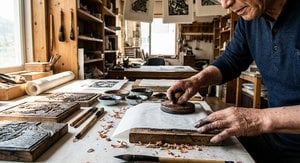
The Enduring Legacy of Woodblock Printmaking: Technique, History & Artistic Expression
Explore the rich history of woodblock printmaking – from ancient techniques to Ukiyo-e masterpieces. Discover expert insights on collecting, preserving & appreciating this enduring art form.

Tsukioka Yoshitoshi: A Master of Ukiyo-e's Final Flourish – Narrative, Innovation, and the Meiji Transition
Explore the life & art of Tsukioka Yoshitoshi, the last great master of ukiyo-e woodblock printing. Discover his dramatic warrior prints, innovative series like 'One Hundred Aspects of the Moon,' and legacy reflecting Japan's Meiji transition.

Ukiyo-e's Poetic Visionary: Hiroshige Ando & the Transformation of Landscape in 19th-Century Japan
Explore the life & art of Ando Hiroshige, Japan's last great ukiyo-e master. Discover his iconic landscapes, poetic style, and profound influence on Western Impressionism. Learn about The Fifty-Three Stations & more!

25 шедеврів Кацусіки Хокусая: мистецтво Японії для вашого дому | ArtsDot
Відкрийте 25 культових робіт Кацусіки Хокусая! Гравюри укійо-е, легендарна "Хвиля", пейзажі Фудзі та неймовірний світ японського мистецтва. Репродукції картин преміум-класу для вашого дому на ArtsDot.com.

Ukiyo-e: Exploring Japan's Floating World & Enduring Artistic Legacy
Explore the captivating world of Ukiyo-e – Japan's iconic woodblock prints! Discover masters like Hokusai & Hiroshige, learn about Edo period culture, and find expert art collecting guidance at ArtsDot.


