

 Переглянути в інтер'єрі
 Надіслати як листівку
 Поділитися
 Детальніше

 Завантажити
 Схожі експонати
 Рентгенівське дослідження
 Слайд-шоу
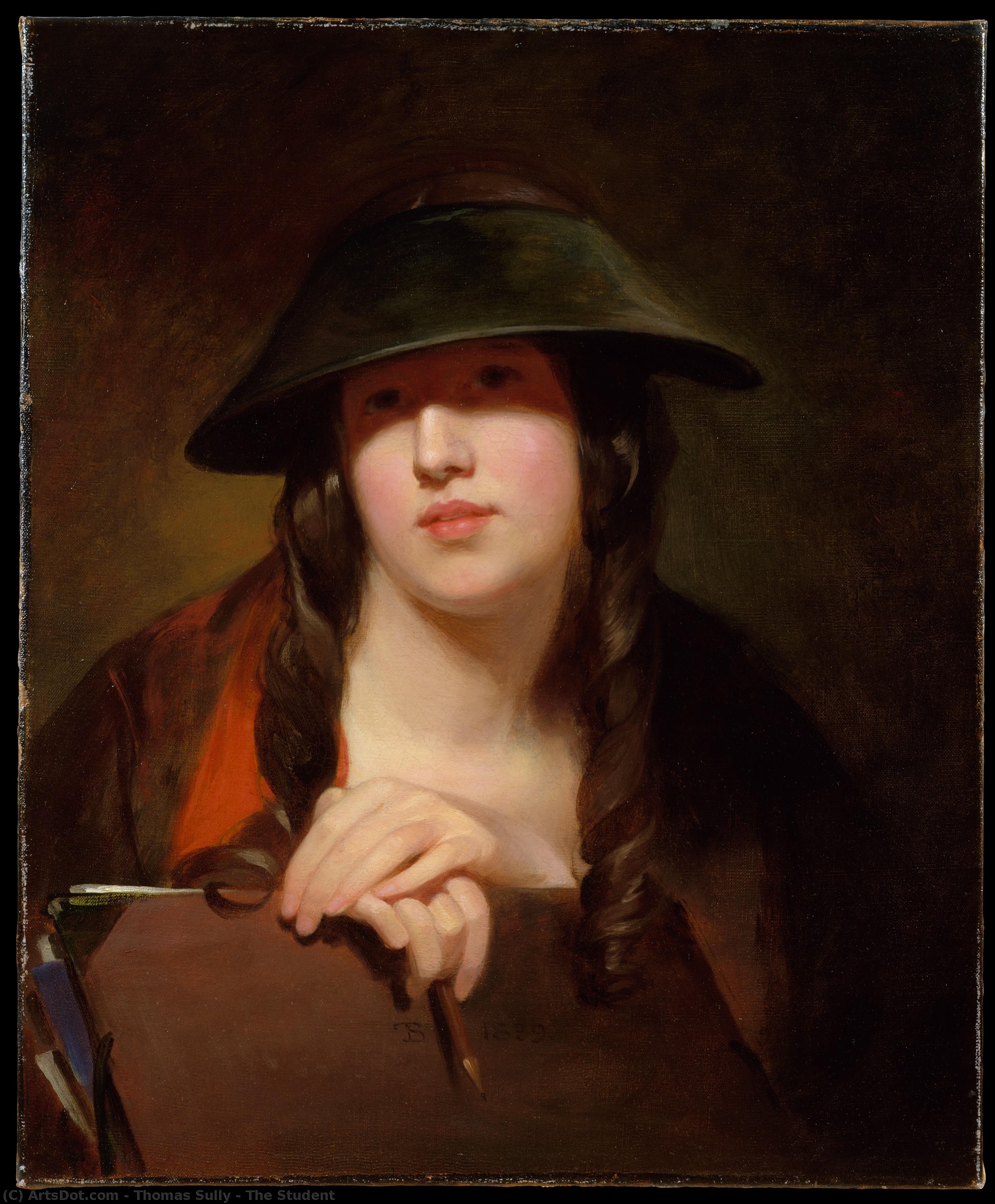
The Student
 Oil On Canvas
- WallArt
- Neoclassicism
 1839
1839- 19th Century
 60.0 x 50.0 cm
 Музей Метрополітен
 Читати далі
Олійная репродукція ручної роботи
Написана вручну олією на полотні у вашому розмірі та рамі, виготовлена на замовлення нашими художниками. ( Замовити принт Купити цифрове зображення)




P118B $10

P118H $10

P118W $10

P438Z $10

P508JH $12

P508YH $12

P805H $10

P805Z $10

P919BZ $10

P919G $10

P919XJ $10

P959ZH $10

P968JZ $12

W106C $8

W218G $10

W218JH $8

W218Y $10

W307PJ $10

W316G $10

W316PJ $8

W316Y $10

W398PJ $8

W4111J $10

W500HY $15

W500JH $15

W692G $12

W849H $8

W940BG $15

W953PJ $8




Обирайте з наших стандартних розмірів, що відповідають оригінальним пропорціям твору мистецтва.

Ви можете вказати власні розміри, щоб репродукція ідеально підійшла до конкретної рами або інтер'єру. Якщо вибраний вами розмір не відповідає пропорціям оригіналу, ми або обріжемо полотно, або доповнимо картину додатковими елементами, промальованими вручну. Цифровий макет буде надіслано вам на затвердження перед початком виробництва.
Зверніть увагу, що попередній перегляд на екрані не відображає фактичне обрізання або розширення зображення. Тільки макет точно покаже остаточну композицію.
Хоча ми можемо виготовити виріб у нестандартному розмірі, для збереження оригінальних пропорцій рекомендуємо обирати варіанти зі встановленого списку.
Після оформлення замовлення команда ArtsDot.com зв'яжеться з клієнтом електронною поштою для отримання інструкцій та надасть попередній макет
Доставка по всьому світу () за 3–4 тижні замість стандартних 5 тижнів. (16 Серпень). Без жодних компромісів у якості.

Безкоштовна експрес-доставка по всьому світу

Високоякісне лляне полотно

Повне страхове покриття доставки

Гарантія відшкодування митних зборів

Гарантія точного відтворення кольорів

Політика повернення протягом 60 днів (лише у разі виявлення дефектів)

Гарантія повернення 100% коштів

Пропозиція на оптові замовлення
 Скляний варіант доступний лише для розмірів до 110 см

The Student
Матеріал репродукції
Розмір репродукції
-


Підсумкова вартість
$ 263
Опис твору
A Portrait of Quiet Intensity: Thomas Sully’s “The Student”
Thomas Sully's "The Student," painted in 1839, is more than just a likeness; it’s a carefully constructed tableau of introspection and nascent artistic promise. This captivating portrait, rendered in rich oil on canvas, offers a glimpse into the mind of a young artist grappling with observation, creativity, and perhaps a touch of melancholy – emotions subtly conveyed through masterful technique and evocative symbolism. The painting immediately draws the viewer in with its dramatic lighting, casting deep shadows that emphasize the subject’s face and clothing while simultaneously creating an atmosphere of quiet contemplation. Sully's skill lies not merely in replicating appearance but in capturing the *essence* of his sitter, a young woman poised on the cusp of her artistic journey.
The neoclassical style evident in “The Student” is deeply rooted in the traditions of portraiture prevalent during Sully’s career. He skillfully employs lines to define the contours of the subject's face, hair, and clothing – a precision that speaks to his meticulous attention to detail. The shapes are predominantly organic: the flowing lines of her hair, the rounded forms of her face, and the rectangular structure of her hat and sketchbook all contribute to a sense of naturalism balanced with formal elegance. The visible brushstrokes, layered textures, and the deliberate use of dark browns, reds, and greens – a palette that evokes both seriousness and sophistication – further enhance the painting’s tactile quality and imbue it with a palpable sense of history.
Decoding Symbolism: The Language of Art
Beyond its technical brilliance, “The Student” is laden with symbolic elements. The most obvious is, of course, the sketchbook and pencil in her hand – potent emblems of artistic creation and the act of observation. These tools represent not just a means of recording visual information but also the process of translating that information into art. The hat itself can be interpreted as a symbol of identity, perhaps even protection from the outside world, suggesting a desire for solitude and focused creative work. Sully’s choice of attire – modest yet refined – hints at the young woman's aspirations and her position within the social hierarchy of the time.
The composition itself is carefully orchestrated to draw attention to the subject’s inner world. The shallow perspective, typical of portraiture, emphasizes her presence within the frame, creating a sense of intimacy and immediacy. Subtle variations in tone and shadow subtly create depth, preventing the image from feeling flat or static. Sully masterfully uses light and dark not just for aesthetic effect but to shape our understanding of the sitter’s mood – a quiet intensity that suggests both vulnerability and determination.
A Transatlantic Legacy: Thomas Sully's Artistic Journey
Understanding “The Student” requires acknowledging the broader context of Thomas Sully’s life and career. Born in Horncastle, Lincolnshire, England, in 1783, Sully’s journey was one of remarkable transatlantic passage – a testament to his adaptability and artistic ambition. His early exposure to theatrical performance, where he initially pursued a career as a tumbler, undoubtedly shaped his ability to capture fleeting expressions and embody character, skills that would prove invaluable in his portraiture work. His apprenticeship with an insurance broker honed his observational abilities and attention to detail, while his subsequent studies under Benjamin West in London solidified his technical training and introduced him to the conventions of neoclassical portraiture.
Sully’s arrival in America marked a pivotal moment in his career. He quickly established himself as one of the leading portrait painters of his time, capturing the likenesses of prominent figures – presidents, generals, and social elites alike. His work reflected both American ideals of civic virtue and European artistic traditions. “The Student,” therefore, can be seen as a microcosm of Sully’s broader artistic vision: a celebration of individual character, rendered with technical skill and imbued with symbolic meaning. It stands as a poignant reminder of the quiet dedication required to pursue a life devoted to art.
Bringing "The Student" Home: A Reproduction for Your Collection
ArtsDot is proud to offer meticulously crafted hand-painted reproductions of Thomas Sully’s “The Student.” Each reproduction captures the painting's original textures, colors, and emotional depth with unparalleled accuracy. Whether you are an art collector, interior designer seeking a sophisticated statement piece, or simply someone captivated by this evocative portrait, our reproductions provide a beautiful and authentic way to experience the artistry of Thomas Sully. Explore our range of sizes and canvas options to find the perfect addition to your home or office – a timeless work of art that speaks volumes about observation, creativity, and the enduring power of human expression.
Схожі твори мистецтва


Біографія митця
A Transatlantic Brushstroke: The Life and Art of Thomas Sully
Thomas Sully’s story is one of remarkable journeys – a transatlantic passage not just across oceans, but through artistic styles and cultural landscapes. Born in 1783 under the skies of Horncastle, Lincolnshire, England, his life unfolded as a captivating blend of theatrical beginnings, European refinement, and ultimately, an American identity forged through brushstrokes. His early years were marked by an itinerant childhood, traveling with his family’s acting troupe across Britain before settling in Charleston, South Carolina, in 1792. This exposure to the vibrant world of performance – the demands of capturing fleeting expressions and embodying characters – profoundly shaped his artistic sensibilities, instilling a keen awareness of human psychology and the power of visual storytelling. Initially drawn to the stage himself as a tumbler, Sully’s innate talent quickly found expression in a different medium: painting. An apprenticeship with an insurance broker provided him with a foundational understanding of detail and precision, but it was the guidance of Charles Fraser, a local artist, and later his brother-in-law Jean Belzons, that truly ignited his passion for miniature painting – a delicate art form that honed his observational skills and established a solid base for his future career.From Miniature to Monumental: Forging an American Style
Sully’s artistic development wasn't confined by geographical boundaries; it was a dynamic process of adaptation and refinement. A pivotal moment in his journey arrived with his studies in London from 1808 to 1809, under the tutelage of Benjamin West, a celebrated portraitist and figure of the Royal Academy. While West’s influence was undoubtedly significant, it was the encounter with Thomas Lawrence that truly resonated deeply within Sully's artistic soul. Lawrence’s elegant style – characterized by its graceful lines, masterful use of light and texture, and remarkable ability to capture both likeness and character – captivated Sully, shaping his approach to portraiture for years to come. Upon returning to America in 1809, Sully absorbed these influences, adapting them to create a distinctly American style that blended European sophistication with a uniquely New World sensibility. He wasn’t simply copying; he was synthesizing, forging an artistic voice that reflected the burgeoning identity of the United States. His portraits weren't merely representations of wealth or status; they were explorations of personality, imbued with psychological depth and emotional resonance – capturing not just what people looked like, but *how* they felt. This approach quickly established him as a leading portraitist in Philadelphia, a city that became his artistic home for much of his career.The Influence of Lawrence and the Development of His Technique
Sully’s stylistic evolution is inextricably linked to Thomas Lawrence. The influence of Lawrence's technique – particularly his use of *sfumato* (a subtle blurring of lines) and his ability to create a sense of atmospheric depth – is readily apparent in Sully’s portraits. He meticulously studied Lawrence’s compositions, color palettes, and brushwork, striving to emulate the artist’s signature elegance and warmth. However, Sully didn't simply mimic; he adapted these influences to suit the American context. He developed a looser, more expressive style than Lawrence, incorporating elements of Romanticism – a movement that emphasized emotion, individualism, and the beauty of nature – into his work. This resulted in portraits with a heightened sense of drama and psychological intensity. Sully’s technique involved layering thin glazes of paint to achieve luminous effects and subtle gradations of tone. He was also a master of capturing fleeting expressions, skillfully rendering the nuances of human emotion through carefully observed details of the face and eyes. His meticulous attention to detail – honed during his apprenticeship with an insurance broker – ensured that every portrait possessed a remarkable sense of realism and immediacy.Notable Portraits and Historical Works
Sully’s prolific output spanned over seven decades, resulting in more than 2,300 paintings – portraits, miniatures, landscapes, and historical scenes. Among his most celebrated works are portraits of prominent figures from the early 19th century, including Thomas Jefferson, John Quincy Adams, Andrew Jackson, and numerous members of Philadelphia’s elite society. His portrait of Marquis de Lafayette is particularly noteworthy for its dynamic composition and evocative portrayal of the French hero. However, Sully wasn't limited to individual portraits; he also ventured into historical painting with works such as *The Passage of the Delaware* (1819), a dramatic depiction of George Washington’s iconic crossing of the river – a piece that demonstrated his ability to handle large-scale compositions and imbue them with powerful narrative. This willingness to engage with historical subjects broadened his appeal and solidified his place in the American art world. His paintings often depicted scenes from the Revolutionary War, capturing the spirit of patriotism and heroism that defined the nation’s founding era.A Legacy of Influence and Enduring Beauty
Thomas Sully's legacy extends far beyond the individual portraits that hang in museums and private collections across America and Europe. He was a dedicated teacher, mentoring numerous young artists who went on to achieve success in their own right. His influence can be seen in the work of Marcus Aurelius Root, one of the pioneers of American photography, who admired Sully’s meticulous attention to detail and his ability to capture the essence of his subjects. Furthermore, Sully's commitment to cultural enrichment is evident in his involvement with Philadelphia’s Musical Fund Society, a testament to his belief that art plays a vital role in fostering community and elevating the human spirit. Today, Thomas Sully’s paintings continue to captivate audiences with their beauty, elegance, and enduring power – a lasting reminder of an artist who skillfully blended European sophistication with uniquely American sensibilities. His work stands as a significant contribution to both American portraiture and the broader history of 19th-century art.
Томас Саллі
1783 - 1872 , Великобританія
Короткі факти
- Artistic Movement Or Style: Романтизм, Неокласицизм
- Artists Or Movements Influenced By This Artist: ['Американський портрет']
- Artists Who Influenced This Artist:
- Бенджамін Вест
- Томас Лоуренс
- Date Of Birth: 1783
- Date Of Death: 1872
- Full Name: Thomas Sully
- Nationality: Британський-американський
- Notable Artworks:
- Прохід Делавэр
- Портрети Джефферсона
- Портрети Адамса
- Place Of Birth: Horncastle, UK
Пов'язані статті

Romantic Realism's Finest: 10 Masterpieces for Your Home | ArtsDot
Explore 10 defining masterpieces of Romantic Realism! Discover Courbet, Millet & Daumier's powerful paintings—capturing emotion and social realities. Find museum-quality reproductions for your home at ArtsDot.com.

The Enduring Legacy of Oil on Canvas: Technique, History & Aesthetic Impact
Explore the rich history & techniques of oil painting – from Renaissance masters to Impressionism. Discover pigments, layering methods, and why this timeless medium endures. Expert insights for artists & art enthusiasts.

Thomas Barker of Bath: Landscape Painting & Societal Reflection in Early 19th-Century England
Explore the life & work of Thomas Barker of Bath, a key figure in 19th-century English Romanticism. Discover his Parisian success, iconic paintings like 'The Bride of Death', and lasting artistic legacy. Learn more at ArtsDot.

Топ-10 шедеврів XIX століття: мистецтво та історія для вашого дому
Пориньте у світ мистецтва XIX століття! Від Моне до Ван Гога – відкрийте 10 шедеврів імпресіонізму, реалізму та романтизму. Репродукції картин преміум-якості для вашого дому на ArtsDot.com. Дослідіть колекцію онлайн!

Reflections of an Era: Identity & Social Commentary in 19th-Century Portraiture
Explore the captivating world of 19th-century portraiture! Discover key artists, movements like Realism & Impressionism, and the powerful social commentary embedded within these iconic artworks. Expert insights at ArtsDot.

