
 Переглянути в інтер'єрі
 Надіслати як листівку
 Поділитися
 Деталі витвору
 Посібник

 Завантажити
 Схожі екземпляри
 Рентгенівське дослідження
 Слайд-шоу
 Питання та відповіді
 Статистика
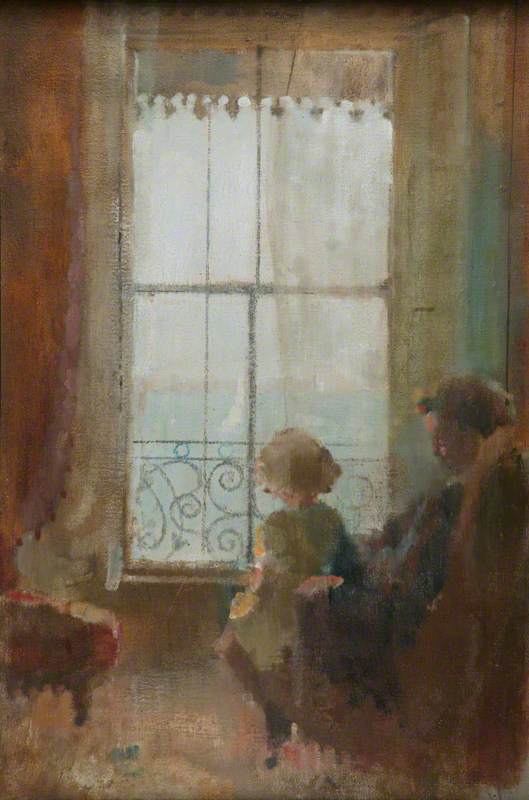
The Window

- 61.0 x 40.0 cm


 Розгорнути текст
Отримайте файл, готовий до друку, якість якого значно перевищує якість веб-попереднього перегляду. Кожне цифрове зображення, яке ми продаємо, створене на основі високої роздільної здатності з нашої бази даних — зазвичай від 5 000 до 15 000 пікселів по ширині — тому ви можете впевнено друкувати у великому форматі, робити щільну обрізку або відтворювати найдрібніші деталі.
Жоден файл не залишається в нашій студії без уваги. Експерт із цифрової обробки звіряє кольори з оригінальною картиною та за потреби коригує їх, після чого покращує чіткість і деталізацію за допомогою професійних інструментів ретушування — завжди зберігаючи вірність мазкам пензля та стилю художника. Результатом є зображення, яке виглядає як справжня картина, а не як відскановане фото з накладеними фільтрами.
Ви затверджуєте результат перед завершенням замовлення: протягом 72 годин наш експерт надішле зображення електронною поштою для вашого перегляду. Не задоволені результатом? Ви можете попросити про внесення змін чи виправлень або отримати відшкодування, якщо якість не відповідає вашим очікуванням.
Саме на таку якість покладаються видавництва, дизайн-студії, галереї та друкарні.
Цифрове зображення
Завантажте файл високої роздільної здатності для особистого використання, друку та творчих проєктів. ( Перейти до друку Замовити картину ручної роботи)
Переваги кожного замовлення цифрових зображень
Експертна цифрова доставка з гарантією якості
Обираючи ArtsDot.com, ви отримуєте не просто зображення — ви отримуєте професійно вдосконалений цифровий витвір мистецтва, створений з надзвичайною точністю та підкріплений гарантією задоволення. Ось усе, що автоматично додається до вашого замовлення:

Швидка доставка на email
Ваш цифровий файл із зображенням високої роздільної здатності буде надісланий вам електронною поштою протягом 72 годин після оформлення замовлення — він буде готовий до негайного використання.

Цифровий файл із покращенням ШІ
Ваш витвір мистецтва професійно оптимізовано за допомогою передових інструментів штучного інтелекту та ручної корекції, що забезпечує максимальну деталізацію, чіткість і точність передачі кольорів.

Безкоштовне повторне завантаження назавжди
Випадково видалили або втратили файл? Не хвилюйтеся — ми надішлемо його вам повторно в будь-який час безкоштовно.

Без митних зборів — завжди
Насолоджуйтесь вашим витвором мистецтва миттєво без жодних мит, зборів або плати за доставку — цифрові завантаження завжди не оподатковуються.

Гарантія точності кольорів
Ми гарантуємо максимально точне відтворення оригінальних кольорів на вашому цифровому зображенні завдяки використанню професійних інструментів та систем управління кольором.

100-денна гарантія задоволення
Якщо ви не задоволені придбаним цифровим зображенням, ми внесемо правки або повернемо 100% вартості протягом 100 днів — без зайвих запитань.

Гарантія повернення 100% коштів
Незадоволені покупкою? Отримайте повне повернення коштів протягом 100 днів після отримання цифрового файлу — без зайвих запитань.

Знижки на оптові замовлення
Купуйте 3 зображення — заощаджуйте 10% — Купуйте 5 — заощаджуйте 15% — Купуйте 10+ — заощаджуйте 20%. Чудово підходить для творчих проєктів, галерей та агентств.
Схожі твори мистецтва


Біографія митця
Thomas James Carr: Weaver of Domestic Landscapes
Thomas James Carr (1909-1999) wasn’t a name that frequently echoed through the halls of 20th-century art, yet his quietly observant paintings offer a compelling window into the heartland of America – and, crucially, Ireland. Often categorized within the Euston Road School, a movement known for its restrained realism and focus on everyday life, Carr possessed a unique ability to imbue seemingly simple scenes with a profound sense of atmosphere and human connection. His work isn’t about grand pronouncements or dramatic gestures; it's a subtle exploration of rural existence, family routines, and the enduring beauty found in the commonplace.
Born in Belfast, Northern Ireland, into a comfortable family with strong connections to the stockbroking world – his grandfather was a watercolourist – Carr’s early life instilled within him an appreciation for visual representation. He received his initial artistic training at Oundle School in England, where he studied under E.M.O'R. Dickey and Christopher Perkins, gaining foundational skills in draughtsmanship and composition. A pivotal moment arrived in 1927 when he moved to London and enrolled at the Slade School of Art, studying under Henry Tonks. This period exposed him to a wider range of artistic approaches, though it was his subsequent year spent in Settignano, near Florence, that truly shaped his aesthetic sensibilities. Immersed in the Italian landscape and art tradition, Carr developed a deeper understanding of light, color, and the expressive potential of paint – a shift evident in the warmth and luminosity he brought to his later works.
Returning to London, Carr established himself as a respected painter of domestic scenes. He wasn’t simply documenting reality; he was actively interpreting it. His paintings frequently depict rural life—farmers tending their fields, families gathered around tables, or solitary figures engaged in quiet pursuits. While often described as a realist, Carr's work transcends mere imitation. He employed a loose, painterly technique, favoring broad brushstrokes and a muted color palette to create a sense of depth and atmosphere. Notably, he was included in the 1934 Objective Abstractionists exhibition at Zwemmer’s gallery, suggesting an awareness of modern artistic trends without fully embracing abstraction himself. This inclusion highlights his willingness to engage with contemporary art while maintaining his own distinct visual language.
Carr's career unfolded across several decades, punctuated by exhibitions in London and Ireland. He found a supportive audience at the Leicester Galleries, Redfern Gallery, and Agnew’s, showcasing his work alongside prominent artists of the time. During World War II, he returned to Northern Ireland and took on commissions from the War Artists’ Advisory Committee, capturing scenes of parachute manufacture and the construction of Short Sunderland flying-boats in Belfast – a testament to his adaptability and ability to depict industrial subjects with sensitivity. Following the war, he taught at the Belfast College of Art and later moved to Newcastle, County Down, where he continued to paint until his death in 1999. His final years were marked by a renewed focus on landscape painting, reflecting a lifelong connection to the natural world.
The Euston Road School and Carr’s Place Within It
Carr's association with the Euston Road School is central to understanding his artistic development and legacy. This group of artists, led by William Coldstream, formed a distinct movement within British painting in the mid-20th century. The Euston Road School rejected the overtly expressive styles of earlier movements, instead prioritizing observation, restraint, and a subtle exploration of form and color. They were deeply influenced by the work of Cézanne and focused on capturing the essence of their subjects rather than simply reproducing them realistically.
Carr’s paintings align closely with the Euston Road School's principles. Like his colleagues – Victor Pasmore, Claude Rogers, and others – he eschewed dramatic compositions or overtly emotional subject matter. Instead, he sought to create paintings that were quietly evocative, inviting viewers to contemplate the beauty and complexity of everyday life. His use of light and color is particularly noteworthy, reflecting a deep understanding of how these elements can shape our perception of a scene. While he shared a common aesthetic with the Euston Road School, Carr’s work also retained a distinctly Irish sensibility – a sensitivity to the landscape, the rhythms of rural life, and the cultural traditions of his homeland.
Themes and Symbolism in Carr's Work
Carr’s paintings are rich in subtle symbolism and thematic resonance. At their core, they explore themes of family, community, and the relationship between humans and nature. His depictions of rural life often convey a sense of nostalgia for a simpler time – a longing for connection to the land and to traditional values. The figures in his paintings are rarely idealized; they are presented as ordinary people engaged in everyday activities, reflecting Carr’s belief that beauty can be found in the mundane.
The landscapes he painted are equally significant. They aren't merely scenic representations but rather expressions of a deep connection to the natural world. Carr frequently employed muted color palettes and atmospheric effects to create a sense of mood and atmosphere, evoking the changing seasons and the rhythms of rural life. The use of light is particularly important – it’s often diffused and subtle, creating a feeling of quiet contemplation.
Legacy and Historical Significance
Thomas James Carr may not be as widely celebrated as some of his contemporaries, but his work holds considerable historical significance. He represents a vital link between the realist traditions of British painting and the emerging trends of mid-20th-century art. His association with the Euston Road School helped to shape the course of British painting, while his distinctive style – characterized by its quiet observation, atmospheric effects, and subtle symbolism – continues to resonate with viewers today.
Carr’s paintings offer a valuable glimpse into the social and cultural landscape of Ireland and Britain during the 20th century. They document the rhythms of rural life, the values of community, and the enduring beauty of the natural world. His legacy lies not in grand gestures or revolutionary innovations but in his ability to capture the essence of everyday life with quiet grace and profound insight.

Thomas James Carr
1909 - 1999
Короткі факти
- Full Name: Thomas James Carr
- Nationality: British
- Date Of Birth: 1909
- Date Of Death: 1999
- Place Of Birth: Belfast, Northern Ireland
- Notable Artworks:
- Domestic scenes
- Landscapes
- Parachute manufacture
- Artistic Movement Or Style: Euston Road School
- Artists Who Influenced This Artist:
- E.M.O'R. Dickey
- Christopher Perkins
- Artists Or Movements Influenced By This Artist:
- Victor Pasmore
- Claude Rogers