


 Переглянути в інтер'єрі
 Надіслати
 Поділитися
 Деталі
 Посібник

 Завантажити
 Схожі предмети колекціонування
 Рентгенівське дослідження
 Слайд-шоу
 Статистика переглядів
Cleopatra

 Читати далі
Мистецький твір, представлений на цій сторінці, захищений законом про авторське право, що унеможливлює легальне створення або продаж його ідентичної репродукції. Цей захист забезпечується відповідно до міжнародних угод, таких як Бернська конвенція та національним законодавством, зокрема положеннями, що викладені в Законодавство США про авторське право — Розділ 17. Всі права захищені. Будь-яке використання без дозволу заборонено.
Цей метод повністю відповідає нормам авторського права, оскільки він не передбачає копіювання чи дублювання захищеного твору мистецтва. Натомість це творче переосмислення — створення нового малюнка під впливом оригіналу, який не є його точним відтворенням.
Гікле / Художній принт
Музейна якість друку جيкле або на полотні з оперативним виготовленням та різноманітними варіантами фінішної обробки. ( Купити картину ручної роботи Перейти до цифрових зображень)




P118B ₴10

P118H ₴10

P118W ₴10

P438Z ₴10

P508JH ₴12

P508YH ₴12

P805H ₴10

P805Z ₴10

P919BZ ₴10

P919G ₴10

P919XJ ₴10

P959ZH ₴10

P968JZ ₴12

W106C ₴8

W218G ₴10

W218JH ₴8

W218Y ₴10

W307PJ ₴10

W316G ₴10

W316PJ ₴8

W316Y ₴10

W398PJ ₴8

W4111J ₴10

W500HY ₴15

W500JH ₴15

W692G ₴12

W849H ₴8

W940BG ₴15

W953PJ ₴8




Обирайте з наших стандартних розмірів, що відповідають оригінальним пропорціям твору мистецтва.

Ви можете вказати власні розміри, щоб репродукція ідеально підійшла до конкретної рами або інтер'єру. Якщо обраний вами розмір не відповідає пропорціям оригіналу, ми або обріжемо полотно, або розширимо зображення за допомогою дзеркального відображення чи суцільної заливки країв. Перед початком виробництва вам буде надіслано цифровий макет для затвердження.
Будь ласка, зверніть увагу, що попередній перегляд на екрані не відображає фактичне обрізання або розширення. Тільки макет точно покаже фінальну композицію.
Хоча можливість замовлення індивідуальних розмірів доступна, ми рекомендуємо обирати формат із попередньо визначеного списку, щоб зберегти оригінальні пропорції.
Доставка по всьому світу () за 2 тижні замість стандартних 4/5 тижнів. (13 Жовтень)

Безкоштовна експрес-доставка по всьому світу

Високоякісне лляне полотно

Повне страхове покриття доставки

Гарантія повернення митних зборів

Гарантія точного відтворення кольорів

Політика повернення протягом 100 днів (лише у разі виявлення дефектів)

Гарантія повернення 100% коштів

Знижка на оптові замовлення
 Скляний варіант доступний лише для розмірів до 110 см

Cleopatra
Гікле / Художній принт
Розмір репродукції
-


Загальна вартість
₴ 2766
Схожі твори мистецтва


Біографія митця
A Pioneering Vision: The Life and Art of Rita Angus
Henrietta Catherine Angus, a name forever etched in the annals of New Zealand art, was born on March 12, 1908, in Hastings – a small coastal town that would profoundly shape her artistic sensibility. Her early life was marked by constant relocation due to her father’s career as a carpenter and construction worker, a nomadic upbringing that instilled within her a keen observational eye and an independent spirit—qualities that would later inform her distinctive artistic vision. As the eldest of seven children, Rita demonstrated an exceptional talent for drawing from a young age, receiving private lessons that nurtured her burgeoning passion. Her formal education at Palmerston North Girls’ High School from 1922 to 1926 provided a solid foundation, with teachers recognizing and encouraging her innate abilities—a recognition that set the stage for her future artistic pursuits. This early exposure to art history and traditional techniques proved crucial in shaping her later style.Forging a Distinctive Style: Influences and Innovation
Rita Angus’s artistic journey was not one of simple imitation, but rather a dynamic process of absorbing influences and forging her own unique voice. Her marriage in 1930 to fellow artist Alfred Cook, though ultimately short-lived, coincided with a period of intense creative exploration. During this time, she began to develop a style characterized by bold colors, sharp lines, and simplified forms—a departure from the prevailing realism of the era. She was deeply influenced by the works of Renaissance masters like Vermeer and Cézanne, whose use of light and perspective resonated profoundly with her artistic sensibilities. Furthermore, Angus’s travels throughout Europe in the 1940s exposed her to Byzantine art, a style known for its rich symbolism and dramatic intensity—elements that she skillfully incorporated into her own work. The geometric fragmentation of Cubism also played a significant role, as did the evocative landscapes of Christopher Perkins, whose paintings captured the unique light and atmosphere of New Zealand’s South Island. Crucially, Angus wasn't simply replicating these influences; she was synthesizing them—transforming them through her own personal vision to create something entirely new. Her art became a reflection of her inner world, a testament to her love for humanity and her unwavering belief in the power of art to communicate profound truths.Landscapes of the Soul and Portraits of Identity: Themes and Techniques
The 1930s and 1940s witnessed the blossoming of Rita Angus’s artistic career, as she began exhibiting her work with increasing recognition within the Canterbury Society of Arts. Her landscapes—particularly those depicting the rugged beauty of Canterbury and Otago—became a defining feature of her oeuvre. Paintings like *Cass* (1936), a deceptively simple depiction of a small railway station, quickly gained popularity, demonstrating her ability to capture both the physical details and the emotional essence of a scene. However, Angus’s artistic output extended far beyond landscapes; she was equally adept at portraiture, skillfully capturing not just likeness but also the inner lives and personalities of her subjects. Her portraits were often imbued with a sense of psychological depth—revealing hidden emotions and unspoken narratives. During this period, she also created a powerful series of goddess images – *Rutu* being perhaps the most iconic – which explored themes of peace, resilience, and feminine strength. These works reflected her pacifist beliefs and her deep concern for social justice. Angus’s technical skill was matched by her willingness to experiment with color and composition—often employing bold, unconventional palettes and dynamic arrangements to create a sense of movement and energy.Legacy and Enduring Influence: A New Zealand Icon
Rita Angus's life was not without its challenges; the dissolution of her marriage in 1934 left her facing financial hardship and emotional distress. Despite these difficulties, she continued to paint with unwavering dedication, producing some of her most significant works during this period. In the late 1940s, she experienced a severe mental health crisis and was admitted to Sunnyside Mental Hospital, but emerged from this experience with renewed determination. Her final years were marked by a move to Wellington and a continued exploration of new subjects—including cityscapes, landscapes, and self-portraits. The creation of over fifty self-portraits during her career is a testament to her introspective nature and her willingness to confront her own identity. Rita Angus’s legacy extends far beyond the canvases she created; she remains a pivotal figure in New Zealand art history—a pioneer who challenged conventional artistic norms, embraced innovation, and ultimately left behind a body of work that continues to inspire and captivate audiences today. Her home in Wellington has been preserved as the Rita Angus Cottage, now an artist residency, ensuring that her spirit and creative vision will continue to resonate for generations to come. Her commitment to art, coupled with her profound belief in its power to express peace, humanity, and individual identity, ensures that her work will resonate with audiences for years to come.
Рита Анджус
1908 - 1970 , Нова Зеландія
Довідкова інформація
- Artistic Movement Or Style: Модернізм, регіоналізм
- Artists Who Influenced This Artist: ['Christopher Perkins']
- Date Of Birth: 12 березня 1908
- Date Of Death: 25 січня 1970
- Full Name: Henrietta Catherine Angus
- Nationality: Новозеландка
- Notable Artworks:
- Cass (1936)
- Rutu
- Central Otago
- Fay and Jane Birkinshaw
- Self-portraits
- Place Of Birth: Гастінгс, Нова Зеландія
Схожі статті

Verdant Visions: Exploring the Symbolism & Aesthetic Impact of Green in Art History
Explore the rich history & symbolism of green in art! Discover iconic paintings, techniques, and how to bring verdant harmony into your home with ArtsDot's expert guide.

Azure Visions: Exploring Representations of the Blue Dress in Western Art History
Explore the rich history of the blue dress in Western art! Discover its symbolism, from Renaissance masterpieces to modern interpretations by artists like Martin & Schiele. Uncover cultural meanings and artistic techniques.

Serene Blue Backgrounds: Discover Soulful Art to Transform Your Space with Timeless Elegance
Transform your home with soulful blue art. From serene Monet impressions to modern textured sculptures, discover curated masterpieces designed to inspire calm. Explore expert art consultations and bespoke hand-painted reproductions to create your personal sanctuary.
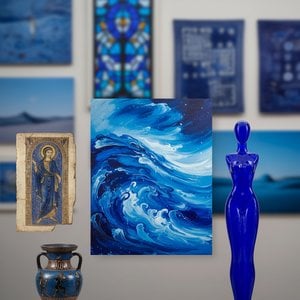
The Allure of Azure: Exploring the Symbolic & Aesthetic Depths of Blue in Art History
Explore the rich history of blue in art! Discover its symbolism, from ancient pigments to modern masterpieces by Kandinsky & Seurat. Uncover the psychological impact and cultural meanings behind this captivating hue.

Топ-10 знаменитих картин у відтінках сіро-блакитного: мистецтво для вашого дому
Пориньте у світ сіро-блакитного кольору! Від Моне до Ренуара – топ-10 знаменитих картин, що зачаровують глибиною відтінків. Історія мистецтва, техніки та натхнення для вашого дому. Знайдіть репродукцію мрії на ArtsDot.com!