
 Переглянути в інтер'єрі
 Надіслати як листівку
 Поділитися
 Деталі витвору
 Посібник

 Завантажити
 Схожі екземпляри
 Рентгенівське дослідження
 Слайд-шоу
 Питання та відповіді
 Статистика
The guide


 Розгорнути текст
Мистецький твір, представлений на цій сторінці, захищений законом про авторське право, що унеможливлює легальне створення або продаж його ідентичної репродукції. Цей захист забезпечується відповідно до міжнародних угод, таких як Бернська конвенція та національним законодавством, зокрема положеннями, що викладені в Законодавство США про авторське право — Розділ 17. Всі права захищені. Будь-яке використання без дозволу заборонено.
Цей метод повністю відповідає нормам авторського права, оскільки він не передбачає копіювання чи дублювання захищеного твору мистецтва. Натомість це творче переосмислення — створення нового малюнка під впливом оригіналу, який не є його точним відтворенням.
Гікле / Художній принт
Друк جيкле або на полотні музейної якості з оперативним виготовленням та різноманітними варіантами фінішної обробки. ( Замовити картину ручної роботи Перейти до цифрових зображень)




P118B ₴10

P118H ₴10

P118W ₴10

P438Z ₴10

P508JH ₴12

P508YH ₴12

P805H ₴10

P805Z ₴10

P919BZ ₴10

P919G ₴10

P919XJ ₴10

P959ZH ₴10

P968JZ ₴12

W106C ₴8

W218G ₴10

W218JH ₴8

W218Y ₴10

W307PJ ₴10

W316G ₴10

W316PJ ₴8

W316Y ₴10

W398PJ ₴8

W4111J ₴10

W500HY ₴15

W500JH ₴15

W692G ₴12

W849H ₴8

W940BG ₴15

W953PJ ₴8




Обирайте з наших стандартних розмірів, що відповідають оригінальним пропорціям твору мистецтва.

Введіть необхідну ширину та висоту, щоб принт ідеально підійшов до вашої рами або стіни. Принт можна лише обрізати, але не можна зробити більшим за оригінал, тому при зміні пропорцій частина зображення буде втрачена. Перед друком ми надсилаємо вам цифровий макет для затвердження. Зображення на цій сторінці не відображає реальну обрізку — її можна побачити лише на макеті.
Доставка по всьому світу () за 2 тижні замість стандартних 4/5 тижнів. (15 Листопад)

Безкоштовна експрес-доставка по всьому світу

Високоякісне лляне полотно

Повне страхове покриття доставки

Гарантія повернення митних зборів

Гарантія точного відтворення кольорів

Політика повернення протягом 100 днів (лише у разі виявлення дефектів)

Гарантія повернення 100% коштів

Пропозиція на оптові замовлення
 Скляний варіант доступний лише для розмірів до 110 см

The guide
Гікле / Художній принт
Розмір репродукції
-


Підсумкова вартість
₴ 2828
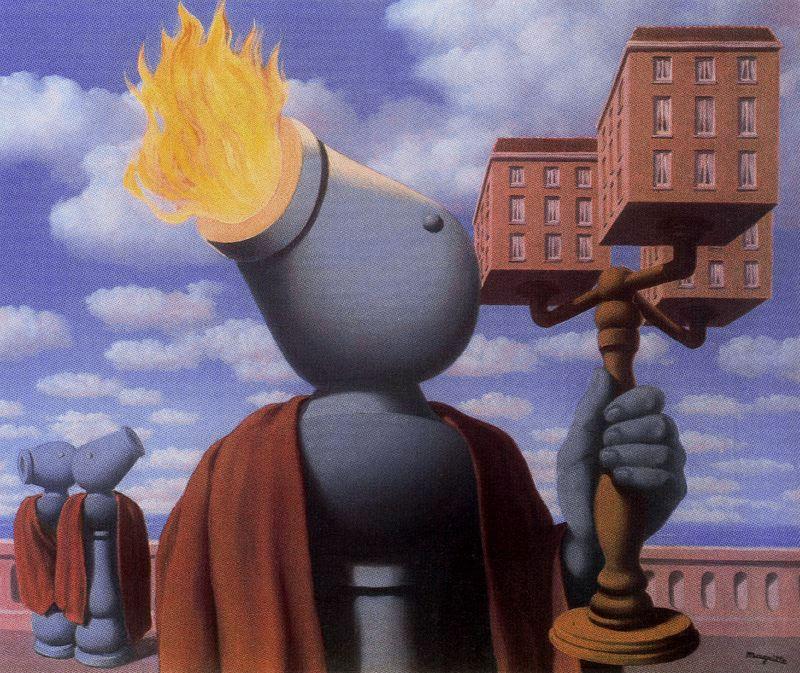
A Surrealist Riddle: Decoding René Magritte’s “The Guide”
To gaze upon René Magritte's 1962 masterpiece, “The Guide,” is to step directly into a dreamscape where the logic of the waking world dissolves into a profound, unsettling mystery. This evocative Surrealist work does not merely present a scene; it poses a question that lingers in the mind long after one has turned away. At its heart, the painting presents a startling juxtaposition: a humanoid robot, rendered with a meticulous, almost clinical precision, stands before a nondescript building, clutching a bright red fire hydrant firmly within its mouth. This central, bizarre image is flanked by two additional robotic figures, creating an atmosphere of eerie stillness and silent observation. The composition is further animated by the presence of three birds—one perched in the upper left, another drifting through the center-right, and a third nestled at the bottom left—elements that introduce a fragile, natural grace to an otherwise mechanical and stark landscape.
Magritte’s technique is a masterclass in the art of deception. Eschewing the expressive brushwork of the Impressionists, he employed a smooth, controlled application of oil paint on canvas to achieve a deliberate flatness. This precision serves a higher purpose: by rendering these impossible objects with such clarity and realistic detail, Magritte forces the viewer to confront the "reality" of the absurd. His style aligns perfectly with the Surrealist movement's mission to bypass rational thought and tap into the subconscious. There is no heavy texture to distract the eye; instead, the seamless blending of colors creates an illusionistic surface that makes the impossible feel tangibly present, inviting collectors and enthusiasts to inhabit this beautifully rendered, dreamlike dimension.
Symbolism and the Architecture of the Subconscious
Every element within “The Guide” acts as a piece in a larger, enigmatic puzzle. The robot, a symbol of the man-made and the artificial, holding a fire hydrant—a vessel for the most fundamental element of life, water—creates a powerful tension between technology and nature. This juxtaposition serves to challenge our assumptions about identity and utility. Is the robot a servant, or is it a distorted mirror of human existence? The presence of the birds adds a layer of organic unpredictability to the scene, their flight paths suggesting a freedom that contrasts sharply with the rigid, metallic forms of the robots. Magritte often used such motifs to explore the boundaries between what is seen and what is hidden, a theme deeply rooted in his own life experiences and the broader intellectual climate of post-war Europe.
For the discerning interior designer or art collector, this piece offers more than just visual intrigue; it provides a profound emotional resonance. The painting evokes a sense of quiet contemplation, a stillness that can transform a modern living space into a sanctuary for thought. It is a work that demands engagement, making it an ideal centerpiece for those who appreciate art that provokes conversation and stimulates the intellect. Whether viewed as a study in Surrealist history or as a striking contemporary statement, “The Guide” remains a timeless exploration of the elusive boundaries between reality and illusion, making it a truly captivating addition to any curated collection.
Питання та відповіді
Яке місце посідає «The guide» у творчому шляху Рене Магрітт?
«The guide» належить до Mature Surrealism творчого шляху Рене Магрітт. Ця класифікація пов’язує твір із етапом становлення митця.
Чи доступний попередній перегляд «The guide» у доповненій реальності?
Для твору "The guide" доступна функція попереднього перегляду в доповненій реальності: на сторінці Перегляд в AR ви можете побачити його у власному інтер'єрі за допомогою сумісного пристрою.
Для якого призначення та в якому інтер'єрі рекомендується розміщувати «The guide» роботи Рене Магрітт?
Рекомендоване використання (Accent) та розміщення у (Living Room) — це дві поради для «The guide» роботи Рене Магрітт.
Схожі твори мистецтва


Біографія митця
Ранні роки життя Рене Маґрітта
Народившись 21 листопада 1898 року в Лесінні, Бельгія, під ім'ям Рене Франсуа Гілен Маґрітт, художник прийшов у світ, що визначався тихою працелюбністю його родини. Його батько, Леопольд Маґрітт, працював кравцем і торговцем текстилем, забезпечуючи стабільне, хоча й непомітне дитинство. Вже до десяти років Рене Маґрітт почав шукати уроки малювання, відкривши в собі ранню схильність до візуального самовираження, яка згодом стане основою всього його творчого шляху.
Глибока тінь лягла на його підлітковий вік у 1912 році, коли його мати, Регіна Бертеншамп, вчинила самогубство. Ця втрата залишила незгладимий слід у його психіці, принісши відчуття таємничості та прихованого, що згодом проявиться в його картинах через завуальовані постаті та приховане обличчя. Подібна особиста травма часто стає джерелом тихої напруги, яку ми бачимо в його пізніших композиціях, де видиме і невидиме перебувають у стані постійного тертя.
Його офіційне навчання розпочалося в Академії королівських витончених мистецтв у Брюсселі, де він навчався з 1916 по 1918 рік. Протягом цих років він перейшов від простих ескізів своєї юності до більш дисциплінованого розуміння форми. Цей період академічного навчання заклав технічний фундамент, необхідний для концептуальних зрушень, які відбудуться згодом, коли він почне рухатися в напрямку авангардних течій початку двадцятого століття.
Художній розвиток та ранні впливи
Перші кроки Рене Маґрітта у живописі, зроблені приблизно у 1915 році, були позначені імпресіоністичним чутливістю. Ці початкові спроби були далекі від тих інтелектуальних головоломок, які згодом стануть його візитною карточкою. Під час Першої світової війни його шлях перервався військовою службою, де він працював картографом в бельгійській армії. Цей період служби став структурованим технічним контрастом до його бурно зростаючих творчих імпульсів. Повернувшись до навчання, він почав відходити від м'яких контурів імпресіонізму, експериментуючи натомість з роздробленими площинами кубізму та динамічною енергією футуризму. Ці напрями відкрили йому шлях до деконструкції візуального світу, хоча з часом він відчував, що їхні формальні обмеження занадто тісні для його особливого бачення.
Глибокий перелом стався, коли він відкрив для себе творчість Джорджо де Кріко. Картина 1914 року «Пісня кохання» справила на нього незабутле враження, привносячи відчуття сновидницької напруги, що глибоко відгукнулася в його душі. Ця зустріч спрямувала його до стилю, що віддавав перевагу тривожному поєднанню звичних речей. Він також черпав натхнення у полотнах Вільяма Дегува де Нанка, чий вплив посприяв формуванню його унікальної естетики. Ці ранні роки були часом пошуків — періодом, коли він проходив крізь різноманітні авангардні стилі, намагаючись знайти мову, здатну висловити дивну логіку підсвідомого.
Паризькі роки та сюрреалізм
До 1927 року спокійне життя в Бельгії поступилося місцем неспокійній енергії Парижа. Цей переїзд став поворотним моментом у його траєкторії, оскільки він глибоко занурився у діяльність сюрреалістичної групи. У кафе та майстернях міста він знайшов спільноту однодумців, завівши дружні стосунки з такими постатями, як Андре Бретон, Поль Елюар та Сальвадор Далі. Ці зв'язки не були лише соціальними; вони стали інтелектуальним союзом, що допоміг визначити його місце в межах цього мистецького руху. Він проходив крізь цей період із чітким відчуттям мети, прагнучи перекласти ірраціональне на візуальну мову, що кидала виклик логіці світу реального.
Його перехід до цього нового способу самовираження розпочався ще у 1926 році з написання картини Le Jockey Perdu (Загублений жокей) — роботи, яку широко визнають його першим справді сюрреалістичним полотном. Це раннє занурення в несподіване передувало його офіційному втіленню в паризьку арт-сцену. Під час перебування в місті його професійне життя набуло більш структурованої, хоча й нестабільної форми. У 1929 році він підписав контракт із галереєю Goemans у Парижі, працюючи пліч-о-пліч із Жаном Арпом та Івом Танґю. Цей період офіційного співробітництва забезпечив короткий проміжок стабільності, перш ніж складні обставини десятиліття зрештою повернули його до рідної країни.
Повернення до Брюсселя та рекламна діяльність
Від’їзд із Парижа у 1930 році став для Рене Маґрітта періодом прагматичного переосмислення свого шляху. Повернувшись до Брюсселя, він намагався знайти стабільність через комерційне застосування своїх візуальних навичок. Разом зі своїм братом Полем він заснував рекламне агентство — підприємство, що вимагало надзвичайної дисципліни у роботі з образами та типографікою. Це професійне життя не було відступом від його творчих інстинктів, а радше їхнім вдосконаленням, адже він майстерно балансував на межі мистецтва та комерції.
Його заробіток часто був пов’язаний з індустріальним та буденним світом. Він працював креслярником на фабриці шпалер, а його досвід був затребуваний на підприємстві Usines Peters-Lacroix (U.P.L.) на посаді дизайнера. Ці роки комерційної праці забезпечили йому стабільний дохід і глибоке розуміння текстур та візерунків повсякденних предметів. Саме ця технічна точність згодом ляже в основу чіткості його глибоших філософських полотен. Також він знайшов себе у кіноіндустрії, створюючи плакати для німецького дистриб'ютора звукового кіно Tobis Klangfilm. Для цих завдань він використовував псевдонім «Emair» — маску, яка дозволяла йому працювати у комерційній сфері, зберігаючи при цьому професійну дистанцію.
Період Ренуара та сюрреалізм у сонячному світлі
У середині 1940-х років естетика Рене Маґрітта зазнала помітного переломного моменту. Приблизно між 1943 та 1947 роками він відійшов від темних, більш похмурих тонів, які характеризували більшу частину його ранніх сюрреалістичних витворів. Цей етап, який часто називають його «періодом Ренуара», позначився переходом до палітри яскравих кольорів та композицій, що тяжіли до оптимізму. Це був свідомий відхід від важкої психологічної напруги попередніх років на користь відчуття ясності та світла.
Ця стилістична еволюція не була випадковою примхою, а була глибоко пов'язана з інтелектуальним кліматом того часу. На його роботи в ці роки вплинув маніфест «Сюрреалізм у повному сонячному світлі». Надихаючись творчістю художника Пьера-Огюста Ренуара, Маґрітт обрав більш люмінесцентний, світлий підхід до своїх сюжетів. Тіні, що раніше затьмарювали його постаті, змінилися більш відкритим, залитим сонцем настроєм. Хоча цей зсув був зустрінутий певним скепсисом з боку його сучасників у сюрреалістичному русі, він став вагомим моментом особистого експериментування у його довгій творчій кар'єрі.
Техніка та фірмовий візуальний стиль
Підхід Рене Маґрітта до полотна вирізнявся ретельною, майже клінічною точністю. Він уникав експресивного, хаотичного мазка, який був притаманний багатьом його сучасникам, віддаючи перевагу стилю, що з приголомшливою чіткістю відтворював неможливе. Використовуючи реалістичні техніки для зображення ірраціональних сценаріїв, він позбавляв глядача звичного відчуття комфорту перед знайомим. Ця ясність була надзвичайно важливою для його методу створення візуальних парадоксів, де бездоганність виконання робила дивність сюжету ще більш тривожною.
Його образна система ґрунтувалася на поєднанні повсякденних предметів у несподіваних контекстах. Він часто повертався до певного набору мотивів: капелюха-котела, яблука та жіночого торса. Ці об'єкти, позбавлені своєї буденної утилітарності, ставали символами глибшої, прихованої реальності. Він часто маніпулював зв'язком між предметом і його представленням, найяскравіше це проявлялося через використання тексту в його картинах, що кидало виклик сприйняттю мови та образу глядачем. Цей інтелектуальний конфлікт посилювався використанням завуальованих облич та об'єктів, що ширяють у повітрі, порушуючи природні закони гравітації та ідентичності.
- Зрада образів (1929)
- Син людини (1964)
- Коханці (без дати)
- Замок у Піренеях (1959)
- Час, зупинений на мить (1938)
Ключові шедеври та знаковий витвір
Полотно Рене Маґрітта часто слугували візуальними головоломками, створеними для того, щоб похитнути впевненість глядача. У 1929 році він створив Зраду образів — твір, де поруч із ретельно виписаною люлькою розміщено напис: «Це не люлька». Цей парадокс змушує нас зіткнутися з прірвою між самим об'єктом та його репрезентацією. Його дослідження теми прихованості досягло емоційного піку у серії 1928 року Коханці. Ці чотири варіації зображують постаті, що намагаються поцілуватися крізь пелени білої тканини — мотив, який перетворює інтимність на відчуття глибокої фрустрації.
Художник також володів талантом руйнувати логіку побутового та фізичного простору. У 1938 році картина Час зупинений представила важкий локомотив, що проривається крізь цегляну стіну — сцена, яка кидає виклик стабільності архітектури. Ця здатність поміщати буденні речі в неможливі обставини стала візитною карточкою його зрілого періоду. У 1953 році Голконда наповнила небо десятками майже ідентичних чоловіків у темних пальтах та котелах. Ці постаті постають у тривимірній ґратці, зависли в повітрі, ніби застиглі в моменті падіння або підйому.
Навіть у пізні роки певні символи залишалися незмінними. Син людини, створений у 1964 році, зображує чоловіка в котелі, чиє обличчя частково приховане. Це повторення образу буржуазної «маленької людини» та котела допомогло сформувати візуальну мову, яка була водночас простою та глибоко тривожною. Його творчість залишається дослідженням напруги між тим, що ми бачимо, і тим, що нам відомо.
Де можна побачити його роботи сьогодні
Збереження його візуальних головоломок розподілене між кількома провідними інституціями, що дозволяє відчувати його присутність як у Європі, так і в Америці. У Брюсселі Музей Маґрітта в Жетті пропонує спеціалізований простір для його творчості, розташований у тому самому будинку, де він жив і працював протягом двадцяти чотирьох років. Це місце залишається глибоко пов'язаним з його особистою історією, адже саме у квартирі, де він мешкав зі своєю дружиною Жоржетт, він знаходив натхнення для своїх композицій. Неподалік Королівські музеї витончених мистецтВ також зберігають значну частину його полотен, підтримуючи бельгійський зв'язок з його сюрреалістичними дослідженнями.
Його вплив простягається через Атлантику, де американські колекції зберігають кілька його значущих полотен. Музей сучасного мистецтва в Нью-Йорку тримає у себе вибір його робіт, тоді як Колекція Меніл в Х'юстоні, штат Техас, є домівкою для картини 1953 року Голконда. Ці локації дають можливість продовжувати вивчення того, як він маніпулював звичним, щоб створювати несподіване.
- Коханці (дата невідома)
- Син людини (1964)
- Час, зупинений на мить (1938)
- Зрада образів (1929)

Рене Магрітт
1898 - 1967 , Бельгія
Короткі факти
- Artistic Movement Or Style: Сюрреалізм
- Artists Or Movements Influenced By This Artist:
- Поп-арт
- Мінімалізм
- Концептуальне мистецтво
- Artists Who Influenced This Artist:
- Джорджо де Кирико
- Клод Моне
- Вінсент ван Гог
- Поль Сезанн
- Жорж Сера
- Пабло Пікассо
- Date Of Birth: 1898
- Date Of Death: 1967
- Full Name: Рене Франсуа Гілен Маґрітт
- Nationality: Бельгієць
- Notable Artworks:
- Зрада образів
- Коханці
- Час зупинився
- Людська умова
- Син людини
- Замок Піренейв
- Голконда
- Place Of Birth: Лесінне, Бельгія
Пов'язані статті

Топ-10 містичних шедеврів мистецтва для вашого інтер'єру | ArtsDot.com
Пориньте у світ містичного мистецтва! 10 шедеврів від Босха до Клімта, що захоплюють уяву. Дізнайтеся історії створення та символізм культових картин. Купуйте репродукції високої якості для вашого інтер'єру на ArtsDot.com

Топ-10 шедеврів сюрреалізму: мистецтво, що змінює сприйняття | ArtsDot.com
Відкрийте світ сюрреалізму! Дослідіть 10 шедеврів Далі, Магрітта та інших геніїв. Історія мистецтва, техніки та натхнення для вашого дому від ArtsDot.com. Репродукції картин преміум-класу.

The Ethereal Realm on Canvas: Exploring Dreamlike Qualities in Art History & Contemporary Practice
Explore the captivating world of surrealism & dreamlike art! Discover key artists like Dalí & Magritte, symbolism's history, and how color evokes emotion. Find high-quality reproductions at ArtsDot.

Unveiling the Mystery: The Top 25 Surrealist Masterpieces by René Magritte
Explore 25 iconic René Magritte masterpieces and the secrets of Surrealism. Discover the full collection online at ArtsDot.com.

Beyond the Pipe: Unlocking the Surrealist Mystery of René Magritte
Explore the enigmatic world of René Magritte. From decoding 'The Treachery of Images' to understanding his surrealist mastery, discover how this Belgian icon challenges reality through profound, hand-painted art and timeless mystery.


