


 Переглянути в інтер'єрі
 Надіслати
 Поділитися
 Деталі
 Посібник

 Завантажити
 Схожі предмети колекціонування
 Рентгенівське дослідження
 Слайд-шоу
 Статистика переглядів
Glass Tears


 Читати далі
Мистецький твір, представлений на цій сторінці, захищений законом про авторське право, що унеможливлює легальне створення або продаж його ідентичної репродукції. Цей захист забезпечується відповідно до міжнародних угод, таких як Бернська конвенція та національним законодавством, зокрема положеннями, що викладені в Законодавство США про авторське право — Розділ 17. Всі права захищені. Будь-яке використання без дозволу заборонено.
Як шанобливу та законну альтернативу, ми пропонуємо унікальні картини ручної роботи, створені натхненням від оригіналу. Наші досвідчені професійні художники ретельно вивчають стиль, настрій та художню сутність оригіналу, щоб створити новий, неповторний твір, який викликає ті ж почуття, — залишаючись при цьому самобутнім творінням.
Цей метод повністю відповідає нормам авторського права, оскільки він не передбачає копіювання чи дублювання захищеного твору мистецтва. Натомість це творче переосмислення — створення нового малюнка під впливом оригіналу, який не є його точним відтворенням.
Олійная репродукція ручної роботи
Написана вручну олією на полотні у вашому розмірі та рамі, виготовлена на замовлення нашими художниками. ( Перейти до друку Перейти до цифрових зображень)




P118B ₴10

P118H ₴10

P118W ₴10

P438Z ₴10

P508JH ₴12

P508YH ₴12

P805H ₴10

P805Z ₴10

P919BZ ₴10

P919G ₴10

P919XJ ₴10

P959ZH ₴10

P968JZ ₴12

W106C ₴8

W218G ₴10

W218JH ₴8

W218Y ₴10

W307PJ ₴10

W316G ₴10

W316PJ ₴8

W316Y ₴10

W398PJ ₴8

W4111J ₴10

W500HY ₴15

W500JH ₴15

W692G ₴12

W849H ₴8

W940BG ₴15

W953PJ ₴8




Обирайте з наших стандартних розмірів, що відповідають оригінальним пропорціям твору мистецтва.

Введіть необхідну ширину та висоту, щоб картина підійшла до вашої рами або стіни. Оскільки це ручний розпис, для розміру іншої форми художник може написати трохи більше навколо картини або трохи обрізати її — вибір за вами. Перед початком роботи ми надішлемо вам цифровий макет для затвердження. Зображення, показане на цій сторінці, не є реальним результатом — лише макет відображає майбутній вигляд.
Після оформлення замовлення команда ArtsDot.com зв'яжеться з клієнтом електронною поштою для отримання інструкцій та надасть попередній макет
Доставка по всьому світу () за 3–4 тижні замість стандартних 5 тижнів. (23 Жовтень). Без жодних компромісів у якості.

Безкоштовна експрес-доставка по всьому світу

Високоякісне лляне полотно

Повне страхове покриття доставки

Гарантія повернення митних зборів

Гарантія точного відтворення кольорів

Політика повернення протягом 100 днів (лише у разі виявлення дефектів)

Гарантія повернення 100% коштів

Знижка на оптові замовлення
 Скляний варіант доступний лише для розмірів до 110 см

Glass Tears
Техніка репродукції
Розмір репродукції
-


Загальна вартість
₴ 11823
A Frozen Moment of Melancholy: Man Ray’s “Glass Tears”
Man Ray's "Glass Tears," created between 1930 and 1932, isn’t merely a photograph; it’s a distilled emotion captured in stark black and white. The image, a close-up of a woman’s face, immediately draws the viewer into a world of profound sadness and quiet contemplation. It's a deceptively simple composition—a single eye, framed by long, dark lashes adorned with glistening droplets of water – yet within that simplicity lies a complex narrative about grief, performance, and the very nature of representation.
The photograph’s genesis is rooted in the turbulent period following Man Ray's painful separation from his lover, Lee Miller. Following their breakup, Ray embarked on a deliberate act of emotional excavation, creating a series of images intended to both confront and exorcise his feelings. “Glass Tears” emerged during this time, serving as one poignant expression of that inner turmoil. The model, a fashion mannequin, becomes an embodiment of vulnerability—a silent witness to the artist’s heartbreak. Ray's choice to utilize a mannequin rather than a live subject speaks volumes about his desire to control and manipulate the image, transforming a manufactured object into a vehicle for raw emotion.
The Language of Photograms: Technique and Innovation
Man Ray was a pioneer in photographic techniques, and “Glass Tears” exemplifies his innovative approach. The photograph itself is a photogram – an image created directly onto photographic paper without the use of a camera. This process involved placing glass beads on the woman’s face and then exposing the sheet to light through a negative. The resulting effect is remarkably tactile; the beads create a shimmering, almost crystalline texture that mimics the appearance of tears. The stark contrast between the dark lashes and the bright highlights of the eye further emphasizes the image's dramatic intensity.
Ray’s mastery lies in his ability to imbue this seemingly straightforward technique with layers of meaning. He wasn’t simply documenting a face; he was constructing an emotional landscape, manipulating light and texture to evoke a specific mood. The deliberate blurring around the edges contributes to the photograph's dreamlike quality, suggesting that the image exists outside of conventional reality.
Symbolism and Emotional Resonance
The symbolism within “Glass Tears” is both subtle and deeply affecting. The tears themselves are the most obvious symbol – a universal representation of sorrow, loss, and vulnerability. However, Ray’s choice to depict them as glass beads adds another layer of complexity. Glass, often associated with fragility and preciousness, suggests that these tears are not merely expressions of sadness but also represent something valuable—perhaps memories or emotions that cannot be easily replaced.
The woman's gaze – upward and slightly averted – invites the viewer to share in her unspoken grief. It’s a look of quiet contemplation, suggesting an internal struggle with overwhelming emotion. The photograph taps into a primal human response to sadness, creating a powerful connection between the viewer and the subject.
A Legacy of Surrealist Vision
“Glass Tears” is a quintessential example of Man Ray's contribution to the Surrealist movement. While he resisted strict categorization, his work consistently explored themes of dreamlike imagery, psychological states, and the subconscious mind. The photograph’s unsettling beauty and emotional depth align perfectly with the Surrealists’ fascination with challenging conventional perceptions of reality. It stands as a testament to Ray's ability to transform everyday objects—a mannequin, glass beads—into potent symbols of human experience.
Reproductions of “Glass Tears” offer a remarkable opportunity to bring this evocative image into your home or office. The meticulous detail and dramatic lighting of the original are faithfully captured in high-quality reproductions, allowing you to appreciate the artistry and emotional power of this iconic photograph for years to come.
Запитання та відповіді
Чи є у «Glass Tears» можливість попереднього перегляду в доповненій реальності?
Для твору "Glass Tears" доступна функція попереднього перегляду в доповненій реальності: на сторінці AR-перегляд ви можете побачити його у власному інтер'єрі за допомогою сумісного пристрою.
Як кольори «Glass Tears» Ман Рей пов'язані з емоційним настроєм твору?
«Glass Tears» Ман Рей поєднує в собі Neutrals палітру та Melancholic тональність.
Чи можу я детальніше розглянути "Glass Tears"?
Рентгенівський зріз «Glass Tears» Ман Рей доступний на сторінці Рентгенівське дослідження твору: це інтерактивне дослідження зображення крізь одинадцять оптичних шарів.


Біографія митця
A Life Illuminated by Shadows
Emmanuel Radnitzky, a name forever intertwined with the enigmatic “Man Ray,” was born in Philadelphia in 1890 to Russian Jewish immigrant parents. His early life, steeped in the vibrant energy of New York City, proved formative, exposing him to the burgeoning modernist scene and instilling within him a lifelong fascination with experimentation – a restless spirit determined to forge an identity unbound by convention. The shift from “Manny” Radnitzky to the iconic Man Ray wasn’t merely a pseudonym; it represented a deliberate assertion of artistic independence, a rejection of societal expectations, and a commitment to exploring uncharted creative territories. His family's move to New York City proved pivotal, immersing him in the avant-garde circles that would shape his artistic trajectory. Early influences included the European modernist movements showcased at Alfred Stieglitz’s 291 gallery – a space that served as a crucial incubator for radical ideas and a gateway to a world of artistic innovation. Simultaneously, he absorbed the gritty realism of the Ashcan School, a distinctly American movement capturing the raw energy and social realities of urban life. This potent combination—European sophistication and American grit—would subtly inform his later work, creating a unique visual language characterized by both elegance and unflinching honesty.Dada, Surrealism, and the Pursuit of the Impossible
Man Ray’s artistic journey took an extraordinary turn with his encounter with Marcel Duchamp in New York around 1915. This meeting ignited a shared rebellion against established artistic norms, leading to explorations of “ready-mades”—ordinary manufactured objects elevated to the status of art – a concept that fundamentally challenged traditional notions of creativity and authorship. This radical spirit propelled Ray into the heart of the Dada movement, an anti-art protest born from the disillusionment following World War I. Dada artists sought to dismantle conventional values, questioning everything from aesthetics to morality. Man Ray embraced this ethos wholeheartedly, participating in numerous Dada gatherings and exhibitions, contributing to a climate of irreverence and iconoclasm. He quickly became associated with the Surrealist movement shortly after, drawn by its exploration of the subconscious mind, dreams, and the irrational. The Surrealists sought to liberate art from the constraints of reason and logic, embracing chance, automatism, and the power of the imagination. Man Ray’s work during this period reflects these influences—a dreamlike quality infused with a sense of mystery and unease. He wasn't interested in simply representing reality; he aimed to capture its essence – its hidden emotions, its unspoken desires, its fragmented nature. His collaborations with other Surrealist artists, such as Salvador Dalí, further solidified his position within the movement, though he always maintained a distinct artistic voice.Rayographs and the Alchemy of Light
Perhaps Man Ray is most renowned for his invention of the “rayograph,” a groundbreaking technique that fundamentally altered the possibilities of photography. Almost by accident, while experimenting with light and objects, he discovered a method of creating images without using a camera lens. He would place objects – anything from fruit to shoes to portraits – directly onto light-sensitive paper and expose them to light, often utilizing a small electric lamp. The resulting photographs—known as rayographs—were ethereal, ghostly, and utterly unlike traditional photographic representations. The key wasn’t simply the absence of a camera; it was the way in which Ray manipulated light itself. He treated the photograph not as a record of reality but as an artistic medium, capable of evoking mood, emotion, and suggestion. The rayograph wasn't merely an alternative method; it was a philosophical statement about the nature of photography—a rejection of objectivity and an embrace of subjectivity. These images possessed a unique beauty, a sense of mystery that captivated audiences and inspired countless artists. Beyond rayographs, Man Ray’s photographic portraits – particularly those of his contemporaries like Lee Miller – are celebrated for their striking compositions and psychological depth. He experimented relentlessly with solarization—a technique that reverses the tones of a photograph, creating dramatic contrasts and an otherworldly effect—and multiple exposures, pushing the boundaries of what photography could achieve. His innovative approach to portraiture revealed not just physical likenesses but also glimpses into the inner lives of his subjects.Beyond Stillness: Film and a Lasting Legacy
Man Ray’s artistic curiosity extended beyond still images into the realm of filmmaking. Recognizing the potential for experimentation, he ventured into the world of cinema, producing a series of groundbreaking films that defied conventional narrative structures and embraced surreal imagery. His early experimental films, such as *Le Retour à la Raison* (1923) and *L'Étoile de Mer* (1928), were characterized by their dreamlike sequences, unconventional editing techniques, and a deliberate rejection of traditional storytelling. These weren’t stories told in a linear fashion; they were visual poems— explorations of form, rhythm, and the subconscious. He employed innovative techniques like stop-motion animation and superimposition to create disorienting and mesmerizing effects, challenging viewers' perceptions of reality. While his film work remained relatively small in scale compared to his photography, it was profoundly influential on subsequent generations of avant-garde filmmakers—demonstrating Man Ray’s commitment to pushing the boundaries of artistic expression across multiple mediums. His legacy extends far beyond his own lifetime, continuing to inspire artists and audiences today.A Continuing Influence
- Photography: Man Ray's techniques, particularly rayography and solarization, continue to be explored by contemporary photographers seeking innovative ways to manipulate light and create evocative images.
- Surrealism: His contributions solidified the movement’s visual language and inspired countless artists across disciplines, influencing everything from painting and sculpture to literature and design.
- Experimental Film: His pioneering work in film laid the groundwork for future generations of avant-garde filmmakers, demonstrating a willingness to challenge conventional cinematic practices.
- Fashion Photography: Ray’s innovative approach to portraiture and composition influenced the development of modern fashion photography, emphasizing mood, atmosphere, and psychological depth.

Ман Рей
1890 - 1976 , США
Довідкова інформація
- Artistic Movement Or Style: Дада, сюрреалізм
- Artists Or Movements Influenced By This Artist: ['Сюрреалізм']
- Artists Who Influenced This Artist: ['Marcel Duchamp']
- Date Of Birth: 27 серпня 1890
- Date Of Death: 18 листопада 1976
- Full Name: Emmanuel Radnitzky
- Nationality: Американський
- Notable Artworks:
- Rayographs
- Le Retour à la Raison
- L'Étoile de Mer
- Place Of Birth: Філадельфія, США
Схожі статті

Pictorialism: A Search for Artistic Photography's Soul – Aesthetics, Techniques & Legacy
Explore the captivating world of Pictorialism – a pivotal movement that transformed photography into fine art. Discover key artists like Stieglitz & Käsebier, techniques, and collecting tips from experts.

Monochrome Visions: Exploring the Aesthetic & Historical Significance of Black & White Photography
Explore the rich history & artistic power of black and white photography. From early techniques to iconic masters like Ansel Adams, discover why monochrome continues to captivate art lovers today. Expert insights for collectors.

Beyond the Lens: Photography's Enduring Influence on Modern & Contemporary Art
Explore photography's pivotal role in shaping modern & contemporary art. Discover key movements, influential artists like Stieglitz, and expert collecting advice from ArtsDot.
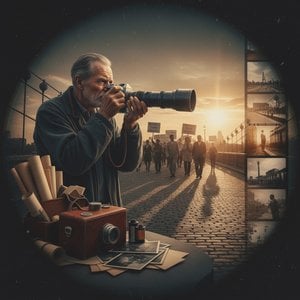
Witnessing History Through Lens & Light: Documentary Photography's Enduring Legacy
Explore the powerful history of documentary photography – from its origins to contemporary masters like Gordon Parks & W. Eugene Smith. Discover how this art form shapes our understanding of society and witness pivotal moments in time.

Топ-10 шедеврів живопису в чорних тонах: історія, мистецтво та декор від ArtsDot
Відкрийте для себе 10 найвідоміших картин у чорних тонах! Історія, техніка та емоції від ArtsDot. Романтизм, готика, експресіонізм – шедеври живопису онлайн. Купіть репродукцію мрії на ArtsDot.com!
