


 Переглянути в інтер'єрі
 Надіслати
 Поділитися
 Деталі
 Посібник

 Завантажити
 Схожі предмети колекціонування
 Рентгенівське дослідження
 Слайд-шоу
 Статистика переглядів
Spatial Concept
 Acrylic On Canvas
- WallArt
- Spatialism
 1955
1955- Late Medieval
 80.0 x 65.0 cm
 Boschi Di Stefano House Museum
 Читати далі
Мистецький твір, представлений на цій сторінці, захищений законом про авторське право, що унеможливлює легальне створення або продаж його ідентичної репродукції. Цей захист забезпечується відповідно до міжнародних угод, таких як Бернська конвенція та національним законодавством, зокрема положеннями, що викладені в Законодавство США про авторське право — Розділ 17. Всі права захищені. Будь-яке використання без дозволу заборонено.
Цей метод повністю відповідає нормам авторського права, оскільки він не передбачає копіювання чи дублювання захищеного твору мистецтва. Натомість це творче переосмислення — створення нового малюнка під впливом оригіналу, який не є його точним відтворенням.
Гікле / Художній принт
Музейна якість друку جيкле або на полотні з оперативним виготовленням та різноманітними варіантами фінішної обробки. ( Купити картину ручної роботи Перейти до цифрових зображень)




P118B ₴10

P118H ₴10

P118W ₴10

P438Z ₴10

P508JH ₴12

P508YH ₴12

P805H ₴10

P805Z ₴10

P919BZ ₴10

P919G ₴10

P919XJ ₴10

P959ZH ₴10

P968JZ ₴12

W106C ₴8

W218G ₴10

W218JH ₴8

W218Y ₴10

W307PJ ₴10

W316G ₴10

W316PJ ₴8

W316Y ₴10

W398PJ ₴8

W4111J ₴10

W500HY ₴15

W500JH ₴15

W692G ₴12

W849H ₴8

W940BG ₴15

W953PJ ₴8




Обирайте з наших стандартних розмірів, що відповідають оригінальним пропорціям твору мистецтва.

Введіть необхідну ширину та висоту, щоб принт ідеально підійшов до вашої рами або стіни. Принт можна лише обрізати, але не можна зробити більшим за оригінал, тому при зміні пропорцій частина зображення буде втрачена. Перед друком ми надсилаємо вам цифровий макет для затвердження. Зображення на цій сторінці не відображає реальну обрізку — її можна побачити лише на макеті.
Доставка по всьому світу () за 2 тижні замість стандартних 4/5 тижнів. (22 Жовтень)

Безкоштовна експрес-доставка по всьому світу

Високоякісне лляне полотно

Повне страхове покриття доставки

Гарантія повернення митних зборів

Гарантія точного відтворення кольорів

Політика повернення протягом 100 днів (лише у разі виявлення дефектів)

Гарантія повернення 100% коштів

Знижка на оптові замовлення
 Скляний варіант доступний лише для розмірів до 110 см

Spatial Concept
Гікле / Художній принт
Розмір репродукції
-


Загальна вартість
₴ 2779
The Genesis of Spatialism: “Spatial Concept” (1955)
Lucio Fontana's "Spatial Concept," painted in 1955, isn’t merely a painting; it’s a declaration. Born from the fertile ground of post-war Italy and fueled by a desire to transcend traditional artistic boundaries, this work embodies the very genesis of Spatialism – a revolutionary movement that redefined the relationship between art and space itself. Fontana, having spent formative years in Argentina before returning to Italy, carried with him a restless spirit and a profound questioning of established norms. He sought to dismantle the conventional limitations of painting, moving beyond the static surface to engage with the dynamic reality of the surrounding environment. “Spatial Concept” achieves this through a deceptively simple yet profoundly impactful gesture: the deliberate incision into a monochrome canvas.
The painting’s foundation is a stark, almost austere black field – a deliberate choice that amplifies the drama of the intervention. Against this backdrop, Fontana introduces a series of precisely executed perforations, creating a network of holes that disrupt the surface and invite contemplation. These aren't random marks; they are carefully considered punctures, strategically placed to suggest a dialogue between the two-dimensional plane and an unseen, boundless space beyond. The composition is subtly asymmetrical, with a denser concentration of these apertures towards the upper left quadrant, punctuated by a vertical line of smaller elements – tiny dots or beads interspersed with fragments of blue glass. This central axis creates a sense of directed movement, drawing the eye through the work and hinting at an underlying order within apparent chaos.
Technique and Materials: A Fusion of Disciplines
Fontana’s technique is both meticulous and intuitively expressive. The canvas itself – typically primed with a thin white wash – serves as the stage for his radical intervention. He employed an awl, meticulously creating each hole with precision and control. The choice of black paint was equally deliberate; it provided a stark contrast to the perforations, intensifying their visual impact and emphasizing their spatial qualities. Crucially, Fontana didn’t simply cut into the canvas; he often lined the reverse with black gauze, allowing the darkness behind the openings to shimmer and create an illusion of depth – effectively turning the painting into a window onto another dimension. The incorporation of small blue fragments—likely meticulously chosen pieces of glass or ceramic—adds a subtle chromatic counterpoint, suggesting a connection to the natural world and further enriching the work’s layered complexity.
Beyond the canvas itself, Fontana's approach was deeply interdisciplinary. He drew inspiration from architecture, industrial design, and even scientific concepts like space exploration. This fusion of influences is evident in his use of materials – a deliberate departure from traditional painting mediums – and his conceptual framework, which sought to dissolve the boundaries between art and reality.
Symbolism and Emotional Resonance: Beyond Representation
“Spatial Concept” transcends mere representation; it’s an exploration of fundamental concepts—space, time, and perception. The act of cutting into the canvas can be interpreted as a symbolic gesture of liberation – a breaking free from the constraints of traditional artistic conventions. The holes themselves evoke feelings of fragmentation and incompleteness, mirroring the anxieties and uncertainties of the post-war era. Yet, alongside this sense of disruption, there’s also an underlying feeling of order and connection, suggested by the central vertical line and the carefully arranged blue fragments.
Fontana himself described his work as “an art for the Space Age,” reflecting a belief that art should engage with the world around us—not simply depict it. “Spatial Concept” invites viewers to step beyond the confines of the canvas, to contemplate the space surrounding them, and to consider their own relationship to the vastness of existence. It’s a powerfully evocative work that continues to resonate today, reminding us of the enduring power of art to challenge our perceptions and expand our horizons.
Historical Context & Further Exploration
Created in 1955, “Spatial Concept” sits firmly within Fontana's broader body of work exploring Spatialism. It’s a pivotal piece in understanding his radical approach to painting, which he developed over decades and that profoundly influenced subsequent generations of artists. To delve deeper into this fascinating artist and movement, consider exploring the resources linked below:
- Lucio Fontana - Spatial Concept (Concetto Spaziale) - The Metropolitan Museum of Art
- Lucio Fontana – Wikipedia
- Concetto Spaziale - Robilant+Voena
Запитання та відповіді
Який це вид твору мистецтва: «Spatial Concept» Лучіо Фонтана?
«Spatial Concept» — це твір у техніці WallArt.
Чи доступна робота "Spatial Concept" у вигляді художнього принта?
«Spatial Concept» доступний як художній принт на бавовняному полотні або архівному канвас-папері. Замовлення можна оформити на сторінці Художній принт у будь-якому обраному вами розмірі.
Як у «Spatial Concept» Лучіо Фонтана переплітаються художній стиль та епоха?
«Spatial Concept» належить до течії Spatialism, а її автор працював у епоху — Модерн.
Схожі твори мистецтва


Біографія митця
A Life Forged in Spatialism
Lucio Fontana, a name now synonymous with radical innovation and the very expansion of artistic possibility, was born into a world poised on the cusp of profound change. His journey began not amidst the familiar landscapes of Italy – the nation that would ultimately become his most enduring contribution to the art world – but in Rosario, Argentina, in 1899. The son of Luigi Fontana, an Italian sculptor who had emigrated to Argentina a year prior, young Lucio inherited both a craftsman’s meticulousness and a nascent artistic vision. This early exposure to form, material, and the tactile nature of creation proved foundational, shaping his approach even as his life unfolded across continents and embraced diverse stylistic explorations. Returning to Italy with his family, he immersed himself in the rich cultural heritage of Europe, enrolling at the prestigious Brera Academy in Milan and absorbing the vibrant energy of the avant-garde movements that were actively challenging established artistic norms. Yet, a persistent connection to his origins remained – multiple returns to Argentina punctuated his career, fueling a desire to transcend conventional boundaries and offering a unique perspective shaped by his dual heritage. Fontana’s early work reflected this complex duality: initially rooted in figurative sculpture and painting, it gradually evolved towards abstraction, hinting at the revolutionary path he was destined to forge.Breaking the Canvas: The Birth of Spatialism
The seismic events of World War II served as a pivotal catalyst for Fontana's most groundbreaking artistic endeavors. Witnessing firsthand the devastation and upheaval that engulfed Europe, he felt compelled to fundamentally redefine art’s purpose in a world irrevocably altered. This led to the formulation of *Spatialism*, a movement not merely focused on representing space but actively incorporating it as an integral element within the artwork itself. Fontana believed that traditional painting, confined to its two-dimensional plane, inherently limited artistic expression, restricting creativity to a static surface. He envisioned a new form of art—one that would dismantle these constraints, acknowledging and celebrating the boundless depth and potential inherent in space beyond the confines of the canvas. This wasn’t simply about creating illusions of depth; it was about physically opening up the artwork, inviting viewers to perceive something *more* – an infinite expanse beyond the visible surface. Beginning in the late 1940s, Fontana embarked on his now-iconic series of slashed and punctured canvases—the *Concetti Spaziali* (Spatial Concepts). These weren’t acts of destructive vandalism but rather deliberate interventions, meticulously executed with a razor blade, designed to reveal a void – a symbolic representation of the vastness of the cosmos. The slashes, often precise and considered, transformed the canvas into a window onto another dimension, suggesting an unseen reality just beyond our perception. He wasn’t destroying the painting; he was liberating it from its limitations, inviting viewers to contemplate the relationship between the artwork and the infinite space surrounding it.Influences and Artistic Kinship
Fontana's artistic development wasn’t a solitary pursuit. His creative journey was deeply informed by a diverse range of influences, which he skillfully absorbed and transformed into his unique visual language. The expressive power of Vincent van Gogh resonated profoundly within him—particularly the emotional intensity conveyed through brushwork and the use of color to evoke profound feelings. He also found inspiration in the satirical edge of Pieter Bruegel the Elder, recognizing the older master’s ability to critique societal flaws with a sharp wit and keen observation. However, a particularly transformative encounter occurred when he engaged with the work of Polish artist Jan Grzegorz Stanisławski. Stanisławski's exploration of light and color within his 'Mullein' series profoundly impacted Fontana’s approach to abstraction and spatial representation, encouraging him to consider how light could be used to create illusions of depth and dimension. Furthermore, his participation in groups like *Abstraction-Création* in Paris exposed him to a broader network of avant-garde artists—a stimulating environment that fostered an exchange of ideas and fueled his experimentation with new techniques and concepts. While distinctively original, Fontana’s work also shares affinities with other post-war movements such as Zero and Nouveau Réalisme, all striving to redefine the boundaries of art and challenge traditional notions of artistic value.Major Achievements: The Slash and Beyond
Fontana's most iconic achievement undoubtedly lies in his *Concetti Spaziali* series – the slashed canvases that became instantly recognizable symbols of his revolutionary approach. However, his exploration of space extended far beyond this singular technique. He created *hole paintings*, meticulously piercing the canvas with a razor blade to create actual openings—a deliberate act that further emphasized spatial depth and invited viewers to engage physically with the artwork. These weren’t simply decorative perforations; they were integral to Fontana's conceptual framework, representing a disruption of the traditional boundaries between art and reality. He also ventured into sculpture, producing monumental works – often incorporating elements of architecture—that echoed the themes of volume and void found in his two-dimensional pieces. His *Soffitto Spaziale* (Spatial Ceiling) installations were particularly ambitious, transforming entire environments into immersive experiences designed to evoke a sense of infinite space and blur the lines between art and architecture. These large-scale creations enveloped viewers, challenging their perceptions of reality and inviting them to contemplate the boundless possibilities beyond the confines of the familiar.A Lasting Resonance
Lucio Fontana’s death in Comabbio, Italy, in 1968, marked the end of a remarkable career but not the end of his profound influence on the art world. Today, his works are held in prestigious museum collections across the globe—from The Metropolitan Museum of Art to the Ballarat Fine Art Gallery in Australia—testament to his enduring legacy as a pioneer of modern abstraction. Fontana’s work continues to inspire artists and viewers alike, prompting us to question our assumptions about space, perception, and the very nature of art itself. He wasn't merely a painter; he was an explorer of dimensions, a visionary who dared to break down boundaries and invite us to perceive reality in new and expansive ways. His legacy is not simply a collection of slashed canvases but a profound invitation to contemplate the infinite possibilities that lie beyond our immediate perception—a testament to the power of art to transform our understanding of the world.
Лучіо Фонтана
1899 - 1968 , Аргентина
Довідкова інформація
- Artistic Movement Or Style: Спейс-ізм
- Artists Or Movements Influenced By This Artist:
- Нульовий
- Новий Реалізм
- Мінімалізм
- Artists Who Influenced This Artist:
- Ян Гжегозь Станіславський
- Вінсент Ван Гог
- Пітер Брюгель Старший
- Date Of Birth: 1899
- Full Name: Лучіо Фонтана
- Nationality: Італієць-Аргентинець
- Notable Artworks:
- Концепт Спейцалe, Атезе
- Простір Концепція
- Розрізаний полотно
- Place Of Birth: Розаріо, Аргентина
Схожі статті

Топ-10 шедеврів живопису в чорних тонах: історія, мистецтво та декор від ArtsDot
Відкрийте для себе 10 найвідоміших картин у чорних тонах! Історія, техніка та емоції від ArtsDot. Романтизм, готика, експресіонізм – шедеври живопису онлайн. Купіть репродукцію мрії на ArtsDot.com!

Топ-10 шедеврів абстрактного експресіонізму: мистецтво, яке змінила епоху | ArtsDot.com
Відкрийте для себе 10 шедеврів абстрактного експресіонізму! Дізнайтесь історію Поллока, Ротко та інших геніїв. Репродукції картин преміум-якості для вашого дому від ArtsDot.com. Дослідіть колекцію онлайн!

Топ-10 шедеврів у білих тонах: мистецтво світла та простору від ArtsDot
Відкрийте для себе 10 легендарних картин, де білий колір стає головним героєм! Історія Моне, Ван Гога та інших майстрів. Купіть репродукції шедеврів імпресіонізму на ArtsDot.com – мистецтво для вашого дому.

Топ-25 шедеврів Василя Кандинського: подорож у світ абстрактного мистецтва | ArtsDot.com
Відкрийте для себе 25 найвідоміших шедеврів Василя Кандинського! Пориньте у світ абстрактного мистецтва, експресіонізму та кольорових композицій. Репродукції картин Кандинського преміум-якості на ArtsDot.com – для вашого інтер'єру з душею. Дослідіть повну колекцію онлайн!
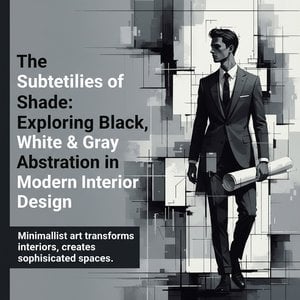
The Subtleties of Shade: Exploring Black, White & Gray Abstraction in Modern Interior Design
Explore the power of black, white & gray abstraction in modern interior design. Discover how minimalist art impacts spatial perception & creates sophisticated hotel spaces. Expert insights for designers.


