


 Переглянути в інтер'єрі
 Надіслати
 Поділитися
 Деталі
 Посібник

 Завантажити
 Схожі предмети колекціонування
 Рентгенівське дослідження
 Слайд-шоу
 Статистика переглядів
Four Demons with a Book
 Acrylic On Paper
- WallArt
- Renaissance draftsmanship
 335.0 x 284.0 cm
 Бібліотека Дж. П. Моргана
 Читати далі
Гікле / Художній принт
Музейна якість друку جيкле або на полотні з оперативним виготовленням та різноманітними варіантами фінішної обробки. ( Купити картину ручної роботи Перейти до цифрових зображень)




P118B $10

P118H $10

P118W $10

P438Z $10

P508JH $12

P508YH $12

P805H $10

P805Z $10

P919BZ $10

P919G $10

P919XJ $10

P959ZH $10

P968JZ $12

W106C $8

W218G $10

W218JH $8

W218Y $10

W307PJ $10

W316G $10

W316PJ $8

W316Y $10

W398PJ $8

W4111J $10

W500HY $15

W500JH $15

W692G $12

W849H $8

W940BG $15

W953PJ $8




Обирайте з наших стандартних розмірів, що відповідають оригінальним пропорціям твору мистецтва.

Ви можете вказати власні розміри, щоб репродукція ідеально підійшла до конкретної рами або інтер'єру. Якщо обраний вами розмір не відповідає пропорціям оригіналу, ми або обріжемо полотно, або розширимо зображення за допомогою дзеркального відображення чи суцільної заливки країв. Перед початком виробництва вам буде надіслано цифровий макет для затвердження.
Будь ласка, зверніть увагу, що попередній перегляд на екрані не відображає фактичне обрізання або розширення. Тільки макет точно покаже фінальну композицію.
Хоча можливість замовлення індивідуальних розмірів доступна, ми рекомендуємо обирати формат із попередньо визначеного списку, щоб зберегти оригінальні пропорції.
Доставка по всьому світу () за 2 тижні замість стандартних 4/5 тижнів. (25 Вересень)

Безкоштовна експрес-доставка по всьому світу

Високоякісне лляне полотно

Повне страхове покриття доставки

Гарантія повернення митних зборів

Гарантія точного відтворення кольорів

Політика повернення протягом 100 днів (лише у разі виявлення дефектів)

Гарантія повернення 100% коштів

Знижка на оптові замовлення
 Скляний варіант доступний лише для розмірів до 110 см

Four Demons with a Book
Гікле / Художній принт
Розмір репродукції
-


Загальна вартість
$ 62
The Genesis of a Masterpiece: Luca Signorelli's Preparatory Drawing
Luca Signorelli’s “Four Demons with a Book,” a remarkably detailed preparatory study for the monumental fresco cycle adorning Orvieto Cathedral, offers a captivating glimpse into the mind of one of the High Renaissance’s most potent visual storytellers. More than just a sketch, it's a concentrated distillation of ideas, a vibrant testament to Signorelli’s meticulous draftsmanship and his profound understanding of human psychology – particularly as manifested through the unsettling interplay of demonic figures and forbidden knowledge. The drawing itself, rendered in charcoal or silverpoint on aged paper, possesses an immediate power, radiating a palpable sense of urgency and contained chaos.
The work’s genesis lies within the Cappella Nova, a space already steeped in religious narrative through earlier frescoes by Fra Angelico. Signorelli was tasked with expanding this existing framework, creating a dramatic visual representation of the Apocalypse – a subject demanding both grandeur and terrifying intimacy. This preparatory study isn't merely a preliminary sketch; it’s a crucial stage in the artist’s process, revealing his initial compositional choices, anatomical explorations, and the evolution of individual figures before they were unleashed upon the vast cathedral walls.
A Symphony of Line: Technique and Composition
Signorelli's mastery is immediately evident in the drawing’s intensely linear quality. Hatching and cross-hatching dominate, building up volume with a remarkable degree of precision and control. The figures aren’t simply outlined; they are sculpted through layers of carefully applied lines, conveying not just their physical form but also the texture of skin, clothing, and even the suggestion of demonic musculature. The limited palette – primarily shades of gray and white – amplifies this effect, creating a dramatic chiaroscuro that emphasizes the figures’ powerful presence against an implied darkness. The composition itself is deliberately claustrophobic, with the demons crowding together in a dynamic, almost violent arrangement. There's no background; the focus remains entirely on these unsettling characters and their interaction with the central object of contemplation – the book.
The drawing’s flattened perspective, characteristic of preparatory studies, lends it an immediacy and intimacy rarely found in finished works. It feels as though we are witnessing Signorelli wrestling with his ideas directly, capturing a fleeting moment of creative struggle. The subtle erasures and adjustments visible throughout the piece further underscore this sense of process, revealing the artist’s willingness to experiment and refine his vision.
Symbolism and Psychological Depth
The subject matter – four demonic figures clustered around a book – is laden with symbolic weight. Demons, traditionally representing temptation, sin, and the forces of evil, are inherently unsettling. Their muscular physiques and aggressive postures convey power and menace. The book, however, introduces an element of ambiguity. It’s not simply a symbol of knowledge; it suggests a dangerous, potentially corrupting influence – a forbidden text promising enlightenment but ultimately leading to damnation. The positioning of the demons, particularly one holding the book aloft with a look of intense concentration, hints at a struggle between intellect and faith, reason and revelation.
Signorelli’s genius lies in his ability to imbue these archetypal figures with psychological depth. The expressions on their faces – ranging from rage and suspicion to curiosity and perhaps even a hint of despair – suggest a complex internal landscape. The drawing isn't merely a depiction of demons; it’s an exploration of the human condition, confronting us with our own vulnerabilities and temptations.
A Legacy in Stone and Charcoal
“Four Demons with a Book” stands as a pivotal work in Signorelli’s oeuvre, foreshadowing the dramatic intensity and psychological complexity that would define his masterpiece at Orvieto. It's a testament to his extraordinary draftsmanship, his profound understanding of human anatomy, and his ability to translate complex theological ideas into visually arresting imagery. The drawing offers a rare opportunity to connect with the creative process of one of the Renaissance’s most influential artists, revealing the meticulous care and intellectual rigor that underpinned his monumental achievements. Reproductions of this captivating study offer a window into a world of dramatic tension, profound symbolism, and enduring artistic power.
Схожі твори мистецтва


Біографія митця
Early Life and Training
Лука Фа Престо, відомий як Лука Signorelli, народився в Кортоні, в Тоскані, приблизно у 1450 році. Точна дата його народження залишається невідомою, але вважається, що він народився між 1441 та 1445 роками. Він був видатним художником-графіком, який вирізнявся майстерністю в передачі форми та використанням перспективи. Його раннє навчання відбулося в Перуджі, де він безпосередньо вплинув від стилів таких митців, як Benedetto Bonfigli, Lorenzo di Pietro (так само відомий як Pinturicchio) та інші. Згідно з записами Джорджіо Вазарі, Лука був під керівництвом Pierro della Francesca, його дядька по материнській лінії, Лаццаро Васарі. Це навчання дало йому міцну основу для подальшого розвитку та експериментів у мистецтві.Artistic Career and Notable Works
Кар'єра Лука Signorelli почалася з виконання невеличких робіт в Ареццо (1472) та Чітта ді Кастелло (1474). Однак, його найвидатнішим твором стала фреска "Школа Пан", яку він подарував Лоренцо де' Медічі. Цей твір демонструє вражаючу здатність Signorelli до реалістичного зображення людського тіла та майстерне використання чіткості світла та темряви (чароскуро) та лінійної перспективи. Він також створив грандіозну фреску "Останній суд" у соборі Орвіето (1499-1503), яка стала його справжньою віхою в творчості та, безсумнівно, найважливішим внеском до історії мистецтва. Крім того, він написав поліптих святого Медара (1507) для музею святого Медара в Аркевійї – чудовий приклад його праць, що вражають деталізацією та натуралізмом у зображенні людського тіла.Artistic Influences and Movement
Лука Signorelli був активним учасником італійського Ренесансу, періоду, який ознаменував перехід від середньовіччя до раннього сучасності в Європі. Цей час характеризувався поверненням до класичних традицій, акцентом на натуралізм та гуманізм. Його творчість була значно вплинута такими художниками, як Франческо Пієро дальа Francesca, відомий своєю майстерністю в передачі перспективи та реалістичного зображення людського тіла. Він також був під впливом стилів Benedetto Bonfigli та Pinturicchio, які сприяли розвитку його техніки та композиційних рішень.Legacy and Significance
Творчість Лука Signorelli мала значний вплив на розвиток ренесансного мистецтва. Його новаторський підхід до використання перспективи, майстерність у графічному оформленні та здатність передати емоції та драматизм зробили його одним із найважливіших художників того часу. Його роботи продовжують захоплювати глядачів і сьогодні, а "Останній суд" в соборі Орвіето залишається символом ренесансного мистецтва та візуальним вираженням релігійних переконань епохи. Його внесок у розвиток живопису непереоцінений, і він продовжує надихати художників і дослідників мистецтва.
Лука Signorelli
1450 - 1523 , Італія
Довідкова інформація
- Artistic Movement Or Style: Ренесанс
- Artists Or Movements Influenced By This Artist: ['Fra Angelico']
- Artists Who Influenced This Artist: ['Пiero della Francesca']
- Date Of Birth: 1441/1445 (приблизно)
- Date Of Death: 16 жовтня 1523
- Full Name: Luca di Egidio di Ventura Signorelli
- Nationality: Італійський
- Notable Artworks:
- Останній суд
- Схоластика Пан
- Place Of Birth: Кортона, Італія
Схожі статті

The Alchemy of Graphite: An Expert Guide to Mastering Detail and Depth in Pencil Sketching
Unlock the secrets of graphite sketching with our expert guide for art students. Learn to master pencil grades, create realistic depth, and capture intricate textures through professional techniques designed to elevate your observational drawing skills.

Luca Signorelli: Renaissance Innovation & Dramatic Foreshadowing of Modern Artistic Expression
Explore the revolutionary art of Luca Signorelli, a High Renaissance master renowned for his dramatic frescoes & anatomical precision. Discover his lasting impact on art history and techniques like foreshortening.

The Nuances of Graphite: Exploring Emotional Depth & Technical Mastery in Pencil Drawing
Explore the captivating world of graphite drawing! Discover its rich history, master essential techniques like chiaroscuro, and learn how artists evoke emotion through this timeless medium. Expert insights for art enthusiasts.

The Eloquent Line: Exploring the Artistic Significance of Sketches Across Movements and Media
Explore the profound artistic significance of sketches throughout history. From Renaissance masters to modern innovators like Van Gogh & Guston, discover how these foundational works reveal technique, emotion, and vision. Learn more at ArtsDot.
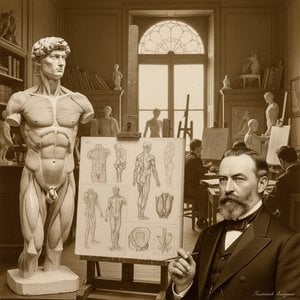
Frederick Bridgman: Anatomical Mastery & the Evolution of Figure Drawing Instruction
Explore the anatomical mastery of George B. Bridgman & his revolutionary figure drawing techniques. Discover how his methods transformed art instruction and continue to inspire artists today. Learn more at ArtsDot.


