


 Переглянути в інтер'єрі
 Надіслати
 Поділитися
 Деталі
 Посібник

 Завантажити
 Схожі предмети колекціонування
 Рентгенівське дослідження
 Слайд-шоу
 Статистика переглядів
Noah
 International Gothic Style
 1408
1408 66.0 x 44.0 cm
 Музей Метрополітен
 Читати далі
Олійная репродукція ручної роботи
Написана вручну олією на полотні у вашому розмірі та рамі, виготовлена на замовлення нашими художниками. ( Перейти до друку Перейти до цифрових зображень)




P118B ₴10

P118H ₴10

P118W ₴10

P438Z ₴10

P508JH ₴12

P508YH ₴12

P805H ₴10

P805Z ₴10

P919BZ ₴10

P919G ₴10

P919XJ ₴10

P959ZH ₴10

P968JZ ₴12

W106C ₴8

W218G ₴10

W218JH ₴8

W218Y ₴10

W307PJ ₴10

W316G ₴10

W316PJ ₴8

W316Y ₴10

W398PJ ₴8

W4111J ₴10

W500HY ₴15

W500JH ₴15

W692G ₴12

W849H ₴8

W940BG ₴15

W953PJ ₴8




Обирайте з наших стандартних розмірів, що відповідають оригінальним пропорціям твору мистецтва.

Введіть необхідну ширину та висоту, щоб картина підійшла до вашої рами або стіни. Оскільки це ручний розпис, для розміру іншої форми художник може написати трохи більше навколо картини або трохи обрізати її — вибір за вами. Перед початком роботи ми надішлемо вам цифровий макет для затвердження. Зображення, показане на цій сторінці, не є реальним результатом — лише макет відображає майбутній вигляд.
Після оформлення замовлення команда ArtsDot.com зв'яжеться з клієнтом електронною поштою для отримання інструкцій та надасть попередній макет
Доставка по всьому світу () за 3–4 тижні замість стандартних 5 тижнів. (22 Жовтень). Без жодних компромісів у якості.

Безкоштовна експрес-доставка по всьому світу

Високоякісне лляне полотно

Повне страхове покриття доставки

Гарантія повернення митних зборів

Гарантія точного відтворення кольорів

Політика повернення протягом 100 днів (лише у разі виявлення дефектів)

Гарантія повернення 100% коштів

Знижка на оптові замовлення
 Скляний варіант доступний лише для розмірів до 110 см

Noah
Техніка репродукції
Розмір репродукції
-


Загальна вартість
₴ 11799
Lorenzo Monaco’s “Noah”: A Testament to Faith Amidst Gothic Elegance
Lorenzo Monaco (1370–1425), a Florentine monk whose artistic vision bridged the Gothic tradition with the nascent Renaissance, stands as one of the most influential figures in early fifteenth-century Italian art. While biographical details remain elusive—scholars debate his precise birthplace and formative influences—his oeuvre speaks volumes about his profound engagement with spirituality and his masterful assimilation of stylistic innovations. This painting, “Noah,” created around 1408–10 and currently residing at the Metropolitan Museum of Art in New York City, exemplifies Monaco’s distinctive approach: a harmonious blend of Gothic grandeur and humanist sensitivity.- Subject Matter & Narrative Depth: The artwork depicts Noah, revered as a prophet and savior of humanity, embodying biblical themes of divine providence and moral responsibility. Monaco meticulously portrays Noah's solemn demeanor and unwavering faith—a characteristic found throughout his religious paintings—reflecting the prevailing spiritual fervor of the era.
- Style & Technique – Gothic Influence: Monaco’s style is undeniably rooted in the Gothic tradition, evident in the elongated figures and expressive drapery that characterize the composition. The artist skillfully employs tempera on wood, a technique favored for illuminated manuscripts and altarpieces during this period, achieving remarkable luminosity and textural detail. Notably, the gold leaf painstakingly applied to the background underscores the opulent aesthetic sensibilities of late medieval art.
- Compositional Elements: The painting’s architectural setting—a stylized church reminiscent of Florentine Gothic churches—serves as a symbolic backdrop for Noah's narrative. The pointed arch and gilded embellishments reinforce the sacred atmosphere, guiding the viewer’s gaze toward the central figure. Monaco’s meticulous attention to detail extends beyond the architecture, meticulously rendering Noah’s robes and facial features with remarkable realism.
- Symbolism & Significance: Beyond its visual beauty, “Noah” carries profound symbolic weight. The scroll held by Noah represents divine scripture—a cornerstone of Christian belief—affirming the importance of moral guidance and prophetic utterance. Similarly, Noah's raised hand signifies authority and divine instruction, emphasizing his role as a leader entrusted with safeguarding humanity’s future.
Lorenzo Monaco: Bridging Gothic Tradition & Renaissance Ideals
Born Piero di Giovanni around 1370 in Siena, Monaco's artistic apprenticeship in Florence exposed him to the stylistic achievements of Giotto and Agnolo Gaddi—artists who championed narrative clarity and emotional resonance. However, his subsequent embrace of monastic life at Santa Maria degli Angeli profoundly shaped his artistic sensibilities, fostering a contemplative spirit that permeated his entire oeuvre. This dedication to spiritual contemplation distinguishes Monaco from many of his contemporaries and contributes significantly to the enduring appeal of his artwork.Exploring Monaco’s Artistic Legacy
Considered a pivotal figure in the transition between Gothic and Renaissance art, Lorenzo Monaco's influence extended beyond “Noah.” His masterful depictions of biblical figures—such as Moses and Abraham—demonstrate his ability to convey complex theological concepts with breathtaking artistry. Furthermore, Monaco’s innovative use of color and textural detail foreshadowed the stylistic breakthroughs that would characterize the High Renaissance, establishing him as a precursor to masters like Masolino and Piero della Francesca. To delve deeper into Monaco's artistic achievements, explore paintings like “Moses” and “Abraham” on https://ArtsDot.com/.A Masterpiece Revisited: The Metropolitan Museum of Art Collection
“Noah,” housed at the Metropolitan Museum of Art in New York City—a repository of exceptional religious art from the fifteenth century—offers viewers an opportunity to contemplate a seminal work of Italian Renaissance art. Its enduring beauty and historical significance continue to inspire admiration and scholarly inquiry, cementing Monaco’s place as one of the most celebrated artists of his time. For more information on Monaco's life and artistic contributions, visit /art/list/?Filter=lorenzo+monaco,lorenzo,monaco& or consult Wikipedia: https://en.wikipedia.org/wiki/Lorenzo_Monaco .Запитання та відповіді
Як я можу переглянути «Noah» Лоренцо Монакко у форматі слайд-шоу?
«Noah» Лоренцо Монакко можна переглянути у форматі слайд-шоу на сторінці Слайд-шоу цього твору.
Яку кольорову гармонію демонструє «Noah» Лоренцо Монакко?
Колірна гармонія твору "Noah" визначена як Висока колірна єдність.
Які псевдоніми або інші імена має Лоренцо Монакко?
Лоренцо Монакко також відомий/відома як Пiero di Giovanni.
Схожі твори мистецтва


Біографія митця
Lorenzo Monaco, c.1370–1425 | Art UK
Lorenzo Monaco (c.1370–1425) stands as a singular figure in the artistic landscape of late Gothic Florence—a beacon illuminating the twilight years before the full blaze of the Renaissance. Despite the scarcity of biographical data, his oeuvre speaks volumes about an artist deeply rooted in tradition yet subtly attuned to emerging stylistic currents, securing him a place among the most revered masters of his era. His journey began in Siena, where he was born around 1370—a birthplace that would later become synonymous with artistic excellence and innovation. Precise details regarding his upbringing remain elusive, but scholarly consensus points to Florence as his formative environment, where he absorbed the lessons imparted by luminaries like Giotto, Spinello Aretino, and Agnolo Gaddi – artists who established a bedrock of narrative clarity and emotional resonance that would define Monaco’s artistic trajectory.Early Training and Influences: The Gothic Legacy
Lorenzo Monaco's formative years were spent honing his craft in the *bottega* of Agnolo Gaddi—a workshop renowned for its patronage of Giottoesque painting and its commitment to upholding the stylistic conventions of the International Gothic style. This exposure undoubtedly instilled in him a profound appreciation for meticulous detail, elegant linearism, and restrained chromatic palettes—characteristics that would permeate his early works. The influence of Giotto is palpable in Monaco’s approach to portraying human figures, particularly in his depiction of drapery folds and facial expressions—a stylistic hallmark that distinguishes him from many of his contemporaries. Furthermore, he absorbed insights from Ghiberti and Starnina, artists who championed sophisticated compositional techniques and a heightened awareness of visual space—elements that would contribute to the distinctive aesthetic of his artistic output. The International Gothic style itself—characterized by shimmering gold leaf, elongated figures draped in flowing garments, and an ethereal luminescence—provided Monaco with a framework for exploring themes of piety and transcendence.The Camaldolese Order and Artistic Transformation
A pivotal moment in Lorenzo Monaco’s life occurred in 1390 when he embraced monastic vows at Santa Maria degli Angeli in Florence—joining the Camaldolese order, a movement dedicated to contemplative prayer and scholarly pursuits. This decision profoundly shaped his artistic identity, imbuing it with an introspective quality and directing him toward subjects of spiritual significance. The monastery’s scriptorium became his studio, where he diligently illuminated manuscripts—a practice that demanded precision, patience, and a mastery of color and texture—further refining his technical skills and deepening his understanding of visual symbolism. It was during this period that Monaco adopted the name Lorenzo Monaco—a moniker signifying “Lawrence the Monk”—reflecting his unwavering devotion to God and his commitment to upholding monastic traditions. This dedication would become an enduring hallmark of his artistic vision, distinguishing him from many artists of his time who prioritized worldly pursuits over spiritual contemplation.Stylistic Evolution: From Gothic Grace to Renaissance Light
As Monaco’s artistic career progressed, he subtly adapted the stylistic conventions of the International Gothic style—embracing elongated figures draped in sinuous garments and favoring sharp edges and brilliant colors—particularly gold leaf and lapis lazuli—to convey emotion and spiritual depth. However, unlike many artists of his era who wholeheartedly embraced Renaissance humanism—characterized by anatomical accuracy and perspectival illusion—Monaco remained steadfastly committed to the expressive power of Gothic tradition. His later works demonstrate a remarkable sensitivity to light—a technique that anticipates the innovations championed by Masaccio and Filippo Brunelleschi—creating an ethereal luminescence that elevates his paintings beyond mere representation, transforming them into vehicles for conveying profound theological ideas. The *Pietà*, housed in Florence’s Galleria dell'Accademia, exemplifies this stylistic evolution—capturing the sorrowful dignity of Mary mourning Jesus with a nervous energy in its lines and a palpable sense of emotional tension. Similarly, *The Coronation of the Virgin*—now gracing the Uffizi Gallery—displays Monaco’s masterful command of color and composition—creating a vibrant tapestry of saints rendered with sinuous forms and dazzling hues.Legacy: A Singular Voice Amidst Changing Times
Lorenzo Monaco's artistic legacy endures as a testament to his singular vision—a synthesis of Gothic elegance and nascent Renaissance sensibilities that distinguishes him from many of his contemporaries. Giorgio Vasari, writing in *Lives of the Artists*, acknowledged Monaco’s talent while noting his untimely death around 1425—a loss that deprived Florence of one of its most distinguished painters. Despite the brevity of his life, Monaco left an indelible mark on art history—establishing himself as the final significant exponent of Giotto's style and paving the way for subsequent generations of artists who embraced Renaissance humanism. His paintings continue to inspire admiration for their refined technique, spiritual depth, and evocative beauty—serving as enduring reminders of a pivotal moment in Florentine artistic culture—a time when tradition and innovation converged to produce masterpieces that resonate with viewers centuries later.
Лоренцо Монакко
1370 - 1425 , Італія
Довідкова інформація
- Artistic Movement Or Style: Пізня готична / Ранній ренесанс
- Artists Or Movements Influenced By This Artist:
- Фра Анжеліко
- Мазаччо
- Artists Who Influenced This Artist:
- Джото
- Спіньоло Аретіно
- Агноло Гадді
- Date Of Birth: Сiena, Італія (бл. 1370)
- Date Of Death: Італія (бл. 1425)
- Full Name: Lorenzo Monaco
- Nationality: Італійський
- Notable Artworks:
- П'єта
- Коронація Діви Марії
- Поклоніння Magi
- Place Of Birth: Сiena
Схожі статті

Illuminating Faith: Biblical Narrative & Artistic Expression Through the Ages
Explore the rich history of biblical art from Giotto to the Renaissance masters with ArtsDot. Discover symbolism, techniques & enduring legacies. Museum-quality reproductions & expert insights.

Топ-25 шедеврів Фра Анджеліко: італійське Відродження для вашого дому | ArtsDot
Відкрийте для себе 25 шедеврів Фра Анджеліко – італійського майстра Відродження! Дізнайтесь історію кожної фрески та картини, їхній духовний зміст та техніку виконання. Репродукції картин високої якості для вашого дому на ArtsDot.com.

Топ-10 шедеврів темпери на дошці, що змінили мистецтво | ArtsDot.com
Відкрийте для себе 10 легендарних шедеврів темпери на дошці, що змінили хід мистецтва! Ікона, Джотто, Ян ван Ейк та інші майстри. Купіть репродукції картин преміум-якості для вашого дому на ArtsDot.com.

Illuminating History: A Comprehensive Exploration of Tempera Painting Techniques & Artistic Legacy
Explore the rich history & techniques of tempera painting! Discover Renaissance masters like Botticelli & Fra Angelico, conservation insights, and the enduring legacy of this captivating art form.
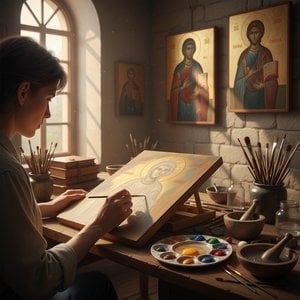
Illuminating Surfaces: A Comprehensive Exploration of Tempera on Panel Painting Techniques & Historical Significance
Explore the rich history & techniques of tempera painting! Discover Renaissance masters like Botticelli & Fra Angelico, conservation insights, and the enduring legacy of this captivating art form. Learn more now!


