
- Додому

- Друк на полотні
- lesser ury
- Eiffel Tower

 Замовити репродукцію Купити цифрове зображення
 Надіслати
 Поділитися
 Деталі витвору
 Додати до улюблених

 Завантажити
 Схожі вироби
 Рентгенівське дослідження
 Слайд-шоу
Eiffel Tower


 Розгорнути текст
Гікле / Художній принт
Музейна якість друку جيкле або на полотні з оперативним виготовленням та різноманітними варіантами фінішної обробки.




P118B $10

P118H $10

P118W $10

P438Z $10

P508JH $12

P508YH $12

P805H $10

P805Z $10

P919BZ $10

P919G $10

P919XJ $10

P959ZH $10

P968JZ $12

W106C $8

W218G $10

W218JH $8

W218Y $10

W307PJ $10

W316G $10

W316PJ $8

W316Y $10

W398PJ $8

W4111J $10

W500HY $15

W500JH $15

W692G $12

W849H $8

W940BG $15

W953PJ $8




Обирайте з наших стандартних розмірів, що відповідають оригінальним пропорціям твору мистецтва.

Ви можете вказати власні розміри, щоб репродукція ідеально підійшла до конкретної рами або інтер'єру. Якщо обраний вами розмір не відповідає пропорціям оригіналу, ми або обріжемо полотно, або розширимо зображення за допомогою дзеркального відображення чи суцільної заливки країв. Перед початком виробництва вам буде надіслано цифровий макет для затвердження.
Будь ласка, зверніть увагу, що попередній перегляд на екрані не відображає фактичне обрізання або розширення. Тільки макет точно покаже фінальну композицію.
Хоча можливість замовлення індивідуальних розмірів доступна, ми рекомендуємо обирати формат із попередньо визначеного списку, щоб зберегти оригінальні пропорції.
Доставка по всьому світу () за 2 тижні замість стандартних 4/5 тижнів. (15 Липень)

Безкоштовна експрес-доставка по всьому світу

Високоякісне лляне полотно

Повне страхове покриття доставки

Гарантія відшкодування митних зборів

Гарантія точного відтворення кольорів

Політика повернення протягом 60 днів (лише у разі виявлення дефектів)

Гарантія повернення 100% коштів

Знижка на багатоелементні замовлення
 Скляний варіант доступний лише для розмірів до 110 см

Eiffel Tower
Гікле / Художній принт
Розмір репродукції
-


Підсумкова ціна
-
Схожі витвори мистецтва


Біографія митця
A Life Painted in Light: The World of Leo Lesser Ury
Leo Lesser Ury, a name perhaps less instantly recognizable than some of his Impressionist contemporaries, nevertheless occupies a vital and evocative space within the narrative of German painting. Born on November 7, 1861, in Birnbaum, Prussia – now Międzychód, Poland – Ury’s journey was one marked by both artistic triumph and personal hardship. His early life was shadowed by loss; the death of his father, a baker, in 1872 forced a relocation to Berlin with his mother. This displacement instilled within him, perhaps, a lifelong sensitivity to urban landscapes and the transient nature of modern existence. Initially apprenticed to a tradesman, Ury’s artistic calling proved too strong to ignore, leading him to the Kunstakademie Düsseldorf in 1879. It was the beginning of an extended period of European exploration – Brussels, Paris, Munich, Stuttgart, Karlsruhe – each city contributing to the evolving palette and perspective that would define his unique style. These travels weren’t merely geographical; they were immersive studies in light, atmosphere, and the burgeoning energy of modern life.Embracing Impressionism and Capturing a City's Soul
Ury’s artistic development was deeply intertwined with the currents of late 19th-century art. While initially met with resistance – his first exhibition in 1889 eliciting a hostile response – he found a champion in the esteemed Adolph Menzel, whose support opened doors within the Berlin Academy. This recognition proved pivotal, allowing Ury to further refine his technique and vision. His embrace of Impressionism wasn’t merely stylistic; it was a means of capturing the fleeting moments of modern urban life. He joined the Munich Secession in 1893, aligning himself with a group of artists who challenged academic conventions and sought new modes of expression. Ury's canvases began to shimmer with lively brushstrokes, impasto application creating texture and depth, and an acute sensitivity to light’s transformative power. His primary subjects crystallized around this time: landscapes imbued with atmosphere, intimate interior settings, but most notably, the vibrant, often nocturnal scenes of city life. He wasn’t simply *depicting* Berlin; he was capturing its very essence – the glow of gas lamps on rain-slicked streets, the bustling energy of cafes, the quiet solitude of shadowed corners. He meticulously studied these urban spaces, utilizing postcards and photographs sent to him from Paris as visual aids, striving for a realism that nonetheless retained an element of subjective interpretation.A Distinctive Style: Pastel and Nocturne
Ury’s artistic signature is immediately recognizable through his masterful use of pastel. He possessed an extraordinary ability to capture the subtle nuances of light and shadow, particularly in nocturnal scenes – what he often referred to as “nocturnes.” These paintings are characterized by a delicate balance between darkness and illumination, creating a sense of mystery and intimacy. The application of pastel was deliberate; Ury believed it allowed for unparalleled control over color and texture, enabling him to achieve the atmospheric effects he sought. His palette leaned towards muted tones – blues, grays, purples – often punctuated by flashes of vibrant color that drew the eye and heightened the emotional impact of the scene. Beyond pastels, Ury also worked in oil paints, though his nocturnal landscapes are most frequently associated with this medium. His compositions were typically framed to emphasize the verticality of buildings, creating a sense of scale and grandeur within the urban environment.Recognition and a Complex Legacy
The early years of the 20th century saw Ury return to Berlin, where he quickly became a prominent figure in the city’s art scene. His participation in exhibitions with the Berlin Secession from 1915 onwards steadily increased his recognition. A landmark exhibition in 1922, showcasing 150 of his paintings and pastels, cemented his reputation; the mayor of Berlin hailed him as “the artistic glorifier of the capital.” This period marked a high point in Ury’s career, fueled by both critical acclaim and commercial success. He became particularly renowned for his mastery of pastel, utilizing the medium to create works of exceptional delicacy and atmospheric depth. However, this success was shadowed by a complex aspect of his practice. To meet growing demand, Ury began repeating compositions, producing numerous copies – some of lesser quality – that unfortunately diluted his artistic standing in the eyes of some critics. This pragmatic approach, while financially beneficial, ultimately contributed to a somewhat ambivalent assessment of his oeuvre.A Lasting Impression: Historical Significance and Enduring Appeal
Leo Lesser Ury’s historical significance extends beyond his technical skill and aesthetic sensibilities. He is remembered as a keen observer and evocative portrayer of modern urban life, particularly the nocturnal landscapes of Berlin that resonated with audiences seeking to understand their rapidly changing world. His work offers a glimpse into a specific time and place – a city on the cusp of modernity, grappling with industrialization, social change, and the anxieties of a new era. Furthermore, as a Jewish artist navigating German society, Ury’s life and work reflect aspects of Jewish cultural identity and experience within a complex socio-political landscape. His paintings, while not overtly political, subtly convey a sense of belonging and alienation, offering a unique perspective on the challenges faced by Jewish communities in Germany during this period. His legacy is a testament to the power of art to capture not just what we see, but how it feels to be alive in a particular moment. Ury’s paintings continue to resonate with viewers today, inviting us to contemplate the beauty and complexity of urban life through his evocative lens.
lesser ury
1861 - 1931 , Польща
Короткі факти
- Artistic Movement Or Style: Імпресіонізм
- Artists Or Movements Influenced By This Artist: ['Пізнi художники']
- Artists Who Influenced This Artist: ['АдОльф Менезель']
- Date Of Birth: 7 квiтня 1861
- Date Of Death: 18 квiтеня 1931
- Full Name: Leo Lesser Ury
- Nationality: Німецький
- Notable Artworks:
- «Молитва єврея»
- На озері Гарда
- Заборiжжя
- Place Of Birth: Бірнбаум, Польща
Пов'язані статті

Urban Visions: A Historical & Artistic Exploration of the Cityscape in Painting
Explore the evolution of cityscape painting from historical maps to Impressionist masterpieces. Discover artists like Caillebotte, Utrillo & Matsumoto Shunsuke. Find museum-quality reproductions at ArtsDot.

Capturing Fleeting Light: A Comprehensive Exploration of Impressionistic Landscape Painting
Explore the captivating world of Impressionistic landscape painting! Discover techniques, key artists like Monet & Renoir, and its lasting influence on art history. A comprehensive guide for enthusiasts.

Henri Moret: Capturing the Essence of Brittany's Light – A Study in Post-Impressionist Landscape Painting
Explore the captivating landscapes of Henri Moret, a master of Post-Impressionism. Discover his unique style, key works, and legacy in our expert guide. Learn about collecting Moret's art & its investment potential.
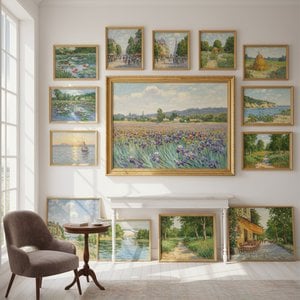
Топ-10 шедеврів імпресіонізму: пейзажі, що змінили мистецтво | ArtsDot
Відкрийте для себе 10 шедеврів імпресіонізму, що змінили пейзажне мистецтво! Дізнайтесь історії Моне, Ренуара та інших майстрів. Купіть репродукції картин імпресіоністів преміум-якості на ArtsDot.com і додайте елегантності вашому інтер'єру. Дослідіть колекцію онлайн!

Alexei Harlamoff: A Study in Russian Romantic Landscape Painting & Imperial Patronage
Explore the captivating world of Alexei Harlamoff, a master of Russian Romantic painting. Discover his life, Imperial patronage, signature style & enduring legacy with ArtsDot.

