
- Додому

- Репродукція картини олією
- Jonathan Eastman Johnson
- Worthington Whittredte

 Замовити друк Купити цифрове зображення
 Надіслати
 Поділитися
 Деталі
 Додати до улюблених

 Завантажити
 Схожі вироби
 Рентгенівське дослідження
 Слайд-шоу
Worthington Whittredte


 Розгорнути текст
Олійная репродукція ручної роботи
Написана вручну олією на полотні у вашому розмірі та рамі, виготовлена на замовлення нашими художниками.




P118B $10

P118H $10

P118W $10

P438Z $10

P508JH $12

P508YH $12

P805H $10

P805Z $10

P919BZ $10

P919G $10

P919XJ $10

P959ZH $10

P968JZ $12

W106C $8

W218G $10

W218JH $8

W218Y $10

W307PJ $10

W316G $10

W316PJ $8

W316Y $10

W398PJ $8

W4111J $10

W500HY $15

W500JH $15

W692G $12

W849H $8

W940BG $15

W953PJ $8




Обирайте з наших стандартних розмірів, що відповідають оригінальним пропорціям твору мистецтва.

Ви можете вказати власні розміри, щоб репродукція підійшла до конкретної рами або інтер'єру. Якщо вибраний вами розмір не відповідає пропорціям оригіналу, ми або обріжемо полотно, або доповнимо картину додатковими елементами, промальованими вручну. Цифровий макет буде надіслано вам на затвердження перед початком виробництва.
Зверніть увагу, що попередній перегляд на екрані не відображає фактичне обрізання або розширення зображення. Тільки макет точно покаже остаточну композицію.
Хоча ми можемо виготовити виріб у нестандартному розмірі, для збереження оригінальних пропорцій рекомендуємо обирати варіанти зі встановленого списку.
Після оформлення замовлення команда ArtsDot.com зв'яжеться з клієнтом електронною поштою для отримання інструкцій та надасть попередній макет
Доставка по всьому світу () за 3–4 тижні замість стандартних 5 тижнів. (2 Липень). Без жодних компромісів у якості.

Безкоштовна експрес-доставка по всьому світу

Високоякісне лляне полотно

Повне страхове покриття доставки

Гарантія відшкодування митних зборів

Гарантія точного відтворення кольорів

Політика повернення протягом 60 днів (лише у разі виявлення дефектів)

Гарантія повернення 100% коштів

Знижка на багатоелементні замовлення
 Скляний варіант доступний лише для розмірів до 110 см

Worthington Whittredte
Матеріал репродукції
Розмір репродукції
-


Підсумкова ціна
-
Опис твору
Worthington Whittredge: A Portrait of Quiet Dignity
Worthington Whittredge’s “Worthington Whittredge,” completed in 1854, stands as a testament to the burgeoning realism that characterized American art during its mid-century period. Painted by Eastman Johnson—a name inextricably linked with the legacy of Dutch Masters influence—this oil on canvas captures a moment of contemplative stillness, offering viewers an intimate glimpse into the life of a gentleman whose gaze holds both seriousness and subtle vulnerability. The Detroit Institute of Arts proudly houses this masterpiece, recognizing its significance within Whittredge’s oeuvre and the broader artistic landscape of his time.- Subject Matter: The portrait depicts Worthington Whittredge himself—a prominent figure in Michigan society—seated indoors, bathed in soft light that illuminates his face and attire.
- Style & Technique: Johnson’s masterful brushwork exemplifies the Impressionistic style gaining traction across Europe, particularly in Holland. He skillfully employs tonal modulation to create depth and texture, capturing the nuances of skin tone and fabric folds with remarkable precision. The artist's meticulous attention to detail—evident in the rendering of Whittredge’s facial features and clothing—reflects a commitment to portraying reality as faithfully as possible.
- Historical Context: Painted during Reconstruction America (1865-1877), “Worthington Whittredge” speaks to the anxieties and aspirations of a nation grappling with profound social change. Whittredge’s dignified posture embodies the ideals of Victorian morality and civic responsibility, mirroring the values prevalent in upper-class circles at the time.
- Symbolism: The subdued palette—dominated by earthy browns and muted greens—contributes to the painting's contemplative mood. Light plays a crucial role in shaping the composition, symbolizing enlightenment and introspection. Whittredge’s gaze directs towards the viewer, fostering a connection between subject and observer – inviting contemplation on themes of identity and social status.
- Emotional Impact: “Worthington Whittredge” transcends mere representation; it evokes a feeling of quiet dignity and understated elegance. The painting's serene atmosphere encourages viewers to pause and consider the complexities of human experience, capturing a timeless portrait of character and composure.
Схожі витвори мистецтва


Біографія митця
Jonathan Eastman Johnson: The American Rembrandt
Jonathan Eastman Johnson, a name that echoes with the quiet dignity of 19th-century America, was more than just a painter; he was a visual storyteller, meticulously documenting his era through a lens of honesty, nuance, and a subtle melancholy. Born in Lovell, Maine, in 1824, his artistic journey wasn’t one of immediate fanfare but rather a gradual unfolding shaped by familial connections, rigorous training, and an unwavering commitment to portraying the world as he truly saw it – with a profound respect for everyday life and its inherent beauty. His father, Philip Carrigan Johnson, held positions in business and fraternal organizations, instilling in young Eastman a deep sense of community engagement, a value that would profoundly influence his artistic subjects. Early experiences in Fryeburg and Augusta, Maine, provided the foundational bedrock upon which he built his understanding of American existence – an understanding he translated onto canvas with remarkable sensitivity and detail. His formal training began as an apprenticeship with a Boston lithographer in 1840, marking the initial step on a path defined by meticulous observation and technical mastery. This early experience honed his skills in capturing precise details and rendering textures, laying the groundwork for his later success.From European Masters to American Landscapes
Johnson’s artistic development was a fascinating synthesis of influences. Initially drawn to portraiture, he quickly expanded his repertoire to encompass genre painting – scenes depicting the vibrant tapestry of everyday American life. This wasn't merely about creating representations; it was about capturing the *essence* of American society, offering glimpses into the lives of ordinary people often overlooked by grand historical narratives. A pivotal moment arrived during the 1850s when Johnson embarked on a transformative journey to The Hague and immersed himself in the works of 17th-century Dutch masters. This encounter proved profoundly influential. He absorbed their mastery of composition, lighting, and realism – particularly their ability to convey atmosphere and emotion through subtle brushstrokes – earning him the affectionate moniker “The American Rembrandt.” This influence is strikingly evident in his paintings: a subdued palette, dramatic chiaroscuro (the use of strong contrasts between light and dark), and an almost photographic attention to detail characterize his mature style. However, Johnson didn’t simply imitate; he synthesized these European techniques with his uniquely American sensibility, creating works that were both technically brilliant and deeply rooted in the social fabric of his time. He aligned himself with the burgeoning Realist movement, rejecting idealized representations in favor of accurate depictions of everyday life – a commitment that would define his artistic legacy and set him apart from many of his contemporaries.Witnessing an Era: Civil War and Beyond
Johnson’s oeuvre is remarkably diverse, encompassing portraits of prominent figures like Abraham Lincoln, Nathaniel Hawthorne, Ralph Waldo Emerson, and Henry Wadsworth Longfellow alongside intimate scenes of domesticity and rural life. Yet, certain works stand out as particularly significant for their social commentary and artistic innovation. *Negro Life at the South* (1859), a painting that sparked intense debate and controversy, remains one of his most celebrated – and challenging – pieces. Depicting African Americans enjoying leisure time in a carefully constructed tableau, it offered a glimpse into a world rarely portrayed with such dignity and complexity. The ambiguity inherent in the scene—was it a romanticized portrayal or a subtle critique?—fueled discussions that resonated far beyond the art world, forcing viewers to confront uncomfortable truths about race relations and slavery. His response to the Civil War was equally poignant. Rather than focusing on battlefield heroics – a common theme in many war paintings of the era – Johnson turned his attention to the impact of conflict on civilian life, creating haunting images of anxious families, displaced communities, and scenes far removed from the front lines. *Ride For Liberty* (1862), depicting an enslaved family escaping to freedom, is a powerful testament to his commitment to social justice and his willingness to use art as a tool for advocacy. Furthermore, Johnson’s depictions of New England rural life – the rhythmic movements of maple sugar harvesting, the vibrant colors of cranberry picking – celebrated traditional American values and craftsmanship with a quiet reverence, capturing a sense of timelessness and connection to the land.A Legacy Etched in Stone: The Metropolitan Museum and Beyond
Beyond his artistic achievements, Jonathan Eastman Johnson played a crucial role in shaping the American art landscape. His dedication to genre painting elevated it as a respected form of artistic expression, challenging prevailing notions of what constituted “high art.” He wasn’t merely an artist; he was a cultural advocate, deeply invested in promoting and preserving American artistic heritage. His commitment extended beyond his own practice, culminating in his co-founding of the Metropolitan Museum of Art in New York City – a testament to his belief in the power of art to educate, inspire, and foster a shared sense of national identity. His name is inscribed at its entrance, a permanent recognition of his significant contribution to the nation’s artistic heritage. Johnson's influence on American Realism is undeniable; his dedication to depicting everyday life with honesty and detail paved the way for future generations of artists who sought to capture the complexities of the human experience. He died in New York City in 1906, leaving behind a body of work that continues to captivate and inspire, ensuring his enduring recognition as a significant figure in American art history. His legacy lies not just in the beauty of his paintings but also in their ability to provoke thought, spark dialogue, and offer a poignant reflection on the human condition.Enduring Significance
Johnson’s artistic journey is a remarkable story of synthesis – blending European techniques with uniquely American subject matter. His ability to imbue ordinary scenes with profound meaning, his willingness to engage with complex social issues, and his unwavering commitment to realism cemented his place as a pivotal figure in 19th-century American art. He wasn’t simply recording life; he was interpreting it, prompting viewers to reflect on their own values and beliefs. His work serves as a powerful reminder that true artistry lies not just in technical skill but also in the ability to connect with the human spirit and illuminate the world around us.
Jonathan Eastman Johnson
1824 - 1906 , Великобританія
Короткі факти
- Artistic Movement Or Style: Реалізм, Жанр
- Artists Or Movements Influenced By This Artist: ['Американський реалізм']
- Artists Who Influenced This Artist:
- Голландські майстри
- Джон Ф. Мілет
- Date Of Birth: 29 лип 1824
- Date Of Death: 5 квв 1906
- Full Name: Jonathan Eastman Johnson
- Nationality: Американський
- Notable Artworks:
- Негровий життя на півдні
- Подорож за свободою
- Place Of Birth: Ловелл, Великобританія
Пов'язані статті

George Goodwin Kilburne: Capturing Victorian Sentimentality Through Genre Painting
Explore the evocative Victorian paintings of George Goodwin Kilburne. Discover his detailed scenes of domestic life, masterful use of light, and lasting impact on British genre painting. Learn more at ArtsDot.

James Sant: Capturing Victorian Childhood & the Evolving Landscape of British Genre Painting
Explore the life & art of James Sant (1820-1916), renowned Victorian portraitist to Queen Victoria. Discover his captivating depictions of childhood, landscapes, and aristocratic society. Learn about his legacy & find fine art reproductions.

R.A. Benjamin Williams: Victorian Genre Painting & Social Commentary
Explore the captivating world of Benjamin Williams Leader's Victorian genre paintings. Discover his mastery of naturalism, social commentary & lasting influence on British art. Expert insights at ArtsDot.
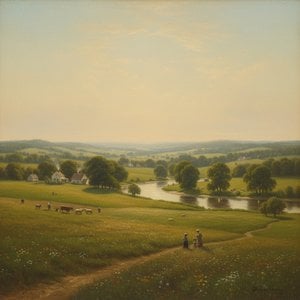
Thomas Worthington Whittredge: Capturing the American Pastoral Ideal with Luminist Light
Explore the luminous landscapes of Thomas Worthington Whittredge, a key figure in the Hudson River School and master of Luminism. Discover his captivating paintings & legacy with ArtsDot.

Jean-Baptiste Greuze: Morality, Sentiment & the Rise of Genre Painting
Explore the life & art of Jean-Baptiste Greuze, a pivotal French Rococo painter renowned for his emotionally resonant genre scenes and moral lessons. Discover his legacy & impact on 18th-century art history.

