


Картина відповідає вашим виборам: , .
Опис експоната
Experience the realism of Eastman Johnson's 'Self Portrait' (1860). A captivating oil painting showcasing an American artist’s nuanced portrayal of himself, reflecting a bygone era.
 Розгорнути текст
Біографія митця
Дональд Джонсон (1824-1906) – американський художник, відомий жанровими та портретними полотнами, що відтворюють життя Америки в епоху реалізму. Його твори – це вікно у минуле.
Олійная репродукція ручної роботи
Написана вручну олією на полотні у вашому розмірі та рамі, виготовлена на замовлення нашими художниками. ( Перейти до друку Перейти до цифрових зображень)
Більше про цю картину
 Переглянути в інтер'єрі
 Надіслати як листівку
 Поділитися
 Деталі витвору
 Посібник

 Завантажити
 Схожі екземпляри
 Рентгенівське дослідження
 Слайд-шоу
 Питання та відповіді
 Статистика
Замовте свою картину у чотири прості кроки
Не поспішайте. Ви можете змінити будь-яку відповідь; ціна у вашій кошику буде оновлюватися відповідно до кожного вибору.
1 Перший крок із чотирьох
Який розмір ви бажаєте обрати?
Ці розміри зберігають пропорції оригінальної картини. На малюнку показано ваш вибір на стіні над двометровим диваном.
Або вкажіть власні розміри
Обирайте з наших стандартних розмірів, що відповідають оригінальним пропорціям твору мистецтва.

Введіть необхідну ширину та висоту, щоб картина підійшла до вашої рами або стіни. Оскільки це ручний розпис, для зміни пропорцій художник може дописати трохи більше по краях або дещо обрізати композицію — вибір за вами. Перед початком роботи ми надішлемо вам цифровий макет для затвердження. Зображення, показане на цій сторінці, не є реальним результатом — лише макет відображає майбутній вигляд.
2 Другий крок із чотирьох
Як його підготувати: у рулоні, на підрамнику чи в рамі?
Наведені нижче ціни вказані для розміру, обраного вами на першому кроці.
Оберіть тип країв натяжного полотна
Оберіть свою раму

Білий край ₴1

Розмитий край ₴1

З розширенням ₴1

P118B ₴10

P118H ₴10

P118W ₴10

P438Z ₴10

P508JH ₴12

P508YH ₴12

P805H ₴10

P805Z ₴10

P919BZ ₴10

P919G ₴10

P919XJ ₴10

P959ZH ₴10

P968JZ ₴12

W106C ₴8

W218G ₴10

W218JH ₴8

W218Y ₴10

W307PJ ₴10

W316G ₴10

W316PJ ₴8

W316Y ₴10

W398PJ ₴8

W4111J ₴10

W500HY ₴15

W500JH ₴15

W692G ₴12

W849H ₴8

W940BG ₴15

W953PJ ₴8

H24-GOLD ₴30

H24-SILVER ₴30

H36-GOLD ₴45

H36-SILVER ₴45
У рамі
Багет: . Загальний розмір із рамою: .
3 Третій крок із чотирьох
Бажаєте внести якісь зміни в картину?
Більшість людей відповідають «ні». Оскільки кожна картина створена вручну, наш художник також може адаптувати її для вас.
Після оформлення замовлення команда ArtsDot.com надішле клієнту електронний лист із запитом інструкцій та надасть попередній макет для перегляду
4 Четвертий крок із чотирьох
Кілька варіантів фінішного покриття
Усі вони є необов'язковими. Вибір уже вибраних варіантів не потребує додаткової оплати.
Хто автор?
Доставка по всьому світу () за 3–4 тижні замість стандартних 5 тижнів. (4 Листопад). Без жодних компромісів у якості.
Табличка, як у музеї?
Деталі гравірування на бронзовій табличці
This elegant plaque features the artist's name and the title of the artwork, finely engraved for a timeless presentation.
It is made from bronze with a refined, elegant finish. The text is precisely laser-engraved for a sharp and permanent result. Measuring 9x2 cm, the plaque is compact yet easy to read. It's built to be durable and scratch-resistant, offering a professional, museum-quality look. Mounting is simple thanks to the included adhesive backing.
Деталі прозорої акрилової таблички
The plaque includes essential engraved details such as the artist's name, the title of the artwork, the date it was created, the type of media used-like oil on canvas or watercolor-a brief description of the piece, and a QR code that links to the complete artwork information.
It is crafted from clear acrylic, offering a sleek, modern appearance. The text is UV-engraved in black to ensure strong visual contrast. With a size of 10x15 cm, it ensures optimal readability. It comes equipped with two metal hooks for secure wall mounting. The plaque is designed to be weather-resistant, making it suitable for various environments, and it includes interactive features that work seamlessly with smartphone scanning.
Деталі чорної акрилової таблички
This elegant plaque includes engraved information such as the artist's name, the title of the artwork, the date it was created, the type of media used (like oil on canvas or watercolor), a short description of the artwork, and a QR code for quick access to more information.
The plaque itself is made from refined black acrylic with a premium finish. The text is laser-engraved in white for high contrast and readability. Its size is 10x15 cm, designed to be easy to read. It comes with two metal hooks for professional mounting. The design is sleek and fits any interior style. It is also weather-resistant and durable, with built-in digital integration for mobile compatibility.
Захисний лак?
Коли вам це потрібно?
✓ Перевірити та замовити
Ваша картина, згідно із вашим замовленням

Self Portrait
Матеріал репродукції
Розмір репродукції
-

Видатний майстер-художник
Більше деталізації, витонченості та додаткового часу на створення твору
-

Рама для репродукції
-
-
Для творів мистецтва або репродукцій, розмір яких перевищує 105 см (приблизно 41 дюйм) з будь-якого боку, рама доставляється у вигляді розібраного комплекту. Такий метод гарантує безпечну доставку та запобігає пошкодженням під час транспортування.
Потребує професійного збирання — це не продукт для самостійного виготовлення (DIY).
Комплект має бути зібраний, а полотно натягнуте досвідченим майстром багетних робіт із використанням клейового дерева (не входить у комплект), щипців для натягування полотна та затискачів, щоб підрамник залишався рівним під час висихання клею. Неправильне збирання або нерівномірне натягування полотна може призвести до незворотного пошкодження твору мистецтва, що не підпадає під дію нашої гарантії.
 Для творів мистецтва або репродукцій, розмір яких перевищує 105 см (приблизно 41 дюйм) з будь-якого боку, рама доставляється у вигляді розібраного комплекту. Такий метод гарантує безпечну доставку та запобігає пошкодженням під час транспортування.
У комплект входять усі бруски з цільного дерева, точно вирізані за розміром.
Збирається за допомогою гвинтів, що входять до комплекту, а також клейового розчину для кутових з'єднань, який не входить до комплекту і має бути підготовлений вашим майстром.
Потрібні професійні інструменти, які не входять до комплекту: щипці для натягування полотна (натягувач) та затискачі, щоб утримувати рейки рівно під час висихання клею.
Важливо:
Для з'єднання кутів потрібен клей для дерева, перекладини необхідно затиснути струбцинами до повного висихання клею, а для натягування полотна на зібрану раму знадобляться щипці для натягування полотна. Жоден із цих інструментів не входить до комплекту. Будь ласка, проконсультуйтеся з досвідченим майстром багетного оформлення перед замовленням рами такого розміру.

Етикетка експоната
-
-

Захисний лак
Глянцевий лак (підсилює яскравість кольорів, захищає від світла та вологи)
-

Персоналізувати мій витвір
Приклади можливих змін: заміна обличчя на фото клієнта; додавання домашньої тварини (наприклад, заміна кота на собаку); додавання прихованого повідомлення на фоні; зміна пейзажу або елементів фону.
-

Прискорено
Доставка по всьому світу () за 3–4 тижні замість стандартних 5 тижнів. (4 Листопад). Без компромісів у якості.
-
Експрес-доставка
Доставка по всьому світу () протягом 5 тижнів. (11 Листопад).
Включено в ціну
Підсумкова вартість
₴ 11832
Скляний варіант доступний лише для розмірів до 110 см
До кожного замовлення додається
- Безкоштовна експрес-доставка по всьому світу
- Високоякісне лляне полотно
- Повне страхове покриття доставки
- Гарантія повернення митних зборів
- Гарантія точного відтворення кольорів
- Політика повернення протягом 100 днів (лише у разі виявлення дефектів)
- Гарантія повернення 100% коштів
- Пропозиція на оптові замовлення


A Window into American Realism: Eastman Johnson’s “Self Portrait” (1860)
Eastman Johnson's "Self Portrait" of 1860 is more than just a likeness; it’s a meticulously crafted window into the soul of an era and the quiet dignity of a man. Painted during a pivotal period of American artistic development, this oil-on-canvas work embodies the burgeoning realism that would define Johnson's career and, in many ways, shape the course of 19th-century portraiture. The painting immediately draws the viewer in with its direct gaze – Johnson’s eyes meet ours across time, conveying a sense of thoughtful introspection and understated strength.
The composition is deceptively simple yet profoundly effective. Dressed in a dark, well-tailored coat and holding a red cloth—a subtle detail that hints at theatricality or perhaps a deliberate gesture of presentation – Johnson presents himself against a muted wall adorned with a vase and a clock. These elements aren’t merely decorative; they ground the portrait within a domestic setting, suggesting a life lived within the rhythms of everyday existence. The background's subdued palette further emphasizes the subject, allowing his features and demeanor to take center stage.
The Painter’s Palette: Technique and Style
Johnson’s masterful technique is rooted in the academic traditions he studied in Europe, particularly in Düsseldorf, Germany, where he honed his skills alongside other American artists seeking a rigorous artistic education. However, unlike many of his European contemporaries, Johnson didn't simply replicate established styles; he adapted them to reflect the unique character of American life. His brushwork is precise and controlled, yet imbued with a remarkable sensitivity to light and shadow. Note the subtle gradations in tone that define the contours of his face, creating a sense of volume and depth.
The painting’s realism extends beyond mere representation. Johnson captures not just Johnson's physical appearance but also something of his personality – a quiet confidence tempered by a hint of melancholy. The careful attention to detail—the texture of the coat, the slight furrow in his brow—reveals a deep understanding of human anatomy and expression. It’s a testament to Johnson’s ability to translate observation into compelling visual narrative.
A Man of His Time: Historical Context
To fully appreciate “Self Portrait,” it's essential to understand the social and artistic landscape of 1860 America. The nation was grappling with the aftermath of the Civil War, navigating a period of Reconstruction and profound societal change. Johnson’s work reflects this atmosphere of introspection and quiet resilience. He wasn’t interested in grand historical narratives or idealized representations; instead, he focused on capturing the realities of ordinary American life – a theme that would become increasingly prominent in his later genre paintings.
Johnson's connection to Washington D.C. is particularly significant. He lived and worked there for much of his career, documenting the lives of politicians, businessmen, and everyday citizens. His portraits offer invaluable insights into the social fabric of a rapidly evolving nation. The inclusion of elements like the vase and clock—common features of domestic interiors—further anchors the portrait within this specific context.
Symbolism and Emotional Resonance
While seemingly straightforward, “Self Portrait” is rich in subtle symbolism. The red cloth held in Johnson’s hand could represent passion, creativity, or perhaps a theatrical element – reflecting his involvement in stage design and set dressing. The direct gaze of the subject invites contemplation, prompting us to consider not only Johnson's identity but also our own relationship with self-representation and portraiture itself.
Ultimately, “Self Portrait” is a powerful testament to the enduring appeal of realism as an artistic approach. It’s a painting that speaks to the complexities of human experience – capturing both the outward appearance and the inner life of a man who sought to document his time with honesty, nuance, and a profound appreciation for the beauty of everyday existence.
Питання та відповіді
«Self Portrait» роботи Jonathan Eastman Johnson — це світлий чи темний твір мистецтва?
Відчутна яскравість твору «Self Portrait» роботи Jonathan Eastman Johnson становить deep_shadow. Її можна підібрати відповідно до освітлення в запланованому інтер'єрі.
Наскільки виражений контраст у «Self Portrait» роботи Jonathan Eastman Johnson?
У творі «Self Portrait» роботи Jonathan Eastman Johnson спостерігається Bold контраст між світлими та темними ділянками.
Яка насиченість та інтенсивність кольорів у «Self Portrait» роботи Jonathan Eastman Johnson?
«Self Portrait» роботи Jonathan Eastman Johnson вирізняється Balanced Soft насиченістю та Balanced інтенсивністю кольору.
Схожі твори мистецтва


Jonathan Eastman Johnson
1824 - 1906, Великобританія
Біографія митця
Jonathan Eastman Johnson: The American Rembrandt
Jonathan Eastman Johnson, a name that echoes with the quiet dignity of 19th-century America, was more than just a painter; he was a visual storyteller, meticulously documenting his era through a lens of honesty, nuance, and a subtle melancholy. Born in Lovell, Maine, in 1824, his artistic journey wasn’t one of immediate fanfare but rather a gradual unfolding shaped by familial connections, rigorous training, and an unwavering commitment to portraying the world as he truly saw it – with a profound respect for everyday life and its inherent beauty. His father, Philip Carrigan Johnson, held positions in business and fraternal organizations, instilling in young Eastman a deep sense of community engagement, a value that would profoundly influence his artistic subjects. Early experiences in Fryeburg and Augusta, Maine, provided the foundational bedrock upon which he built his understanding of American existence – an understanding he translated onto canvas with remarkable sensitivity and detail. His formal training began as an apprenticeship with a Boston lithographer in 1840, marking the initial step on a path defined by meticulous observation and technical mastery. This early experience honed his skills in capturing precise details and rendering textures, laying the groundwork for his later success.From European Masters to American Landscapes
Johnson’s artistic development was a fascinating synthesis of influences. Initially drawn to portraiture, he quickly expanded his repertoire to encompass genre painting – scenes depicting the vibrant tapestry of everyday American life. This wasn't merely about creating representations; it was about capturing the *essence* of American society, offering glimpses into the lives of ordinary people often overlooked by grand historical narratives. A pivotal moment arrived during the 1850s when Johnson embarked on a transformative journey to The Hague and immersed himself in the works of 17th-century Dutch masters. This encounter proved profoundly influential. He absorbed their mastery of composition, lighting, and realism – particularly their ability to convey atmosphere and emotion through subtle brushstrokes – earning him the affectionate moniker “The American Rembrandt.” This influence is strikingly evident in his paintings: a subdued palette, dramatic chiaroscuro (the use of strong contrasts between light and dark), and an almost photographic attention to detail characterize his mature style. However, Johnson didn’t simply imitate; he synthesized these European techniques with his uniquely American sensibility, creating works that were both technically brilliant and deeply rooted in the social fabric of his time. He aligned himself with the burgeoning Realist movement, rejecting idealized representations in favor of accurate depictions of everyday life – a commitment that would define his artistic legacy and set him apart from many of his contemporaries.Witnessing an Era: Civil War and Beyond
Johnson’s oeuvre is remarkably diverse, encompassing portraits of prominent figures like Abraham Lincoln, Nathaniel Hawthorne, Ralph Waldo Emerson, and Henry Wadsworth Longfellow alongside intimate scenes of domesticity and rural life. Yet, certain works stand out as particularly significant for their social commentary and artistic innovation. *Negro Life at the South* (1859), a painting that sparked intense debate and controversy, remains one of his most celebrated – and challenging – pieces. Depicting African Americans enjoying leisure time in a carefully constructed tableau, it offered a glimpse into a world rarely portrayed with such dignity and complexity. The ambiguity inherent in the scene—was it a romanticized portrayal or a subtle critique?—fueled discussions that resonated far beyond the art world, forcing viewers to confront uncomfortable truths about race relations and slavery. His response to the Civil War was equally poignant. Rather than focusing on battlefield heroics – a common theme in many war paintings of the era – Johnson turned his attention to the impact of conflict on civilian life, creating haunting images of anxious families, displaced communities, and scenes far removed from the front lines. *Ride For Liberty* (1862), depicting an enslaved family escaping to freedom, is a powerful testament to his commitment to social justice and his willingness to use art as a tool for advocacy. Furthermore, Johnson’s depictions of New England rural life – the rhythmic movements of maple sugar harvesting, the vibrant colors of cranberry picking – celebrated traditional American values and craftsmanship with a quiet reverence, capturing a sense of timelessness and connection to the land.A Legacy Etched in Stone: The Metropolitan Museum and Beyond
Beyond his artistic achievements, Jonathan Eastman Johnson played a crucial role in shaping the American art landscape. His dedication to genre painting elevated it as a respected form of artistic expression, challenging prevailing notions of what constituted “high art.” He wasn’t merely an artist; he was a cultural advocate, deeply invested in promoting and preserving American artistic heritage. His commitment extended beyond his own practice, culminating in his co-founding of the Metropolitan Museum of Art in New York City – a testament to his belief in the power of art to educate, inspire, and foster a shared sense of national identity. His name is inscribed at its entrance, a permanent recognition of his significant contribution to the nation’s artistic heritage. Johnson's influence on American Realism is undeniable; his dedication to depicting everyday life with honesty and detail paved the way for future generations of artists who sought to capture the complexities of the human experience. He died in New York City in 1906, leaving behind a body of work that continues to captivate and inspire, ensuring his enduring recognition as a significant figure in American art history. His legacy lies not just in the beauty of his paintings but also in their ability to provoke thought, spark dialogue, and offer a poignant reflection on the human condition.Enduring Significance
Johnson’s artistic journey is a remarkable story of synthesis – blending European techniques with uniquely American subject matter. His ability to imbue ordinary scenes with profound meaning, his willingness to engage with complex social issues, and his unwavering commitment to realism cemented his place as a pivotal figure in 19th-century American art. He wasn’t simply recording life; he was interpreting it, prompting viewers to reflect on their own values and beliefs. His work serves as a powerful reminder that true artistry lies not just in technical skill but also in the ability to connect with the human spirit and illuminate the world around us.Пов'язані статті

American Realism: Social Commentary & Artistic Representation in Early 20th-Century Painting
Explore the powerful social commentary & artistic representation of American Realism. Discover key artists like Bellows & Sloan, and understand the movement's lasting impact on 20th-century art history.

Топ-10 шедеврів американського реалізму: мистецтво правдивого відображення життя | ArtsDot
Відкрийте для себе 10 шедеврів американського реалізму! Дослідіть історії Ендрю Уайєта, Хопера та інших видатних художників. Купіть репродукції картин преміум-якості для вашого дому на ArtsDot.com.
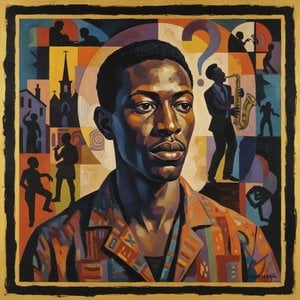
William H. Johnson: A Life Painted in Bold Strokes – Race, Identity & Modernism
Explore the powerful life & art of William H. Johnson – a pivotal American painter who captured African American experiences with bold expressionism and folk art style. Discover his legacy at ArtsDot.