


 Переглянути в інтер'єрі
 Надіслати як листівку
 Поділитися
 Детальніше

 Завантажити
 Схожі експонати
 Рентгенівське дослідження
 Слайд-шоу
Self Portrait
 Oil On Canvas
- WallArt
- Impressionism
 1870
1870- 19th Century
 46.0 x 38.0 cm
 Читати далі
Олійная репродукція ручної роботи
Написана вручну олією на полотні у вашому розмірі та рамі, виготовлена на замовлення нашими художниками. ( Замовити принт Купити цифрове зображення)




P118B $10

P118H $10

P118W $10

P438Z $10

P508JH $12

P508YH $12

P805H $10

P805Z $10

P919BZ $10

P919G $10

P919XJ $10

P959ZH $10

P968JZ $12

W106C $8

W218G $10

W218JH $8

W218Y $10

W307PJ $10

W316G $10

W316PJ $8

W316Y $10

W398PJ $8

W4111J $10

W500HY $15

W500JH $15

W692G $12

W849H $8

W940BG $15

W953PJ $8




Обирайте з наших стандартних розмірів, що відповідають оригінальним пропорціям твору мистецтва.

Ви можете вказати власні розміри, щоб репродукція ідеально підійшла до конкретної рами або інтер'єру. Якщо вибраний вами розмір не відповідає пропорціям оригіналу, ми або обріжемо полотно, або доповнимо картину додатковими елементами, промальованими вручну. Цифровий макет буде надіслано вам на затвердження перед початком виробництва.
Зверніть увагу, що попередній перегляд на екрані не відображає фактичне обрізання або розширення зображення. Тільки макет точно покаже остаточну композицію.
Хоча ми можемо виготовити виріб у нестандартному розмірі, для збереження оригінальних пропорцій рекомендуємо обирати варіанти зі встановленого списку.
Після оформлення замовлення команда ArtsDot.com зв'яжеться з клієнтом електронною поштою для отримання інструкцій та надасть попередній макет
Доставка по всьому світу () за 3–4 тижні замість стандартних 5 тижнів. (23 Серпень). Без жодних компромісів у якості.

Безкоштовна експрес-доставка по всьому світу

Високоякісне лляне полотно

Повне страхове покриття доставки

Гарантія відшкодування митних зборів

Гарантія точного відтворення кольорів

Політика повернення протягом 60 днів (лише у разі виявлення дефектів)

Гарантія повернення 100% коштів

Пропозиція на оптові замовлення
 Скляний варіант доступний лише для розмірів до 110 см

Self Portrait
Матеріал репродукції
Розмір репродукції
-


Підсумкова вартість
$ 263
Опис твору
A Glimpse into the Soul of an Impressionist Master
In this poignant Self Portrait, painted in 1870, we encounter Frédéric Bazille not merely as a painter, but as a man caught in the delicate transition between youthful ambition and the heavy mantle of artistic legacy. The canvas presents a striking study of character; the subject gazes directly at the viewer with an expression that is simultaneously serious and deeply introspective. Clad in the crisp formality of a white shirt and a black tie, his neatly combed hair lends him an air of intellectual rigor, yet there is an undeniable vulnerability beneath the surface. This work serves as a profound window into the psyche of a man whose life would be tragically cut short at the height of his creative powers.
The composition is masterfully layered, moving beyond a simple portrait to create a narrative space that feels lived-in and complex. While the central figure commands our immediate attention, the presence of other figures—one positioned toward the right and another receding into the background on the left—suggests a world teeming with social connection and shared history. A subtle, almost ethereal detail, a bird visible near the top-left corner, introduces an element of unexpected life and perhaps symbolizes the fleeting nature of existence. The inclusion of a chair at the far right edge anchors the scene in a domestic reality, grounding the psychological depth of the portrait within a tangible, physical environment.
Technique and the Radiance of Light
As a pivotal figure in the early Impressionist movement, Bazille’s technique in this self-portrait reflects a sophisticated command over light and form. The brushwork, while maintaining a certain structural integrity characteristic of his academic training, begins to embrace the luminous qualities that would define his later contributions to art history. There is a palpable sense of texture in the rendering of his clothing and the subtle shadows that contour his face, creating a three-dimensional presence that breathes within the frame. The interplay of light across the subject's features does more than just define shape; it evokes an emotional temperature, capturing a moment of quiet, contemplative stillness.
For the discerning collector or interior designer, this piece offers much more than mere decoration. It is an invitation to engage with the history of French Impressionism through a deeply personal lens. The painting’s palette and composition make it a versatile centerpiece for a sophisticated interior, providing a focal point that sparks conversation and invites lingering study. Whether placed in a sunlit gallery or a moody, library-style study, this reproduction brings with it the weight of 19th-century history and the enduring beauty of a master's self-reflection.
Схожі твори мистецтва


Біографія митця
Jean Frédéric Bazille: A Fleeting Radiance of Impressionism
Jean Frédéric Bazille’s life, though tragically short, casts a remarkable glow upon the early days of Impressionism. Born in Montpellier, France, on December 6, 1841, into a family deeply rooted in the region's prosperous wine trade – a lineage stretching back generations – he initially seemed destined for a path far removed from the vibrant world of art. His parents, recognizing his artistic inclinations alongside his medical studies (a compromise reflecting the societal norms of the time), sought to balance his passions, hoping to secure both intellectual and financial stability. This duality shaped his formative years, dividing his attention between the meticulous dissection of anatomy and the irresistible allure of capturing fleeting moments of light and color – a fundamental shift that would ultimately define his artistic legacy.The Crucible of Paris: Friendship and Artistic Awakening
Paris in the 1860s was a magnetic force for young artists seeking to break free from the constraints of academic tradition. It was here, amidst the bustling studios and fervent debates, that Bazille’s artistic journey truly ignited. He quickly found himself immersed in a circle of kindred spirits – Claude Monet, Pierre-Auguste Renoir, Alfred Sisley, and others – all united by a shared desire to revolutionize painting. Studying under Charles Gleyre provided him with the foundational skills of formal training, but it was the unbridled camaraderie and radical ideas exchanged amongst these friends that truly fueled his artistic vision. Bazille’s family's financial security, a fortunate contrast to the often precarious existence of his companions, allowed him to generously support them, providing studio space, materials, and unwavering encouragement – a testament to their deep bond and mutual belief in their collective potential. He became a central hub for this burgeoning movement, fostering an environment of experimentation, innovation, and fearless exploration. Early works like *The Pink Dress* (c. 1864), housed today at the Musée d'Orsay, already reveal his keen eye for capturing ephemeral light and atmosphere – hallmarks that would become synonymous with Impressionism.A Distinctive Style: Light, Color, and Human Connection
Bazille’s artistic style, while firmly rooted in the principles of Impressionism, possessed a unique character that distinguished him from his contemporaries. He embraced *plein air* painting – working directly outdoors to capture the nuances of natural light – yet his compositions often retained a more structured quality than Monet's or Renoir's sometimes seemingly spontaneous approach. Frequently blending figure painting with landscape, he masterfully placed his subjects within their environment, creating scenes that resonated with both visual beauty and emotional depth. *Family Reunion* (1867-1868), a masterpiece showcasing this skill, is not merely a depiction of a familial gathering; it’s an evocative exploration of light filtering through the trees, animating the scene with warmth and intimacy – a testament to Bazille's ability to imbue his paintings with profound emotional resonance. He was profoundly influenced by Eugène Delacroix, whose vibrant use of color and dramatic compositions resonated deeply within him, yet he skillfully transcended academic conventions, forging a distinctly modern sensibility.A Tragic Interruption: War and Legacy
The blossoming career of Jean Frédéric Bazille was tragically cut short by the Franco-Prussian War in 1870. Driven by a deep sense of patriotic duty, he enlisted in a Zouave regiment just months before the conflict erupted. On November 28th, 1870, near Beaune-la-Rolande, he fell in action at the young age of 28 – a devastating loss that robbed the art world of a brilliant talent and a generous friend. His premature death cast a long shadow over his contemporaries, leaving many works unfinished and his artistic recognition delayed. Despite this, Bazille’s legacy has experienced a remarkable resurgence in recent decades. Today, his paintings are celebrated in prestigious museums across Europe and beyond, and reproductions allow art lovers worldwide to appreciate the beauty and innovation of his vision. More than just an artist, Bazille embodies the spirit of youthful idealism, unwavering dedication, and the enduring power of friendship – qualities that continue to resonate with audiences today.The Family Roots: A Foundation for Artistic Pursuit
Bazille’s upbringing within a prominent Protestant family in Montpellier profoundly shaped his artistic sensibilities. Born into a lineage steeped in tradition and prosperity—his parents were involved in the wine trade, tracing their roots back centuries—he benefited from a privileged environment that fostered both intellectual curiosity and an appreciation for beauty. The Bazilles' influence extended beyond their immediate family; they were intertwined with numerous other influential families in Montpellier, creating a rich social network that provided opportunities for cultural enrichment and artistic inspiration. This familial connection instilled in him a sense of belonging and a deep understanding of the region’s history and culture – elements that would later inform his artistic choices and subject matter. The legacy of his father, Gaston Bazille, an agronomist and senator, further emphasized the importance of civic engagement and social responsibility—values that likely contributed to Bazille's own commitment to supporting his fellow artists.Key Works
* **The Pink Dress (c. 1864):** A quintessential Impressionistic work showcasing Bazille’s mastery of capturing fleeting light and atmosphere. * **Family Reunion (1867-1868):** Demonstrates his ability to integrate figure painting with landscape, creating scenes imbued with warmth and intimacy. * **Studio in Rue de Furstenberg (c. 1867):** A glimpse into the vibrant social life of Parisian artists, capturing a moment of camaraderie and shared passion.
Жан-Фредерик Базіль
1841 - 1870 , Франція
Короткі факти
- Artistic Movement Or Style: імпресіонізм
- Artists Or Movements Influenced By This Artist:
- Моне
- Ренуар
- Artists Who Influenced This Artist:
- Дюрер
- Моне
- Date Of Birth: 6 груд., 1841
- Date Of Death: 28 нов., 1870
- Full Name: Jean Frédéric Bazille
- Nationality: Француз
- Notable Artworks:
- Рожеве плаття
- Сімейна зустріч
- Place Of Birth: Монпелье, Франція
Пов'язані статті

Топ-10 шедеврів у білих тонах: мистецтво світла та простору від ArtsDot
Відкрийте для себе 10 легендарних картин, де білий колір стає головним героєм! Історія Моне, Ван Гога та інших майстрів. Купіть репродукції шедеврів імпресіонізму на ArtsDot.com – мистецтво для вашого дому.

Топ-10 шедеврів живопису в чорних тонах: історія, мистецтво та декор від ArtsDot
Відкрийте для себе 10 найвідоміших картин у чорних тонах! Історія, техніка та емоції від ArtsDot. Романтизм, готика, експресіонізм – шедеври живопису онлайн. Купіть репродукцію мрії на ArtsDot.com!

Monochrome Visions: Exploring the Aesthetic & Historical Significance of Black & White Photography
Explore the rich history & artistic power of black and white photography. From early techniques to iconic masters like Ansel Adams, discover why monochrome continues to captivate art lovers today. Expert insights for collectors.
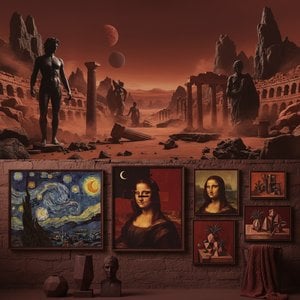
Топ-10 шедеврів у відтінках чорного: мистецтво та декор з ArtsDot
Відкрийте силу чорного кольору в мистецтві! Топ-10 шедеврів від Ван Гога, Мунка та інших геніїв. Історія створення, техніки живопису та натхнення для вашого декору з ArtsDot. Дослідіть колекцію онлайн!
The Subtleties of White: Exploring Absence, Light & Symbolism in Art History
Explore the profound symbolism & history of white in art! From ancient purity to modern abstraction, discover how artists have used absence & light. Expert insights from ArtsDot.



