


 Переглянути в інтер'єрі
 Надіслати
 Поділитися
 Деталі
 Посібник

 Завантажити
 Схожі предмети колекціонування
 Рентгенівське дослідження
 Слайд-шоу
 Статистика переглядів
Self-Portrait

 Читати далі
Гікле / Художній принт
Музейна якість друку جيкле або на полотні з оперативним виготовленням та різноманітними варіантами фінішної обробки. ( Купити картину ручної роботи Перейти до цифрових зображень)




P118B $10

P118H $10

P118W $10

P438Z $10

P508JH $12

P508YH $12

P805H $10

P805Z $10

P919BZ $10

P919G $10

P919XJ $10

P959ZH $10

P968JZ $12

W106C $8

W218G $10

W218JH $8

W218Y $10

W307PJ $10

W316G $10

W316PJ $8

W316Y $10

W398PJ $8

W4111J $10

W500HY $15

W500JH $15

W692G $12

W849H $8

W940BG $15

W953PJ $8




Обирайте з наших стандартних розмірів, що відповідають оригінальним пропорціям твору мистецтва.

Ви можете вказати власні розміри, щоб репродукція ідеально підійшла до конкретної рами або інтер'єру. Якщо обраний вами розмір не відповідає пропорціям оригіналу, ми або обріжемо полотно, або розширимо зображення за допомогою дзеркального відображення чи суцільної заливки країв. Перед початком виробництва вам буде надіслано цифровий макет для затвердження.
Будь ласка, зверніть увагу, що попередній перегляд на екрані не відображає фактичне обрізання або розширення. Тільки макет точно покаже фінальну композицію.
Хоча можливість замовлення індивідуальних розмірів доступна, ми рекомендуємо обирати формат із попередньо визначеного списку, щоб зберегти оригінальні пропорції.
Доставка по всьому світу () за 2 тижні замість стандартних 4/5 тижнів. (26 Вересень)

Безкоштовна експрес-доставка по всьому світу

Високоякісне лляне полотно

Повне страхове покриття доставки

Гарантія повернення митних зборів

Гарантія точного відтворення кольорів

Політика повернення протягом 100 днів (лише у разі виявлення дефектів)

Гарантія повернення 100% коштів

Знижка на оптові замовлення
 Скляний варіант доступний лише для розмірів до 110 см

Self-Portrait
Гікле / Художній принт
Розмір репродукції
-


Загальна вартість
$ 62
Introduction to the Artist and his Work
Jean Baptiste Camille Corot, a French landscape and portrait painter, was born on July 16, 1796, in Paris. He is considered one of the most influential artists of the 19th century, with his vast output referencing Neo-Classical traditions while anticipating plein-air innovations of Impressionism. Corot's works are known for their mastery of light and shadow, which he used to create depth and volume in his compositions. Self-Portrait, painted around 1825, is an excellent example of Corot's early work. This painting may have been created at the request of his parents before he embarked on a study trip to Italy. The self-portrait showcases Corot's skill in capturing light and shadow, as well as his ability to convey emotion through facial expression.Corot's Study Trip to Italy
Italy had a profound impact on Corot's artistic development. During his stay from 1825 to 1828, he focused on capturing the effects of light in his landscapes, which marked a significant phase in his own painting and in the evolution of landscape painting as a whole. The Cathedral of Chartres, painted in 1830 after Corot's return to France, reflects the influence of his Italian sojourn. The highly original framing and luminosity of this work demonstrate Corot's experiments with light and shadow, which he had developed during his time in Italy.Corot's Impact on Landscape Painting
Corot's innovative approach to landscape painting laid the groundwork for Impressionism. His emphasis on capturing natural light and color, as well as his use of plein-air techniques, helped redefine the genre and paved the way for future artistic movements.Conclusion
Jean Baptiste Camille Corot's contributions to landscape and portrait painting are immeasurable. His mastery of light and shadow, as well as his innovative approach to capturing natural scenes, have solidified his place as one of the most influential artists in history. Discover more about Jean Baptiste Camille Corot's works by visiting our collection at /en/art/show/art-7z4q9p-en/.- Explore our collection of art movements
- Learn about other influential artists like Giovanni Fattori
Схожі твори мистецтва


Біографія митця
A Life Immersed in Light and Landscape
Jean-Baptiste-Camille Corot, a name that resonates with the tranquil beauty of 19th-century French landscape painting, was born into a comfortable Parisian bourgeois family on July 16, 1796. Though initially steered towards a commercial path, destiny – and perhaps an innate artistic sensibility – intervened. His early years were marked by an unconventional upbringing; entrusted to the care of a nurse in the countryside near L’Isle-Adam until age four, he developed a profound connection with nature that would indelibly shape his artistic vision. This initial immersion in rural tranquility stood in stark contrast to the bustling city life awaiting him, yet it laid the foundation for a lifelong pursuit of capturing the ephemeral qualities of light and atmosphere. His parents, successful milliners, provided financial stability, allowing Corot the freedom to explore his burgeoning passion for painting after an unsuccessful attempt at mercantile pursuits – a rare privilege for aspiring artists of that era. This support was crucial, enabling him to dedicate himself fully to artistic training without the immediate pressures of earning a livelihood.From Academic Foundations to Plein-Air Innovation
Corot’s formal artistic education began with studies under Achille Etna Michallon and later Jean-Victor Bertin, both esteemed landscape painters steeped in the neoclassical tradition. This grounding instilled in him a meticulous approach to composition and form, emphasizing clarity and structure. However, Corot wasn't content merely replicating established styles; he yearned for something more authentic, a way to convey not just *what* he saw, but *how* it felt to be immersed within the landscape. A pivotal moment arrived with his first journey to Italy in 1825. The Roman Campagna, bathed in golden light and steeped in history, ignited his imagination. He spent years sketching and painting en plein air – directly from nature – a practice that was still relatively uncommon at the time. This dedication to direct observation allowed him to capture the subtle nuances of light and shadow, the delicate atmospheric effects that would become hallmarks of his style. He wasn’t simply recording topographical details; he was striving to evoke a mood, a feeling of tranquility and harmony. His early Italian works demonstrate a clarity of form and bright palette influenced by classical ideals, yet already hint at the softer, more evocative approach that would define his mature style. He meticulously studied the masters, copying their work in the Roman galleries, but always filtered these lessons through his own increasingly sensitive perception of nature.A Bridge Between Traditions
Corot’s artistic development wasn't linear; it was a delicate balancing act between tradition and innovation. He exhibited regularly at the Paris Salon, initially gaining recognition for works rooted in neoclassical conventions. However, as he continued to explore plein-air painting, his style began to evolve. He moved away from highly finished, detailed compositions towards looser brushwork and a more muted palette. This shift wasn’t a rejection of academic principles entirely; rather, it was an attempt to infuse them with the immediacy and emotional resonance of direct observation. He became a master of tonalism, using subtle variations in value to create depth and atmosphere. His landscapes weren't about dramatic narratives or grand gestures; they were about quiet contemplation, the beauty of everyday scenes – a forest glade, a sun-dappled meadow, a tranquil riverbank. This approach resonated with a growing audience seeking respite from the rapid industrialization and social upheaval of 19th-century France. He skillfully blended elements of realism with an almost poetic sensibility, creating landscapes that felt both familiar and deeply personal. He wasn’t interested in grand pronouncements or political statements; his art was about finding beauty in the ordinary, elevating the commonplace to a realm of serene contemplation.Influence and Legacy
Jean-Baptiste-Camille Corot's influence on subsequent generations of artists is immeasurable. He served as a crucial link between the neoclassical tradition and the emerging Impressionist movement. Artists like Monet, Pissarro, and Sisley deeply admired his ability to capture the fleeting effects of light and atmosphere, and they built upon his innovations in their own groundbreaking work. Corot’s emphasis on direct observation and plein-air painting paved the way for the Impressionists' radical departure from studio-based practices. However, Corot wasn’t simply a precursor to Impressionism; he was a unique and significant artist in his own right. His vast output – encompassing landscapes, portraits, and figure studies – continues to captivate audiences with its serene beauty and emotional depth. His works can be found in major museums around the world, including the Musée des Beaux-Arts in Dunkirk and the Musée Courbet in Ornans, France, as well as the National Gallery in London and the Metropolitan Museum of Art in New York. He died on February 22, 1875, leaving behind a legacy that continues to inspire artists and art lovers alike – a testament to the enduring power of light, landscape, and quiet contemplation. The Repose, Interrupted Reading, and Agostina remain iconic examples of his mastery, showcasing his ability to capture both the physical world and the inner life of his subjects with remarkable sensitivity and grace. His influence extends beyond painting; he fostered a spirit of artistic freedom and encouraged younger artists to find their own voice, solidifying his place as a pivotal figure in the history of art.
Каміль Коро
1796 - 1875 , Франція
Довідкова інформація
- Artistic Movement Or Style: Реалізм, Імпресіонізм
- Artists Or Movements Influenced By This Artist:
- Моне
- Піссарро
- Сісле
- Artists Who Influenced This Artist:
- Мішалон
- Бертін
- Date Of Birth: 16 лип 1796
- Date Of Death: 22 лют 1875
- Full Name: Jean-Baptiste-Camille Corot
- Nationality: Француз
- Notable Artworks:
- Відпочинок
- Читання
- Агостина
- Place Of Birth: Париж, Франція
Схожі статті

25 Шедеврів Staatliche Museen: Від Нефертіти до Скульптур Стародавньої Греції | ArtsDot
Відкрийте 25 шедеврів Staatliche Museen, Берлін! Історія Нефертіти, Альтес Музей та інші скарби німецького мистецтва. Репродукції картин онлайн на ArtsDot.com – для вашого дому та інтер'єру.

Топ-25 шедеврів Жоана Міро: подорож у світ каталонської фантазії | ArtsDot
Відкрийте світ каталонської фантазії з топ-25 шедеврами Жоана Міро! Дослідіть сюрреалістичні картини, абстрактні композиції та унікальні кольори. Купіть репродукцію мистецтва для вашого дому на ArtsDot.com.

25 шедеврів Кацусіки Хокусая: мистецтво Японії для вашого дому | ArtsDot
Відкрийте 25 культових робіт Кацусіки Хокусая! Гравюри укійо-е, легендарна "Хвиля", пейзажі Фудзі та неймовірний світ японського мистецтва. Репродукції картин преміум-класу для вашого дому на ArtsDot.com.
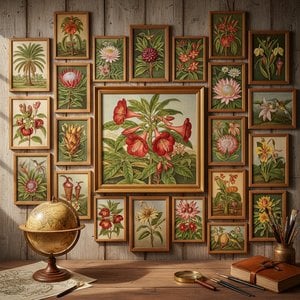
Топ-25 шедеврів Маріанни Норт: екзотична краса природи в інтер'єрі | ArtsDot
Відкрийте для себе 25 захопливих шедеврів Маріанни Норт! Екзотичні рослини, ботанічна ілюстрація та вікторіанський живопис в унікальних картинах. Придбайте репродукції високої якості для вашого інтер'єру на ArtsDot.com.

Клод Моне: Топ-25 шедеврів імпресіонізму для вашого дому | ArtsDot
Відкрийте для себе 25 найвідоміших шедеврів Клода Моне! Історія імпресіонізму, пейзажі, водні лілії та унікальні техніки живопису. Репродукції картин високої якості для вашого дому від ArtsDot.com. Дослідіть всю колекцію онлайн!


