

 Переглянути в інтер'єрі
 Надіслати як листівку
 Поділитися
 Детальніше

 Завантажити
 Схожі експонати
 Рентгенівське дослідження
 Слайд-шоу
Shepherdess
 Олія на полотні
- Настінне мистецтво
- Baroque Landscape
 1660
1660 104.0 x 78.0 cm
 Ермітаж
 Читати далі
Олійная репродукція ручної роботи
Написана вручну олією на полотні у вашому розмірі та рамі, виготовлена на замовлення нашими художниками. ( Замовити принт Купити цифрове зображення)




P118B $10

P118H $10

P118W $10

P438Z $10

P508JH $12

P508YH $12

P805H $10

P805Z $10

P919BZ $10

P919G $10

P919XJ $10

P959ZH $10

P968JZ $12

W106C $8

W218G $10

W218JH $8

W218Y $10

W307PJ $10

W316G $10

W316PJ $8

W316Y $10

W398PJ $8

W4111J $10

W500HY $15

W500JH $15

W692G $12

W849H $8

W940BG $15

W953PJ $8




Обирайте з наших стандартних розмірів, що відповідають оригінальним пропорціям твору мистецтва.

Ви можете вказати власні розміри, щоб репродукція ідеально підійшла до конкретної рами або інтер'єру. Якщо вибраний вами розмір не відповідає пропорціям оригіналу, ми або обріжемо полотно, або доповнимо картину додатковими елементами, промальованими вручну. Цифровий макет буде надіслано вам на затвердження перед початком виробництва.
Зверніть увагу, що попередній перегляд на екрані не відображає фактичне обрізання або розширення зображення. Тільки макет точно покаже остаточну композицію.
Хоча ми можемо виготовити виріб у нестандартному розмірі, для збереження оригінальних пропорцій рекомендуємо обирати варіанти зі встановленого списку.
Після оформлення замовлення команда ArtsDot.com зв'яжеться з клієнтом електронною поштою для отримання інструкцій та надасть попередній макет
Доставка по всьому світу () за 3–4 тижні замість стандартних 5 тижнів. (17 Серпень). Без жодних компромісів у якості.

Безкоштовна експрес-доставка по всьому світу

Високоякісне лляне полотно

Повне страхове покриття доставки

Гарантія відшкодування митних зборів

Гарантія точного відтворення кольорів

Політика повернення протягом 60 днів (лише у разі виявлення дефектів)

Гарантія повернення 100% коштів

Пропозиція на оптові замовлення
 Скляний варіант доступний лише для розмірів до 110 см

Shepherdess
Матеріал репродукції
Розмір репродукції
-


Підсумкова вартість
$ 263
Опис твору
A Pastoral Vision: Jan Siberechts’ “Shepherdess”
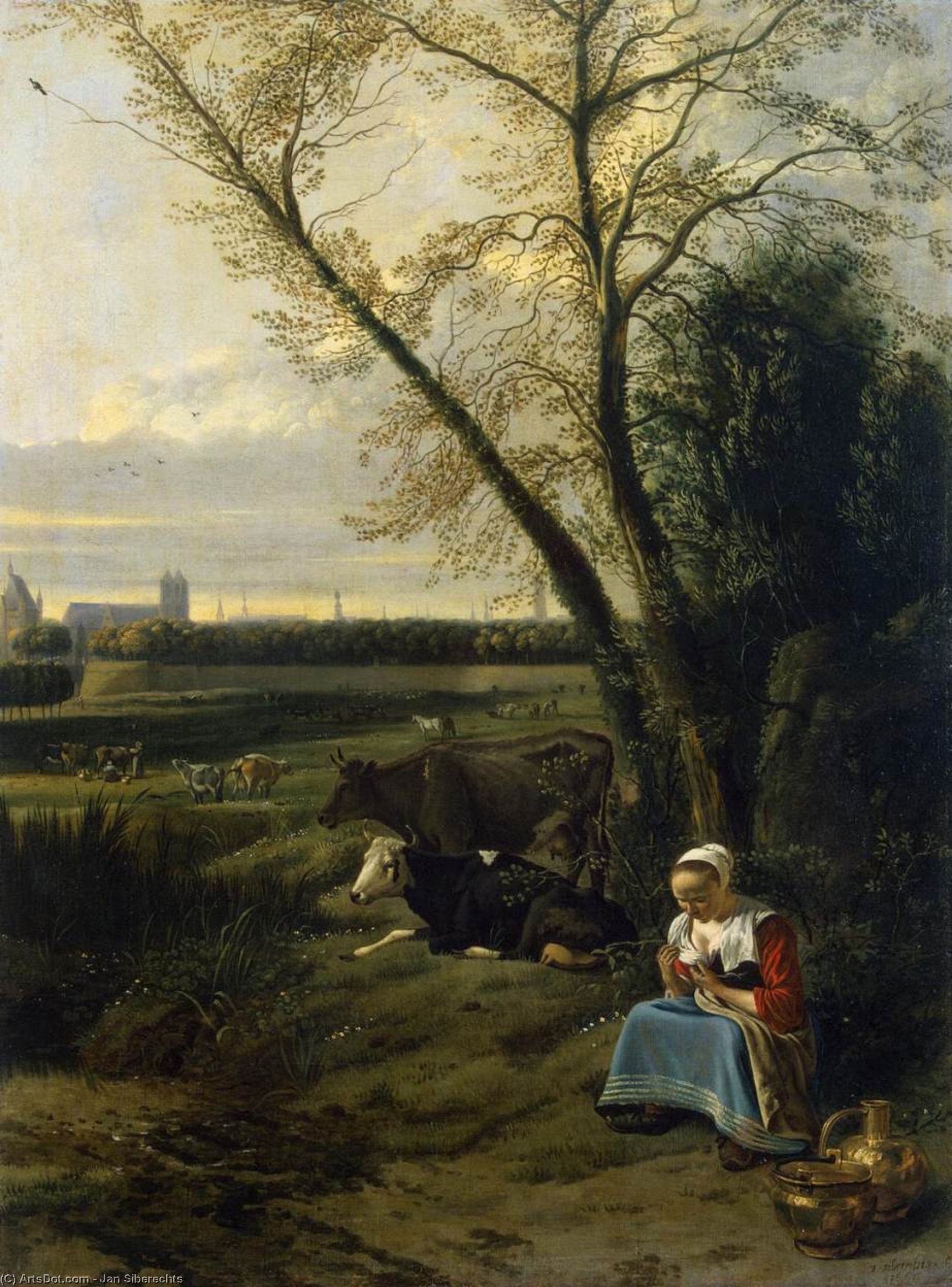
Jan Siberechts' "Shepherdess," painted around 1660, isn’t merely a depiction of rural life; it’s a carefully constructed tableau brimming with quiet dignity and an almost palpable sense of serenity. This oil on canvas, currently residing in the Hermitage Museum in St. Petersburg, Russia, offers a glimpse into a world where humanity exists in harmonious balance with nature – a rare and profoundly affecting vision for its time. The painting immediately draws the eye to the central figure, a young shepherdess seated beneath a gnarled, skeletal tree, her posture relaxed yet imbued with an understated grace. She’s not actively engaged in labor; instead, she seems lost in contemplation, holding a small bird – a symbol of innocence and connection to the natural world – gently in her hands.
Siberechts, a Flemish artist working during a period of transition between the Dutch Golden Age and the rise of English landscape painting, skillfully blends influences. His early works, like this one, reveal a clear debt to the Dutch Italianates—artists who had embraced the idealized landscapes of Italy—noting their emphasis on golden light and tranquil scenes. However, Siberechts quickly developed his own distinct style, characterized by meticulous detail and an almost photographic realism, particularly evident in the rendering of textures – from the rough bark of the tree to the soft fur of the cow grazing nearby.
The Language of Light and Color
The painting’s power lies not just in its subject matter but also in Siberechts' masterful use of light and color. The palette is dominated by earthy tones—ochres, browns, and greens—creating a sense of groundedness and connection to the land. Yet, these muted hues are punctuated by vibrant accents – the red bodice of the shepherdess, the blue of her skirt, and the yellow of the bird – which draw the eye and inject a subtle energy into the scene. The light filtering through the branches of the tree casts dappled shadows across the landscape, adding depth and dimension to the composition.
Notably, Siberechts employed a technique known as *chiaroscuro*, skillfully contrasting areas of light and shadow to create a dramatic effect. This is particularly evident in the way he illuminates the shepherdess’s face, highlighting her features and drawing attention to her serene expression. The use of atmospheric perspective—where distant objects appear paler and less distinct—further enhances the sense of depth and space.
Symbolism and Context
Beyond its aesthetic beauty, “Shepherdess” is rich in symbolic meaning. The shepherdess herself represents innocence, purity, and a connection to the natural world – values highly prized during the 17th century. The bird she holds symbolizes hope, freedom, and the fleeting nature of life. The presence of the cow reinforces this pastoral theme, evoking images of abundance and fertility. Considering Siberechts’ later work in England, it's fascinating to note how he retained these core Flemish elements while adapting his style to suit a new audience.
Painted during a period of significant social and political upheaval in Europe, “Shepherdess” offers a respite from the turmoil of the time. It’s a reminder of a simpler way of life—a world where humans lived in harmony with nature and found contentment in the rhythms of rural existence. The painting's enduring appeal lies in its ability to transport us to this idyllic realm, inviting us to pause and reflect on our own relationship with the natural world.
A Legacy of Landscape Painting
Jan Siberechts’ “Shepherdess” holds a significant place in art history as one of the earliest examples of English landscape painting. His meticulous attention to detail, his masterful use of light and color, and his ability to capture the essence of rural life paved the way for future generations of British artists. His work influenced figures like William-Adolphe Bouguereau, whose own depictions of shepherdesses—such as “The Little Shepherdess”—demonstrate a clear debt to Siberechts’ pioneering vision.
Today, "Shepherdess" continues to captivate viewers with its timeless beauty and profound emotional resonance. It stands as a testament to the enduring power of art to transport us to other worlds and remind us of the values that matter most—peace, harmony, and connection to nature.
Схожі твори мистецтва


Біографія митця
A Flemish Vision in England: The Life and Art of Jan Siberechts
Jan Siberechts, born in Antwerp in 1627, occupies a fascinating position in the history of European art—a bridge between the vibrant traditions of Flemish painting and the burgeoning landscape tradition of England. His story is one of artistic development, fortunate patronage, and ultimately, pioneering influence. The son of a sculptor also named Jan Siberechts, he received his initial training within the family workshop, absorbing the skills and aesthetic sensibilities that would form the foundation of his career. By 1648, he had achieved master status in the prestigious Guild of Saint Luke in Antwerp, signaling his recognition as a skilled craftsman. While concrete evidence remains elusive, art historians speculate about a possible sojourn to Italy during the late 1640s or early 1650s. Though unconfirmed, this potential exposure to Italianate landscape painting—with its emphasis on classical compositions and atmospheric perspective—undoubtedly left an imprint on his evolving style, visible in the early works that showcase a delicate balance between Flemish realism and Italianate ideals.Early Training and Artistic Influences
Siberechts’ formative years were steeped in the artistic heritage of Antwerp, a city renowned for its sculptural prowess and vibrant artistic community. His father instilled in him a deep appreciation for craftsmanship and meticulous observation—qualities that would prove invaluable throughout his career. The Guild of Saint Luke provided him with formal training and access to established artistic conventions, shaping his understanding of technique and composition. Notably, Siberechts’ early works demonstrate considerable influence from Dutch masters like Nicolaes Berchem and Karel Dujardin. These painters skillfully captured the serene beauty of pastoral landscapes, utilizing soft lighting and subtle color palettes to evoke a sense of tranquility and harmony. The meticulous rendering of foliage and water reflections—characteristic of Berchem’s oeuvre—clearly resonated with Siberechts’ artistic sensibilities. Furthermore, he absorbed lessons from Italianate landscape painting, recognizing the importance of classical principles like perspective and idealized forms. This dual influence contributed to his distinctive style—one rooted in Flemish realism yet infused with elements of Italian grandeur.The Marriage and Consolidation of Skill
In 1652, Siberechts married Maria-Anna Croes, marking a period of stability that allowed him to dedicate himself fully to artistic pursuits. This union provided him with a supportive home environment and fostered a family life that enriched his creative spirit. During this time, he continued honing his craft, experimenting with new techniques and expanding his repertoire of subjects. He remained steadfastly committed to Flemish landscape painting, drawing inspiration from the rhythms of rural life and capturing the essence of the Flemish countryside. His depictions of farmers tending their fields, shepherds guiding their flocks, and villagers engaging in everyday activities—often rendered with remarkable detail and vibrancy—were imbued with a humanist sensibility that reflected the broader artistic currents of the era.The Turning Point: Embracing English Landscapes
The 1660s represented a pivotal moment in Siberechts’ artistic trajectory. He decisively shifted his focus towards the landscapes of England, embarking on an ambitious project to document the estates and vistas of the British aristocracy. This decision was spurred by an invitation from George Villiers, the Second Duke of Buckingham—a patron who recognized Siberechts’ exceptional talent and championed his artistic vision. Recognizing a rare gift, Villiers extended an offer for Siberechts to travel to England, initiating a transformative chapter in his life and career. Around 1672, Siberechts accepted, relocating to London and immersing himself in the English landscape tradition. He quickly established himself as a sought-after artist among the elite, undertaking numerous commissions to portray stately homes and surrounding landscapes—a practice that would solidify his reputation as a pioneer of British landscape painting.A Legacy of Atmospheric Perspective and Detail
Siberechts’ approach to English landscape painting distinguished itself from prevailing trends. Unlike many contemporaries who favored idealized representations or theatrical compositions, he prioritized atmospheric perspective—creating visual echoes and adding depth to his canvases through subtle gradations of color and tone. He skillfully manipulated light effects, capturing the fleeting moods of dawn and dusk with breathtaking accuracy. His paintings weren’t merely topographical records; they were artistic interpretations that conveyed a profound sense of place and atmosphere. Siberechts' meticulous attention to detail—evident in the rendering of foliage, rocks, and water reflections—further enhanced his artistic impact. He captured not just the physical presence of these estates but also their spirit—a quality that continues to captivate viewers today. Approximately one hundred works attributed to Siberechts have survived, offering invaluable insight into his prolific output and artistic evolution. His style, initially shaped by Dutch and Italianate traditions, ultimately blossomed into something uniquely his own—characterized by vibrant colors, meticulously rendered figures, and atmospheric landscapes that captured the essence of both Flemish rural life and the grandeur of English estates. He even counted John Wootton among his pupils, furthering his influence on the artistic landscape of England. His paintings are more than just landscapes; they are windows into a bygone era, offering a glimpse into the lives and aspirations of those who inhabited them.
Ян Сіберехтс
1627 - 1703 , Бельгія
Короткі факти
- Artistic Movement Or Style: Бароко, Пейзаж
- Artists Or Movements Influenced By This Artist:
- Джордж Вілліямс II
- Інглійський пейзаж
- Artists Who Influenced This Artist:
- Пітер Тільменс
- Ніколає Берхем
- Date Of Birth: 1627
- Date Of Death: 1703
- Full Name: Jan Siberechts
- Nationality: Фламандський
- Notable Artworks:
- «Бэльзи Эстейт»
- Пейзаж з фігурами
- Портрет Джованні Арнольфіні та його дружини
- Place Of Birth: Антверпен, Бельгия
Пов'язані статті

Топ-25 шедеврів Джона Констебла: пейзажі Англії для вашого дому | ArtsDot
Відкрийте для себе 25 найкращих шедеврів Джона Констебла! Англійські пейзажі, романтизм та емоційне світло в живописі. Репродукції картин високої якості для вашого дому від ArtsDot.com. Дослідіть повну колекцію онлайн!

Jan Brueghel the Elder: A Master of Flemish Landscape & Allegory – Exploring Innovation & Influence
Explore the captivating world of Jan Brueghel the Elder, a Flemish Baroque master renowned for his stunning landscapes & allegorical paintings. Discover his collaborations with Rubens and lasting artistic legacy.

Топ-10 шедеврів пейзажу: мистецтво природи в інтер'єрі від ArtsDot
Відкрийте для себе 10 найвідоміших пейзажів в історії мистецтва! Ван Гог, Моне та інші майстри. Репродукції картин високої якості від ArtsDot – натхнення для вашого дому. Дослідіть колекцію онлайн!

Cultivating Visions: A Historical Journey Through Rural Landscapes in Art
Explore the rich history of rural landscape painting with ArtsDot. Discover Impressionist masterpieces, key artists & movements. Find your perfect serene artwork and bring nature's beauty home.

Топ-10 шедеврів романтичного пейзажу: мистецтво, що захоплює дух | ArtsDot
Відкрийте для себе 10 шедеврів романтичного пейзажу! Каспар Давид Фрідріх, Тернер та інші майстри. Історія мистецтва, емоційні кольори природи та ідеї декору з ArtsDot.com. Дослідіть колекцію онлайн!

