


The picture follows your choices: , .
Опис експоната
Henry Raeburn's 'Mrs. Charles Steuart' captures elegance and refinement with exquisite detail. This captivating portrait, painted in 1794, showcases the artist’s mastery of light, shadow, and subject portrayal.
 Розгорнути текст
Біографія митця
Генрі Райберн – видатний шотландський портретист, що славиться реалістичним стилем та здатністю вловити характер впливових особистостей. Відкрийте для себе його спадщину!
Олійная репродукція ручної роботи
Написана вручну олією на полотні у вашому розмірі та рамі, виготовлена на замовлення нашими художниками. ( Перейти до друку Перейти до цифрових зображень)
More about this painting
 Переглянути в інтер'єрі
 Надіслати як листівку
 Поділитися
 Деталі витвору
 Посібник

 Завантажити
 Схожі екземпляри
 Рентгенівське дослідження
 Слайд-шоу
 Q&A
Q&A Статистика
Order your painting in four simple steps
Take your time. You can change any answer; the price in your order card follows each choice.
1 Step one of four
Which size would you like?
These sizes keep the proportions of the original painting. The drawing shows your choice on a wall, above a two-metre sofa.
Or give your own measurements
Обирайте з наших стандартних розмірів, що відповідають оригінальним пропорціям твору мистецтва.

Введіть необхідну ширину та висоту, щоб картина підійшла до вашої рами або стіни. Оскільки це ручний розпис, для зміни пропорцій художник може дописати трохи більше по краях або дещо обрізати композицію — вибір за вами. Перед початком роботи ми надішлемо вам цифровий макет для затвердження. Зображення, показане на цій сторінці, не є реальним результатом — лише макет відображає майбутній вигляд.
2 Step two of four
How should it be prepared: rolled, stretched or framed?
The prices below are for the size you chose in step one.
Choose the edges of the stretched canvas
Choose your frame

White ₴1

Blurside ₴1

Extended ₴1

P118B ₴10

P118H ₴10

P118W ₴10

P438Z ₴10

P508JH ₴12

P508YH ₴12

P805H ₴10

P805Z ₴10

P919BZ ₴10

P919G ₴10

P919XJ ₴10

P959ZH ₴10

P968JZ ₴12

W106C ₴8

W218G ₴10

W218JH ₴8

W218Y ₴10

W307PJ ₴10

W316G ₴10

W316PJ ₴8

W316Y ₴10

W398PJ ₴8

W4111J ₴10

W500HY ₴15

W500JH ₴15

W692G ₴12

W849H ₴8

W940BG ₴15

W953PJ ₴8

H24-GOLD ₴30

H24-SILVER ₴30

H36-GOLD ₴45

H36-SILVER ₴45
У рамі
Moulding: . Overall size with the frame: .
3 Step three of four
Would you like anything changed in the painting?
Most people answer no. Because each painting is made by hand, our artist can also adapt it for you.
After order, ArtsDot.com team will email client for instructions and provide a mockup preview
4 Step four of four
A few finishing options
All of them are optional. The answers already selected cost nothing extra.
Who paints it?
Доставка по всьому світу () за 3–4 тижні замість стандартних 5 тижнів. (3 Листопад). Без жодних компромісів у якості.
A nameplate, as in a museum?
Деталі гравірування на бронзовій табличці
This elegant plaque features the artist's name and the title of the artwork, finely engraved for a timeless presentation.
It is made from bronze with a refined, elegant finish. The text is precisely laser-engraved for a sharp and permanent result. Measuring 9x2 cm, the plaque is compact yet easy to read. It's built to be durable and scratch-resistant, offering a professional, museum-quality look. Mounting is simple thanks to the included adhesive backing.
Деталі прозорої акрилової таблички
The plaque includes essential engraved details such as the artist's name, the title of the artwork, the date it was created, the type of media used-like oil on canvas or watercolor-a brief description of the piece, and a QR code that links to the complete artwork information.
It is crafted from clear acrylic, offering a sleek, modern appearance. The text is UV-engraved in black to ensure strong visual contrast. With a size of 10x15 cm, it ensures optimal readability. It comes equipped with two metal hooks for secure wall mounting. The plaque is designed to be weather-resistant, making it suitable for various environments, and it includes interactive features that work seamlessly with smartphone scanning.
Деталі чорної акрилової таблички
This elegant plaque includes engraved information such as the artist's name, the title of the artwork, the date it was created, the type of media used (like oil on canvas or watercolor), a short description of the artwork, and a QR code for quick access to more information.
The plaque itself is made from refined black acrylic with a premium finish. The text is laser-engraved in white for high contrast and readability. Its size is 10x15 cm, designed to be easy to read. It comes with two metal hooks for professional mounting. The design is sleek and fits any interior style. It is also weather-resistant and durable, with built-in digital integration for mobile compatibility.
A protective varnish?
When do you need it?
✓ Check and order
Your painting, as you ordered it

Mrs Charles Steuart
Матеріал репродукції
Розмір репродукції
-

Видатний майстер-художник
Більше деталізації, витонченості та додаткового часу на створення твору
-

Рама для репродукції
-
-
Для творів мистецтва або репродукцій, розмір яких перевищує 105 см (приблизно 41 дюйм) з будь-якого боку, рама доставляється у вигляді розібраного комплекту. Такий метод гарантує безпечну доставку та запобігає пошкодженням під час транспортування.
Потребує професійного збирання — це не продукт для самостійного виготовлення (DIY).
Комплект має бути зібраний, а полотно натягнуте досвідченим майстром багетних робіт із використанням клейового дерева (не входить у комплект), щипців для натягування полотна та затискачів, щоб підрамник залишався рівним під час висихання клею. Неправильне збирання або нерівномірне натягування полотна може призвести до незворотного пошкодження твору мистецтва, що не підпадає під дію нашої гарантії.
 Для творів мистецтва або репродукцій, розмір яких перевищує 105 см (приблизно 41 дюйм) з будь-якого боку, рама доставляється у вигляді розібраного комплекту. Такий метод гарантує безпечну доставку та запобігає пошкодженням під час транспортування.
У комплект входять усі бруски з цільного дерева, точно вирізані за розміром.
Збирається за допомогою гвинтів, що входять до комплекту, а також клейового розчину для кутових з'єднань, який не входить до комплекту і має бути підготовлений вашим майстром.
Потрібні професійні інструменти, які не входять до комплекту: щипці для натягування полотна (натягувач) та затискачі, щоб утримувати рейки рівно під час висихання клею.
Важливо:
Для з'єднання кутів потрібен клей для дерева, перекладини необхідно затиснути струбцинами до повного висихання клею, а для натягування полотна на зібрану раму знадобляться щипці для натягування полотна. Жоден із цих інструментів не входить до комплекту. Будь ласка, проконсультуйтеся з досвідченим майстром багетного оформлення перед замовленням рами такого розміру.

Етикетка експоната
-
-

Захисний лак
Глянцевий лак (підсилює яскравість кольорів, захищає від світла та вологи)
-

Персоналізувати мій витвір
Приклади можливих змін: заміна обличчя на фото клієнта; додавання домашньої тварини (наприклад, заміна кота на собаку); додавання прихованого повідомлення на фоні; зміна пейзажу або елементів фону.
-

Прискорено
Доставка по всьому світу () за 3–4 тижні замість стандартних 5 тижнів. (3 Листопад). Без компромісів у якості.
-
Експрес-доставка
Доставка по всьому світу () протягом 5 тижнів. (10 Листопад).
Включено в ціну
Підсумкова вартість
₴ 11866
Скляний варіант доступний лише для розмірів до 110 см
Included with every order
- Безкоштовна експрес-доставка по всьому світу
- Високоякісне лляне полотно
- Повне страхове покриття доставки
- Гарантія повернення митних зборів
- Гарантія точного відтворення кольорів
- Політика повернення протягом 100 днів (лише у разі виявлення дефектів)
- Гарантія повернення 100% коштів
- Пропозиція на оптові замовлення


A Portrait of Refined Elegance: Mrs Charles Steuart by Henry Raeburn
Henry Raeburn’s “Mrs. Charles Steuart,” painted in 1794, is more than just a portrait; it's a meticulously crafted window into the social and artistic sensibilities of late 18th-century Britain. This captivating oil on canvas, currently residing within the hallowed halls of the Tate Gallery in London, exemplifies Raeburn’s mastery of capturing not only likeness but also the very essence of his subject – her poise, grace, and subtle air of wealth. The painting immediately draws the eye to Mrs. Steuart herself, a woman radiating an understated elegance through her carefully chosen attire and direct gaze. Her white gown, adorned with delicate pearl accents, speaks volumes about her social standing, while her brown hair, styled in a fashionable manner of the period, adds to the overall impression of refined beauty.
Raeburn’s technique is characterized by an extraordinary sensitivity to light and shadow. He employs soft, diffused colors – creams, browns, and subtle blues – to create a sense of warmth and intimacy within the scene. The background, featuring a carefully rendered landscape with trees and a sky, serves not merely as a backdrop but as an integral element of the composition, subtly enhancing the feeling of depth and tranquility. Notably, Raeburn’s skill lies in his ability to imbue the portrait with a sense of immediacy; it feels less like a formal depiction and more like a captured moment, inviting the viewer into Mrs. Steuart's world.
The Context of a Scottish Master
To fully appreciate “Mrs. Charles Steuart,” one must understand Henry Raeburn’s place within the broader context of 18th-century British art. Born in Stockbridge, Scotland, in 1756, Raeburn initially pursued a career as a goldsmith before dedicating himself to painting. His early training under James Gilliland honed his precision and attention to detail – skills that would prove invaluable in his later portraiture work. Raeburn’s rise to prominence was remarkable; he became the first native Scottish painter to achieve widespread acclaim and royal patronage, a testament to his talent and ambition.
The painting reflects Raeburn's growing confidence as an artist, moving beyond the more rigid conventions of earlier portraiture styles. He embraced a looser, more naturalistic approach, capturing not just the outward appearance of his subjects but also their personalities and inner lives. This shift towards realism was partly influenced by his time in Italy, where he studied the works of Michelangelo and other masters, absorbing their techniques and philosophies.
Symbolism and Social Significance
Beyond its aesthetic qualities, “Mrs. Charles Steuart” offers a glimpse into the social dynamics of the era. Portraits like this were not merely decorative; they served as powerful symbols of status, wealth, and lineage. The elaborate gown, the pearl necklace – these details communicated Mrs. Steuart’s position within the social hierarchy. The direct gaze of the subject also suggests a degree of self-assurance and confidence, qualities highly valued in women of her station.
Furthermore, Raeburn's decision to portray Mrs. Steuart in such a dignified manner reflects the prevailing attitudes towards women during this period – they were often idealized as virtuous, gentle, and refined. However, beneath the surface of elegance lies a subtle complexity; the painting invites us to contemplate not just her outward appearance but also her inner world.
Discovering More of Henry Raeburn’s Works
For those captivated by “Mrs. Charles Steuart,” a wealth of resources is available for further exploration. The Tate Gallery's website offers detailed information about the painting, including high-resolution images and scholarly essays. Additionally, the Kendal Museum in the United Kingdom houses an impressive collection of artworks by Elias V. Coe, providing a broader context for understanding Raeburn’s artistic influences. Reproductions of “Mrs. Charles Steuart” are available through various sources, offering collectors and interior designers alike the opportunity to bring this timeless masterpiece into their own spaces.
The enduring appeal of “Mrs. Charles Steuart” lies in its ability to transport us back to a bygone era – a time of elegance, refinement, and artistic innovation. It is a testament to Henry Raeburn’s genius as a portrait painter and a valuable window into the social and cultural landscape of 18th-century Britain.
Питання та відповіді
Яким чином обґрунтовано статус авторського права на «Mrs Charles Steuart» роботи Генрі Райберн?
Статус авторського права на твір "Mrs Charles Steuart" — є суспільним надбанням — термін дії авторського права закінчився — визначається датою смерті митця у 1823.
Який емоційний тон має «Mrs Charles Steuart» роботи Генрі Райберн?
«Mrs Charles Steuart» роботи Генрі Райберн передає Рефлексивний емоційний настрій.
Який домінантний відтінок у «Mrs Charles Steuart» роботи Генрі Райберн?
У «Mrs Charles Steuart» роботи Генрі Райберн переплітаються Гама золотисто-жовтих тонів відтінки.
Схожі твори мистецтва


Генрі Райберн
1756 - 1823, Шотландія
Біографія митця
A Scottish Master of Realism: The Life and Art of Sir Henry Raeburn
Sir Henry Raeburn emerged from the shadows of early 18th-century Scotland, a figure whose artistic journey defied convention and ultimately redefined portraiture. Born in Stockbridge, Edinburgh, in 1756 – a village then on the outskirts of the city – his life began with an unexpected tragedy: the loss of both parents before he reached the age of six. Raised by his elder brother, William, Raeburn’s early years were marked by hardship and a reliance on familial support. This formative experience instilled in him a quiet determination that would later fuel his relentless pursuit of artistic mastery. His family's background as textile manufacturers provided a foundation for stability, allowing him to pursue his burgeoning passion without the immediate pressures of commercial obligations.From Goldsmith’s Apprentice to Miniature Master
Raeburn’s formal education was limited, yet this didn’t hinder his innate talent. At fifteen, he apprenticed himself to James Gilliland, a goldsmith and jeweler in Edinburgh's Old Town – a craft that honed his meticulous attention to detail and his understanding of intricate design. It was within the world of miniature portraiture that Raeburn truly began to flourish. He quickly demonstrated an extraordinary ability to capture likenesses with remarkable accuracy, creating exquisite portraits on ivory that were highly sought after by the Scottish elite. This early success provided him with financial security and a platform from which to develop his artistic vision. He was particularly adept at rendering the subtle nuances of facial expression, conveying not just physical resemblance but also the personality and character of his subjects.The Italian Influence: A Turning Point
Around 1784, Raeburn embarked on a transformative journey to Italy – a pilgrimage that would profoundly shape his artistic style. While the exact details remain somewhat shrouded in mystery, this trip allowed him to immerse himself in the works of the Old Masters, particularly those of Caravaggio and Rembrandt. He studied their masterful use of light and shadow, their dramatic compositions, and their ability to capture the psychological depth of their subjects. Returning to Edinburgh in 1786, Raeburn brought with him a renewed sense of purpose and a bolder, more expressive approach to painting. He began experimenting with larger canvases and incorporating elements of Baroque style into his work – a departure from the delicate miniatures that had defined his early career.The Rise of a National Portraitist
By the late 1780s, Raeburn had firmly established himself as Edinburgh’s leading portrait painter. He attracted commissions from prominent figures in Scottish society, including Adam Smith, David Hume, and James Grant – men who shaped the intellectual and cultural landscape of the nation. His portraits were characterized by a remarkable honesty and directness, capturing not just the outward appearance of his subjects but also their inner character and status. Raeburn’s technique was masterful—a combination of meticulous observation, confident brushwork, and a sophisticated understanding of light and shadow. He often positioned his subjects against dark backgrounds, allowing their faces and figures to emerge with striking clarity. His most famous work, *The Young Polo Player*, exemplifies this approach – it's not simply a depiction of a sporting gentleman; it’s an energetic snapshot of youthful vitality and aristocratic leisure.Recognition and Legacy: A Scottish Icon
In 1815, Raeburn achieved the pinnacle of his career when he was elected to the Royal Academy in London—a momentous occasion that solidified his reputation as one of Britain's leading portrait painters. Shortly before his death in 1823, he was appointed His Majesty’s Limner for Scotland – a testament to his enduring influence and artistic merit. Raeburn’s legacy extends far beyond the canvases he created. He represents a triumph of self-education, perseverance, and artistic vision—a symbol of Scottish ingenuity and creativity. His paintings continue to be studied and admired by artists and scholars alike, inspiring generations with their realism, psychological insight, and masterful technique. His work remains an integral part of Scotland’s rich cultural heritage, a testament to the enduring power of art to capture the essence of human experience.Пов'язані статті

The Allure of Elegance in Art: A Historical & Aesthetic Exploration of Refinement & Grace
Explore the exquisite world of Rococo art! Discover its history, masters (Watteau, Boucher & more), and defining elegance. Expert insights for collectors seeking museum-quality reproductions & custom portraits.
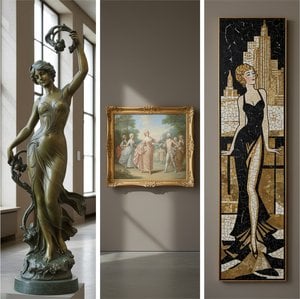
The Allure of Elegance: Exploring Artistic Representations of Refinement Across Movements
Explore the captivating history of elegance in art, from Rococo's grace to Romanticism’s passion. Discover investment-worthy masterpieces & expert guidance for building your collection with ArtsDot.

Топ-10 вишуканих творів мистецтва для елегантного інтер'єру | ArtsDot.com
Відкрийте для себе 10 вишуканих творів мистецтва, що втілюють елегантність! Дізнайтесь історії Моне, Ван Гога та інших майстрів. Розкішні картини для вашого інтер'єру – репродукції високої якості на ArtsDot.com. Дослідіть колекцію онлайн!