


Картина відповідає вашим виборам: , .
Опис експоната
Explore the Sala del Cinquecento in Florence's Palazzo Vecchio – a masterpiece of Renaissance art featuring monumental frescoes and historical significance.
 Розгорнути текст
Біографія митця
Джорджіо Вазарі (1511-1574): італійський художник, архітектор та мистецтвознавець. Відомий своїми життєписами митців, які стали основою історії мистецтва, а також проектом Уффіці.
Олійная репродукція ручної роботи
Написана вручну олією на полотні у вашому розмірі та рамі, виготовлена на замовлення нашими художниками. ( Перейти до друку Перейти до цифрових зображень)
Більше про цю картину
 Переглянути в інтер'єрі
 Надіслати як листівку
 Поділитися
 Деталі витвору
 Посібник

 Завантажити
 Схожі екземпляри
 Рентгенівське дослідження
 Слайд-шоу
 Питання та відповіді
 Статистика
Замовте свою картину у чотири прості кроки
Не поспішайте. Ви можете змінити будь-яку відповідь; ціна у вашій кошику буде оновлюватися відповідно до кожного вибору.
1 Перший крок із чотирьох
Який розмір ви бажаєте обрати?
Ці розміри зберігають пропорції оригінальної картини. На малюнку показано ваш вибір на стіні над двометровим диваном.
Або вкажіть власні розміри
Обирайте з наших стандартних розмірів, що відповідають оригінальним пропорціям твору мистецтва.

Введіть необхідну ширину та висоту, щоб картина підійшла до вашої рами або стіни. Оскільки це ручний розпис, для зміни пропорцій художник може дописати трохи більше по краях або дещо обрізати композицію — вибір за вами. Перед початком роботи ми надішлемо вам цифровий макет для затвердження. Зображення, показане на цій сторінці, не є реальним результатом — лише макет відображає майбутній вигляд.
2 Другий крок із чотирьох
Як його підготувати: у рулоні, на підрамнику чи в рамі?
Наведені нижче ціни вказані для розміру, обраного вами на першому кроці.
Оберіть тип країв натяжного полотна
Оберіть свою раму

Білий край ₴1

Розмитий край ₴1

З розширенням ₴1

P118B ₴10

P118H ₴10

P118W ₴10

P438Z ₴10

P508JH ₴12

P508YH ₴12

P805H ₴10

P805Z ₴10

P919BZ ₴10

P919G ₴10

P919XJ ₴10

P959ZH ₴10

P968JZ ₴12

W106C ₴8

W218G ₴10

W218JH ₴8

W218Y ₴10

W307PJ ₴10

W316G ₴10

W316PJ ₴8

W316Y ₴10

W398PJ ₴8

W4111J ₴10

W500HY ₴15

W500JH ₴15

W692G ₴12

W849H ₴8

W940BG ₴15

W953PJ ₴8

H24-GOLD ₴30

H24-SILVER ₴30

H36-GOLD ₴45

H36-SILVER ₴45
У рамі
Багет: . Загальний розмір із рамою: .
3 Третій крок із чотирьох
Бажаєте внести якісь зміни в картину?
Більшість людей відповідають «ні». Оскільки кожна картина створена вручну, наш художник також може адаптувати її для вас.
Після оформлення замовлення команда ArtsDot.com надішле клієнту електронний лист із запитом інструкцій та надасть попередній макет для перегляду
4 Четвертий крок із чотирьох
Кілька варіантів фінішного покриття
Усі вони є необов'язковими. Вибір уже вибраних варіантів не потребує додаткової оплати.
Хто автор?
Доставка по всьому світу () за 3–4 тижні замість стандартних 5 тижнів. (9 Листопад). Без жодних компромісів у якості.
Табличка, як у музеї?
Деталі гравірування на бронзовій табличці
This elegant plaque features the artist's name and the title of the artwork, finely engraved for a timeless presentation.
It is made from bronze with a refined, elegant finish. The text is precisely laser-engraved for a sharp and permanent result. Measuring 9x2 cm, the plaque is compact yet easy to read. It's built to be durable and scratch-resistant, offering a professional, museum-quality look. Mounting is simple thanks to the included adhesive backing.
Деталі прозорої акрилової таблички
The plaque includes essential engraved details such as the artist's name, the title of the artwork, the date it was created, the type of media used-like oil on canvas or watercolor-a brief description of the piece, and a QR code that links to the complete artwork information.
It is crafted from clear acrylic, offering a sleek, modern appearance. The text is UV-engraved in black to ensure strong visual contrast. With a size of 10x15 cm, it ensures optimal readability. It comes equipped with two metal hooks for secure wall mounting. The plaque is designed to be weather-resistant, making it suitable for various environments, and it includes interactive features that work seamlessly with smartphone scanning.
Деталі чорної акрилової таблички
This elegant plaque includes engraved information such as the artist's name, the title of the artwork, the date it was created, the type of media used (like oil on canvas or watercolor), a short description of the artwork, and a QR code for quick access to more information.
The plaque itself is made from refined black acrylic with a premium finish. The text is laser-engraved in white for high contrast and readability. Its size is 10x15 cm, designed to be easy to read. It comes with two metal hooks for professional mounting. The design is sleek and fits any interior style. It is also weather-resistant and durable, with built-in digital integration for mobile compatibility.
Захисний лак?
Коли вам це потрібно?
✓ Перевірити та замовити
Ваша картина, згідно із вашим замовленням

Sala del Cinquecento
Матеріал репродукції
Розмір репродукції
-

Видатний майстер-художник
Більше деталізації, витонченості та додаткового часу на створення твору
-

Рама для репродукції
-
-
Для творів мистецтва або репродукцій, розмір яких перевищує 105 см (приблизно 41 дюйм) з будь-якого боку, рама доставляється у вигляді розібраного комплекту. Такий метод гарантує безпечну доставку та запобігає пошкодженням під час транспортування.
Потребує професійного збирання — це не продукт для самостійного виготовлення (DIY).
Комплект має бути зібраний, а полотно натягнуте досвідченим майстром багетних робіт із використанням клейового дерева (не входить у комплект), щипців для натягування полотна та затискачів, щоб підрамник залишався рівним під час висихання клею. Неправильне збирання або нерівномірне натягування полотна може призвести до незворотного пошкодження твору мистецтва, що не підпадає під дію нашої гарантії.
 Для творів мистецтва або репродукцій, розмір яких перевищує 105 см (приблизно 41 дюйм) з будь-якого боку, рама доставляється у вигляді розібраного комплекту. Такий метод гарантує безпечну доставку та запобігає пошкодженням під час транспортування.
У комплект входять усі бруски з цільного дерева, точно вирізані за розміром.
Збирається за допомогою гвинтів, що входять до комплекту, а також клейового розчину для кутових з'єднань, який не входить до комплекту і має бути підготовлений вашим майстром.
Потрібні професійні інструменти, які не входять до комплекту: щипці для натягування полотна (натягувач) та затискачі, щоб утримувати рейки рівно під час висихання клею.
Важливо:
Для з'єднання кутів потрібен клей для дерева, перекладини необхідно затиснути струбцинами до повного висихання клею, а для натягування полотна на зібрану раму знадобляться щипці для натягування полотна. Жоден із цих інструментів не входить до комплекту. Будь ласка, проконсультуйтеся з досвідченим майстром багетного оформлення перед замовленням рами такого розміру.

Етикетка експоната
-
-

Захисний лак
Глянцевий лак (підсилює яскравість кольорів, захищає від світла та вологи)
-

Персоналізувати мій витвір
Приклади можливих змін: заміна обличчя на фото клієнта; додавання домашньої тварини (наприклад, заміна кота на собаку); додавання прихованого повідомлення на фоні; зміна пейзажу або елементів фону.
-

Прискорено
Доставка по всьому світу () за 3–4 тижні замість стандартних 5 тижнів. (9 Листопад). Без компромісів у якості.
-
Експрес-доставка
Доставка по всьому світу () протягом 5 тижнів. (16 Листопад).
Включено в ціну
Підсумкова вартість
₴ 11807
Скляний варіант доступний лише для розмірів до 110 см
До кожного замовлення додається
- Безкоштовна експрес-доставка по всьому світу
- Високоякісне лляне полотно
- Повне страхове покриття доставки
- Гарантія повернення митних зборів
- Гарантія точного відтворення кольорів
- Політика повернення протягом 100 днів (лише у разі виявлення дефектів)
- Гарантія повернення 100% коштів
- Пропозиція на оптові замовлення


Introduction
The Sala del Cinquecento, located in the Palazzo Vecchio in Florence, Italy, is a masterpiece of Florentine Renaissance art. This room was commissioned by Cosimo I de' Medici and designed by Giorgio Vasari between 1555 and 1572. The Sala del Cinquecento is a testament to the artistic and cultural achievements of the Florentine Renaissance, showcasing some of the most impressive frescoes and architectural elements of the period.Giorgio Vasari: A Master Artist of the Florentine Renaissance
Giorgio Vasari (1511-1574) was an Italian painter, architect, and historian who played a crucial role in shaping the course of Florentine Renaissance art. He is best known for his biographies of Italian artists, which were published in 1550 as "Le Vite de' più eccellenti pittori, scultori e architettori." Vasari was also a prolific artist, creating numerous masterpieces throughout his career.The Sala del Cinquecento: A Masterpiece of Florentine Renaissance Art
The Sala del Cinquecento is a stunning example of Florentine Renaissance art, featuring some of the most impressive frescoes and architectural elements of the period. The room measures 54 meters long, 23 meters wide, and 18 meters high, making it one of the largest and most impressive rooms in the Palazzo Vecchio. The Sala del Cinquecento features two large frescoes on its walls: "The Battle of Marciano" and "The Battle of Anghiari." These frescoes were painted by Vasari and his assistants, and they depict some of the most important military victories of the Medici family.The Battle of Marciano
The Battle of Marciano is a stunning fresco that covers the entire north wall of the Sala del Cinquecento. The fresco depicts the Battle of Marciano, which took place in 1554 between the Medici forces and the Florentine Republic. The fresco features numerous figures, including Cosimo I de' Medici, who is depicted on horseback at the center of the composition.The Battle of Anghiari
The Battle of Anghiari is a stunning fresco that covers the entire south wall of the Sala del Cinquecento. The fresco depicts the Battle of Anghiari, which took place in 1440 between the Florentine Republic and the Milanese forces. The fresco features numerous figures, including Leonardo da Vinci, who is depicted at the center of the composition.Conclusion
The Sala del Cinquecento is a stunning example of Florentine Renaissance art, featuring some of the most impressive frescoes and architectural elements of the period. This room is a testament to the artistic and cultural achievements of the Florentine Renaissance, showcasing the work of some of the most important artists of the period, including Giorgio Vasari, Leonardo da Vinci, and Michelangelo. If you are interested in learning more about Florentine Renaissance art or purchasing hand-made oil painting reproductions of your favorite works, please visit our website at https://ArtsDot.com. We offer a wide range of reproductions, including those of the Sala del Cinquecento, that are sure to enhance any art collection.- Sources:
- Giorgio Vasari: The Lives of the Most Excellent Painters, Sculptors, and Architects, translated by Gaston du C. de Vere (New York: Alfred A. Knopf, 1996).
- /en/art/show/art-8y2ux3-en/
- /art/list/?Filter=Florentine%20Renaissance%20art
- Painting by 'Giorgio Vasari' | Giorgio Vasari:View of the Studiolo (Palazzo Vecchio (Florence, Italy),Oil On Panel)
- Painting by 'Giorgio Vasari' | Giorgio Vasari:Perseus and Andromeda (detail) (Palazzo Vecchio (Florence, Italy),Oil)
Питання та відповіді
Чи відомий Джорджіо Вазарі, автор твору "Sala del Cinquecento", під іншими іменами?
Інші відомі імена Джорджіо Вазарі, автора твору "Sala del Cinquecento", включають Джорджо ді Антоніо Вазарі, Вазарі.
Який колір домінує в композиції «Sala del Cinquecento» роботи Джорджіо Вазарі?
Переважаючим кольором у творі «Sala del Cinquecento» роботи Джорджіо Вазарі є Еспресо (#57402a).
Які кольори переважають у «Sala del Cinquecento» роботи Джорджіо Вазарі?
«Sala del Cinquecento» вирізняється Землисті відтінки палітрою, де домінує Еспресо (#57402a).
Схожі твори мистецтва


Джорджіо Вазарі
1511 - 1574, Італія
Біографія митця
A Life Woven into the Renaissance Fabric
Giorgio Vasari, born in Arezzo, Tuscany, on July 30, 1511, was more than simply a painter; he was a quintessential embodiment of the Italian Renaissance spirit. His life unfolded as a vibrant tapestry woven with threads of artistic creation, architectural innovation, insightful historical writing, and an unwavering dedication to celebrating the masters who came before him. From his earliest training under Guglielmo da Marsiglia, a skilled artisan in stained glass, young Giorgio’s path was steered towards visual artistry. However, it was his move to Florence at sixteen that truly ignited his potential. Immersing himself within the dynamic circle of Andrea del Sarto and absorbing the influences of Rosso Fiorentino and Jacopo Pontormo, Vasari began a journey that would see him become one of the most influential figures of his era. His formative years were also deeply marked by the patronage and friendship of the powerful Medici family, a relationship that would shape both his career and his perspective on art’s role in society.The Artist's Hand and Eye
Vasari’s artistic style is often categorized as Mannerist, reflecting the prevailing aesthetic trends of the mid-16th century. His paintings are characterized by elongated figures, dynamic compositions, and a sophisticated use of color—qualities highly admired during his lifetime. While perhaps not achieving the same level of enduring fame as some of the artists he chronicled, Vasari’s skill was undeniable. Notable works such as *The Studio of the Painter*, a fresco housed in Casa Vasari in Arezzo, offer a fascinating glimpse into the artistic practices of the time. The sheer scale and ambition of his frescoes for the Palazzo Vecchio in Florence, undertaken between 1555 and 1572, demonstrate his mastery of large-scale decorative schemes. His final monumental undertaking, *The Last Judgement*, adorning the cupola of Florence Cathedral—completed after his death by Federico Zuccari—stands as a testament to his unwavering commitment to grand artistic visions. Beyond painting, Vasari’s architectural contributions were equally significant. He designed the elegant loggia of the Palazzo degli Uffizi, transforming it into a public piazza and creating a vital link within Florence's urban landscape. Perhaps most famously, he conceived and oversaw the construction of the Vasari Corridor, a secret passageway connecting the Uffizi Gallery with the Palazzo Pitti—a feat of engineering and architectural ingenuity that continues to captivate visitors today.A Historian Forging a Legacy
However, it is arguably as an art historian that Giorgio Vasari secured his most lasting legacy. His monumental work, *Lives of the Most Excellent Painters, Sculptors, and Architects*, published in 1550 (with a revised edition in 1568), revolutionized the way art was understood and appreciated. This groundbreaking text wasn’t merely a collection of biographies; it established a narrative framework for the development of Italian Renaissance art, tracing its evolution from the early masters like Cimabue and Giotto to his contemporaries Michelangelo and Raphael. Vasari's work introduced the very concept of the “Renaissance” – a rebirth of classical ideals—and laid the foundation for modern art history as a discipline. While acknowledging that Vasari’s accounts are not without their biases and inaccuracies, particularly concerning artists predating his own time, the impact of *Lives* remains profound. It provided a crucial historical context for artistic creation, elevating the status of artists from skilled craftsmen to intellectual figures worthy of scholarly attention.Influences and Enduring Significance
Vasari’s artistic development was profoundly shaped by his exposure to the works of Renaissance masters. His visit to Rome in 1529, where he studied the art of Raphael and other High Renaissance artists, proved pivotal. He absorbed their principles of composition, anatomical accuracy, and idealized beauty, incorporating them into his own style. Michelangelo, whom Vasari greatly admired, exerted a particularly strong influence on both his painting and architecture. The grandeur and dynamism characteristic of Michelangelo’s work are evident in many of Vasari’s projects. Beyond specific artists, the broader intellectual currents of the Renaissance—humanism, classical learning, and a renewed interest in empirical observation—also informed Vasari's approach to art and history. Giorgio Vasari died on June 27, 1574, in Florence, leaving behind a multifaceted legacy that continues to resonate today. He was not only a talented artist and architect but also a pioneering historian whose writings shaped our understanding of one of the most transformative periods in Western art history. His work remains essential for anyone seeking to explore the rich cultural heritage of the Italian Renaissance.Major Achievements
- The Studio of the Painter (1563): A monumental fresco within Casa Vasari, offering a detailed depiction of an artist’s studio and serving as a testament to Vasari's understanding of artistic practice.
- Frescoes in Palazzo Vecchio (1555-1572): A series of ambitious frescoes adorning the Salone dei Cinquecento, showcasing Vasari’s mastery of large-scale decorative schemes and his ability to integrate historical narratives into architectural settings.
- Design of the Uffizi Gallery (1560): Transforming a former arsenal into a magnificent public space, Vasari's design for the Uffizi Gallery established a new standard for Renaissance architecture in Florence.
- The Last Judgement (1573-1579): A monumental fresco on the cupola of Florence Cathedral, completed after Vasari’s death by Federico Zuccari, representing a culmination of his artistic ambitions and a powerful statement about faith and mortality.
- The Lives of the Most Excellent Painters, Sculptors, and Architects (1550): A groundbreaking historical work that established a framework for understanding the development of Renaissance art and cemented Vasari’s place as a pivotal figure in art history.
Key Influences
- Guglielmo da Marsiglia: Vasari's early teacher, providing him with foundational training in stained glass techniques.
- Andrea del Sarto: A master painter and influential figure in Florence, whose workshop provided Vasari with invaluable artistic experience.
- Raphael & Michelangelo: The High Renaissance masters whose works profoundly influenced Vasari’s style and approach to art.
- Humanism & Classical Learning: The intellectual currents of the Renaissance, emphasizing reason, observation, and a renewed interest in classical antiquity.
Further Resources
Useful Links:


Пов'язані статті

The Enduring Legacy of Fresco: Technique, History & Artistic Expression
Explore the rich history & enduring artistry of fresco painting. Discover techniques from Giotto to Michelangelo, conservation efforts, & modern applications. Learn how ArtsDot brings this timeless art form to your home.
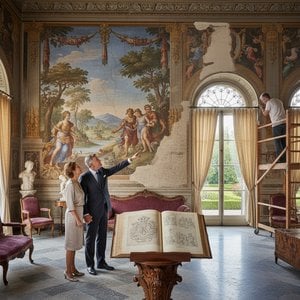
Фреска як сімейна спадщина: Збереження родинної історії через настінне мистецтво
Дізнайтеся все про фрески: історію, техніки, замовлення та догляд. Створіть унікальну сімейну спадщину з нашими професійними художниками! Якість гарантовано.

Мистецтво, що живе з вами: Емоційна сила індивідуального інтер'єрного фреску
Відкрийте для себе світ вишуканих фресок на замовлення! Індивідуальний дизайн, професійне виконання та емоційний вплив у вашому інтер'єрі. Дізнайтесь більше!