

 Переглянути в інтер'єрі
 Надіслати як листівку
 Поділитися
 Деталі витвору
 Посібник

 Завантажити
 Схожі екземпляри
 Рентгенівське дослідження
 Слайд-шоу
 Q&A
Q&A Статистика
Self portrait

 Розгорнути текст
Мистецький твір, представлений на цій сторінці, захищений законом про авторське право, що унеможливлює легальне створення або продаж його ідентичної репродукції. Цей захист забезпечується відповідно до міжнародних угод, таких як Бернська конвенція та національним законодавством, зокрема положеннями, що викладені в Законодавство США про авторське право — Розділ 17. Всі права захищені. Будь-яке використання без дозволу заборонено.
Цей метод повністю відповідає нормам авторського права, оскільки він не передбачає копіювання чи дублювання захищеного твору мистецтва. Натомість це творче переосмислення — створення нового малюнка під впливом оригіналу, який не є його точним відтворенням.
Гікле / Художній принт
Друк جيкле або на полотні музейної якості з оперативним виготовленням та різноманітними варіантами фінішної обробки. ( Замовити картину ручної роботи Перейти до цифрових зображень)




P118B ₴10

P118H ₴10

P118W ₴10

P438Z ₴10

P508JH ₴12

P508YH ₴12

P805H ₴10

P805Z ₴10

P919BZ ₴10

P919G ₴10

P919XJ ₴10

P959ZH ₴10

P968JZ ₴12

W106C ₴8

W218G ₴10

W218JH ₴8

W218Y ₴10

W307PJ ₴10

W316G ₴10

W316PJ ₴8

W316Y ₴10

W398PJ ₴8

W4111J ₴10

W500HY ₴15

W500JH ₴15

W692G ₴12

W849H ₴8

W940BG ₴15

W953PJ ₴8




Обирайте з наших стандартних розмірів, що відповідають оригінальним пропорціям твору мистецтва.

Введіть необхідну ширину та висоту, щоб принт ідеально підійшов до вашої рами або стіни. Принт можна лише обрізати, але не можна зробити більшим за оригінал, тому при зміні пропорцій частина зображення буде втрачена. Перед друком ми надсилаємо вам цифровий макет для затвердження. Зображення на цій сторінці не відображає реальну обрізку — її можна побачити лише на макеті.
Доставка по всьому світу () за 2 тижні замість стандартних 4/5 тижнів. (2 Листопад)

Безкоштовна експрес-доставка по всьому світу

Високоякісне лляне полотно

Повне страхове покриття доставки

Гарантія повернення митних зборів

Гарантія точного відтворення кольорів

Політика повернення протягом 100 днів (лише у разі виявлення дефектів)

Гарантія повернення 100% коштів

Пропозиція на оптові замовлення
 Скляний варіант доступний лише для розмірів до 110 см

Self portrait
Гікле / Художній принт
Розмір репродукції
-


Підсумкова вартість
₴ 2797
A Fragmented Reflection: Examining Gerhard Richter’s ‘Self Portrait’
Gerhard Richter's 'Self Portrait,' painted in 1996, isn’t merely a depiction of the artist himself; it’s a profound meditation on memory, perception, and the elusive nature of identity—themes that resonate powerfully within Richter’s broader oeuvre. The photograph itself – a stark black and white image capturing Richter's gaze directly at the viewer – immediately establishes a sense of intimacy while simultaneously conveying an underlying tension. This deliberate choice of medium speaks volumes about Richter’s artistic philosophy: he eschews illusionistic representation, favoring instead a technique that captures fleeting impressions rather than striving for photographic realism.- Style & Technique: Richter employs a method known as ‘photographic abstraction,’ layering translucent resin onto canvas and then applying thin coats of oil paint. This process creates a surface that resembles photographic emulsion, blurring the boundaries between image and materiality. The resulting texture is subtly grainy, mirroring the imperfections inherent in memory itself—a characteristic that distinguishes it from traditional portraiture.
- Historical Context: Painted during a period marked by significant political upheaval – the reunification of Germany following decades of division – ‘Self Portrait’ reflects Richter's preoccupation with confronting trauma and acknowledging the complexities of historical narrative. The artist himself has spoken about wanting to capture “the feeling of what it is like to remember,” suggesting that the painting operates on a level beyond mere visual representation.
Symbolism Beyond Appearance
The seemingly simple composition belies a deeper symbolic significance. Richter’s gaze—direct, unwavering, yet slightly melancholic—commands attention and invites contemplation. It's not an idealized portrait; there’s no attempt to sanitize or embellish the subject’s features. Instead, it presents a face weathered by experience, hinting at the burdens of history and the anxieties associated with confronting one’s own past. The monochromatic palette reinforces this sense of solemnity, stripping away distracting colors and focusing solely on tonal variations—a stylistic choice that underscores the painting's emotional core.- Emotional Impact: ‘Self Portrait’ evokes a feeling of quiet introspection. It compels viewers to confront their own perceptions of selfhood and memory, prompting questions about how we construct our identities through experience. Richter’s masterful manipulation of texture and color contributes to this emotional resonance, creating an image that feels both tangible and intangible—a testament to the artist's ability to convey profound psychological states.
A Legacy of Uncertainty
Richter’s artistic trajectory has been defined by a consistent refusal to offer definitive answers or impose singular interpretations. Like ‘Self Portrait,’ his work embodies a spirit of questioning and acknowledges the inherent limitations of representation. It stands as an enduring reminder that art can illuminate not only what we see but also what lies beneath—the unspoken anxieties, unresolved traumas, and elusive fragments of experience that shape our understanding of ourselves and the world around us. Its reproduction offers a captivating glimpse into Richter’s artistic vision and invites collectors and interior designers alike to appreciate its understated beauty and intellectual depth.Питання та відповіді
Де я можу купити принт «Self portrait» роботи Герхард Ріхтер?
Принт роботи «Self portrait» роботи Герхард Ріхтер можна замовити безпосередньо на її сторінці Художній принт: художній принт на бавовняному полотні або архівному канвас-папері.
Де я можу знайти твори мистецтва, схожі на «Self portrait» роботи Герхард Ріхтер?
Сторінка Схожі твори для твору «Self portrait» роботи Герхард Ріхтер містить схожі витвори мистецтва.
Який емоційний тон притаманний стилю Contemporary Realism у творі "Self portrait"?
«Self portrait» сповнене Reflective емоційності в межах стилю Contemporary Realism.
Схожі твори мистецтва


Біографія митця
A Life Shaped by Division: The Early Years and Artistic Formation of Gerhard Richter
Gerhard Richter’s story is inextricably linked to the fractured history of 20th-century Germany. Born in Dresden in 1932, his childhood unfolded under the shadow of a rising National Socialist regime. This formative period, marked by displacement – his family moved several times during the war years – instilled within him a profound sense of uncertainty and a questioning spirit that would permeate his artistic practice for decades to come. The idyllic landscapes of his early upbringing in Reichenau and Waltersdorf were soon disrupted by conflict, leaving an indelible mark on his psyche. His father, though not a fervent supporter of the Nazi party, navigated the complexities of life under authoritarian rule as a schoolteacher, while his mother fostered a love for literature and music within the family. This duality – a pragmatic acceptance of circumstance alongside a yearning for cultural expression – became a defining characteristic of Richter’s own artistic approach. He began formal training at the Dresden Academy of Fine Arts in 1951, initially immersed in the tradition of socialist realism demanded by the East German state. However, even within this constrained environment, a desire for artistic freedom simmered beneath the surface, fueled by a growing dissatisfaction with ideological constraints and a longing to explore more expansive creative possibilities.Escaping Constraints: Düsseldorf and the Exploration of Style
The year 1961 proved pivotal. Richter, along with his wife Marianne Eufinger, made the daring decision to flee East Germany, seeking refuge in the burgeoning art scene of Düsseldorf. This move marked a radical shift in his artistic trajectory. The West German landscape offered a liberating environment where experimentation and innovation were not only permitted but actively encouraged. In Düsseldorf, he encountered a vibrant community of artists grappling with questions of identity, representation, and the legacy of history. He quickly began to dismantle the rigid stylistic conventions of socialist realism, embarking on a period of intense exploration that would define his early mature work. This era saw him oscillate between seemingly disparate approaches – from photorealism, meticulously recreating photographic images with astonishing precision, to abstract compositions characterized by bold colors and dynamic brushstrokes. His collaboration with Sigmar Polke led to the coining of the term ‘Capitalist Realism,’ a deliberately ambiguous label that reflected their shared skepticism towards established artistic norms and their appropriation of imagery from advertising and mass media. This period wasn’t about finding *a* style, but rather questioning the very notion of stylistic coherence, embracing contradiction as a fundamental principle.Blurring Boundaries: Photorealism, Abstraction, and the Power of Chance
Richter's artistic vocabulary expanded throughout the 1960s and beyond, encompassing a remarkable range of techniques and themes. His photorealistic paintings, often based on family photographs or newspaper images, are not merely copies of reality but rather investigations into the nature of perception and representation. By meticulously rendering these images with an almost clinical detachment, he forces viewers to confront the inherent ambiguity of photographic truth. Simultaneously, Richter delved deeper into abstraction, creating canvases layered with vibrant colors and gestural marks. These abstract works are often created using a unique technique involving squeegees – tools typically used for cleaning windows – which he drags across the surface of the canvas, manipulating the paint in unpredictable ways. This embrace of chance and spontaneity is central to his artistic philosophy, allowing him to relinquish control and invite unexpected outcomes. His ‘Color Charts,’ systematic arrangements of colored squares, further challenge traditional notions of artistic expression, questioning the very definition of painting itself. These works are not about individual aesthetic preferences but rather about exploring the inherent properties of color and its organizational possibilities.The Weight of History: From Dresden to Berlin
Richter’s early life was profoundly shaped by the tumultuous events of mid-20th century Germany. Growing up in Dresden, a city repeatedly devastated during World War II, instilled within him a deep awareness of loss and destruction. The constant rebuilding efforts, the displacement of families, and the pervasive atmosphere of uncertainty left an enduring mark on his psyche. His father’s experience as a teacher under the Nazi regime – navigating a complex and often oppressive system – further contributed to Richter's critical perspective on authority and ideology. This historical context is subtly woven into many of his works, particularly those exploring themes of memory, identity, and the relationship between art and history. The destruction of Dresden in 1945 served as a powerful catalyst for artistic exploration, prompting Richter to grapple with questions about representation, truth, and the impossibility of fully capturing reality on canvas. Later, after moving to West Germany, he continued to confront these themes through his engagement with photographic imagery, often juxtaposing images of destruction with scenes of everyday life.A Legacy of Innovation: Influence and Recognition
Gerhard Richter’s impact on contemporary art is undeniable. His willingness to challenge conventions, his relentless experimentation with technique, and his profound engagement with historical and political themes have established him as one of the most important artists of our time. He has consistently resisted easy categorization, defying attempts to pigeonhole his work into a single stylistic framework. This refusal to be defined, coupled with his technical virtuosity and intellectual rigor, has earned him widespread critical acclaim and commercial success – his paintings regularly fetch record prices at auction. Beyond the market value, however, lies a deeper significance. Richter’s art speaks to the complexities of modern existence, grappling with issues of memory, identity, and the search for meaning in a fragmented world. He doesn't offer answers but rather poses questions, prompting viewers to confront their own preconceptions and engage in critical dialogue. His influence can be seen in the work of countless artists who have followed in his footsteps, drawn to his innovative techniques and his unwavering commitment to artistic exploration. Richter’s legacy is not simply about creating beautiful objects; it's about expanding the possibilities of painting itself. He remains a vital force in contemporary art, continuing to inspire and provoke audiences with his challenging and deeply resonant work.
Герхард Ріхтер
1932 - , Німеччина
Короткі факти
- Artistic Movement Or Style:
- Фотореалізм
- Абстракція
- Капіталіст реалізм
- Artists Or Movements Influenced By This Artist: ['Сучасні художники']
- Artists Who Influenced This Artist:
- Пабло Пікассо
- Сіґмар Полке
- Date Of Birth: 9 лютого 1932
- Full Name: Gerhard Richter
- Nationality: Німецький
- Notable Artworks:
- Абстрактне зображення 610-1
- Gilbert
- S. з дитиною
- Жовтень 18, 1977
- Place Of Birth: Дрезден, Німеччина
Пов'язані статті
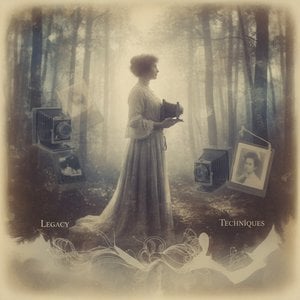
Pictorialism: A Search for Artistic Photography's Soul – Aesthetics, Techniques & Legacy
Explore the captivating world of Pictorialism – a pivotal movement that transformed photography into fine art. Discover key artists like Stieglitz & Käsebier, techniques, and collecting tips from experts.

Топ-10 шедеврів у білих тонах: мистецтво світла та простору від ArtsDot
Відкрийте для себе 10 легендарних картин, де білий колір стає головним героєм! Історія Моне, Ван Гога та інших майстрів. Купіть репродукції шедеврів імпресіонізму на ArtsDot.com – мистецтво для вашого дому.

Beyond the Lens: Photography's Enduring Influence on Modern & Contemporary Art
Explore photography's pivotal role in shaping modern & contemporary art. Discover key movements, influential artists like Stieglitz, and expert collecting advice from ArtsDot.

Monochrome Visions: Exploring the Aesthetic & Historical Significance of Black & White Photography
Explore the rich history & artistic power of black and white photography. From early techniques to iconic masters like Ansel Adams, discover why monochrome continues to captivate art lovers today. Expert insights for collectors.

Топ-10 шедеврів живопису в чорних тонах: історія, мистецтво та декор від ArtsDot
Відкрийте для себе 10 найвідоміших картин у чорних тонах! Історія, техніка та емоції від ArtsDot. Романтизм, готика, експресіонізм – шедеври живопису онлайн. Купіть репродукцію мрії на ArtsDot.com!


