

- 147.0 x 219.0 cm


Картина відповідає вашим виборам: , .
Опис експоната
Experience the dramatic Baroque style of Gerard van Honthorst’s ‘The Dentist,’ showcasing masterful tenebrism and capturing the vulnerability of patient care during the Dutch Golden Age.
 Розгорнути текст
Біографія митця
Герард ван Хонторст – видатний голландський художник епохи Золотого віку, відомий драматичними картинами в стилі бароко та майстерним використанням світла й тіні (тінебризм). Його роботи включають портрети та біблійні сцени.
Олійная репродукція ручної роботи
Написана вручну олією на полотні у вашому розмірі та рамі, виготовлена на замовлення нашими художниками. ( Перейти до друку Перейти до цифрових зображень)
Більше про цю картину
 Переглянути в інтер'єрі
 Надіслати як листівку
 Поділитися
 Деталі витвору
 Посібник

 Завантажити
 Схожі екземпляри
 Рентгенівське дослідження
 Слайд-шоу
 Питання та відповіді
 Статистика
Замовте свою картину у чотири прості кроки
Не поспішайте. Ви можете змінити будь-яку відповідь; ціна у вашій кошику буде оновлюватися відповідно до кожного вибору.
1 Перший крок із чотирьох
Який розмір ви бажаєте обрати?
Ці розміри зберігають пропорції оригінальної картини. На малюнку показано ваш вибір на стіні над двометровим диваном.
Або вкажіть власні розміри
Обирайте з наших стандартних розмірів, що відповідають оригінальним пропорціям твору мистецтва.

Введіть необхідну ширину та висоту, щоб картина підійшла до вашої рами або стіни. Оскільки це ручний розпис, для зміни пропорцій художник може дописати трохи більше по краях або дещо обрізати композицію — вибір за вами. Перед початком роботи ми надішлемо вам цифровий макет для затвердження. Зображення, показане на цій сторінці, не є реальним результатом — лише макет відображає майбутній вигляд.
2 Другий крок із чотирьох
Як його підготувати: у рулоні, на підрамнику чи в рамі?
Наведені нижче ціни вказані для розміру, обраного вами на першому кроці.
Оберіть тип країв натяжного полотна
Оберіть свою раму

Білий край ₴1

Розмитий край ₴1

З розширенням ₴1

P118B ₴10

P118H ₴10

P118W ₴10

P438Z ₴10

P508JH ₴12

P508YH ₴12

P805H ₴10

P805Z ₴10

P919BZ ₴10

P919G ₴10

P919XJ ₴10

P959ZH ₴10

P968JZ ₴12

W106C ₴8

W218G ₴10

W218JH ₴8

W218Y ₴10

W307PJ ₴10

W316G ₴10

W316PJ ₴8

W316Y ₴10

W398PJ ₴8

W4111J ₴10

W500HY ₴15

W500JH ₴15

W692G ₴12

W849H ₴8

W940BG ₴15

W953PJ ₴8

H24-GOLD ₴30

H24-SILVER ₴30

H36-GOLD ₴45

H36-SILVER ₴45
У рамі
Багет: . Загальний розмір із рамою: .
3 Третій крок із чотирьох
Бажаєте внести якісь зміни в картину?
Більшість людей відповідають «ні». Оскільки кожна картина створена вручну, наш художник також може адаптувати її для вас.
Після оформлення замовлення команда ArtsDot.com надішле клієнту електронний лист із запитом інструкцій та надасть попередній макет для перегляду
4 Четвертий крок із чотирьох
Кілька варіантів фінішного покриття
Усі вони є необов'язковими. Вибір уже вибраних варіантів не потребує додаткової оплати.
Хто автор?
Доставка по всьому світу () за 3–4 тижні замість стандартних 5 тижнів. (10 Листопад). Без жодних компромісів у якості.
Табличка, як у музеї?
Деталі гравірування на бронзовій табличці
This elegant plaque features the artist's name and the title of the artwork, finely engraved for a timeless presentation.
It is made from bronze with a refined, elegant finish. The text is precisely laser-engraved for a sharp and permanent result. Measuring 9x2 cm, the plaque is compact yet easy to read. It's built to be durable and scratch-resistant, offering a professional, museum-quality look. Mounting is simple thanks to the included adhesive backing.
Деталі прозорої акрилової таблички
The plaque includes essential engraved details such as the artist's name, the title of the artwork, the date it was created, the type of media used-like oil on canvas or watercolor-a brief description of the piece, and a QR code that links to the complete artwork information.
It is crafted from clear acrylic, offering a sleek, modern appearance. The text is UV-engraved in black to ensure strong visual contrast. With a size of 10x15 cm, it ensures optimal readability. It comes equipped with two metal hooks for secure wall mounting. The plaque is designed to be weather-resistant, making it suitable for various environments, and it includes interactive features that work seamlessly with smartphone scanning.
Деталі чорної акрилової таблички
This elegant plaque includes engraved information such as the artist's name, the title of the artwork, the date it was created, the type of media used (like oil on canvas or watercolor), a short description of the artwork, and a QR code for quick access to more information.
The plaque itself is made from refined black acrylic with a premium finish. The text is laser-engraved in white for high contrast and readability. Its size is 10x15 cm, designed to be easy to read. It comes with two metal hooks for professional mounting. The design is sleek and fits any interior style. It is also weather-resistant and durable, with built-in digital integration for mobile compatibility.
Захисний лак?
Коли вам це потрібно?
✓ Перевірити та замовити
Ваша картина, згідно із вашим замовленням

The Dentist
Матеріал репродукції
Розмір репродукції
-

Видатний майстер-художник
Більше деталізації, витонченості та додаткового часу на створення твору
-

Рама для репродукції
-
-
Для творів мистецтва або репродукцій, розмір яких перевищує 105 см (приблизно 41 дюйм) з будь-якого боку, рама доставляється у вигляді розібраного комплекту. Такий метод гарантує безпечну доставку та запобігає пошкодженням під час транспортування.
Потребує професійного збирання — це не продукт для самостійного виготовлення (DIY).
Комплект має бути зібраний, а полотно натягнуте досвідченим майстром багетних робіт із використанням клейового дерева (не входить у комплект), щипців для натягування полотна та затискачів, щоб підрамник залишався рівним під час висихання клею. Неправильне збирання або нерівномірне натягування полотна може призвести до незворотного пошкодження твору мистецтва, що не підпадає під дію нашої гарантії.
 Для творів мистецтва або репродукцій, розмір яких перевищує 105 см (приблизно 41 дюйм) з будь-якого боку, рама доставляється у вигляді розібраного комплекту. Такий метод гарантує безпечну доставку та запобігає пошкодженням під час транспортування.
У комплект входять усі бруски з цільного дерева, точно вирізані за розміром.
Збирається за допомогою гвинтів, що входять до комплекту, а також клейового розчину для кутових з'єднань, який не входить до комплекту і має бути підготовлений вашим майстром.
Потрібні професійні інструменти, які не входять до комплекту: щипці для натягування полотна (натягувач) та затискачі, щоб утримувати рейки рівно під час висихання клею.
Важливо:
Для з'єднання кутів потрібен клей для дерева, перекладини необхідно затиснути струбцинами до повного висихання клею, а для натягування полотна на зібрану раму знадобляться щипці для натягування полотна. Жоден із цих інструментів не входить до комплекту. Будь ласка, проконсультуйтеся з досвідченим майстром багетного оформлення перед замовленням рами такого розміру.

Етикетка експоната
-
-

Захисний лак
Глянцевий лак (підсилює яскравість кольорів, захищає від світла та вологи)
-

Персоналізувати мій витвір
Приклади можливих змін: заміна обличчя на фото клієнта; додавання домашньої тварини (наприклад, заміна кота на собаку); додавання прихованого повідомлення на фоні; зміна пейзажу або елементів фону.
-

Прискорено
Доставка по всьому світу () за 3–4 тижні замість стандартних 5 тижнів. (10 Листопад). Без компромісів у якості.
-
Експрес-доставка
Доставка по всьому світу () протягом 5 тижнів. (17 Листопад).
Включено в ціну
Підсумкова вартість
₴ 11811
Скляний варіант доступний лише для розмірів до 110 см
До кожного замовлення додається
- Безкоштовна експрес-доставка по всьому світу
- Високоякісне лляне полотно
- Повне страхове покриття доставки
- Гарантія повернення митних зборів
- Гарантія точного відтворення кольорів
- Політика повернення протягом 100 днів (лише у разі виявлення дефектів)
- Гарантія повернення 100% коштів
- Пропозиція на оптові замовлення


A Nocturnal Drama in Light and Shadow
In the dim, flickering atmosphere of a seventeenth-century interior, Gerard van Honthorst captures a moment of profound human vulnerability. The Dentist is not merely a depiction of a medical procedure; it is a masterclass in the Baroque tenebrism that earned the artist his legendary moniker, Glimmer of the Night. As we gaze upon this canvas, we are drawn into a tight, almost claustrophobic circle of figures, where the sharp, singular source of light carves shapes out of an encroaching darkness. The central figure, reclined in a state of palpable discomfort, becomes the emotional anchor of the piece, his face illuminated by a soft yet piercing glow that highlights every nuance of pain and apprehension.
The composition is a rhythmic dance of light and shadow, where Honthorst utilizes chiaroscuro to direct the viewer's eye with surgical precision. The candlelight does more than just illuminate; it breathes life into the textures of the scene—the heavy folds of period clothing, the cold glint of rudimentary dental instruments, and the weary expressions of the onlookers. This dramatic interplay creates a sense of immediacy, making the viewer feel less like a distant observer and more like an uninvited guest standing just at the edge of the candlelight's reach.
The Pulse of the Dutch Golden Age
To understand The Dentist is to understand the transformative era of the Dutch Golden Age and the profound influence of Caravaggio on the Utrecht Caravaggisti. Honthorst, having traveled to Rome, brought back a revolutionary way of seeing—a method that prioritized the psychological weight of a scene through stark contrasts. This painting serves as a window into the social anxieties of 1622, reflecting a period when medical science was often a harrowing, uncertain experience. The surrounding figures—assistants, observers, and even a young boy tending the flame—represent a cross-section of society, each face etched with a unique blend of empathy, curiosity, and dread.
Beyond the technical brilliance, there is a deep symbolic resonance within the work. The light, often associated with divinity or truth in Baroque art, here serves a more grounded, visceral purpose: it exposes the raw reality of human suffering and the communal nature of care. For the modern collector or interior designer, this piece offers much more than historical interest; it provides a sophisticated focal point that commands attention through its tonal depth and narrative complexity. It is an artwork that invites contemplation, perfect for spaces designed to evoke intimacy, drama, and a sense of timeless storytelling.
Whether displayed in a curated gallery setting or as a centerpiece in a richly textured room, a high-quality reproduction of this masterpiece brings with it the soul of the seventeenth century. It is an invitation to appreciate the beauty found in the shadows and the enduring power of a single, well-placed light.
Питання та відповіді
Чи залишився твір «The Dentist» у батьківщині свого автора?
Ні — твір зберігається за кордоном. Герхард ван Хонтхорст народився(-лася) в Нідерланди, а музей, у якому зберігається оригінал твору «The Dentist», розташований у Німеччина.
Хто створив "The Dentist" і в якому році?
Герхард ван Хонтхорст створив(ла) «The Dentist» у 1622 році.
Яка техніка та стиль притаманні «The Dentist» роботи Герхард ван Хонтхорст?
«The Dentist» роботи Герхард ван Хонтхорст поєднує в собі техніку Олія на полотні зі стилем Baroque. Техніка та художній напрям визначають спосіб створення та стилістику твору.
Схожі твори мистецтва


Герхард ван Хонтхорст
1590 - 1656, Нідерланди
Біографія митця
A Master of Light and Shadow: The Life and Art of Gerard van Honthorst
Gerard van Honthorst emerged from Utrecht in 1592, a pivotal figure poised to illuminate the Dutch Golden Age with his dramatic artistry. Initially guided by his father, a decorative painter, young Gerard’s talent blossomed under the tutelage of Abraham Bloemaert, establishing a solid foundation in draftsmanship and composition. However, it was a transformative journey to Rome that irrevocably altered the course of his artistic development. There, amidst the fervent energy of the Italian Baroque, he encountered the groundbreaking work of Caravaggio – an encounter that would define his signature style and earn him the evocative nickname “Gherardo delle Notti,” or Gerard of the Nights. The dramatic use of *tenebrism*, a technique employing stark contrasts between light and dark, became Honthorst’s hallmark, imbuing his canvases with a palpable sense of drama and emotional intensity. He wasn't merely imitating Caravaggio; he was translating the Italian master’s innovations into a distinctly Dutch sensibility, focusing on intimate scenes illuminated by artificial light sources – candles, lamps, and fires – creating an atmosphere both realistic and deeply theatrical. This mastery over light wasn’t simply technical skill; it was a means of revealing character, of drawing the viewer into the emotional core of each scene.From Roman Acclaim to Dutch Mastery
Honthorst's time in Rome was marked by considerable success and patronage. He found favor amongst the city’s elite, including Vincenzo Giustiniani, for whom he created the powerful “Christ Before the High Priest,” a work that exemplifies his masterful command of light and shadow. This painting, now residing in London’s National Gallery, showcases not only his technical skill but also his ability to convey profound psychological depth within his figures. The scene is dominated by a single, intense light source – likely a window – casting dramatic shadows across the faces of the Roman guards and highlighting the vulnerability of Christ. He further solidified his reputation by working for Cosimo II de' Medici, Grand Duke of Tuscany, demonstrating an adaptability and versatility that would serve him well throughout his career. Honthorst’s ability to capture not just physical likeness but also the character and social standing of his sitters made him highly sought after by wealthy merchants, nobles, and even royalty. He became president of the Guild of St. Luke in Utrecht in 1623, a testament to his growing influence within the artistic community. This period saw a flourishing of commissions, allowing Honthorst to refine his style and establish a distinctive voice within Dutch painting. His portraits often depict subjects engaged in lively conversation or dramatic moments, bathed in the warm glow of candlelight – a signature element that immediately identifies his work.A Courtly Artist: Commissions and Collaborations
The reach of Honthorst’s talent extended beyond the Netherlands. His work attracted the attention of Sir Dudley Carleton, who enthusiastically recommended him to prominent English aristocrats like the Earl of Arundel and Lord Dorchester. This led to commissions from Queen Elizabeth of Bohemia, sister of Charles I, who employed him as both a painter and drawing master for her children. These royal connections culminated in significant works such as the allegorical depiction of Charles and Henrietta Maria as Diana and Apollo, now housed at Hampton Court Palace. The painting is a vibrant celebration of power and marriage, with the figures posed amidst lush foliage and bathed in an ethereal light – a testament to Honthorst’s ability to create visually stunning and emotionally resonant scenes. He also collaborated extensively with other artists, notably Peter Paul Rubens during a visit to Utrecht. These partnerships weren't simply about sharing workload; they were intellectual exchanges that enriched the artistic landscape. Honthorst’s willingness to experiment with new techniques and styles, influenced by his Italian contemporaries, broadened his artistic horizons and contributed to the dynamism of Dutch painting during this period.The Utrecht Caravaggisti: A Distinctly Dutch Interpretation
Honthorst was a key figure in the *Utrecht Caravaggisti* movement – a group of Dutch painters who embraced Caravaggio’s dramatic realism and *tenebrism*. Alongside artists like Hendrick ter Brugghen and Dirck van Baburen, he helped to establish a distinctly Dutch interpretation of Italian Baroque style. The Utrecht Caravaggisti were particularly known for their use of dramatic lighting and their focus on genre scenes – everyday life depicted with intense emotion and psychological insight. They retained the emotional intensity of Caravaggio but tempered it with a more nuanced understanding of Dutch culture and social customs. Their work often featured ordinary people caught in moments of drama or surprise, illuminated by candlelight or other artificial light sources – a direct reflection of Honthorst’s own artistic sensibilities. This movement represented a crucial bridge between the Italian Baroque and the developing identity of Dutch painting.Legacy and the Enduring Power of Light
Gerard van Honthorst’s influence resonated far beyond his lifetime. He was a pivotal figure in the development of Dutch Baroque painting, leaving behind a substantial body of work that continues to captivate audiences today. His dramatic beauty and psychological insight are enduring qualities, and his ability to masterfully manipulate light remains a source of fascination for art historians and viewers alike. His paintings serve as a reminder of the power of *tenebrism* – not just as a technical device but as a means of conveying emotion, revealing character, and transporting the viewer into another world. Van Honthorst’s legacy is secured by his contribution to both Italian and Dutch art history, solidifying his place as one of the most important artists of the Golden Age. He died in Utrecht in 1656, leaving behind a body of work that continues to illuminate the artistic landscape and remind us of the profound beauty found within the interplay of light and shadow.
Пов'язані статті

Рембрандт ван Рейн: Топ-25 шедеврів для вашого дому | ArtsDot
Пориньте у світ Рембрандта ван Рейна! 25 культових шедеврів бароко, портретів та біблійних сцен. Купіть високоякісні репродукції картин Рембрандта для вашого дому на ArtsDot.com – музейне мистецтво онлайн!

Golden Age Reflections: Dutch Baroque Painting & Cultural Innovation
Explore the Dutch Golden Age of painting! Discover key artists like Vermeer & ter Borch, their innovative techniques, and the rich cultural context behind these Baroque masterpieces. Learn about collecting & appreciating this iconic art period.
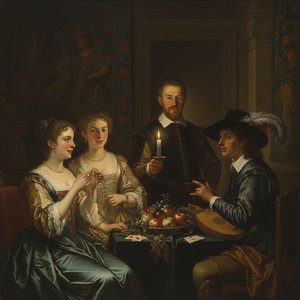
Gerard van Honthorst: Illuminating the Dutch Golden Age with Caravaggism & Courtly Grace
Explore the captivating world of Gerard van Honthorst, a Dutch Golden Age master renowned for his dramatic chiaroscuro & courtly portraits. Discover his life, art, and lasting influence on Baroque painting.