

 Переглянути в інтер'єрі
 Надіслати як листівку
 Поділитися
 Деталі витвору
 Посібник

 Завантажити
 Схожі екземпляри
 Рентгенівське дослідження
 Слайд-шоу
 Питання та відповіді
 Статистика
St Jerome

- 109.0 x 139.0 cm


 Розгорнути текст
Гікле / Художній принт
Друк جيкле або на полотні музейної якості з оперативним виготовленням та різноманітними варіантами фінішної обробки. ( Замовити картину ручної роботи Перейти до цифрових зображень)




P118B ₴10

P118H ₴10

P118W ₴10

P438Z ₴10

P508JH ₴12

P508YH ₴12

P805H ₴10

P805Z ₴10

P919BZ ₴10

P919G ₴10

P919XJ ₴10

P959ZH ₴10

P968JZ ₴12

W106C ₴8

W218G ₴10

W218JH ₴8

W218Y ₴10

W307PJ ₴10

W316G ₴10

W316PJ ₴8

W316Y ₴10

W398PJ ₴8

W4111J ₴10

W500HY ₴15

W500JH ₴15

W692G ₴12

W849H ₴8

W940BG ₴15

W953PJ ₴8




Обирайте з наших стандартних розмірів, що відповідають оригінальним пропорціям твору мистецтва.

Введіть необхідну ширину та висоту, щоб принт ідеально підійшов до вашої рами або стіни. Принт можна лише обрізати, але не можна зробити більшим за оригінал, тому при зміні пропорцій частина зображення буде втрачена. Перед друком ми надсилаємо вам цифровий макет для затвердження. Зображення на цій сторінці не відображає реальну обрізку — її можна побачити лише на макеті.
Доставка по всьому світу () за 2 тижні замість стандартних 4/5 тижнів. (8 Листопад)

Безкоштовна експрес-доставка по всьому світу

Високоякісне лляне полотно

Повне страхове покриття доставки

Гарантія повернення митних зборів

Гарантія точного відтворення кольорів

Політика повернення протягом 100 днів (лише у разі виявлення дефектів)

Гарантія повернення 100% коштів

Пропозиція на оптові замовлення
 Скляний варіант доступний лише для розмірів до 110 см

St Jerome
Гікле / Художній принт
Розмір репродукції
-


Підсумкова вартість
₴ 2828
Saint Jerome by Gerrit van Honthorst: Illuminating the Dutch Golden Age with Caravaggism & Courtly Grace
The painting Saint Jerome by Gerard van Honthorst (Gerrit Van Honthorst) stands as a testament to the Baroque aesthetic, capturing not merely a depiction of biblical scripture but also an atmosphere steeped in contemplation and intellectual rigor. Executed in oil on canvas circa 1647-1650, this artwork resides within the Liechtenstein Museum’s collection in Vienna, Austria—a location that underscores its significance as a cornerstone of Dutch Baroque art history. Measuring approximately 109 x 139 cm, Van Honthorst's masterpiece distinguishes itself through masterful use of chiaroscuro – a technique pioneered by Caravaggio – transforming light and shadow into instruments of dramatic expression and psychological insight.- Subject Matter: The scene portrays Saint Jerome in his study, meticulously rendered against a dimly lit interior punctuated by the stark illumination emanating from a large mirror positioned to the left. This mirror serves not merely as an optical element but also as a symbolic device reflecting both the saint’s figure and the room itself—a motif frequently employed during the Baroque period to heighten visual impact and convey notions of duality and introspection.
- Style & Technique: Van Honthorst's signature style embodies Caravaggio’s influence, prioritizing dramatic realism achieved through tenebrism – a bold juxtaposition of intense light against deep darkness. The artist skillfully employs subtle modeling of light and shadow to sculpt the contours of Jerome’s robe and torso, creating an illusion of volume that draws the viewer’s gaze inward.
- Symbolism: Scattered throughout the composition are symbolic objects—a skull prominently displayed in Jerome's left hand—representing mortality and serving as a poignant reminder of human vulnerability. Alongside the skull rests a book open on his desk, symbolizing knowledge and spiritual contemplation. The inclusion of another skull positioned near the mirror reinforces this thematic preoccupation with death and decay.
- Historical Context: Produced during the Dutch Golden Age – a period characterized by unprecedented artistic flourishing—Saint Jerome reflects the intellectual currents of its time. Artists like Van Honthorst sought to elevate religious imagery beyond mere representation, aiming instead to evoke profound emotional responses and stimulate contemplation on existential themes.
- Emotional Impact: The painting’s subdued color palette—dominated by earthy tones—contributes to its melancholic mood, fostering a sense of solitude and introspection that aligns perfectly with Jerome's ascetic lifestyle. Van Honthorst’s meticulous attention to detail—evident in the textures of the robe, the reflections in the mirror, and the subtle modeling of light—further enhances the artwork’s immersive quality, transporting viewers into the contemplative space of Saint Jerome’s study.
Detailed Analysis: Caravaggism & Chiaroscuro Mastery
Gerard van Honthorst's masterful manipulation of chiaroscuro – derived directly from Caravaggio’s groundbreaking approach – elevates Saint Jerome beyond a simple portrait into an embodiment of Baroque dramatic idealism. The artist meticulously sculpts the figure with light, creating a palpable sense of volume and depth that draws the viewer’s eye toward Jerome’s central form. This technique isn't merely decorative; it serves as a conduit for conveying psychological states—the saint’s inner turmoil mirrored in the stark contrasts of light and shadow. The mirror reflects not only Jerome’s physical presence but also the room’s ambiance, amplifying the painting’s contemplative atmosphere and reinforcing its symbolic significance.Notable Comparisons & Artistic Influences
Saint Jerome stands alongside other seminal Baroque paintings—such as Rembrandt's *The Return of Susanna* and Rubens' *The Descent from Calvary*—as exemplifying the period's artistic conventions. Van Honthorst’s work shares a common thread with these masterpieces: an unwavering commitment to realism infused with expressive emotion. Like Caravaggio, he prioritized capturing the human condition with unflinching honesty, eschewing idealized representations in favor of portraying figures grappling with profound spiritual dilemmas.Provenance & Artistic Legacy
Currently housed at the Liechtenstein Museum, Saint Jerome’s journey through art history reflects the broader dissemination of Baroque ideals across Europe. Its meticulous execution and symbolic richness underscore Van Honthorst's enduring contribution to Dutch artistic heritage—a legacy that continues to inspire artists and collectors alike. The painting serves as a poignant reminder of the Baroque period’s fascination with introspection, mortality, and the pursuit of spiritual enlightenment.Питання та відповіді
Який розмір та орієнтацію рекомендується для друку «St Jerome» роботи Герхард ван Хонтхорст?
Розмір Великий формат, орієнтація Альбомна орієнтація: рекомендовані параметри друку для «St Jerome» роботи Герхард ван Хонтхорст.
Які емоції викликають кольори «St Jerome» роботи Герхард ван Хонтхорст?
У творі "St Jerome" кольори Землисті відтінки створюють Похмурий і глибокий настрій.
Який колір домінує в композиції «St Jerome» роботи Герхард ван Хонтхорст?
Чорний (#0b0607) — це провідний колір твору «St Jerome» роботи Герхард ван Хонтхорст.
Схожі твори мистецтва


Біографія митця
A Master of Light and Shadow: The Life and Art of Gerard van Honthorst
Gerard van Honthorst emerged from Utrecht in 1592, a pivotal figure poised to illuminate the Dutch Golden Age with his dramatic artistry. Initially guided by his father, a decorative painter, young Gerard’s talent blossomed under the tutelage of Abraham Bloemaert, establishing a solid foundation in draftsmanship and composition. However, it was a transformative journey to Rome that irrevocably altered the course of his artistic development. There, amidst the fervent energy of the Italian Baroque, he encountered the groundbreaking work of Caravaggio – an encounter that would define his signature style and earn him the evocative nickname “Gherardo delle Notti,” or Gerard of the Nights. The dramatic use of *tenebrism*, a technique employing stark contrasts between light and dark, became Honthorst’s hallmark, imbuing his canvases with a palpable sense of drama and emotional intensity. He wasn't merely imitating Caravaggio; he was translating the Italian master’s innovations into a distinctly Dutch sensibility, focusing on intimate scenes illuminated by artificial light sources – candles, lamps, and fires – creating an atmosphere both realistic and deeply theatrical. This mastery over light wasn’t simply technical skill; it was a means of revealing character, of drawing the viewer into the emotional core of each scene.From Roman Acclaim to Dutch Mastery
Honthorst's time in Rome was marked by considerable success and patronage. He found favor amongst the city’s elite, including Vincenzo Giustiniani, for whom he created the powerful “Christ Before the High Priest,” a work that exemplifies his masterful command of light and shadow. This painting, now residing in London’s National Gallery, showcases not only his technical skill but also his ability to convey profound psychological depth within his figures. The scene is dominated by a single, intense light source – likely a window – casting dramatic shadows across the faces of the Roman guards and highlighting the vulnerability of Christ. He further solidified his reputation by working for Cosimo II de' Medici, Grand Duke of Tuscany, demonstrating an adaptability and versatility that would serve him well throughout his career. Honthorst’s ability to capture not just physical likeness but also the character and social standing of his sitters made him highly sought after by wealthy merchants, nobles, and even royalty. He became president of the Guild of St. Luke in Utrecht in 1623, a testament to his growing influence within the artistic community. This period saw a flourishing of commissions, allowing Honthorst to refine his style and establish a distinctive voice within Dutch painting. His portraits often depict subjects engaged in lively conversation or dramatic moments, bathed in the warm glow of candlelight – a signature element that immediately identifies his work.A Courtly Artist: Commissions and Collaborations
The reach of Honthorst’s talent extended beyond the Netherlands. His work attracted the attention of Sir Dudley Carleton, who enthusiastically recommended him to prominent English aristocrats like the Earl of Arundel and Lord Dorchester. This led to commissions from Queen Elizabeth of Bohemia, sister of Charles I, who employed him as both a painter and drawing master for her children. These royal connections culminated in significant works such as the allegorical depiction of Charles and Henrietta Maria as Diana and Apollo, now housed at Hampton Court Palace. The painting is a vibrant celebration of power and marriage, with the figures posed amidst lush foliage and bathed in an ethereal light – a testament to Honthorst’s ability to create visually stunning and emotionally resonant scenes. He also collaborated extensively with other artists, notably Peter Paul Rubens during a visit to Utrecht. These partnerships weren't simply about sharing workload; they were intellectual exchanges that enriched the artistic landscape. Honthorst’s willingness to experiment with new techniques and styles, influenced by his Italian contemporaries, broadened his artistic horizons and contributed to the dynamism of Dutch painting during this period.The Utrecht Caravaggisti: A Distinctly Dutch Interpretation
Honthorst was a key figure in the *Utrecht Caravaggisti* movement – a group of Dutch painters who embraced Caravaggio’s dramatic realism and *tenebrism*. Alongside artists like Hendrick ter Brugghen and Dirck van Baburen, he helped to establish a distinctly Dutch interpretation of Italian Baroque style. The Utrecht Caravaggisti were particularly known for their use of dramatic lighting and their focus on genre scenes – everyday life depicted with intense emotion and psychological insight. They retained the emotional intensity of Caravaggio but tempered it with a more nuanced understanding of Dutch culture and social customs. Their work often featured ordinary people caught in moments of drama or surprise, illuminated by candlelight or other artificial light sources – a direct reflection of Honthorst’s own artistic sensibilities. This movement represented a crucial bridge between the Italian Baroque and the developing identity of Dutch painting.Legacy and the Enduring Power of Light
Gerard van Honthorst’s influence resonated far beyond his lifetime. He was a pivotal figure in the development of Dutch Baroque painting, leaving behind a substantial body of work that continues to captivate audiences today. His dramatic beauty and psychological insight are enduring qualities, and his ability to masterfully manipulate light remains a source of fascination for art historians and viewers alike. His paintings serve as a reminder of the power of *tenebrism* – not just as a technical device but as a means of conveying emotion, revealing character, and transporting the viewer into another world. Van Honthorst’s legacy is secured by his contribution to both Italian and Dutch art history, solidifying his place as one of the most important artists of the Golden Age. He died in Utrecht in 1656, leaving behind a body of work that continues to illuminate the artistic landscape and remind us of the profound beauty found within the interplay of light and shadow.
Герхард ван Хонтхорст
1590 - 1656 , Нідерланди
Короткі факти
- Artistic Movement Or Style: Бароко, Каравігаджизм
- Artists Or Movements Influenced By This Artist: ['Утрехтські Каравігаджисти']
- Artists Who Influenced This Artist: ['Караваджо']
- Date Of Birth: 1590
- Date Of Death: 1656
- Full Name: Gerard van Honthorst
- Nationality: Нідерландський
- Notable Artworks:
- Христос у саду
- Свята вечеря
- Діана та Аполлон
- Place Of Birth: Утрехт, Нідерланди
Пов'язані статті
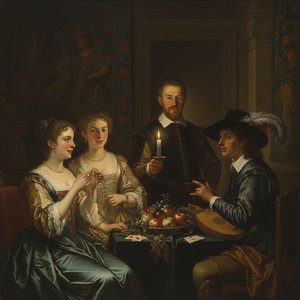
Gerard van Honthorst: Illuminating the Dutch Golden Age with Caravaggism & Courtly Grace
Explore the captivating world of Gerard van Honthorst, a Dutch Golden Age master renowned for his dramatic chiaroscuro & courtly portraits. Discover his life, art, and lasting influence on Baroque painting.

Топ-10 шедеврів голландського бароко: мистецтво для вашого дому від ArtsDot
Пориньте у світ голландського бароко! Від Рембрандта до Вермеєра – 10 шедеврів, що змінили мистецтво. Дізнайтеся історії створення та техніки живопису. Репродукції картин високої якості для вашого дому на ArtsDot.com

Топ-10 шедеврів бароко: картини, що змінили мистецтво | ArtsDot.com
Відкрийте для себе 10 шедеврів бароко від Караваджо, Рембрандта та Рубенса! Історія мистецтва, техніки живопису та натхнення для вашого інтер'єру. Репродукції картин високої якості – ArtsDot.com

Рембрандт ван Рейн: Топ-25 шедеврів для вашого дому | ArtsDot
Пориньте у світ Рембрандта ван Рейна! 25 культових шедеврів бароко, портретів та біблійних сцен. Купіть високоякісні репродукції картин Рембрандта для вашого дому на ArtsDot.com – музейне мистецтво онлайн!

Велич бароко: як драма, світло та емоція XVII століття трансформували мистецтво
Дізнайтеся секрети світла та драми епохи бароко від експертів. Відкрийте для себе велич майстрів вже зараз.
