


 Переглянути в інтер'єрі
 Надіслати
 Поділитися
 Деталі
 Посібник

 Завантажити
 Схожі предмети колекціонування
 Рентгенівське дослідження
 Слайд-шоу
 Статистика переглядів
Fire in the Ashes
 1989
1989 58.0 x 73.0 cm
 Читати далі
Олійная репродукція ручної роботи
Написана вручну олією на полотні у вашому розмірі та рамі, виготовлена на замовлення нашими художниками. ( Перейти до друку Перейти до цифрових зображень)




































Обирайте з наших стандартних розмірів, що відповідають оригінальним пропорціям твору мистецтва.

Ви можете вказати власні розміри, щоб репродукція ідеально підійшла до конкретної рами або інтер'єру. Якщо вибраний вами розмір не відповідає пропорціям оригіналу, ми або обріжемо полотно, або доповнимо картину додатковими елементами, промальованими вручну. Цифровий макет буде надіслано вам на затвердження перед початком виробництва.
Зверніть увагу, що попередній перегляд на екрані не відображає фактичне обрізання або розширення зображення. Тільки макет точно покаже остаточну композицію.
Хоча ми можемо виготовити виріб у нестандартному розмірі, для збереження оригінальних пропорцій рекомендуємо обирати варіанти зі встановленого списку.
Після оформлення замовлення команда ArtsDot.com зв'яжеться з клієнтом електронною поштою для отримання інструкцій та надасть попередній макет
Доставка по всьому світу () за 3–4 тижні замість стандартних 5 тижнів. (23 Вересень). Без жодних компромісів у якості.

Безкоштовна експрес-доставка по всьому світу

Високоякісне лляне полотно

Повне страхове покриття доставки

Гарантія повернення митних зборів

Гарантія точного відтворення кольорів

Політика повернення протягом 100 днів (лише у разі виявлення дефектів)

Гарантія повернення 100% коштів

Знижка на оптові замовлення
 Скляний варіант доступний лише для розмірів до 110 см

Fire in the Ashes
Техніка репродукції
Розмір репродукції
-


Загальна вартість
$ 263
Схожі твори мистецтва


Біографія митця
A Life Forged in Transition: The Early Years and Artistic Awakening of George Legrady
George Legrady, born Légrády György in Budapest, Hungary, in 1950, embodies a life profoundly shaped by displacement and a relentless pursuit of artistic reinvention. His story begins amidst the turbulent aftermath of World War II and the Hungarian Revolution of 1956 – an event that irrevocably altered his childhood and instilled within him a deep sensitivity to themes of identity, memory, and the complexities inherent in representing history. At just six years old, Legrady, along with his family, embarked on a harrowing journey to Canada, seeking refuge from political persecution in Montreal, Quebec. This early experience of exile – a forced severance from homeland and culture – became an enduring undercurrent in his artistic explorations, informing his work’s recurring themes of displacement and the search for belonging. His family's background was rich with creative heritage; his father, Thomas Legrady, a musician and composer, nurtured a deep appreciation for artistic expression within the family, while ancestral roots tracing back to lithography – through great-grandfather Légrády Tivadar, co-founder of a Budapest publishing house – and the theater – via maternal great-grandfather Váradi Antal, a playwright and director – hinted at a lineage steeped in storytelling and visual communication. These familial influences provided an early foundation for Legrady’s multidisciplinary approach to artmaking, suggesting a natural inclination towards combining diverse artistic disciplines. His formative years were marked by navigating two distinct linguistic worlds—French elementary school followed by English high school—a duality that perhaps fostered his later interest in semiotics and the inherent ambiguities of communication. Before dedicating himself fully to art, Legrady engaged in a series of demanding physical jobs – construction, factory work, even perilous underground mining operations in northern Manitoba – experiences that instilled within him a profound respect for labor, materiality, and the stark realities of human existence, offering a powerful contrast to the conceptual realms he would later inhabit. Simultaneously, his passion for music continued to flourish as a keyboardist in various Montreal bands, honing his collaborative spirit and developing a keen sense of rhythm and musical arrangement.From Documentary Roots to Digital Frontiers: The Evolution of an Artistic Vision
Legrady’s formal artistic education began with studies at Loyola College in Montreal, where he encountered photography through the guidance of Charles Gagnon and John Max. This initial encounter sparked a deep fascination with the medium, leading him to explore its potential as a tool for social commentary and visual storytelling. His early photographic work was deeply rooted in documentary practices, most notably his 1973 photo project documenting four James Bay Cree communities. This wasn’t merely an aesthetic exercise; it was a deliberate act of engagement with a marginalized community, utilizing photography to amplify their voices and shed light on the injustices they faced during the contentious James Bay hydroelectric development. Legrady's commitment to using art as a vehicle for social awareness remained central to his work throughout his career. However, this initial focus on direct documentary representation soon gave way to a more conceptual approach, driven by a growing dissatisfaction with the limitations of traditional photography—its perceived objectivity and its inherent framing. This questioning led him towards the burgeoning field of digital media in the early 1980s, where he discovered new tools and possibilities for deconstructing and reimagining the photographic image. His time at the University of California, San Diego, under the tutelage of Harold Cohen – a pioneer in computer-generated art – proved pivotal, opening his eyes to the potential of algorithmic processes and computer-based imagery. This marked a transformative shift in his artistic trajectory, moving him away from simply capturing reality towards analyzing its representation—a semiotic investigation into the very nature of the photographic medium itself.Interactivity, Data, and the Poetics of Information
Legrady’s work increasingly embraced interactivity and data visualization as central tenets of his artistic practice. He moved beyond static images, creating projects that invited audience participation and challenged conventional notions of authorship and the role of the viewer. His 1985 photo documentary on billboards in four major Chinese cities wasn't simply a visual record; it was a sophisticated analysis of the visual syntax of public space – how meaning is constructed through image and text—a critical examination of the persuasive power of advertising. This interest in systems of communication evolved into large-scale interactive installations that explored historical narratives, collective memory, and the flow of information. Anecdoted Archive from the Cold War (1993) stands as a landmark project, allowing users to navigate a complex network of information related to the era – from primary source documents to personal accounts—prompting reflection on the construction of history and the subjective nature of memory. Slippery Traces (1995), published by the ZKM Museum in Karlsruhe, further developed these themes, delving into the ephemeral nature of digital information and its impact on our perception of reality. Throughout the mid-to-late 1980s, Legrady experimented with computer-generated imagery, learning programming languages and developing his own software tools for manipulating images. This culminated in his first interactive work, *Equivalents II* (1992-1994), which was exhibited at PS1 and the National Gallery of Canada, demonstrating his ability to seamlessly integrate technology into artistic expression.Recognition and Legacy: A Pioneer of Digital Art
Throughout his distinguished career, George Legrady has received numerous accolades recognizing his innovative contributions to the field of digital art. From Canada Council Arts Grants spanning decades (1979-2014) to prestigious fellowships from the National Endowment for the Arts (1996) and Creative Capital Foundation (2002), his work has consistently garnered critical acclaim. The University of Southern California Innovative Teaching Award (1987) acknowledged his dedication to pedagogical experimentation, while the Langlois Foundation Grant (2000) supported his continued exploration of digital media. In 2016, Concordia University bestowed upon him an Honorary Doctorate of Fine Arts, cementing his status as a leading figure in contemporary art. Legrady’s significance lies not only in his artistic output but also in his pioneering spirit—his willingness to embrace new technologies and challenge conventional boundaries. He has consistently pushed the limits of what art can be, blurring the lines between photography, data visualization, interactivity, and social commentary. His work serves as a powerful reminder that technology is not merely a tool but a medium for exploring fundamental questions about human perception, memory, and our relationship to the world around us. He continues to inspire artists and scholars alike, shaping the future of digital art with his visionary approach and unwavering commitment to innovation.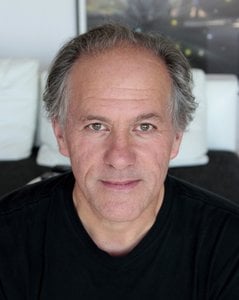
Джордж Леграді
1950 - , Угорщина
Довідкова інформація
- Artistic Movement Or Style: Цифрове мистецтво, Нова медіа
- Artists Or Movements Influenced By This Artist: ['Нова медіа']
- Artists Who Influenced This Artist:
- Чарльз Гаґнон
- Джон Макс
- Геррі Халд Коен
- Date Of Birth: 1950
- Full Name: George Legrady (Légrády György)
- Nationality: Канадський, Угорський
- Notable Artworks:
- Anecdoted Archive
- Pockets Full of Memories
- Making Visible the Invisible
- Slippery Traces
- Place Of Birth: Будапешт, Угорщина