


 Переглянути в інтер'єрі
 Надіслати
 Поділитися
 Деталі
 Посібник

 Завантажити
 Схожі предмети колекціонування
 Рентгенівське дослідження
 Слайд-шоу
 Статистика переглядів
Winter scene

 Читати далі
Гікле / Художній принт
Музейна якість друку جيкле або на полотні з оперативним виготовленням та різноманітними варіантами фінішної обробки. ( Купити картину ручної роботи Перейти до цифрових зображень)




































Обирайте з наших стандартних розмірів, що відповідають оригінальним пропорціям твору мистецтва.

Ви можете вказати власні розміри, щоб репродукція ідеально підійшла до конкретної рами або інтер'єру. Якщо обраний вами розмір не відповідає пропорціям оригіналу, ми або обріжемо полотно, або розширимо зображення за допомогою дзеркального відображення чи суцільної заливки країв. Перед початком виробництва вам буде надіслано цифровий макет для затвердження.
Будь ласка, зверніть увагу, що попередній перегляд на екрані не відображає фактичне обрізання або розширення. Тільки макет точно покаже фінальну композицію.
Хоча можливість замовлення індивідуальних розмірів доступна, ми рекомендуємо обирати формат із попередньо визначеного списку, щоб зберегти оригінальні пропорції.
Доставка по всьому світу () за 2 тижні замість стандартних 4/5 тижнів. (27 Вересень)

Безкоштовна експрес-доставка по всьому світу

Високоякісне лляне полотно

Повне страхове покриття доставки

Гарантія повернення митних зборів

Гарантія точного відтворення кольорів

Політика повернення протягом 100 днів (лише у разі виявлення дефектів)

Гарантія повернення 100% коштів

Знижка на оптові замовлення
 Скляний варіант доступний лише для розмірів до 110 см

Winter scene
Гікле / Художній принт
Розмір репродукції
-


Загальна вартість
$ 62
Схожі твори мистецтва


Біографія митця
The Poet of the Dutch Landscape
Frederik Marianus Kruseman stands as a cornerstone of Dutch Romantic landscape painting, embodying the profound spirit of his era and leaving an indelible mark on the history of European art. Born in 1816 in Haarlem to a family steeped in artistic tradition—his father was a hatter and his lineage connected to the vibrant creative pulse of the Netherlands—Kruseman’s early life fostered a deep appreciation for the nuances of light and observation. His journey began with formal drawing lessons under Jan Reekers, where he mastered the fundamental rules of perspective and the art of sketching directly from nature. This foundational training prepared him for a career that would eventually transcend mere topographical accuracy, moving instead toward a soulful exploration of the natural world.
As his talent blossomed, Kruseman sought out the masters of his time, studying under Nicolaas Johannes Roosenboom and later engaging with the advanced techniques of Jan van Ravenswaay. His artistic formation was further enriched by brief but significant encounters with the works of Barend Cornelis Koekkoek, a titan of the Romantic landscape tradition. These influences coalesced to create a style that was uniquely his own—a blend of meticulous detail and atmospheric grandeur. While his early years were spent navigating the artistic hubs of Haarlem and The Hague, his travels through Kleve and eventually his settlement in Brussels allowed him to absorb the diverse light and textures of Northern Europe, imbuing his canvases with a cosmopolitan yet deeply Dutch sensibility.
Atmospheric Mastery and the Winter Vision
The true essence of Kruseman’s oeuvre lies in his ability to capture the fleeting, ephemeral moments of the natural world. He was a master of the sublime, particularly through his celebrated winter landscapes, which constitute approximately two-thirds of his total body of work. In these compositions, the artist achieved a breathtaking realism; he perfected the rendering of the jet-black, mirror-like surface of frozen rivers and the delicate, intricate marks left by skaters upon the ice. His ability to depict the skeletal beauty of coral-like tree branches against a pale, wintry sky demonstrates a technical precision that serves an even higher emotional purpose: the evocation of solitude and quiet contemplation.
As his career progressed toward its full fruition around 1860, Kruseman’s palette underwent a fascinating evolution. The cool, silvery grey-blue tones that characterized his earlier works gradually gave way to a much warmer, more luminous spectrum. This transition allowed him to capture the magical transition of light during the fading hours of early evening. His most evocative scenes often feature a soft warmth emanating from a distant, small interior or a low sun breaking through mist, creating a sense of profound psychological depth. Through this mastery of light and temperature, Krusebman did not merely paint scenery; he painted the very feeling of a season, inviting the viewer to experience the stillness and the biting chill of a Dutch winter.
Legacy of a Romantic Visionary
Beyond the technical brilliance of his brushwork, Kruseman’s historical significance lies in his role as a bridge between the classical traditions of the Dutch Golden Age revival and the burgeoning emotionalism of 19th-century Romanticism. He moved away from the rigid documentation of landscapes to embrace a more symbolic approach, where a misty vista or a lonely castle on a hill served as metaphors for the human condition. His work resonates with the themes of solitude and the spiritual resonance found in the works of Caspar David Friedrich, yet it remains grounded in the specific, tactile beauty of the Low Countries.
Throughout his life, from his debut at the Exhibition for Living Masters in The Hague to his final years in Sint-Gillis, Kruseman remained a dedicated observer of the earth's quietest transformations. His legacy is preserved in canvases that continue to captivate collectors and historians alike, serving as a testament to a period when art sought to find the infinite within the intimate. Today, we remember him not just as a painter of landscapes, but as a poet of the atmosphere, whose work continues to breathe with the light and shadows of a bygone era.

frederick marianus kruseman
1817 - 1882 , Netherlands
Довідкова інформація
- Artistic Movement Or Style: Dutch Romanticism
- Artists Or Movements Influenced By This Artist: ['Romanticism']
- Artists Who Influenced This Artist: ['Johannes Hendrik Willem Hengelmans']
- Date Of Birth: 1817
- Full Name: Frederik Marianus Kruseman
- Nationality: Dutch
- Notable Artworks:
- Monk Meditating near a Ruin by Moonlight
- The Watering Place
- A Blustery Summer Landscape
- Place Of Birth: Netherlands
Схожі статті

Топ-10 шедеврів романтичного пейзажу: мистецтво, що захоплює дух | ArtsDot
Відкрийте для себе 10 шедеврів романтичного пейзажу! Каспар Давид Фрідріх, Тернер та інші майстри. Історія мистецтва, емоційні кольори природи та ідеї декору з ArtsDot.com. Дослідіть колекцію онлайн!

Golden Light & Dutch Skies: Bringing the Magic of Dutch Golden Age Landscapes into Your Home
Transform your home with the breathtaking light of Dutch Golden Age landscapes. Discover how hand-painted oil reproductions of masterworks like Ruisdael and Vermeer bring timeless elegance, atmosphere, and soulful texture to modern interiors. Elevate your space with museum-quality art.

Charles Leickert: Capturing the Dutch Golden Age Light – A Comprehensive Study of Technique, Context, and Legacy
Explore the captivating winter landscapes of Charles Leickert, a master of Dutch Golden Age light & atmosphere. Discover his techniques, symbolism, and lasting legacy – a comprehensive study for art enthusiasts and collectors.
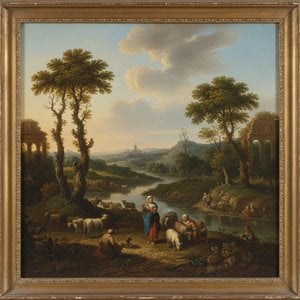
Nicolaes Berchem: Dutch Golden Age Pastoralism & the Evolution of Landscape Painting
Explore the captivating world of Nicolaes Berchem, a leading Dutch Golden Age painter. Discover his idyllic landscapes, masterful technique & lasting influence on art history. Learn more at ArtsDot.

Evocations of Place: A Historical Journey Through Landscape Art
Explore the rich history of landscape art with ArtsDot. Discover renowned artists, movements like Impressionism & Romanticism, and expert guidance for collecting timeless pieces. Find your perfect serene escape today!