


 Переглянути в інтер'єрі
 Надіслати
 Поділитися
 Деталі

 Завантажити
 Схожі експонати
 Рентгенівське дослідження
 Слайд-шоу
Study for 'Under Niagara'

 Читати далі
Олійная репродукція ручної роботи
Написана вручну олією на полотні у вашому розмірі та рамі, виготовлена на замовлення нашими художниками. ( Перейти до друку Перейти до зображення)




































Обирайте з наших стандартних розмірів, що відповідають оригінальним пропорціям твору мистецтва.

Ви можете вказати власні розміри, щоб репродукція ідеально підійшла до конкретної рами або інтер'єру. Якщо вибраний вами розмір не відповідає пропорціям оригіналу, ми або обріжемо полотно, або доповнимо картину додатковими елементами, промальованими вручну. Цифровий макет буде надіслано вам на затвердження перед початком виробництва.
Зверніть увагу, що попередній перегляд на екрані не відображає фактичне обрізання або розширення зображення. Тільки макет точно покаже остаточну композицію.
Хоча ми можемо виготовити виріб у нестандартному розмірі, для збереження оригінальних пропорцій рекомендуємо обирати варіанти зі встановленого списку.
Після оформлення замовлення команда ArtsDot.com зв'яжеться з клієнтом електронною поштою для отримання інструкцій та надасть попередній макет
Доставка по всьому світу () за 3–4 тижні замість стандартних 5 тижнів. (11 Серпень). Без жодних компромісів у якості.

Безкоштовна експрес-доставка по всьому світу

Високоякісне лляне полотно

Повне страхове покриття доставки

Гарантія відшкодування митних зборів

Гарантія точного відтворення кольорів

Політика повернення протягом 60 днів (лише у разі виявлення дефектів)

Гарантія повернення 100% коштів

Знижка на оптові замовлення
 Скляний варіант доступний лише для розмірів до 110 см

Study for 'Under Niagara'
Техніка репродукції
Розмір репродукції
-


Загальна вартість
$ 263
Опис твору
A Glimpse into Nature's Majesty: Frederic Edwin Church’s 'Study for 'Under Niagara''
This captivating artwork offers a preparatory glimpse into Frederic Edwin Church’s monumental painting, ‘Niagara.’ More than just a sketch, this study encapsulates the raw power and sublime beauty of one of nature’s most iconic wonders. Created by a leading figure of the Hudson River School, it provides invaluable insight into Church's artistic process while standing as a compelling work in its own right. The piece invites viewers to contemplate the overwhelming force of nature and experience a sense of awe-inspiring grandeur.Hudson River Romanticism & Artistic Technique
Rooted firmly within the Hudson River School, this study exemplifies the movement’s dedication to detailed depictions of American landscapes, blending realism with romantic ideals. Church's technique showcases a masterful command of oil paints on canvas (or panel). Noticeable brushstrokes, skillfully blended, create a surface that is both textured and smooth. The layering evident in the depiction of water and mist demonstrates his meticulous approach to capturing atmospheric effects. While not as expansive as the finished ‘Niagara,’ this study reveals Church’s careful consideration of composition, color, and light – all crucial elements in conveying the scene's emotional impact. It is a testament to his ability to distill complex natural phenomena into a visually arresting image.Color, Composition & The Essence of Niagara
The palette is dominated by cool tones—blues, greens, and whites—effectively representing the cascading water and enveloping mist. Earthy browns and tans ground the scene with the rocky foreground, while subtle yellows and oranges hint at warmth within the spray. Church employs a relatively simple composition, focusing intently on Niagara’s central subject matter. The horizontal format emphasizes the waterfall's width, drawing the eye across the canvas. Rocks in the foreground provide a crucial sense of scale, grounding the immense falls within a tangible landscape. The use of atmospheric perspective—where distant elements appear lighter and less defined—creates depth and enhances the feeling of vastness.Symbolism & Emotional Resonance
Beyond its visual appeal, 'Study for 'Under Niagara'' carries profound symbolic weight. Niagara Falls has long been interpreted as a symbol of nature’s overwhelming power, evoking feelings of awe and even spiritual transcendence. Church's study captures this essence perfectly—a moment of quiet contemplation before the full force of the completed painting is unleashed. The work invites viewers to connect with the natural world on a deeper level, fostering a sense of wonder and respect for its untamed beauty. It’s an invitation to experience, vicariously, the sublime power that captivated artists and audiences alike in 19th-century America.Схожі твори мистецтва


Біографія митця
A Pioneer of American Landscape: The Life and Art of Frederic Edwin Church
Frederic Edwin Church, born in Hartford, Connecticut, on May 4th, 1826, emerged as a pivotal figure in the blossoming landscape tradition of 19th-century America. His lineage was steeped in New England history—a direct descendant of Puritan pioneers—and his family’s prosperity afforded him opportunities rare for aspiring artists of the time. This financial stability allowed Church to dedicate himself wholeheartedly to his artistic pursuits, a path that would ultimately lead him to become one of the most celebrated and influential painters of the Hudson River School. His early training began at the age of eighteen under the tutelage of Thomas Cole, the very founder of this distinctly American art movement. These formative years spent in Catskill, New York, were crucial, instilling in Church a deep reverence for nature and a commitment to capturing its grandeur on canvas. The apprenticeship wasn’t merely technical; it was an immersion into a philosophy that saw landscape not just as scenery, but as a reflection of the divine and a symbol of national identity.The Rise of a Master: Style and Influences
Church quickly distinguished himself from his contemporaries through a remarkable ability to blend meticulous realism with a romantic sensibility. His paintings are characterized by an astonishing level of detail, capturing the textures of foliage, the play of light on water, and the imposing scale of mountains with breathtaking accuracy. He meticulously rendered every leaf, every ripple, every shadow, creating images that seemed almost photographic in their precision. However, this wasn’t simply photographic representation; Church infused his work with a dramatic flair, employing sweeping panoramic views, vibrant color palettes—often utilizing a technique called “lost and found edges” to create an illusion of depth—and a masterful command of atmospheric perspective. He was deeply influenced by the scientific explorations of Alexander von Humboldt, whose writings on the interconnectedness of nature resonated profoundly with the artist. Humboldt’s emphasis on the importance of observation and the integration of art and science directly informed Church's approach to landscape painting. This influence is evident in Church’s later expeditions to South America and his attempts to convey not just the visual beauty of these landscapes but also their underlying geological and botanical complexities. The Oxbow, completed in 1836, stands as an early testament to this synthesis of observation and imagination—a romantic vision of the American wilderness that would become a hallmark of his style. His technique involved “hidden” brushstrokes, creating smooth surfaces that enhanced the realism and luminosity of his paintings.Ventures into the Wild: Travels and Major Works
Church’s ambition extended beyond the familiar landscapes of New England and New York. Driven by a thirst for firsthand experience and inspired by Humboldt's writings, he embarked on daring expeditions to remote corners of the world. These journeys—to South America in 1853 and 1857, and later to the Arctic regions—provided him with an unparalleled wealth of visual material. The Heart of the Andes, completed in 1859, is perhaps his most ambitious undertaking, a monumental canvas that sought to encapsulate the entire ecosystem of the Andean mountains. The painting was exhibited in a specially constructed gallery, illuminated by skylights, creating an immersive experience for viewers and solidifying Church’s reputation as a master showman as well as an artist. The sheer scale of the work—nearly seven feet wide—and its dramatic lighting were designed to transport the viewer directly into the heart of the Andes. His subsequent series of paintings inspired by his Arctic travels, such as Icebergs: The North, demonstrated his versatility and willingness to tackle challenging subjects. These works weren’t merely depictions of remote landscapes; they were statements about the power and fragility of nature, reflecting a growing environmental consciousness in the mid-19th century. He meticulously documented the shifting ice formations, capturing their ethereal beauty and conveying a sense of awe at the forces of nature.A Family Man and Artistic Innovator
Beyond his artistic pursuits, Church was a devoted husband and father. His marriage to Isabel Carnes in 1860 marked the beginning of a long and fulfilling partnership, one that profoundly influenced his life and work. Together, they established a home on a hillside overlooking the Hudson River—Olana—which became not only a residence but also a studio and a testament to Church’s architectural vision. He designed and built Olana himself, incorporating elements of Persian architecture and creating a space that reflected his love of travel and his appreciation for beauty. The house featured expansive windows offering breathtaking views of the surrounding landscape, providing him with endless inspiration for his paintings. Church was also a keen observer of social and cultural trends, participating in New York’s vibrant artistic community and engaging in philanthropic endeavors. He actively supported the Wadsworth Atheneum, contributing generously to its collection and exhibitions.Legacy and Impact on American Art
Frederic Edwin Church’s influence on American landscape painting is undeniable. He elevated the genre to new heights of artistic achievement and popular acclaim, inspiring generations of artists to explore the beauty and majesty of the natural world. His innovative exhibition practices—presenting single paintings in dramatic settings—set a precedent for future art displays and helped to cultivate a broader public appreciation for art. Beyond his painting, Church was also a dedicated conservationist, advocating for the preservation of Niagara Falls and playing a role in the establishment of national parks. He understood that art could be a powerful tool for raising awareness about environmental issues and inspiring action. His home, Olana, stands as a testament to his artistic vision and his deep connection to the landscape. Frederic Edwin Church died in 1900, leaving behind a legacy of breathtaking paintings and a profound appreciation for the enduring power of nature. His art continues to resonate with viewers today, reminding us of the beauty that surrounds us and the importance of preserving it for future generations.
Фредерик Едвін Церк
1826 - 1900 , США
Досьє митця
- Artistic Movement Or Style: Художній потік «Худсон»
- Artists Or Movements Influenced By This Artist: ['Американський пейзаж']
- Artists Who Influenced This Artist:
- Томас Кол
- А. фон Гумбольдт
- Date Of Birth: 5 травня 1826
- Date Of Death: 7 квітня 1900
- Full Name: Frederic Edwin Church
- Nationality: Американський
- Notable Artworks:
- «Окса́л»
- «Гора́ Холіок»
- «Серце Андійських гір»
- Place Of Birth: Гарфорд, США
Схожі статті

William Bradford: Navigating Faith, Landscape & Artistic Innovation in Early American Painting
Explore the captivating world of William Bradford, American Romanticist painter renowned for his dramatic Arctic seascapes & ship portraits. Discover his artistic evolution, influences, and lasting legacy with ArtsDot.

Thomas Hill: Luminosity, Landscape & the American Pastoral Ideal
Explore the luminous landscapes of Thomas Hill, a pivotal figure in the Hudson River School & Luminism movements. Discover his artistic journey, philosophical depth, and enduring legacy with ArtsDot.
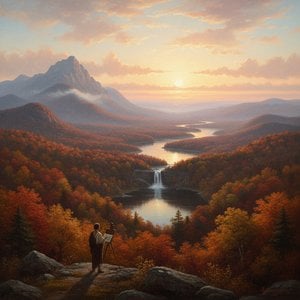
The Sublime Landscape: Exploring the Hudson River School Movement
Explore the captivating world of the Hudson River School! Discover the history, artists, and defining characteristics of this iconic American art movement. Learn about Romanticism's influence & find inspiration for your collection.
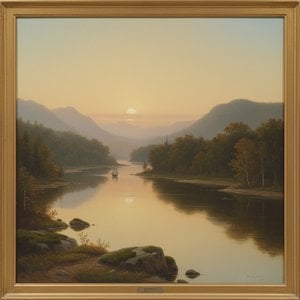
David Johnson: A Luminist Master of the Hudson River School & Beyond
Explore the captivating landscapes of David Johnson, a key figure in the Hudson River School & Luminism movement. Discover his artistic evolution, legacy, and how to collect his works with ArtsDot.

10 шедеврів школи Гудзона: пейзажі, що змінили американське мистецтво | ArtsDot
Відкрийте для себе 10 шедеврів школи Гудзона – Томаса Коула, Фредеріка Черча та інших. Романтичні пейзажі Америки, що захоплюють дух! Репродукції картин преміум-класу для вашого інтер'єру на ArtsDot.com



