

 Переглянути в інтер'єрі
 Надіслати як листівку
 Поділитися
 Детальніше

 Завантажити
 Схожі експонати
 Рентгенівське дослідження
 Слайд-шоу
animated lines


 Читати далі
Придбайте цифрову копію високої роздільної здатності з покращеною якістю, що значно перевершує онлайн-перегляд.
Кожен файл ретельно підготовлений нашими фахівцями за допомогою сучасних інструментів та професійної ручної ретуші. Ми гарантуємо виняткову чіткість, точну передачу кольору та високу деталізацію кожного зображення.
Фінальний файл надсилається електронною поштою протягом 72 годин і оптимізований для негайного використання у професійних виданнях та друкованих матеріалах. Таку якість обирають провідні дизайнерські студії, видавництва та галереї.
Цифрове зображення
Завантажте файл високої роздільної здатності для особистого використання, друку та творчих проєктів. ( Замовити принт Замовити репродукцію ручної роботи)
Переваги кожного замовлення цифрових зображень
Експертна цифрова доставка з гарантією якості
Обираючи ArtsDot.com, ви отримуєте не просто зображення — ви отримуєте професійно вдосконалений цифровий витвір мистецтва, створений з надзвичайною точністю та підкріплений гарантією задоволення. Ось усе, що автоматично додається до вашого замовлення:

Швидка доставка на email
Ваш цифровий файл із зображенням високої роздільної здатності буде надісланий вам електронною поштою протягом 72 годин після оформлення замовлення — він буде готовий до негайного використання.

Цифровий файл із покращенням ШІ
Ваш витвір мистецтва професійно оптимізовано за допомогою передових інструментів штучного інтелекту та ручної корекції, що забезпечує максимальну деталізацію, чіткість і точність передачі кольорів.

Безкоштовне повторне завантаження назавжди
Випадково видалили або втратили файл? Не хвилюйтеся — ми надішлемо його вам повторно в будь-який час безкоштовно.

Без митних зборів — ніколи
Насолоджуйтесь вашим витвором мистецтва миттєво без жодних мит, зборів або плати за доставку — цифрові завантаження завжди не оподатковуються.

Гарантія точності кольорів
Ми гарантуємо максимально точне відтворення оригінальних кольорів на вашому цифровому зображенні завдяки використанню професійних інструментів та систем управління кольором.

Гарантія задоволення протягом 60 днів
Якщо ви не задоволені придбаним цифровим зображенням, ми відкоригуємо його або повернемо 100% вартості протягом 60 днів — без жодних запитань.

Гарантія повернення 100% коштів
Не задоволені покупкою? Отримайте повне повернення коштів протягом 60 днів після отримання цифрового файлу — без жодних запитань.

Знижки на оптові замовлення
Купуйте 3 зображення — заощаджуйте 10% — Купуйте 5 — заощаджуйте 15% — Купуйте 10+ — заощаджуйте 20%. Чудово підходить для творчих проєктів, галерей та агентств.
Опис колекційного об'єкта
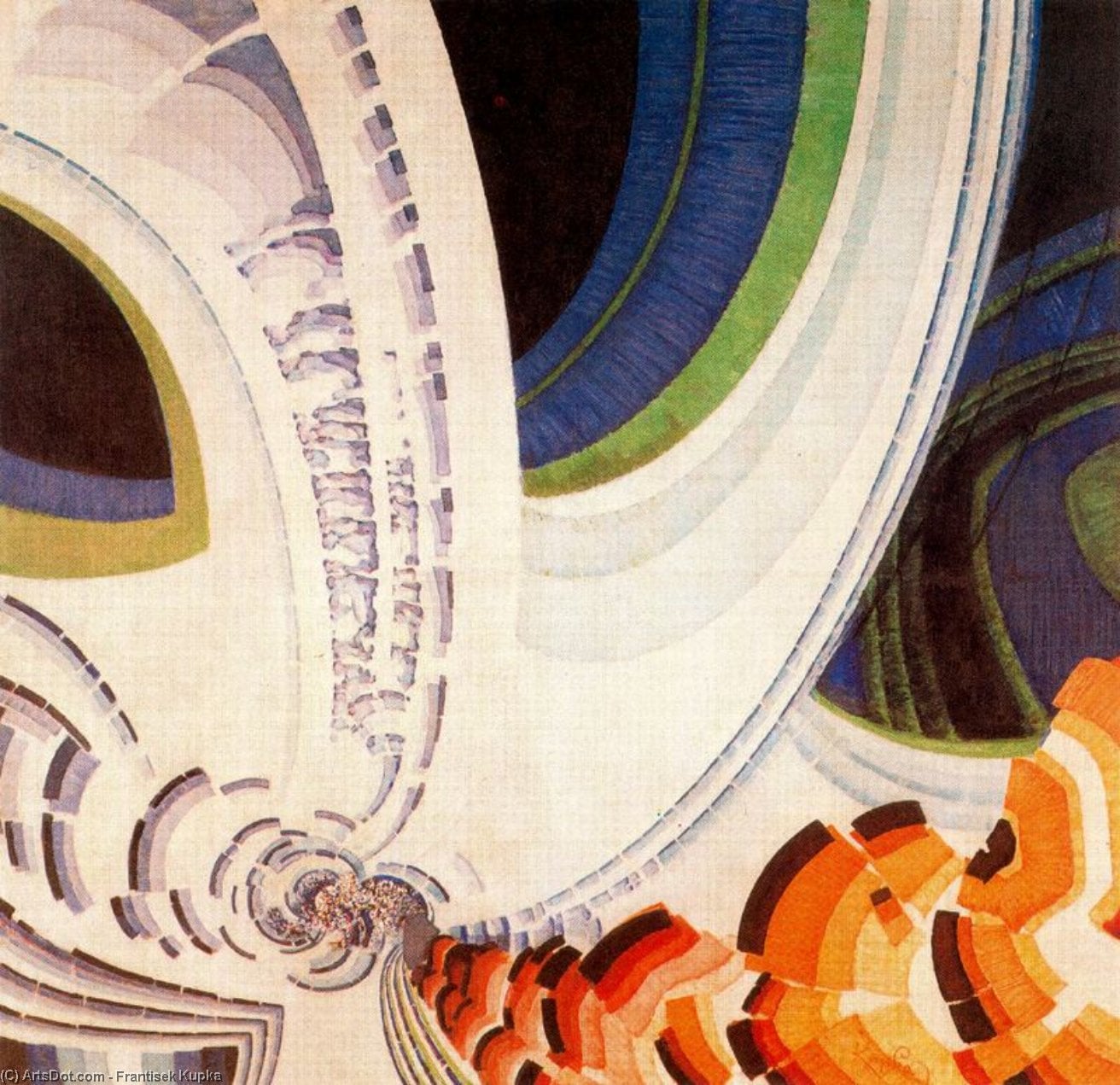
A Dance of Lines: Exploring František Kupka’s “Animated Lines”
František Kupka's "Animated Lines" stands as a pivotal work in the nascent world of abstract art, a testament to the artist’s relentless pursuit of pure form and color. Painted by a visionary who anticipated the 20th century’s artistic revolution, this piece embodies the spirit of experimentation and spiritual inquiry that characterized Kupka's career. The artwork immediately captivates with its dynamic composition – a swirling vortex of interwoven lines that seem to pulse with an internal energy. It’s not merely a visual arrangement; it’s a carefully orchestrated movement, inviting the viewer into a realm beyond representational imagery.
- Style and Technique: Kupka's approach aligns firmly within the early explorations of abstraction, predating many of the movements that would later define the era. The painting showcases a technique characterized by bold, expressive brushstrokes and a masterful manipulation of color. Rather than attempting to mimic the natural world, Kupka prioritized conveying emotional states and spiritual concepts through purely visual means. The layering of colors – blues, greens, reds, and yellows – creates a vibrant depth that enhances the sense of movement.
- Historical Context: Created during the late 19th and early 20th centuries, “Animated Lines” reflects the intellectual currents of its time. Kupka’s work aligns with the broader artistic trends of Symbolism and Art Nouveau, movements that sought to evoke emotion and meaning through symbolic imagery and decorative forms. However, unlike many of his contemporaries, Kupka ultimately rejected representational art altogether, forging a path toward pure abstraction.
Decoding the Visual Language
The composition of “Animated Lines” is rich with symbolic potential, though Kupka himself resisted providing definitive interpretations. The central spiral, a recurring motif in his work, often represents the cyclical nature of time and existence – a visual echo of spiritual or philosophical concepts. The scattered shapes—the blue circle, green triangle, and red square—can be seen as independent elements contributing to the overall dynamism, perhaps representing different facets of consciousness or emotional experience. These aren't merely decorative additions; they are integral components of a complex visual language.
- Color Symbolism: Kupka’s use of color is particularly significant. Blue often represents spirituality and the infinite, while green symbolizes growth and harmony. Red evokes passion and energy, and yellow signifies intellect and enlightenment. The interplay of these colors creates a powerful emotional resonance within the artwork.
- The Spiral Motif: The spiral’s prominence suggests themes of evolution, transformation, and the journey towards spiritual understanding – concepts central to Kupka's philosophical leanings.
A Legacy of Innovation
František Kupka is rightfully recognized as a pioneer of abstract art. “Animated Lines” exemplifies his groundbreaking approach, demonstrating a profound commitment to exploring the fundamental properties of color and form. This artwork’s enduring appeal lies in its ability to evoke a sense of wonder and invite contemplation – a reminder that true artistic expression transcends mere representation and taps into something deeper within the human psyche. A hand-painted reproduction offers an unparalleled opportunity to experience the full impact of this seminal work, bringing Kupka's visionary spirit directly into your space.
Artist: František Kupka Birth Year: 1871 Birth Country: Czech Republic


Біографія митця
František Kupka: A Pioneer of Abstract Vision
František Kupka, a name now inextricably linked to the dawn of abstract art, was born in 1871 in Opočno, Bohemia – a landscape that would subtly shape his lifelong exploration of form and color. His artistic journey wasn’t a swift transformation but rather a gradual unfolding, deeply rooted in spiritual inquiry and an unwavering pursuit of visual truth. Initially immersed in the traditions of historical and patriotic painting during his studies at the Academy of Fine Arts in Prague and later Vienna, Kupka's early work possessed technical skill, yet lacked the distinctive voice that would soon define him. It was his relocation to Paris in 1894, however, that proved a pivotal catalyst, immersing him within a vibrant artistic milieu – an environment brimming with symbolism, Neo-Impressionism, and the burgeoning excitement of Fauvism – igniting within him a revolutionary creative spirit. This Parisian atmosphere wasn’t merely about formal training; it was a collision of intellectual currents, exposing Kupka to radical ideas that would fundamentally alter his approach to art.The Seeds of Abstraction: Influences and Spiritual Awakening
Kupka's artistic trajectory wasn’t solely driven by aesthetic considerations; it was profoundly shaped by philosophical and spiritual explorations. A significant turning point in his life occurred with his engagement with Theosophy, a mystical system that sought to synthesize Eastern religions and Western esotericism. This belief system posited an underlying unity to all existence – a concept of interconnectedness and hidden realities beyond the realm of ordinary perception. Kupka found resonance within this philosophy, believing it offered a pathway to accessing deeper truths through artistic expression. He began to perceive art not simply as a representation of the visible world but as a means of unlocking these concealed dimensions. This conviction led him away from depicting recognizable objects and towards a more subjective, internal exploration of visual experience – a deliberate rejection of conventional realism in favor of conveying inner states and spiritual concepts. Early experiments involved blurring the boundaries between figuration and abstraction, creating works like *The Beginning of Life*, where symbolic imagery intertwined with nascent geometric forms, hinting at the birth of new ideas and possibilities. Crucially, Kupka wasn’t operating in isolation; he was influenced by contemporary scientific theories concerning color and light, seeking to understand their psychological effects on the viewer – a fusion of spiritual inquiry and empirical observation that would become a defining characteristic of his work. He believed that color possessed an inherent power to evoke emotion and communicate meaning directly, bypassing the need for literal representation.The Emergence of Orphic Cubism: A New Visual Language
By the early 1910s, Kupka had embarked on a path that would ultimately lead him to become one of the pioneers of abstract art. His paintings from this period – works such as *Amorpha: Fugue in Two Colors* (1912) and *Around a Point* (1911-12) – stand as groundbreaking examples of non-representational art, challenging established notions of artistic representation and paving the way for future generations. He wasn’t simply dismantling form; rather, he was constructing a completely new visual language based on pure abstraction. This led to his association with Orphic Cubism (also known as Orphism), a movement spearheaded by Robert Delaunay that emphasized the dynamic interplay of color and light. However, Kupka's approach within this movement differed significantly from Delaunay’s; while both explored abstract forms, Kupka retained a discernible sense of underlying structure and rhythm – evoking musical compositions in his paintings – as evidenced by titles like “fugue” and “disks.” *Disks of Newton*, for instance, depicts circular forms that seem to vibrate with energy, suggesting the fundamental forces governing the universe. He wasn’t merely creating aesthetically pleasing arrangements; he was attempting to visualize underlying cosmic principles. This period also saw him experimenting with techniques inspired by pointillism, further refining his understanding of color and its expressive potential.Key Works and Lasting Contributions
Throughout his career, Kupka produced a remarkable body of work that continues to fascinate and inspire. *The Colored One* (1910) is a prime example of his early explorations into symbolic abstraction, while *Around a Point* (1911-12) showcases his growing mastery of pure geometric forms. His series of “Disks” – *Disks of Newton*, *Disks of Light*, and *Disks of the Sun* – represent a culmination of his research into color theory and its relationship to perception, demonstrating his belief that colors could be arranged to evoke specific emotional responses. Notably, Kupka’s work was recognized internationally during the 1936 “Cubism and Abstract Art” exhibition at the Museum of Modern Art in New York, solidifying his place as a key figure in the development of modern art. He played a vital role in establishing Abstraction-Création in 1931, an international group dedicated to promoting abstract art and fostering dialogue among artists exploring new forms of expression. Despite often being overshadowed by more prominent figures like Kandinsky or Mondrian, František Kupka’s pioneering spirit and unique visual language have secured his legacy as a crucial innovator – a visionary who dared to question the very nature of representation and unlock entirely new possibilities for artistic creation.Museum Collections Featuring Kupka's Art
Several museums around the world house significant collections of František Kupka’s work, offering visitors the opportunity to experience his art firsthand:- Solomon R. Guggenheim Museum (New York, United States)
- The Paris Museum of Modern Art (Paris, France)
- Galerie Manés (Prague, Czech Republic)

Франтішек Купка
1871 - 1957 , Чеська Республіка
Основна інформація
- Artistic Movement Or Style: Абстрактне мистецтво, Орфічний кубізм
- Artists Or Movements Influenced By This Artist: ['Теософія']
- Date Of Birth: 23 вересня 1871
- Date Of Death: 24 червня 1957
- Full Name: František Kupka
- Nationality: Чех
- Notable Artworks:
- Диски Ньютона
- Людина-круг
- Place Of Birth: Опочно, Чехія

