

 Переглянути в інтер'єрі
 Надіслати як листівку
 Поділитися
 Деталі витвору
 Посібник

 Завантажити
 Схожі екземпляри
 Рентгенівське дослідження
 Слайд-шоу
 Питання та відповіді
 Статистика
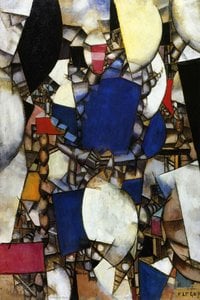
The mask negro

- 148.0 x 173.0 cm

 Розгорнути текст
Отримайте файл, готовий до друку, якість якого значно перевищує якість веб-попереднього перегляду. Кожне цифрове зображення, яке ми продаємо, створене на основі високої роздільної здатності з нашої бази даних — зазвичай від 5 000 до 15 000 пікселів по ширині — тому ви можете впевнено друкувати у великому форматі, робити щільну обрізку або відтворювати найдрібніші деталі.
Жоден файл не залишається в нашій студії без уваги. Експерт із цифрової обробки звіряє кольори з оригінальною картиною та за потреби коригує їх, після чого покращує чіткість і деталізацію за допомогою професійних інструментів ретушування — завжди зберігаючи вірність мазкам пензля та стилю художника. Результатом є зображення, яке виглядає як справжня картина, а не як відскановане фото з накладеними фільтрами.
Ви затверджуєте результат перед завершенням замовлення: протягом 72 годин наш експерт надішле зображення електронною поштою для вашого перегляду. Не задоволені результатом? Ви можете попросити про внесення змін чи виправлень або отримати відшкодування, якщо якість не відповідає вашим очікуванням.
Саме на таку якість покладаються видавництва, дизайн-студії, галереї та друкарні.
Цифрове зображення
Завантажте файл високої роздільної здатності для особистого використання, друку та творчих проєктів. ( Перейти до друку Замовити картину ручної роботи)
Переваги кожного замовлення цифрових зображень
Експертна цифрова доставка з гарантією якості
Обираючи ArtsDot.com, ви отримуєте не просто зображення — ви отримуєте професійно вдосконалений цифровий витвір мистецтва, створений з надзвичайною точністю та підкріплений гарантією задоволення. Ось усе, що автоматично додається до вашого замовлення:

Швидка доставка на email
Ваш цифровий файл із зображенням високої роздільної здатності буде надісланий вам електронною поштою протягом 72 годин після оформлення замовлення — він буде готовий до негайного використання.

Цифровий файл із покращенням ШІ
Ваш витвір мистецтва професійно оптимізовано за допомогою передових інструментів штучного інтелекту та ручної корекції, що забезпечує максимальну деталізацію, чіткість і точність передачі кольорів.

Безкоштовне повторне завантаження назавжди
Випадково видалили або втратили файл? Не хвилюйтеся — ми надішлемо його вам повторно в будь-який час безкоштовно.

Без митних зборів — завжди
Насолоджуйтесь вашим витвором мистецтва миттєво без жодних мит, зборів або плати за доставку — цифрові завантаження завжди не оподатковуються.

Гарантія точності кольорів
Ми гарантуємо максимально точне відтворення оригінальних кольорів на вашому цифровому зображенні завдяки використанню професійних інструментів та систем управління кольором.

100-денна гарантія задоволення
Якщо ви не задоволені придбаним цифровим зображенням, ми внесемо правки або повернемо 100% вартості протягом 100 днів — без зайвих запитань.

Гарантія повернення 100% коштів
Незадоволені покупкою? Отримайте повне повернення коштів протягом 100 днів після отримання цифрового файлу — без зайвих запитань.

Знижки на оптові замовлення
Купуйте 3 зображення — заощаджуйте 10% — Купуйте 5 — заощаджуйте 15% — Купуйте 10+ — заощаджуйте 20%. Чудово підходить для творчих проєктів, галерей та агентств.
A Symphony of Form and Fury: Unveiling "The Mask Negro" by Fernand Léger
Fernand Léger’s “The Mask Negro,” a captivating work measuring 148 x 173 cm, presents a visceral exploration of the burgeoning machine age through a dramatic interplay of form, color, and unsettling symbolism. Painted in black, white, and arresting red, this piece transcends mere representation, embodying Léger's revolutionary approach to modern art – one that sought not to reject reality but to actively engage with its increasingly mechanized aspects.
- Subject Matter: The composition immediately confronts the viewer with two dominant figures: a roaring red lion and a watchful blue monster. These aren’t simply animalistic representations; they are embodiments of raw power, instinct, and perhaps, the burgeoning anxieties surrounding industrialization.
- Technique: Léger's signature “Tubism,” developed in collaboration with Pablo Picasso, is vividly displayed here. The figures are fractured into geometric planes, echoing the shapes of machinery and suggesting a world stripped bare of naturalistic detail. The bold use of black and white creates a stark contrast, emphasizing the angularity and reinforcing the sense of mechanical rigidity.
- Historical Context: Created during Léger’s most intensely productive period (circa 1920-1930), “The Mask Negro” reflects the broader artistic currents of the time – a reaction against Impressionism and Post-Impressionism, and a fascination with the impact of technology on human experience. Léger was deeply influenced by the rise of factories, urban sprawl, and the perceived dehumanization brought about by industrial progress.
Decoding the Symbolism: Beasts of Industry
The choice of animal figures is crucial to understanding the artwork’s deeper meaning. The red lion, traditionally a symbol of strength and aggression, represents the unrestrained power of industry – its relentless force and potential for destruction. Its open mouth, roaring with primal energy, amplifies this sense of overwhelming momentum. Conversely, the blue monster evokes a more unsettling feeling; it suggests the unknown consequences of unchecked technological advancement, a lurking danger within the machine’s embrace.
- The Mask: The title itself – “The Mask Negro” – introduces an element of ambiguity and perhaps social commentary. While interpretations vary, some scholars suggest it references the dehumanizing effects of industrial labor on marginalized communities, using the mask to symbolize a hidden or obscured identity.
- Smaller Faces: Scattered throughout the composition are numerous smaller faces, adding to the sense of unease and suggesting a multitude of individual experiences subsumed by the larger forces of modernity.
Léger’s Artistic Vision: Integrating Modernity
Fernand Léger was determined to create an art that reflected his time. He rejected purely abstract forms, instead seeking to integrate recognizable elements – particularly those found in machines and urban landscapes – into a new visual language. “The Mask Negro” exemplifies this approach perfectly; it’s not simply a depiction of two animals but a carefully constructed exploration of the relationship between humanity and technology. Léger's work anticipated many of the concerns that would become central to 20th-century art, including questions about identity, alienation, and the impact of industrialization on the human psyche.
- Color Palette: The restricted color palette – black, white, and red – further emphasizes the artwork’s starkness and reinforces its themes of power, danger, and transformation.
- Compositional Dynamics: The dynamic arrangement of figures creates a sense of movement and tension, mirroring the perceived instability of the modern world.
A Statement for Your Space
This hand-painted reproduction of “The Mask Negro” offers a unique opportunity to own a piece of art history – a powerful statement about the challenges and possibilities of modernity. Its bold design and evocative symbolism will undoubtedly become a focal point in any interior space, sparking conversation and inviting contemplation. A perfect addition for collectors seeking works that push boundaries and engage with profound themes.
Питання та відповіді
Наскільки світлим є твір "The mask negro" загалом?
Відчутна яскравість твору «The mask negro» роботи Леже становить bright. Її можна підібрати відповідно до освітлення в запланованому інтер'єрі.
Чи є "The mask negro" однією з найпопулярніших робіт Леже?
«The mask negro» має рівень популярності Iconic.
Як сюжет твору "The mask negro" перегукується із звичними темами Леже?
Серед відомих тем Леже, як і в machine age influence, modernity, form, dynamism, industrial spirit depiction, abstracted mechanical imagery, léger’s artistic vision, у творі «The mask negro» особливий акцент зроблено на abstract figures, mechanical forms, red lion, blue monster, face motif, black white red, léger style.




Біографія митця
A Life Forged in Form: The World of Fernand Léger
Fernand Léger, born Joseph Fernand Henri Léger in 1881 amidst the rural landscapes of Argentan, Normandy, stands as a pivotal figure in the evolution of modern art. His journey from the farmlands of his youth to the forefront of Parisian avant-garde circles is a testament to an unwavering artistic vision and a relentless pursuit of capturing the spirit of the machine age. Unlike many of his contemporaries who embraced abstraction as a retreat from representation, Léger sought to *integrate* modernity – its dynamism, its mechanical forms, its very essence – into a new visual language that was both powerfully abstract and deeply rooted in the observable world. His early life, steeped in the physicality of agricultural labor, provided a grounding contrast to the industrialized future he would so passionately depict. Initially destined for architecture, Léger’s path shifted towards painting after arriving in Paris around 1900, supporting himself through drafting work while honing his artistic skills. This period was marked by traditional academic training, but it wasn't until encountering the groundbreaking work of Paul Cézanne that a true transformation began to unfold.The Birth of ‘Tubism’ and the Section d’Or
Cézanne’s retrospective in 1907 acted as a catalyst, liberating Léger from conventional representation and propelling him towards a more geometric and structural approach. He began dismantling forms, analyzing their underlying structures, and rebuilding them on canvas with a newfound emphasis on solidity and volume. This exploration quickly led him into the orbit of Cubism, but Léger wasn’t content to simply replicate the styles of Picasso or Braque. Instead, he developed his own distinct idiom – a personal form of Cubism that critics playfully dubbed “Tubism.” Characterized by cylindrical forms, flattened planes, and bold color contrasts, Tubism celebrated the machine aesthetic long before it became a widespread artistic preoccupation. It was an art born from observing the burgeoning industrial world, recognizing beauty in its functional shapes and mechanical rhythms. Léger’s approach differed significantly; he retained a sense of volume and depth that many Cubists had sacrificed for pure abstraction. This wasn't merely about breaking down forms but about reconstructing them with a deliberate emphasis on their essential qualities. The movement was closely linked to the *Section d’Or* (The Golden Section), a group of artists who explored mathematical principles of harmony and proportion, seeking to infuse their art with a sense of order and rationality. Léger actively participated in this circle, alongside figures like Jean Metzinger and Marcel Duchamp, pushing the boundaries of artistic expression through experimentation with geometry and perspective. The *Section d’Or* aimed for a synthesis between art and science, believing that beauty could be found in the application of mathematical ratios to visual form.War, Mechanization, and a New Aesthetic
The outbreak of World War I profoundly impacted Léger’s life and work. Serving at the front from 1914 to 1916 exposed him to the brutal realities of modern warfare – artillery barrages, aerial combat, and the dehumanizing effects of mechanized conflict. This experience didn't lead to disillusionment or a rejection of modernity; rather, it solidified his fascination with machines and their power. Sketches made during his service documented the stark beauty of military technology, transforming instruments of destruction into subjects of artistic contemplation. The repetitive patterns of trenches, the gleaming metal of tanks, and the angular forms of aircraft became sources of inspiration for Léger’s evolving style. Upon returning to civilian life, Léger’s aesthetic underwent a further evolution. His paintings began to reflect a more streamlined, mechanistic sensibility, celebrating the dynamism and efficiency of the industrial world. *Soldier with a Pipe* (1916) exemplifies this shift, showcasing simplified forms and bold colors that evoke the feeling of mechanical precision. This wasn't merely an aesthetic choice; it was a philosophical statement – an affirmation of modernity’s potential for progress and renewal, even in the wake of devastating conflict. He began to incorporate elements of Futurism into his work, embracing speed, movement, and the energy of the machine age.The Development of Style and Major Works
Léger's style continued to evolve throughout the 1920s and beyond. He experimented with various techniques, including collage and sculpture, exploring new ways to represent form and space. His *Paysages animés* (Animated Landscapes) series from 1921 showcased figures and animals seamlessly integrated into streamlined compositions, blurring the boundaries between organic and inorganic forms. These works demonstrated his ability to synthesize disparate elements – human and machine, natural and artificial – into a cohesive visual narrative. Other notable works include *The Great Parade* (1923), which captures the energy of a bustling city street with its bold colors and simplified figures, and *Nudes in the Forest* (1915), an early example of his distinctive style that combined elements of Cubism and Surrealism. Léger’s artistic output was remarkably prolific, encompassing paintings, sculptures, theater designs, and even experimental films. He sought to create a total work of art, integrating visual and spatial elements to evoke a specific atmosphere or mood.Legacy and Lasting Influence
In his post-war years, Léger continued to explore the intersection of art and industry, creating works that celebrated modern life with a unique blend of abstraction and figuration. His later works, characterized by a focus on the heroic aspects of the ordinary individual, reflect his belief in art’s potential for social responsibility and collective benefit. Léger's influence on subsequent generations of artists is undeniable. His bold simplification of form, his embrace of industrial imagery, and his celebration of popular culture anticipated the emergence of Pop Art decades later. Artists like Roy Lichtenstein and Andy Warhol owe a clear debt to Léger’s pioneering work. He bridged the gap between abstract art and figurative representation, demonstrating that it was possible to create works that were both intellectually rigorous and visually engaging. Today, Fernand Léger’s paintings are held in major museums worldwide, including the Musée d'Art et d’Histoire in France and the Musée National Fernand Léger, dedicated solely to his work. He remains a towering figure of 20th-century art – a visionary who dared to find beauty in the machine age and to translate its energy onto canvas with unparalleled boldness and originality. His legacy is not merely as a painter, but as a prophet of modernity. A true pioneer whose work continues to resonate with audiences today.
Леже
1881 - 1955 , Франція
Короткі факти
- Artistic Movement Or Style: Кубізм, Тюбізм
- Artists Or Movements Influenced By This Artist: ['Поп-арт']
- Artists Who Influenced This Artist: ['Поль Сезанн']
- Date Of Birth: 4 квв 1881
- Date Of Death: 17 авг 1955
- Full Name: Fernand Léger
- Nationality: Француз
- Notable Artworks:
- «Сіджений жінка»
- Машинний елемент
- Великий парад
- Анімльовані пейзажі
- Place Of Birth: Арґантен, Франція