


 Переглянути в інтер'єрі
 Надіслати як листівку
 Поділитися
 Детальніше

 Завантажити
 Схожі експонати
 Рентгенівське дослідження
 Слайд-шоу
A Disc in the City
 Акрил на полотні
- Настінний декор
- Cubism
 1919
1919- Модерн і сучасне мистецтво
 65.0 x 54.0 cm
 Читати далі
Гікле / Художній принт
Музейна якість друку جيкле або на полотні з оперативним виготовленням та різноманітними варіантами фінішної обробки. ( Замовити репродукцію ручної роботи Купити цифрове зображення)




P118B $10

P118H $10

P118W $10

P438Z $10

P508JH $12

P508YH $12

P805H $10

P805Z $10

P919BZ $10

P919G $10

P919XJ $10

P959ZH $10

P968JZ $12

W106C $8

W218G $10

W218JH $8

W218Y $10

W307PJ $10

W316G $10

W316PJ $8

W316Y $10

W398PJ $8

W4111J $10

W500HY $15

W500JH $15

W692G $12

W849H $8

W940BG $15

W953PJ $8




Обирайте з наших стандартних розмірів, що відповідають оригінальним пропорціям твору мистецтва.

Ви можете вказати власні розміри, щоб репродукція ідеально підійшла до конкретної рами або інтер'єру. Якщо обраний вами розмір не відповідає пропорціям оригіналу, ми або обріжемо полотно, або розширимо зображення за допомогою дзеркального відображення чи суцільної заливки країв. Перед початком виробництва вам буде надіслано цифровий макет для затвердження.
Будь ласка, зверніть увагу, що попередній перегляд на екрані не відображає фактичне обрізання або розширення. Тільки макет точно покаже фінальну композицію.
Хоча можливість замовлення індивідуальних розмірів доступна, ми рекомендуємо обирати формат із попередньо визначеного списку, щоб зберегти оригінальні пропорції.
Доставка по всьому світу () за 2 тижні замість стандартних 4/5 тижнів. (4 Вересень)

Безкоштовна експрес-доставка по всьому світу

Високоякісне лляне полотно

Повне страхове покриття доставки

Гарантія відшкодування митних зборів

Гарантія точного відтворення кольорів

Політика повернення протягом 60 днів (лише у разі виявлення дефектів)

Гарантія повернення 100% коштів

Пропозиція на оптові замовлення
 Скляний варіант доступний лише для розмірів до 110 см

A Disc in the City
Гікле / Художній принт
Розмір репродукції
-


Підсумкова вартість
$ 62
A Symphony of Cylinders: Exploring Fernand Léger’s “A Disc in the City”
Fernand Léger's "A Disc in the City," painted in 1919, stands as a cornerstone of Cubism and Tubism—a movement that irrevocably altered the trajectory of modern art. More than just an image of urban life; it’s a deliberate manifesto of Léger’s belief that abstraction could simultaneously convey both intellectual rigor and visceral emotion. This artwork isn't merely observed; it demands engagement, inviting viewers to decipher its geometric language and contemplate its profound symbolism.The Tubist Vision: Embracing Cylindrical Forms
Léger’s affiliation with Tubism—a term coined by Louis Vauxcelles—was pivotal in shaping his artistic approach. Rejecting the fragmentation of Picasso's Cubism, Léger championed cylindrical shapes as a primary visual element, mirroring the industrial landscape and conveying a sense of relentless movement. “A Disc in the City” exemplifies this obsession; the dominant form is undeniably cylindrical, representing not just physical solidity but also the pervasive influence of machinery on human experience. This deliberate simplification wasn’t an abandonment of realism but rather a conscious decision to distill visual information into its most fundamental components—a bold assertion that form could communicate meaning as powerfully as color or texture.Composition and Narrative Depth: Beyond Geometric Precision
The painting's composition is deceptively complex, layering perspectives and angles to create a dynamic tableau. At the center stands a boat – likely a lifeboat – symbolizing resilience and survival amidst the chaos of urban existence. Surrounding it are scattered other boats, reinforcing this theme of precariousness yet hinting at hope. A clock positioned on the right side serves as a poignant reminder of time’s passage, juxtaposed against the static geometry of the cylinder, highlighting the tension between past experience and future aspiration. Notably, a figure in the lower left corner observes the scene—a subtle inclusion that underscores the human element within Léger's stylized depiction. This careful arrangement isn’t simply decorative; it directs the viewer’s gaze and invites contemplation about the role of humanity within the burgeoning industrial age.Influences and Context: Picasso’s Legacy
Léger’s artistic vision was undeniably shaped by his contemporaries, particularly Pablo Picasso. While Picasso explored Cubism with a focus on fracturing perspective and dissecting form, Léger sought to synthesize these techniques into a more unified aesthetic. Consider Picasso's “Mother and Child” (/art/list/?Filter=8XYP6B-Pablo-Picasso-Mother-and-child/), where Picasso’s masterful use of Cubist fragmentation contrasts with Léger’s embrace of cylindrical forms—a testament to the diverse paths taken by artists grappling with the challenges of representing reality in a new era. The painting emerged during the aftermath of World War I, reflecting anxieties about societal upheaval and embracing optimism for the future through technological advancement.Emotional Resonance: A Bold Statement of Modernity
Ultimately, “A Disc in the City” transcends mere visual representation; it communicates an emotional response to its subject matter. Léger’s vibrant color palette—primarily reds and yellows—injects energy into the scene, conveying a sense of dynamism and vitality. The bold geometric forms aren't merely aesthetically pleasing; they embody Léger’s conviction that abstraction could capture the essence of industrial civilization without resorting to sentimentalism. Viewing this artwork is akin to confronting the transformative power of progress – a challenge to conventional artistic conventions and an enduring celebration of human ingenuity.


Біографія митця
A Life Forged in Form: The World of Fernand Léger
Fernand Léger, born Joseph Fernand Henri Léger in 1881 amidst the rural landscapes of Argentan, Normandy, stands as a pivotal figure in the evolution of modern art. His journey from the farmlands of his youth to the forefront of Parisian avant-garde circles is a testament to an unwavering artistic vision and a relentless pursuit of capturing the spirit of the machine age. Unlike many of his contemporaries who embraced abstraction as a retreat from representation, Léger sought to *integrate* modernity – its dynamism, its mechanical forms, its very essence – into a new visual language that was both powerfully abstract and deeply rooted in the observable world. His early life, steeped in the physicality of agricultural labor, provided a grounding contrast to the industrialized future he would so passionately depict. Initially destined for architecture, Léger’s path shifted towards painting after arriving in Paris around 1900, supporting himself through drafting work while honing his artistic skills. This period was marked by traditional academic training, but it wasn't until encountering the groundbreaking work of Paul Cézanne that a true transformation began to unfold.The Birth of ‘Tubism’ and the Section d’Or
Cézanne’s retrospective in 1907 acted as a catalyst, liberating Léger from conventional representation and propelling him towards a more geometric and structural approach. He began dismantling forms, analyzing their underlying structures, and rebuilding them on canvas with a newfound emphasis on solidity and volume. This exploration quickly led him into the orbit of Cubism, but Léger wasn’t content to simply replicate the styles of Picasso or Braque. Instead, he developed his own distinct idiom – a personal form of Cubism that critics playfully dubbed “Tubism.” Characterized by cylindrical forms, flattened planes, and bold color contrasts, Tubism celebrated the machine aesthetic long before it became a widespread artistic preoccupation. It was an art born from observing the burgeoning industrial world, recognizing beauty in its functional shapes and mechanical rhythms. Léger’s approach differed significantly; he retained a sense of volume and depth that many Cubists had sacrificed for pure abstraction. This wasn't merely about breaking down forms but about reconstructing them with a deliberate emphasis on their essential qualities. The movement was closely linked to the *Section d’Or* (The Golden Section), a group of artists who explored mathematical principles of harmony and proportion, seeking to infuse their art with a sense of order and rationality. Léger actively participated in this circle, alongside figures like Jean Metzinger and Marcel Duchamp, pushing the boundaries of artistic expression through experimentation with geometry and perspective. The *Section d’Or* aimed for a synthesis between art and science, believing that beauty could be found in the application of mathematical ratios to visual form.War, Mechanization, and a New Aesthetic
The outbreak of World War I profoundly impacted Léger’s life and work. Serving at the front from 1914 to 1916 exposed him to the brutal realities of modern warfare – artillery barrages, aerial combat, and the dehumanizing effects of mechanized conflict. This experience didn't lead to disillusionment or a rejection of modernity; rather, it solidified his fascination with machines and their power. Sketches made during his service documented the stark beauty of military technology, transforming instruments of destruction into subjects of artistic contemplation. The repetitive patterns of trenches, the gleaming metal of tanks, and the angular forms of aircraft became sources of inspiration for Léger’s evolving style. Upon returning to civilian life, Léger’s aesthetic underwent a further evolution. His paintings began to reflect a more streamlined, mechanistic sensibility, celebrating the dynamism and efficiency of the industrial world. *Soldier with a Pipe* (1916) exemplifies this shift, showcasing simplified forms and bold colors that evoke the feeling of mechanical precision. This wasn't merely an aesthetic choice; it was a philosophical statement – an affirmation of modernity’s potential for progress and renewal, even in the wake of devastating conflict. He began to incorporate elements of Futurism into his work, embracing speed, movement, and the energy of the machine age.The Development of Style and Major Works
Léger's style continued to evolve throughout the 1920s and beyond. He experimented with various techniques, including collage and sculpture, exploring new ways to represent form and space. His *Paysages animés* (Animated Landscapes) series from 1921 showcased figures and animals seamlessly integrated into streamlined compositions, blurring the boundaries between organic and inorganic forms. These works demonstrated his ability to synthesize disparate elements – human and machine, natural and artificial – into a cohesive visual narrative. Other notable works include *The Great Parade* (1923), which captures the energy of a bustling city street with its bold colors and simplified figures, and *Nudes in the Forest* (1915), an early example of his distinctive style that combined elements of Cubism and Surrealism. Léger’s artistic output was remarkably prolific, encompassing paintings, sculptures, theater designs, and even experimental films. He sought to create a total work of art, integrating visual and spatial elements to evoke a specific atmosphere or mood.Legacy and Lasting Influence
In his post-war years, Léger continued to explore the intersection of art and industry, creating works that celebrated modern life with a unique blend of abstraction and figuration. His later works, characterized by a focus on the heroic aspects of the ordinary individual, reflect his belief in art’s potential for social responsibility and collective benefit. Léger's influence on subsequent generations of artists is undeniable. His bold simplification of form, his embrace of industrial imagery, and his celebration of popular culture anticipated the emergence of Pop Art decades later. Artists like Roy Lichtenstein and Andy Warhol owe a clear debt to Léger’s pioneering work. He bridged the gap between abstract art and figurative representation, demonstrating that it was possible to create works that were both intellectually rigorous and visually engaging. Today, Fernand Léger’s paintings are held in major museums worldwide, including the Musée d'Art et d’Histoire in France and the Musée National Fernand Léger, dedicated solely to his work. He remains a towering figure of 20th-century art – a visionary who dared to find beauty in the machine age and to translate its energy onto canvas with unparalleled boldness and originality. His legacy is not merely as a painter, but as a prophet of modernity. A true pioneer whose work continues to resonate with audiences today.
Леже
1881 - 1955 , Франція
Короткі факти
- Artistic Movement Or Style: Кубізм, Тюбізм
- Artists Or Movements Influenced By This Artist: ['Поп-арт']
- Artists Who Influenced This Artist: ['Поль Сезанн']
- Date Of Birth: 4 квв 1881
- Date Of Death: 17 авг 1955
- Full Name: Fernand Léger
- Nationality: Француз
- Notable Artworks:
- «Сіджений жінка»
- Машинний елемент
- Великий парад
- Анімльовані пейзажі
- Place Of Birth: Арґантен, Франція
Пов'язані статті

Топ-25 шедеврів Фернана Леже: мистецтво машинного віку для вашого дому | ArtsDot
Відкрийте для себе 25 шедеврів Фернана Леже – піонера кубізму та тубізму! Історія мистецтва, кольори та форми машинного віку. Репродукції картин високої якості від ArtsDot.com. Дослідіть повну колекцію онлайн!

Індустріальний Естетизм: 10 Шедеврів Мистецтва, Що Відображають Еру Машин та Металу | ArtsDot
Відкрийте для себе 10 шедеврів мистецтва, що передають дух індустріальної епохи! Дізнайтесь історії Моне, Піссаро та інших художників. Репродукції картин в стилі лофт – ідеальний декор для вашого дому від ArtsDot.

Топ-10 шедеврів геометричної абстракції: мистецтво для вашого інтер'єру від ArtsDot.com
Відкрийте для себе 10 шедеврів геометричної абстракції від Кандинського, Малевича та Мондріана! Історія мистецтва, кольори та форми. Репродукції картин преміум-класу на ArtsDot.com – ідеальний декор для вашого дому.
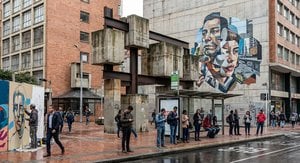
Concrete Narratives: Exploring Urban Life in Modern & Contemporary Art
Explore the evolution of cityscape painting with ArtsDot. Discover key artists from Realism to contemporary movements & invest in timeless urban visions. Expert guidance, museum-quality reproductions.

Jean Dominique Antony Metzinger: Pioneering Cubism & the Evolution of Abstract Form
Explore the life & work of Jean Metzinger, a pivotal Cubist painter and theorist. Discover his innovations in proto-Cubism, 'Du Cubisme,' and Crystal Cubism – a journey through modern art's evolution.



