


 Переглянути в інтер'єрі
 Надіслати
 Поділитися
 Деталі
 Посібник

 Завантажити
 Схожі предмети колекціонування
 Рентгенівське дослідження
 Слайд-шоу
 Статистика переглядів
Evening

 Читати далі
Олійная репродукція ручної роботи
Написана вручну олією на полотні у вашому розмірі та рамі, виготовлена на замовлення нашими художниками. ( Перейти до друку Перейти до цифрових зображень)




P118B ₴10

P118H ₴10

P118W ₴10

P438Z ₴10

P508JH ₴12

P508YH ₴12

P805H ₴10

P805Z ₴10

P919BZ ₴10

P919G ₴10

P919XJ ₴10

P959ZH ₴10

P968JZ ₴12

W106C ₴8

W218G ₴10

W218JH ₴8

W218Y ₴10

W307PJ ₴10

W316G ₴10

W316PJ ₴8

W316Y ₴10

W398PJ ₴8

W4111J ₴10

W500HY ₴15

W500JH ₴15

W692G ₴12

W849H ₴8

W940BG ₴15

W953PJ ₴8




Обирайте з наших стандартних розмірів, що відповідають оригінальним пропорціям твору мистецтва.

Введіть необхідну ширину та висоту, щоб картина підійшла до вашої рами або стіни. Оскільки це ручний розпис, для розміру іншої форми художник може написати трохи більше навколо картини або трохи обрізати її — вибір за вами. Перед початком роботи ми надішлемо вам цифровий макет для затвердження. Зображення, показане на цій сторінці, не є реальним результатом — лише макет відображає майбутній вигляд.
Після оформлення замовлення команда ArtsDot.com зв'яжеться з клієнтом електронною поштою для отримання інструкцій та надасть попередній макет
Доставка по всьому світу () за 3–4 тижні замість стандартних 5 тижнів. (24 Жовтень). Без жодних компромісів у якості.

Безкоштовна експрес-доставка по всьому світу

Високоякісне лляне полотно

Повне страхове покриття доставки

Гарантія повернення митних зборів

Гарантія точного відтворення кольорів

Політика повернення протягом 100 днів (лише у разі виявлення дефектів)

Гарантія повернення 100% коштів

Знижка на оптові замовлення
 Скляний варіант доступний лише для розмірів до 110 см

Evening
Техніка репродукції
Розмір репродукції
-


Загальна вартість
₴ 11823
A Symphony of Color: Experiencing Emil Nolde’s “Evening”
Emil Nolde's "Evening" is a captivating exploration of light and atmosphere, characteristic of his expressive landscape work. This piece doesn’t depict a literal evening scene, but rather an *emotional* response to one – a distillation of the feeling of twilight rendered in bold color and simplified forms. A dominant, luminous yellow cloud commands attention in the upper left quadrant, acting as a focal point that draws the eye down into the composition. Below, a gradient of blues transitions from deep indigo to lighter turquoise and verdant greens along the horizon line, suggesting water reflecting the celestial drama above.
Expressionism & The Power of Color
- Stylistic Roots: Nolde was a key figure in early 20th-century Expressionism, a movement that prioritized subjective experience and emotional impact over realistic representation. “Evening” exemplifies this approach through its non-naturalistic color palette and abstracted forms.
- Technique & Materials: The artwork appears to be executed in watercolor or gouache, evidenced by the fluidity of the washes and blending of colors. Nolde masterfully employs these techniques to create a sense of atmospheric depth despite the flattened perspective. Visible brushstrokes add texture and energy.
- Influences: While forging his own path, Nolde was influenced by artists like Vincent van Gogh and Paul Gauguin, particularly their use of intense color to convey emotion. He also drew inspiration from traditional folk art and primitive masks, evident in the bold outlines and simplified shapes.
Symbolism & Emotional Resonance
The symbolism within “Evening” is subtle yet potent. The large yellow cloud can be interpreted as a source of radiant energy or enlightenment – a beacon amidst the darkening sky. The winding body of water, reflecting the colors above, suggests a connection between the earthly and celestial realms. More broadly, Nolde’s landscapes often represent an attempt to connect with nature on a spiritual level.
The overall emotional impact is one of tranquility mixed with a hint of mystery. The stylized representation invites contemplation and allows viewers to project their own feelings onto the scene. Nolde's work frequently evokes a sense of longing or melancholy, reflecting his own complex relationship with the world around him.
Nolde’s Life & Legacy
Born in 1867 in Nordel, Germany, Emil Nolde dedicated himself to art after years working as a wood carver. Despite facing opposition from his family and later persecution under the Nazi regime (his work was deemed “degenerate”), he remained committed to his artistic vision. Nolde’s landscapes, seascapes, and portraits are celebrated for their raw emotional power and innovative use of color. His ability to capture the essence of a place or feeling – rather than simply its appearance – continues to resonate with audiences today.
Запитання та відповіді
Яка яскравість у «Evening» Еміль Нольде?
Зафіксована яскравість для «Evening» Еміль Нольде становить М'яке сяйво.
Як у творі «Evening» збалансовано світло та тінь?
Зафіксовані значення для «Evening» Еміль Нольде: яскравість — збалансована, світловий потік — М'яке сяйво.
Де я можу купити принт «Evening» Еміль Нольде?
Щоб замовити принт «Evening» Еміль Нольде, просто перейдіть на відповідну сторінку Художній принт: художній принт на бавовняному полотні або архівному канвас-папері.
Схожі твори мистецтва


Біографія митця
Early Life and Artistic Beginnings
Emil Nolde, a name synonymous with vibrant expressionism, was born Hans Emil Hansen on August 7th, 1867, in the small village of Nolde, nestled within the Schleswig-Holstein region of Germany. His origins were deeply rooted in rural life – his family’s livelihood intertwined with the rhythms of farming and a strong connection to their local community. Despite this grounding, young Hans harbored an intense yearning for artistic expression, a passion that initially met resistance from his parents who envisioned a more practical future for him. However, Nolde's determination burned bright, and he relentlessly pursued his artistic dreams, beginning with humble beginnings as a wood carver and furniture decorator – skills that would later inform the tactile quality of his paintings. It was in his late twenties that he truly dedicated himself to painting, embarking on a journey of self-discovery through color and form.Artistic Development and Influences
Nolde’s artistic path wasn't paved with formal training; instead, it unfolded through a process of intense self-education and profound immersion in diverse cultural experiences. He traveled extensively, absorbing the spirit of various landscapes and art movements. Early influences were undeniably shaped by the revolutionary works of Vincent van Gogh – his passionate brushstrokes and emotive color palettes – and Paul Gauguin’s exploration of primitive themes and symbolic imagery. Crucially, Nolde was deeply moved by the expressive power of traditional folk art, particularly the masks and carvings prevalent in rural communities, which instilled within him a fascination with primal emotions and ritualistic symbolism. These encounters ignited a desire to break free from academic constraints and explore a more subjective, emotionally charged approach to painting. Initially experimenting with Realism and Impressionism, Nolde quickly gravitated towards a bolder, more expressive style – one that prioritized conveying inner feelings over strict adherence to representational accuracy.Die Brücke and Expressionist Breakthrough
In 1905, a pivotal moment arrived in Nolde’s artistic life: he co-founded *Die Brücke* (The Bridge), a groundbreaking group of German Expressionist artists based in Dresden. This collective represented a radical departure from the established art world, seeking to dismantle traditional conventions and express profound inner experiences through unrestrained experimentation. *Die Brücke* was driven by a desire to capture the anxieties and uncertainties of modern life, often depicting urban landscapes and figures with distorted forms and jarring colors. Nolde’s contribution to *Die Brücke* was significant; his masterful manipulation of color – particularly his use of intense reds, blues, and yellows – pushed the boundaries of representation and injected a raw emotionality into their work. However, Nolde maintained a somewhat independent trajectory within the group, often diverging in subject matter and stylistic approach, reflecting his deeply personal artistic vision.Key Themes and Artistic Style
Nolde’s oeuvre is characterized by recurring motifs that reveal his profound engagement with spirituality, nature, and the human condition. He frequently depicted religious scenes – from biblical narratives to depictions of saints – imbued with a sense of drama and emotional intensity. Landscapes and seascapes also held a prominent place in his work, often rendered with a brooding atmosphere and a fascination for the power of elemental forces. Portraits, too, were a recurring subject, capturing the essence of individuals through expressive brushwork and symbolic gestures. A defining characteristic of Nolde’s style is his fearless use of color – he employed it not merely to depict reality but to convey emotion, create mood, and evoke psychological states. His paintings are often marked by thick impasto techniques, adding a tactile dimension to the work. Furthermore, Nolde was deeply influenced by primitive art, particularly masks, which he saw as potent symbols of primal emotions and spiritual power.Notable Works and Historical Significance
Throughout his prolific career, Nolde created an extraordinary body of work that continues to captivate audiences today. Some of his most celebrated paintings include *Masks* (1906-1907), a series exploring the symbolic significance of masks; *The Mocking of Christ* (1909), a powerfully emotive depiction of religious suffering; *Autumn Sea* (1908), showcasing his ability to capture the drama and beauty of the natural world; *Flower Garden (Girl and Washing)*, and *Dance around the Golden Calf*. Despite facing criticism and censorship during the rise of Nazism – his work was deemed “degenerate” and removed from museums – Nolde remained steadfast in his artistic convictions. He continued to paint in secret, producing a remarkable collection of watercolor paintings that offer a glimpse into his inner world. Emil Nolde’s legacy extends far beyond his individual achievements; he remains a pivotal figure in the history of German Expressionism, whose innovative use of color and expressive brushwork profoundly influenced generations of artists. His work stands as a testament to the power of art to convey profound emotions and explore the complexities of the human experience.
Еміль Нольде
1867 - 1956 , Німеччина
Довідкова інформація
- Artistic Movement Or Style: Виразникизм / Die Brücke
- Artists Or Movements Influenced By This Artist: ['Едуард Мунк']
- Artists Who Influenced This Artist:
- Вінсент ван Гог
- Пабло Пікассо
- Date Of Birth: 7 серпня 1867
- Date Of Death: 15 квітня 1956
- Full Name: Emil Nolde / Hans Emil Hansen
- Nationality: Німєцько-данський
- Notable Artworks:
- Надрукування Христа
- Сад квітів
- Осінній морський пейзаж
- Place Of Birth: Нільд, Шлезвіг-Гольштейн, Німеччина
Схожі статті

Ephemeral Visions: Exploring the History & Emotional Resonance of Watercolor Painting
Explore the captivating history of watercolor painting, from ancient techniques to modern masters like Kandinsky & Blake. Discover essential artists, collecting tips & the emotional power of this luminous medium. Expert insights for art enthusiasts.

Топ-10 легендарних акварелей, що змінили світ мистецтва | ArtsDot
Відкрийте для себе 10 легендарних акварелей від Turner, Monet та інших майстрів! Історія мистецтва, техніки живопису та натхнення для декору вашого дому. Купуйте репродукції картин аквареллю преміум-якості на ArtsDot.com.

Топ-25 шедеврів Василя Кандинського: подорож у світ абстрактного мистецтва | ArtsDot.com
Відкрийте для себе 25 найвідоміших шедеврів Василя Кандинського! Пориньте у світ абстрактного мистецтва, експресіонізму та кольорових композицій. Репродукції картин Кандинського преміум-якості на ArtsDot.com – для вашого інтер'єру з душею. Дослідіть повну колекцію онлайн!
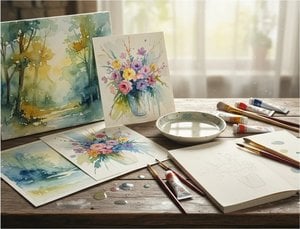
Ephemeral Visions: Exploring the Artistic Legacy & Nuances of Watercolor Painting
Explore the captivating world of watercolor painting! Discover its rich history, essential techniques, influential artists & collecting tips from art experts. A comprehensive guide for enthusiasts.

Ephemeral Visions: Exploring the Artistic Legacy & Contemporary Practice of Watercolor Painting
Explore the captivating world of watercolor painting! Discover its rich history, essential techniques, influential artists & collecting tips. A comprehensive guide for art enthusiasts from ArtsDot.

