


The picture follows your choices: , .
Опис експоната
Egon Schiele’s haunting portrait captures a man in repose, embodying the artist's signature Expressionist style and exploring themes of vulnerability amidst an orange-infused backdrop. Discover this evocative masterpiece and bring its timeless beauty into your home.
 Розгорнути текст
Біографія митця
Еґон Шілельє – австрійський экспресіоністський живописець, відомий своїми емоційно насиченими полотнами та символічним зображенням будинку з сухим пранням. Дізнайтесь більше про мистецтво Шілеля!
Олійная репродукція ручної роботи
Написана вручну олією на полотні у вашому розмірі та рамі, виготовлена на замовлення нашими художниками. ( Перейти до друку Перейти до цифрових зображень)
More about this painting
 Переглянути в інтер'єрі
 Надіслати як листівку
 Поділитися
 Деталі витвору
 Посібник

 Завантажити
 Схожі екземпляри
 Рентгенівське дослідження
 Слайд-шоу
 Q&A
Q&A Статистика
Order your painting in four simple steps
Take your time. You can change any answer; the price in your order card follows each choice.
1 Step one of four
Which size would you like?
These sizes keep the proportions of the original painting. The drawing shows your choice on a wall, above a two-metre sofa.
Or give your own measurements
Обирайте з наших стандартних розмірів, що відповідають оригінальним пропорціям твору мистецтва.

Введіть необхідну ширину та висоту, щоб картина підійшла до вашої рами або стіни. Оскільки це ручний розпис, для зміни пропорцій художник може дописати трохи більше по краях або дещо обрізати композицію — вибір за вами. Перед початком роботи ми надішлемо вам цифровий макет для затвердження. Зображення, показане на цій сторінці, не є реальним результатом — лише макет відображає майбутній вигляд.
2 Step two of four
How should it be prepared: rolled, stretched or framed?
The prices below are for the size you chose in step one.
Choose the edges of the stretched canvas
Choose your frame

White ₴1

Blurside ₴1

Extended ₴1

P118B ₴10

P118H ₴10

P118W ₴10

P438Z ₴10

P508JH ₴12

P508YH ₴12

P805H ₴10

P805Z ₴10

P919BZ ₴10

P919G ₴10

P919XJ ₴10

P959ZH ₴10

P968JZ ₴12

W106C ₴8

W218G ₴10

W218JH ₴8

W218Y ₴10

W307PJ ₴10

W316G ₴10

W316PJ ₴8

W316Y ₴10

W398PJ ₴8

W4111J ₴10

W500HY ₴15

W500JH ₴15

W692G ₴12

W849H ₴8

W940BG ₴15

W953PJ ₴8

H24-GOLD ₴30

H24-SILVER ₴30

H36-GOLD ₴45

H36-SILVER ₴45
У рамі
Moulding: . Overall size with the frame: .
3 Step three of four
Would you like anything changed in the painting?
Most people answer no. Because each painting is made by hand, our artist can also adapt it for you.
After order, ArtsDot.com team will email client for instructions and provide a mockup preview
4 Step four of four
A few finishing options
All of them are optional. The answers already selected cost nothing extra.
Who paints it?
Доставка по всьому світу () за 3–4 тижні замість стандартних 5 тижнів. (2 Листопад). Без жодних компромісів у якості.
A nameplate, as in a museum?
Деталі гравірування на бронзовій табличці
This elegant plaque features the artist's name and the title of the artwork, finely engraved for a timeless presentation.
It is made from bronze with a refined, elegant finish. The text is precisely laser-engraved for a sharp and permanent result. Measuring 9x2 cm, the plaque is compact yet easy to read. It's built to be durable and scratch-resistant, offering a professional, museum-quality look. Mounting is simple thanks to the included adhesive backing.
Деталі прозорої акрилової таблички
The plaque includes essential engraved details such as the artist's name, the title of the artwork, the date it was created, the type of media used-like oil on canvas or watercolor-a brief description of the piece, and a QR code that links to the complete artwork information.
It is crafted from clear acrylic, offering a sleek, modern appearance. The text is UV-engraved in black to ensure strong visual contrast. With a size of 10x15 cm, it ensures optimal readability. It comes equipped with two metal hooks for secure wall mounting. The plaque is designed to be weather-resistant, making it suitable for various environments, and it includes interactive features that work seamlessly with smartphone scanning.
Деталі чорної акрилової таблички
This elegant plaque includes engraved information such as the artist's name, the title of the artwork, the date it was created, the type of media used (like oil on canvas or watercolor), a short description of the artwork, and a QR code for quick access to more information.
The plaque itself is made from refined black acrylic with a premium finish. The text is laser-engraved in white for high contrast and readability. Its size is 10x15 cm, designed to be easy to read. It comes with two metal hooks for professional mounting. The design is sleek and fits any interior style. It is also weather-resistant and durable, with built-in digital integration for mobile compatibility.
A protective varnish?
When do you need it?
✓ Check and order
Your painting, as you ordered it

Willy Lidi
Матеріал репродукції
Розмір репродукції
-

Видатний майстер-художник
Більше деталізації, витонченості та додаткового часу на створення твору
-

Рама для репродукції
-
-
Для творів мистецтва або репродукцій, розмір яких перевищує 105 см (приблизно 41 дюйм) з будь-якого боку, рама доставляється у вигляді розібраного комплекту. Такий метод гарантує безпечну доставку та запобігає пошкодженням під час транспортування.
Потребує професійного збирання — це не продукт для самостійного виготовлення (DIY).
Комплект має бути зібраний, а полотно натягнуте досвідченим майстром багетних робіт із використанням клейового дерева (не входить у комплект), щипців для натягування полотна та затискачів, щоб підрамник залишався рівним під час висихання клею. Неправильне збирання або нерівномірне натягування полотна може призвести до незворотного пошкодження твору мистецтва, що не підпадає під дію нашої гарантії.
 Для творів мистецтва або репродукцій, розмір яких перевищує 105 см (приблизно 41 дюйм) з будь-якого боку, рама доставляється у вигляді розібраного комплекту. Такий метод гарантує безпечну доставку та запобігає пошкодженням під час транспортування.
У комплект входять усі бруски з цільного дерева, точно вирізані за розміром.
Збирається за допомогою гвинтів, що входять до комплекту, а також клейового розчину для кутових з'єднань, який не входить до комплекту і має бути підготовлений вашим майстром.
Потрібні професійні інструменти, які не входять до комплекту: щипці для натягування полотна (натягувач) та затискачі, щоб утримувати рейки рівно під час висихання клею.
Важливо:
Для з'єднання кутів потрібен клей для дерева, перекладини необхідно затиснути струбцинами до повного висихання клею, а для натягування полотна на зібрану раму знадобляться щипці для натягування полотна. Жоден із цих інструментів не входить до комплекту. Будь ласка, проконсультуйтеся з досвідченим майстром багетного оформлення перед замовленням рами такого розміру.

Етикетка експоната
-
-

Захисний лак
Глянцевий лак (підсилює яскравість кольорів, захищає від світла та вологи)
-

Персоналізувати мій витвір
Приклади можливих змін: заміна обличчя на фото клієнта; додавання домашньої тварини (наприклад, заміна кота на собаку); додавання прихованого повідомлення на фоні; зміна пейзажу або елементів фону.
-

Прискорено
Доставка по всьому світу () за 3–4 тижні замість стандартних 5 тижнів. (2 Листопад). Без компромісів у якості.
-
Експрес-доставка
Доставка по всьому світу () протягом 5 тижнів. (9 Листопад).
Включено в ціну
Підсумкова вартість
₴ 11866
Скляний варіант доступний лише для розмірів до 110 см
Included with every order
- Безкоштовна експрес-доставка по всьому світу
- Високоякісне лляне полотно
- Повне страхове покриття доставки
- Гарантія повернення митних зборів
- Гарантія точного відтворення кольорів
- Політика повернення протягом 100 днів (лише у разі виявлення дефектів)
- Гарантія повернення 100% коштів
- Пропозиція на оптові замовлення


A Portrait of Psychological Depth
In the hauntingly beautiful portrait “Willy Lidi,” Egon Schiele invites us into a space where the boundaries between the physical form and the internal psyche begin to dissolve. The painting presents a man captured in a moment of profound tension, his professional attire—a crisp white suit and tie—serving as a stark, formal contrast to the raw, emotive energy radiating from his posture. As he sits, his hands are raised in an upward gesture that feels simultaneously like a plea for transcendence and a defensive recoil against the unseen pressures of existence. Schiele’s meticulous attention to detail is evident in the fine rendering of the subject's spectacles and mustache, yet these realistic touches are secondary to the palpable sense of vulnerability and defiance that defines the sitter's character.
The composition is electrified by a vibrant, orange background that pushes the figure forward, creating an intimate, almost claustrophobic encounter between the viewer and the subject. This bold use of color does more than provide a backdrop; it acts as a psychological furnace, heightening the sense of unease and vitality. For collectors and designers alike, this piece offers a striking focal point, bringing a sophisticated yet emotionally charged atmosphere to any curated space.
The Language of Expressionism
To look upon “Willy Lidi” is to witness the very essence of Austrian Expressionism. Schiele, a master of the jagged line and the distorted figure, deliberately moves away from the polished academic traditions of his era to explore a more visceral truth. His technique involves a masterful use of oil on canvas, where textural layering and subtle shading create a sense of three-dimensional weight, even as the lines themselves remain sharp and angular. The visible brushstrokes serve as a testament to the artist's physical engagement with the medium, adding a rhythmic, nervous energy to the surface of the work.
This stylistic choice was not merely aesthetic but deeply philosophical. Emerging from the cultural crucible of Vienna at the turn of the century, Schiele’s work reflects the broader societal anxieties of a world on the brink of the First World War. Influenced by the psychological breakthroughs of his time and the legacies of mentors like Gustav Klimt, Schiele utilized the human body as a canvas for exploring mortality, sexuality, and the fragmentation of the self. In “Willy Lidi,” every tremor in the line and every shadow on the face contributes to a larger narrative of disillusionment and the search for meaning amidst chaos.
An Enduring Legacy for the Modern Collector
For those seeking to adorn their interiors with art that transcends mere decoration, this reproduction of Schiele’s masterpiece offers an unparalleled opportunity. The painting does not simply occupy space; it commands it, offering a window into the turbulent soul of early twentieth-century modernism. Its ability to evoke complex emotions—ranging from intellectual detachment to profound existential dread—makes it a conversation piece of immense depth.
Whether integrated into a contemporary minimalist setting or paired with classical elements, the striking contrast between the subject's formal attire and the expressive, vibrant background provides endless inspiration for interior styling. Owning a high-quality reproduction of such a seminal work allows one to possess a fragment of art history, bringing the raw, unshielded beauty of Schiele’s vision into the private sanctuary of the home.
Питання та відповіді
Що зображено на творі "Willy Lidi"?
Тематика, представлена у «Willy Lidi» роботи Еґон Шілельє, включає man portrait, vienna artist, suit tie figure, orange background, expressionist style, mustache glasses, formal dignity. Разом вони підсумовують зміст твору.
Чи можна вільно відтворювати зображення «Willy Lidi» роботи Еґон Шілельє?
Статус авторського права для «Willy Lidi» роботи Еґон Шілельє: цей твір є є суспільним надбанням — термін дії авторського права закінчився. Це визначає, чи можна вільно створювати репродукції зображення.
Яка техніка виконання у «Willy Lidi» роботи Еґон Шілельє?
Техніка виконання «Willy Lidi» роботи Еґон Шілельє — Oil On Canvas. Репродукції мають на меті відтворити вигляд цієї техніки.
Схожі твори мистецтва


Еґон Шілельє
1890 - 1918, Австрія
Біографія митця
A Life Forged in Expression
Egon Schiele’s life, a turbulent and intensely personal journey, unfolded from his birth in Tulln an der Donau in 1890, a small Austrian town nestled along the Danube. His early years were shadowed by profound loss – first the death of his father, Adolf Schiele, a railway station master consumed by syphilis when Egon was just fourteen, and later the untimely passing of his sister Elvira. This early exposure to mortality and grief became deeply ingrained within his artistic vision, fueling an enduring fascination with the fragility of existence and the inevitability of death. Raised initially by his mother and then under the somewhat controlling guardianship of his uncle Leopold Czihaczek, Schiele’s childhood lacked the stability often associated with conventional upbringing, yet it fostered a remarkable sense of independence and self-reliance—qualities that would profoundly shape his artistic approach. Even as a young boy, he exhibited an intense curiosity about trains – a motif that subtly reappeared throughout his career, symbolizing both movement and the passage of time. Simultaneously, he displayed a burgeoning talent for drawing, though this pursuit was initially met with disapproval from his father, who viewed it as a distraction from more “practical” endeavors. The early loss of his sister Elvira cast a long shadow over the young artist’s psyche, contributing to a pervasive sense of melancholy and vulnerability that permeated much of his work. These formative experiences—illness, loss, and a lack of stability—instilled within him an unparalleled sensitivity and emotional rawness, qualities that would become defining characteristics of his artistic expression, constantly grappling with the fundamental questions of life, death, and the human condition.The Crucible of Vienna: Artistic Development
Schiele’s formal artistic training began at the Kunstgewerbeschule (School of Arts and Crafts) in Vienna, but he quickly found himself stifled by its conservative and rigidly academic approach. Seeking a more liberating environment, he transferred to the Akademie der bildenden Künste (Academy of Fine Arts), only to discover that even this institution failed to satisfy his artistic aspirations. The rigid traditions and emphasis on historical precedent clashed sharply with Schiele’s desire for innovation and personal expression. Dissatisfied with these constraints, he ultimately abandoned formal training altogether, choosing instead to forge his own path—a bold decision that underscored his unwavering commitment to his artistic vision. Crucially, during these formative years, Schiele was profoundly influenced by the work of Gustav Klimt, a leading figure in Viennese Secessionism. He admired Klimt’s distinctive decorative style and his exploration of symbolism, even receiving mentorship from the established artist. However, Schiele soon diverged significantly from Klimt's aesthetic, developing a uniquely personal style characterized by its stark honesty, psychological intensity, and unflinching portrayal of human vulnerability. This divergence was further fueled by his encounters with other progressive artists within Vienna’s avant-garde circles, leading to the formation of the Neues Wiener Kunstgruppe (New Viennese Art Group) in 1909—a collective dedicated to challenging conventional artistic norms and pushing the boundaries of modern art. The group included figures like Anton Faistauer, Rudolf Kalvach, and Hans Ehrlich, all seeking to redefine the role of art in a rapidly changing world.Raw Emotion and Unflinching Truth
Egon Schiele’s art is immediately recognizable for its raw honesty and psychological depth. He fearlessly confronted themes often considered taboo – sexuality, death, anxiety, isolation – with an unflinching gaze. His distinctive style features elongated figures, contorted poses, and expressive lines that convey a sense of unease and emotional intensity. The human form, particularly the nude, became his primary subject, not as an object of idealized beauty but as a vehicle for exploring the complexities of human experience. Self-portraits constitute a significant portion of his oeuvre, offering intimate glimpses into his inner world—a world often marked by loneliness and self-doubt. He didn’t shy away from depicting himself in unflattering or vulnerable poses, revealing a profound level of self-awareness and introspection. Beyond self-portraiture, Schiele created numerous portraits of others, capturing their likenesses with an unsettling realism that seemed to penetrate beneath the surface. His landscapes, while less central to his work than his figurative paintings, demonstrate his mastery of form and color, often reflecting the same emotional intensity as his portraits. Recurring motifs like the *Physalis* plant – symbolizing death and transience with its delicate, papery husk – further underscore this preoccupation with mortality. The use of line is particularly striking in Schiele’s work; it's not merely a tool for defining shape but an expressive force that conveys emotion and psychological tension.A Legacy Cut Short: Achievements & Significance
Despite facing censorship and legal challenges—including a brief imprisonment for allegedly corrupting minors with his art—Schiele gained recognition within Vienna’s avant-garde circles. His work challenged the conventions of the time, provoking both admiration and outrage. By the time of his untimely death during the Spanish flu pandemic in 1918 at the age of twenty-eight, he had established himself as a leading figure in Austrian Expressionism. Significant works such as *Self-Portrait with Physalis*, *Couple Embracing*, and *Field Landscape (Kreuzberg near Krumau)* stand as testaments to his artistic genius. His influence on subsequent generations of artists is undeniable, particularly those interested in exploring psychological themes and challenging conventional artistic norms. Schiele’s bold approach to form and subject matter continues to resonate with audiences today, making him one of the most important and influential figures in early 20th-century art. His paintings are now held in major museum collections worldwide, including the Leopold Museum in Vienna and the Egon Schiele Art Centrum in Český Krumlov, ensuring his artistic legacy endures. He left behind a body of work that is not merely aesthetically compelling but profoundly human—a testament to the power of art to confront the complexities of existence with honesty, courage, and unwavering vision.- Key Themes: Mortality, sexuality, isolation, psychological turmoil.
- Influences: Gustav Klimt, Viennese Secession, personal trauma.
- Style Characteristics: Elongated figures, contorted poses, expressive lines, raw emotion.


Пов'язані статті

Unlocking Emotion: A Beginner's Guide to the Raw Power of Symbolic Expressionism Art
Discover the raw emotion of Symbolic Expressionism. Our expert guide explores how masters like Munch use color and form to convey inner feelings, offering inspiration for collectors looking to bring powerful, soulful art into their modern homes.
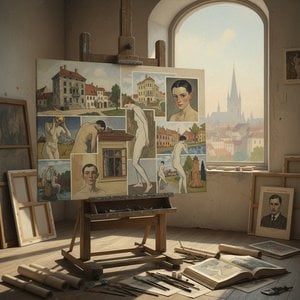
25 шедеврів Еґона Шіле: глибокі історії та мистецтво для вашого дому | ArtsDot
Відкрийте 25 найвідоміших картин Еґона Шіле – австрійського експресіоніста, майстра психологічного портрету та виразного живопису. Історія мистецтва, техніки та натхнення для декору вашого дому від ArtsDot.com.
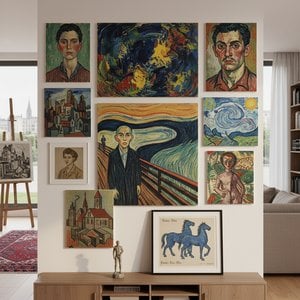
Топ-10 шедеврів експресіонізму: мистецтво емоцій та самовираження від ArtsDot
Пориньте у світ експресіонізму! Відкрийте 10 шедеврів Мунка, Ван Гога та інших геніїв. Історія мистецтва, емоції та кольори – все це на ArtsDot.com. Репродукції картин преміум-якості для вашого дому.