


 Надіслати
 Поділитися
 Деталі
 Посібник

 Завантажити
 Схожі предмети колекціонування
 Слайд-шоу
 Статистика переглядів
David (detail)


 Читати далі
Гікле / Художній принт
Музейна якість друку جيкле або на полотні з оперативним виготовленням та різноманітними варіантами фінішної обробки. ( Купити картину ручної роботи Перейти до цифрових зображень)




































Обирайте з наших стандартних розмірів, що відповідають оригінальним пропорціям твору мистецтва.

Введіть необхідну ширину та висоту, щоб принт ідеально підійшов до вашої рами або стіни. Принт можна лише обрізати, але не можна зробити більшим за оригінал, тому при зміні пропорцій частина зображення буде втрачена. Перед друком ми надсилаємо вам цифровий макет для затвердження. Зображення на цій сторінці не відображає реальну обрізку — її можна побачити лише на макеті.
Доставка по всьому світу () за 2 тижні замість стандартних 4/5 тижнів. (24 Жовтень)

Безкоштовна експрес-доставка по всьому світу

Високоякісне лляне полотно

Повне страхове покриття доставки

Гарантія повернення митних зборів

Гарантія точного відтворення кольорів

Політика повернення протягом 100 днів (лише у разі виявлення дефектів)

Гарантія повернення 100% коштів

Знижка на оптові замовлення
 Скляний варіант доступний лише для розмірів до 110 см

David (detail)
Гікле / Художній принт
Розмір репродукції
-


Загальна вартість
₴ 2782
The Contemplative Gaze of David
To stand before this detail of Donatello's David is to encounter not merely a sculpture, but a profound meditation on nascent heroism. The marble seems to breathe with the weight of history and the quiet intensity of introspection. This close-up view focuses intimately on the head and upper torso, drawing the viewer into the very essence of the biblical figure. The artist has captured a moment suspended between action and reflection; David is not depicted in the triumphant aftermath of battle, but rather in a state of deep contemplation. His gaze, directed forward yet seemingly inward, invites us to ponder the burdens carried by even the mightiest souls.
Mastery in Marble: Technique and Form
The technical brilliance evident here speaks volumes about Donatello's unparalleled skill as a sculptor. The material itself—the luminous white of the marble—is handled with breathtaking finesse. Observe how the soft, diffused lighting plays across the polished surface, defining every subtle curve of the neck and shoulder. The contrast between the smooth, idealized planes of the skin and the more textured suggestion of hair is masterful. Donatello’s technique, rooted in classical tradition yet pushing toward a startlingly modern realism, allows the viewer to appreciate the sheer physicality of the form. It is a testament to the subtractive process—the patient removal of stone until only perfect human potential remained.
Echoes of Renaissance Idealism
Historically, this work anchors us firmly in the burgeoning spirit of the Italian Renaissance. Donatello was instrumental in reviving the freestanding nude male figure since antiquity, a bold statement that marked a pivotal shift in Western art. While the piece embodies classical ideals of beauty and anatomical perfection, it resists mere imitation. Instead, it imbues those perfect forms with palpable human vulnerability. For the collector or designer, owning a reproduction of this work is to bring home a tangible link to the intellectual fervor and artistic rebirth that defined Florence during Donatello's lifetime.
Symbolism and Emotional Resonance
The symbolism woven into David’s posture is rich and multifaceted. He represents more than just a warrior; he embodies the quiet strength required for moral conviction. The slight turn of the head, the gentle drape of the cloth—these elements guide our emotional response toward empathy rather than awe. It suggests that true power often resides not in overt display, but in the steadfast resolve found within moments of solitude. This piece offers a powerful counterpoint to overly dramatic art; it whispers of enduring character.
Bringing Antiquity Home
For those seeking an object that elevates any space—be it a grand hall or a private study—this reproduction serves as more than mere decoration. It is a conversation starter, a piece imbued with narrative depth and artistic pedigree. The soft palette of white, grey, and beige ensures that the sculpture harmonizes beautifully with diverse interior schemes, allowing its timeless form to remain the undisputed focal point. It offers an enduring sense of cultured gravitas.
Запитання та відповіді
Кольори у творі "David (detail)" виглядають насиченими чи ніжними?
«David (detail)» Донателло демонструє Monochromatic насиченість кольору.
Чим пояснюється статус авторського права на «David (detail)» Донателло?
«David (detail)» Донателло перебуває у є суспільним надбанням — термін дії авторського права закінчився. Термін дії авторського права починається з року смерті митця, яка відбулася у 1466.
У якій техніці виконано «David (detail)» Донателло?
Для створення «David (detail)» Донателло використав(ла) техніку Marble. Саме ця техніка визначає матеріальну природу оригінального твору.
Схожі твори мистецтва


Біографія митця
Early Life and Artistic Beginnings
Donato di Niccolò di Betto Bardi, universally known as Donatello, was born in Florence around 1386 – a time of immense artistic ferment within the burgeoning Renaissance city. His early life remains somewhat shrouded in mystery, but it’s understood that he received his initial training not within a formal academy, but through apprenticeship with various stone carvers working on the magnificent Duomo Cathedral. This experience exposed him to the classical ideals and emerging techniques that would profoundly shape his future work. Donatello's father, Niccolò di Betto Bardi, was a wool carder, a modest profession that nonetheless provided the family with a degree of financial stability within Florence’s complex social hierarchy. It is believed that Donatello’s exposure to the works of Lorenzo Ghiberti, who was creating the famed bronze doors for the Duomo, served as a crucial catalyst in his artistic development. Ghiberti's mastery of classical forms and his innovative approach to relief sculpture undoubtedly influenced young Donatello’s nascent style.Key Works and Revolutionary Techniques
Donatello quickly established himself as a sculptor of exceptional talent, rapidly moving beyond simple apprenticeships to undertake increasingly ambitious commissions. His most celebrated work, the bronze *David* (circa 1440), stands as a testament to his revolutionary approach to sculpture. Unlike previous depictions of the biblical hero, which often portrayed him as a mature warrior, Donatello presented David as a youthful, vulnerable figure – a radical departure from established conventions. This portrayal captured not only the physical beauty of the young shepherd but also an intense psychological depth, conveying a sense of anticipation and determination. Other significant works include the emotionally charged *St. Louis of Toulouse* (circa 1422-25), showcasing his masterful use of classical forms within a Gothic framework, and the dramatic relief panel *The Sacrifice of Isaac*, created for the campanile of Santa Maria del Fiore in Florence. Donatello’s innovative technique of “schiacciato,” or flattened relief, allowed him to create incredibly detailed and dynamic scenes with a remarkable sense of depth and perspective – a technique that would become highly influential throughout the Renaissance.The Evolution of Style: From Gothic Roots to Classical Influence
Donatello's artistic style underwent a fascinating evolution over his long career. Initially, his work reflected the influence of the International Gothic style prevalent in Florence at the time, characterized by elegant lines and delicate details. However, as he matured, Donatello increasingly embraced classical ideals, drawing inspiration from ancient Roman sculpture and architecture. This shift is particularly evident in his later works, such as *St. George*, where he skillfully blended classical proportions with a heightened sense of realism and emotional intensity. He wasn’t simply copying the ancients; rather, he was reinterpreting their forms and principles through his own unique artistic vision. Donatello's ability to synthesize these diverse influences – Gothic elegance, classical restraint, and his own innate expressive power – cemented his position as one of the most groundbreaking sculptors of the Renaissance.Legacy and Lasting Impact
Donatello’s impact on the course of Western art is immeasurable. He liberated sculpture from its purely decorative role, transforming it into a powerful medium for expressing human emotion and exploring complex narratives. His pioneering use of bronze, his innovative techniques, and his willingness to challenge artistic conventions paved the way for subsequent generations of sculptors – including Michelangelo Buonarroti, who famously declared that “all men are Donatello’s pupils.” Donatello's work continues to captivate audiences today with its remarkable beauty, psychological depth, and enduring relevance. His legacy is not merely one of technical mastery but also of artistic courage and a profound understanding of the human condition. He remains an icon of the Renaissance, a testament to the transformative power of art.
Донателло
1386 - 1466 , Італія
Довідкова інформація
- Artistic Movement Or Style: Ранній Ренесанс
- Artists Or Movements Influenced By This Artist: ['Італійський Ренесанс']
- Artists Who Influenced This Artist: ['Класична скульптура']
- Date Of Birth: c. 1386
- Date Of Death: 1466
- Full Name: Donatello di Niccolò
- Nationality: Італійський
- Notable Artworks:
- Давид
- Святий Луїджі
- Посвячення Ісаака
- Place Of Birth: Флоренція, Італія
Схожі статті

The Enduring Legacy of Bronze: A Historical & Artistic Exploration for the Collector
Explore the rich history & enduring appeal of bronze sculpture with expert insights for collectors at ArtsDot. Learn about casting techniques, iconic artists, collecting tips & contemporary interpretations.

The Enduring Legacy of Bronze: History, Technique & Artistic Expression for the Collector
Explore the rich history & enduring appeal of bronze sculpture with expert insights for collectors at ArtsDot. Learn about casting techniques, iconic artists, and collecting tips.

10 легендарних бронзових скульптур, що змінили мистецтво | ArtsDot
Відкрийте 10 легендарних бронзових скульптур, що змінили хід мистецтва! Дізнайтесь історії Мікеланджело, Родена та інших геніїв. Репродукції картин преміум-класу для вашого дому – на ArtsDot.com
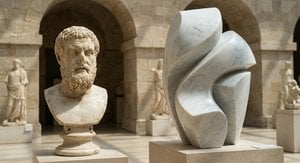
The Enduring Allure of Marble in Art History: From Classical Sculpture to Modern Abstraction
Explore the captivating history of marble sculpture from ancient Greece to modern art. Discover renowned artists like Canova & Michelangelo, carving techniques, and investment insights at ArtsDot.

10 Легендарних Бронзових Шедеврів, Які Змінили Мистецтво | ArtsDot
Відкрийте для себе 10 легендарних бронзових шедеврів, що змінили мистецтво! Історія створення, художні техніки та вплив скульпторів Ренесансу й Античності. Купуйте репродукції картин на ArtsDot.com – музейна якість для вашого дому.
