
 Переглянути в інтер'єрі
 Надіслати як листівку
 Поділитися
 Деталі витвору
 Посібник

 Завантажити
 Схожі екземпляри
 Рентгенівське дослідження
 Слайд-шоу
 Питання та відповіді
 Статистика
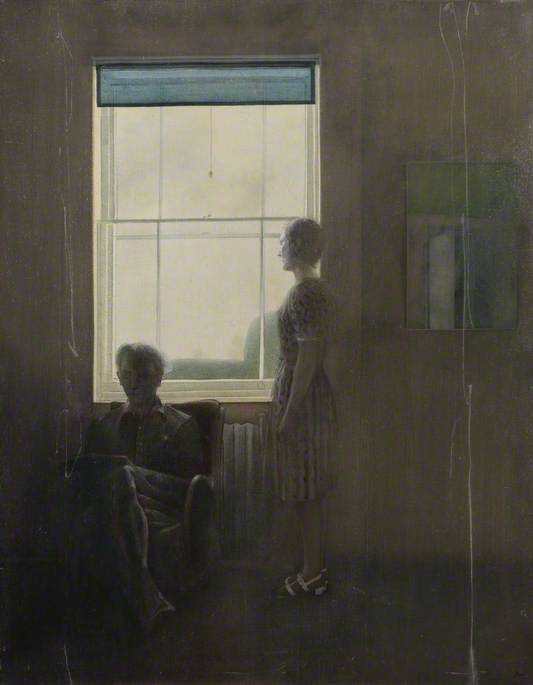
The Relationship

- 91.0 x 71.0 cm

 Розгорнути текст
Отримайте файл, готовий до друку, якість якого значно перевищує якість веб-попереднього перегляду. Кожне цифрове зображення, яке ми продаємо, створене на основі високої роздільної здатності з нашої бази даних — зазвичай від 5 000 до 15 000 пікселів по ширині — тому ви можете впевнено друкувати у великому форматі, робити щільну обрізку або відтворювати найдрібніші деталі.
Жоден файл не залишається в нашій студії без уваги. Експерт із цифрової обробки звіряє кольори з оригінальною картиною та за потреби коригує їх, після чого покращує чіткість і деталізацію за допомогою професійних інструментів ретушування — завжди зберігаючи вірність мазкам пензля та стилю художника. Результатом є зображення, яке виглядає як справжня картина, а не як відскановане фото з накладеними фільтрами.
Ви затверджуєте результат перед завершенням замовлення: протягом 72 годин наш експерт надішле зображення електронною поштою для вашого перегляду. Не задоволені результатом? Ви можете попросити про внесення змін чи виправлень або отримати відшкодування, якщо якість не відповідає вашим очікуванням.
Саме на таку якість покладаються видавництва, дизайн-студії, галереї та друкарні.
Цифрове зображення
Завантажте файл високої роздільної здатності для особистого використання, друку та творчих проєктів. ( Перейти до друку Замовити картину ручної роботи)
Переваги кожного замовлення цифрових зображень
Експертна цифрова доставка з гарантією якості
Обираючи ArtsDot.com, ви отримуєте не просто зображення — ви отримуєте професійно вдосконалений цифровий витвір мистецтва, створений з надзвичайною точністю та підкріплений гарантією задоволення. Ось усе, що автоматично додається до вашого замовлення:

Швидка доставка на email
Ваш цифровий файл із зображенням високої роздільної здатності буде надісланий вам електронною поштою протягом 72 годин після оформлення замовлення — він буде готовий до негайного використання.

Цифровий файл із покращенням ШІ
Ваш витвір мистецтва професійно оптимізовано за допомогою передових інструментів штучного інтелекту та ручної корекції, що забезпечує максимальну деталізацію, чіткість і точність передачі кольорів.

Безкоштовне повторне завантаження назавжди
Випадково видалили або втратили файл? Не хвилюйтеся — ми надішлемо його вам повторно в будь-який час безкоштовно.

Без митних зборів — завжди
Насолоджуйтесь вашим витвором мистецтва миттєво без жодних мит, зборів або плати за доставку — цифрові завантаження завжди не оподатковуються.

Гарантія точності кольорів
Ми гарантуємо максимально точне відтворення оригінальних кольорів на вашому цифровому зображенні завдяки використанню професійних інструментів та систем управління кольором.

100-денна гарантія задоволення
Якщо ви не задоволені придбаним цифровим зображенням, ми внесемо правки або повернемо 100% вартості протягом 100 днів — без зайвих запитань.

Гарантія повернення 100% коштів
Незадоволені покупкою? Отримайте повне повернення коштів протягом 100 днів після отримання цифрового файлу — без зайвих запитань.

Знижки на оптові замовлення
Купуйте 3 зображення — заощаджуйте 10% — Купуйте 5 — заощаджуйте 15% — Купуйте 10+ — заощаджуйте 20%. Чудово підходить для творчих проєктів, галерей та агентств.
Схожі твори мистецтва


Біографія митця
The Life and Art of David Tindle
David Tindle remains a significant figure in British realism, a fact cemented by his election as a Royal Academician in 1979. Born in Huddersfield, Yorkshire, on 29 April 1932, his career has been defined by a disciplined adherence to technical precision. While many of his contemporaries moved toward abstraction, Tindle maintained a focus on the subtle interplay of light and atmosphere. His work possesses a quiet profundity that avoids the need for grandiosity, relying instead on the structural integrity of his subjects.
His practice is characterized by a specific, demanding approach to the egg tempera medium. This choice dictates the pace and texture of his output, requiring a layered, patient application to achieve its characteristic luminosity. He often captures glimpsed views through openings, creating a sense of space that feels both intimate and distant. This method allows him to render ordinary domestic scenes or expansive landscapes with a similar level of intense, observational clarity.
Currently, Tindle resides in Santa Maria del Giudice, near Lucca, Italy. His long-term presence in Europe reflects a life spent observing the nuances of light across different landscapes. His ability to translate these observations into permanent, detailed records ensures his continued relevance in contemporary realist circles. His catalog includes several notable subjects:
Early Life and Artistic Training
Born in Huddersfield, Yorkshire, David Tindle’s early trajectory was defined by a rapid immersion into the technical demands of visual production. His training was not a singular, linear path but a series of practical engagements with the medium. Between 1945 and 1946, he spent six months studying art at the Lanchester College of Technology, a period that provided an immediate, functional foundation before he moved into more formal academic settings.
This early technical grounding led him to the Coventry School of Art, where he studied from 1945 to 1947. This period was crucial for establishing the discipline required for his later precision. During these formative years, Tindle also gained practical experience working with the theatrical scene painter Edward Delaney in Birmingham. This exposure to large-scale scenic work offered a stark contrast to the intimate, detailed nature of his later egg tempera paintings, grounding his development in the physical realities of pigment and surface.
Professional Career and Teaching
Tindle’s professional trajectory moved from early exhibition success to significant institutional influence. He held his first solo show in 1954 at the Piccadilly Gallery in London. This early recognition preceded a long period of academic engagement. Between 1959 and 1972, he held tutoring positions at both Hornsey College of Art and the Byam Shaw School of Art. These roles established his presence within the British art education system, moving from foundational instruction to more specialized guidance.
His influence expanded further when he joined the Royal College of Art as a Tutor from 1972 to 1983. This decade of teaching at one of the UK's most prominent art institutions solidified his standing among his peers. His expertise was later recognized by Oxford University, where he served as the Ruskin Master of Drawing from 1985 to 1987. This appointment underscores a career defined by technical authority and a commitment to the formal study of drawing and painting.
Technique and Artistic Style
Tindle’s practice is defined by the disciplined application of egg tempera. This medium requires a meticulous approach, building color through translucent layers to achieve a specific luminosity. His technical precision allows him to capture subtle shifts in light and atmosphere that oil paints often struggle to replicate. In the 1960s, his approach shifted toward heavily painted, encrusted surfaces paired with a muted palette. This period demonstrated a capacity for abstraction, particularly in his atmospheric views of beaches.
His compositions frequently utilize the perspective of glimpsed views. By framing scenes through open doors and windows, he creates a sense of looking into a private or quiet space. This structural choice contributes to the quiet profundity found in his work. He avoids the grandiosity of wide-open vistas, opting instead for intimate, domestic, or localized subjects that carry significant weight through their stillness.
Notable Works and Subjects
Tindle’s output reveals a career focused on the weight of the ordinary. His early precision is evident in a 1954 still life of a broken egg shell, a work that established his ability to find complexity in discarded, mundane objects. This focus on the domestic and the singular continues in pieces like Saucepan and Milk Bottle, where the subject matter remains grounded in the quietude of everyday life. He does not seek the grand or the dramatic, preferring instead the subtle tension found in a domestic tableau.
His portraiture and landscapes offer a different kind of scrutiny. He captured the former Principal Justin Gosling in a portrait that emphasizes dignity through restraint. In his landscape work, such as Night Walk, 1984, he uses light to define space rather than to create spectacle. These works demonstrate a consistent interest in how light interacts with specific, often solitary, environments. His subjects are rarely crowded; they are usually singular moments or quiet corners of the world.
- Dr Thomas Bewley, CBE, President of the Royal College of Psychiatrists (1984–1987)
- From Room to Room, Self Portrait
- Justin Gosling, Principal (1982–1996)
- Shell Site, South Bank, London
Where to See His Works Today
Tindle’s presence in public collections confirms his standing within British art. His work is held in the Ferens Art Gallery in Hull and at The Hepworth Wakefield. These institutions provide a permanent record of his technical precision and his ability to render light through the egg tempera medium. To see his paintings in these settings is to witness the physical reality of his meticulous layering process.
His connection to Oxford remains visible through specific institutional placements. Several of his paintings are located in the Senior Common Room of St Edmund Hall. Additionally, his portrait of Justin Gosling hangs in the Old Dining Hall of the same college. These works exist in spaces that reflect the academic and social environments he has long been associated with.
- Justin Gosling, Principal (1982–1996)
- Saucepan and Milk Bottle
- Night Walk, 1984

David Tindle
1932 -
Короткі факти
- Artists Who Influenced This Artist:
- Constable
- Turner
- Gerard David
- Jan van Eyck
- Full Name: David Tindle
- Nationality: British
- Notable Artworks:
- Night Walk
- Justin Gosling
- Saucepan and Milk Bottle
- Place Of Birth: Huddersfield, England
- Date Of Birth: 1932