


 Переглянути в інтер'єрі
 Надіслати як листівку
 Поділитися
 Детальніше

 Завантажити
 Схожі експонати
 Рентгенівське дослідження
 Слайд-шоу
Landscape
 Oil On Canvas
- WallArt
- Baroque Style
 1650
1650- Early Modern
 98.0 x 157.0 cm
 Ермітаж
 Читати далі
Олійная репродукція ручної роботи
Написана вручну олією на полотні у вашому розмірі та рамі, виготовлена на замовлення нашими художниками. ( Замовити принт Купити цифрове зображення)




P118B $10

P118H $10

P118W $10

P438Z $10

P508JH $12

P508YH $12

P805H $10

P805Z $10

P919BZ $10

P919G $10

P919XJ $10

P959ZH $10

P968JZ $12

W106C $8

W218G $10

W218JH $8

W218Y $10

W307PJ $10

W316G $10

W316PJ $8

W316Y $10

W398PJ $8

W4111J $10

W500HY $15

W500JH $15

W692G $12

W849H $8

W940BG $15

W953PJ $8




Обирайте з наших стандартних розмірів, що відповідають оригінальним пропорціям твору мистецтва.

Ви можете вказати власні розміри, щоб репродукція ідеально підійшла до конкретної рами або інтер'єру. Якщо вибраний вами розмір не відповідає пропорціям оригіналу, ми або обріжемо полотно, або доповнимо картину додатковими елементами, промальованими вручну. Цифровий макет буде надіслано вам на затвердження перед початком виробництва.
Зверніть увагу, що попередній перегляд на екрані не відображає фактичне обрізання або розширення зображення. Тільки макет точно покаже остаточну композицію.
Хоча ми можемо виготовити виріб у нестандартному розмірі, для збереження оригінальних пропорцій рекомендуємо обирати варіанти зі встановленого списку.
Після оформлення замовлення команда ArtsDot.com зв'яжеться з клієнтом електронною поштою для отримання інструкцій та надасть попередній макет
Доставка по всьому світу () за 3–4 тижні замість стандартних 5 тижнів. (5 Вересень). Без жодних компромісів у якості.

Безкоштовна експрес-доставка по всьому світу

Високоякісне лляне полотно

Повне страхове покриття доставки

Гарантія відшкодування митних зборів

Гарантія точного відтворення кольорів

Політика повернення протягом 60 днів (лише у разі виявлення дефектів)

Гарантія повернення 100% коштів

Пропозиція на оптові замовлення
 Скляний варіант доступний лише для розмірів до 110 см

Landscape
Матеріал репродукції
Розмір репродукції
-


Підсумкова вартість
$ 263
A Pastoral Dream from the Flemish Golden Age
To gaze upon this magnificent landscape is to step directly into a sun-dappled afternoon in 17th-century Flanders. David Teniers the Younger, master chronicler of everyday life and bucolic scenes, has gifted us a vision steeped in tranquility and gentle human activity. The composition immediately draws the eye into a pastoral tableau where nature and humanity coexist in perfect, harmonious leisure. It is more than just a depiction of an outing; it feels like a memory itself—the lingering warmth of a perfect day spent among friends or family.
The Artistry of Teniers: Technique and Subject
Teniers possessed a remarkable gift for capturing the mundane with the grandeur usually reserved for mythology. Here, that skill is evident in every meticulously rendered detail. Observe the foreground, where figures move with an unforced grace; their casual interactions suggest deep familiarity and shared joy. The background unfolds with lush, believable foliage, providing a rich, verdant curtain against which the human drama plays out. Technique-wise, one can appreciate the subtle handling of light—the way sunlight filters through unseen leaves, dappling the ground and illuminating the figures just enough to bring them into sharp relief. The inclusion of scattered birds adds an exquisite layer of life, suggesting movement even in a moment captured forever on canvas.
Symbolism of Companionship and Nature
The elements within this painting are rich with quiet symbolism. The presence of the dogs, positioned attentively near the center and to the right, anchors the scene in domestic reality; they are loyal companions mirroring the bonds between the people depicted. In the art of this period, such outdoor gatherings often served as meditations on the ideal life—a return to simplicity away from the clamor of urban existence. The landscape itself functions as a visual metaphor for peace, suggesting that true contentment is found in natural settings and shared moments.
A Timeless Atmosphere for Modern Living
For the discerning collector or designer seeking to infuse a space with history and soulful depth, this piece offers unparalleled ambiance. Its scale, 98 x 157 cm, allows it to command a wall while maintaining an intimate, breathable quality. Reproducing such a work allows one to bring the sophisticated charm of the Flemish Baroque into contemporary interiors. Imagine this scene above a grand mantelpiece or within a sunlit drawing-room; it whispers tales of bygone eras while promising the serenity of a perfect afternoon today.
Схожі твори мистецтва


Біографія митця
David Teniers the Younger: A Master of Flemish Life
David Teniers the Younger, born in Antwerp on December 15, 1610, was a pivotal figure in the vibrant artistic landscape of Flanders during the Baroque era. His life and career were inextricably linked to his family’s rich artistic heritage – his father, David Teniers the Elder, was himself a respected painter – and he inherited not only technical skills but also a deep appreciation for capturing the essence of everyday Flemish life. From humble beginnings, marked by periods of financial hardship where young David contributed by copying older masterworks to supplement the family income, he rose to become one of the most celebrated genre painters of his time, leaving behind a legacy that continues to captivate art lovers today.Early Influences and Artistic Training
Teniers’ early artistic development was profoundly shaped by his father's style, which leaned towards smaller-scale cabinet paintings – intimate scenes often depicting mythological subjects or portraits. However, he also absorbed the influence of other masters, particularly Pieter Bruegel the Elder, whose earthy realism and ability to portray peasant life resonated deeply with young David. A truly transformative moment in his artistic journey occurred through his marriage to Anna Brueghel, daughter of Jan Brueghel the Elder – a connection that brought him into close contact with Peter Paul Rubens himself. The Archduke served as witness at their wedding, establishing a bond that would profoundly impact Teniers’ career and artistic sensibilities. Rubens' influence is evident in Teniers’ later works, particularly his use of color and dynamic composition.The Rise to Prominence: Genre Painting and the Kermesses
As he matured as an artist, David Teniers began to specialize in genre painting – a genre that allowed him to depict scenes from everyday Flemish life with remarkable detail and immediacy. He became renowned for his lively portrayals of “kermesses,” exuberant village festivals filled with dancing, drinking, games, and communal merriment. These paintings, collectively known as the "Flemish Kermess" series, are arguably Teniers’ most celebrated works. They are characterized by their vibrant colors, intricate compositions, and a keen eye for capturing the nuances of human behavior – the joy, the boisterousness, and even the occasional mischief that defined these festive gatherings. His depictions weren't simply records of events; they were celebrations of Flemish culture and community spirit.Court Painter and Curator: Shaping an Artistic Legacy
A significant turning point in Teniers’ career arrived with his appointment as court painter and curator to Archduke Leopold Wilhelm, the Governor General of the Spanish Netherlands. This prestigious position afforded him access to a vast collection of art, which he meticulously cataloged and curated – a task that further honed his artistic skills and deepened his understanding of visual culture. He established the Antwerp Academy of Fine Arts, an ambitious project aimed at reviving Flemish painting after the decline following the deaths of Rubens and Van Dyck. This academy served as a training ground for young artists, fostering a new generation of painters who would carry on the traditions of Flemish art.A Lasting Impact: Style, Technique, and Influence
David Teniers the Younger’s artistic style is instantly recognizable – a blend of meticulous detail, vibrant color palettes, and an ability to imbue even the most mundane scenes with a sense of life and energy. He was a master of capturing light and shadow, creating a palpable atmosphere in his paintings. His work influenced a wide range of artists, both during his lifetime and in subsequent generations. French Rococo painters, such as Antoine Watteau, drew inspiration from Teniers’ depictions of elegant tavern interiors and fashionable gatherings, adapting his techniques to create their own distinctive style. His legacy extends beyond individual works; he helped shape the very definition of Flemish genre painting, establishing a standard for realism, observation, and artistic expression that continues to be admired today. He died in Antwerp on April 25, 1690, leaving behind an extraordinary body of work that offers a unique glimpse into the vibrant world of 17th-century Flanders.
Девід Тенірс Старший
1610 - 1690 , Бельгія
Короткі факти
- Artistic Movement Or Style: Бароко
- Artists Or Movements Influenced By This Artist: ['Антуан Вотє']
- Artists Who Influenced This Artist: ['Пєтр Паул Рубенс']
- Date Of Birth: 1610
- Date Of Death: 1690
- Full Name: David Teniers the Younger
- Nationality: Фламандський
- Notable Artworks:
- Два п'яниці
- Село
- Інтер'єр таверни
- Place Of Birth: Антверпен, Бельгія
Пов'язані статті
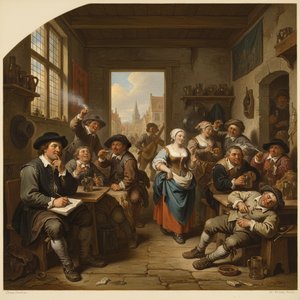
David Teniers the Younger: Genre Painting & Social Commentary in Baroque Flanders
Explore the captivating world of David Teniers the Younger, a leading Flemish Baroque painter. Discover his genre scenes, social commentary, and lasting influence on 17th-century art. Learn about his life, techniques & legacy.

Топ-10 шедеврів романтичного пейзажу: мистецтво, що захоплює дух | ArtsDot
Відкрийте для себе 10 шедеврів романтичного пейзажу! Каспар Давид Фрідріх, Тернер та інші майстри. Історія мистецтва, емоційні кольори природи та ідеї декору з ArtsDot.com. Дослідіть колекцію онлайн!

Топ-10 шедеврів голландського бароко: мистецтво для вашого дому від ArtsDot
Пориньте у світ голландського бароко! Від Рембрандта до Вермеєра – 10 шедеврів, що змінили мистецтво. Дізнайтеся історії створення та техніки живопису. Репродукції картин високої якості для вашого дому на ArtsDot.com

Golden Age Reflections: Dutch Baroque Painting & Cultural Innovation
Explore the Dutch Golden Age of painting! Discover key artists like Vermeer & ter Borch, their innovative techniques, and the rich cultural context behind these Baroque masterpieces. Learn about collecting & appreciating this iconic art period.
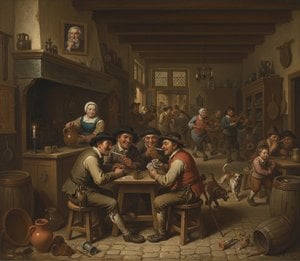
David Teniers II: Master of Flemish Genre & Social Commentary
Explore the captivating world of David Teniers II, a leading Flemish Baroque painter renowned for his lively genre scenes & insightful social commentary. Discover his masterpieces and legacy with ArtsDot.



