


 Переглянути в інтер'єрі
 Надіслати як листівку
 Поділитися
 Детальніше

 Завантажити
 Схожі експонати
 Рентгенівське дослідження
 Слайд-шоу
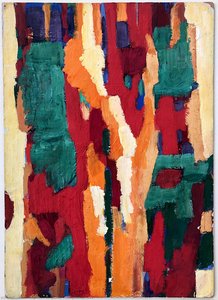
Dancing Figures
 1984
1984 152.0 x 127.0 cm
 USC Fisher Museum of Art
 Читати далі
Олійная репродукція ручної роботи
Написана вручну олією на полотні у вашому розмірі та рамі, виготовлена на замовлення нашими художниками. ( Замовити принт Купити цифрове зображення)




































Обирайте з наших стандартних розмірів, що відповідають оригінальним пропорціям твору мистецтва.

Ви можете вказати власні розміри, щоб репродукція ідеально підійшла до конкретної рами або інтер'єру. Якщо вибраний вами розмір не відповідає пропорціям оригіналу, ми або обріжемо полотно, або доповнимо картину додатковими елементами, промальованими вручну. Цифровий макет буде надіслано вам на затвердження перед початком виробництва.
Зверніть увагу, що попередній перегляд на екрані не відображає фактичне обрізання або розширення зображення. Тільки макет точно покаже остаточну композицію.
Хоча ми можемо виготовити виріб у нестандартному розмірі, для збереження оригінальних пропорцій рекомендуємо обирати варіанти зі встановленого списку.
Після оформлення замовлення команда ArtsDot.com зв'яжеться з клієнтом електронною поштою для отримання інструкцій та надасть попередній макет
Доставка по всьому світу () за 3–4 тижні замість стандартних 5 тижнів. (25 Серпень). Без жодних компромісів у якості.

Безкоштовна експрес-доставка по всьому світу

Високоякісне лляне полотно

Повне страхове покриття доставки

Гарантія відшкодування митних зборів

Гарантія точного відтворення кольорів

Політика повернення протягом 60 днів (лише у разі виявлення дефектів)

Гарантія повернення 100% коштів

Пропозиція на оптові замовлення
 Скляний варіант доступний лише для розмірів до 110 см

Dancing Figures
Матеріал репродукції
Розмір репродукції
-


Підсумкова вартість
$ 263
Схожі твори мистецтва


Біографія митця
The Vibrant Pulse of a Chicano Visionary
Carlos Almaraz (1941-1989) stands as a monumental figure in the Chicano art movement, forever etching himself into the cultural landscape of Los Angeles and beyond. Born in Mexico City to Rudolph Almaraz and Roe Miller, his early life was defined by a profound duality. His family relocated to Chicago shortly after his birth, exposing him to the industrial grit of Gary steel mills alongside the vibrant pulse of Mexican American communities. This stark contrast between urban decay and rich familial heritage became a recurring motif throughout his artistic oeuvre, creating a visual language that spoke to both the struggle and the splendor of the human condition.
Almaraz’s formative years instilled in him an acute awareness of social disparities and cultural identity, themes that would profoundly shape his artistic vision. After pursuing formal training at the Art Institute of Chicago, where he honed his skills in painting and printmaking, he established himself as a resident artist in East Los Angeles during the late 1960s and early 1970s. This period coincided with the burgeoning Chicano movement—a powerful assertion of Mexican American pride and activism. Almaraz quickly became a central figure in this cultural awakening, recognizing the immense potential for art to serve as a catalyst for social change and community dialogue.
A Fusion of Surrealism and Social Reality
The evolution of Almaraz’s style was deeply informed by his engagement with international art movements. Surrealism and Expressionism served as crucial touchstones for his development, providing him with the tools to translate internal emotions onto the canvas. The dreamlike imagery of Salvador Dalí and the emotionally charged, jagged compositions of Ernst Ludwig Kirchner allowed him to move beyond mere representation. He learned to weave together the fantastic and the real, creating works that felt both deeply personal and broadly political.
His commitment to community was perhaps most tangibly expressed through his collaborative efforts. Alongside fellow artists such as Ursula Celada, Judith Baca, and Willie Villalpando, Almaraz co-founded the Centro de Arte Público (CAP) in Highland Park, Los Angeles. This institution aimed to foster Chicano artistic expression and engage local communities in vital conversations about identity and social justice. Through these collective endeavors, he helped bridge the gap between street art and the fine art establishment, ensuring that the voices of East Los Angeles were heard within the broader canon of American art.
The Echo Park Series and Lasting Legacy
Perhaps Almaraz’s most celebrated body of work is his Echo Park series—a collection of paintings depicting the urban sprawl of East Los Angeles with a haunting, luminous beauty. These canvases capture more than just physical landscapes; they are psychological portraits of a city in flux. Through vibrant colors and sweeping, energetic brushstrokes, he depicted the movement of traffic, the glow of streetlights, and the complex layers of urban life, transforming the mundane into something mythic and profound.
The historical significance of Carlos Almaraz lies in his ability to navigate multiple identities simultaneously. As a founder of the influential group Los Four, he was instrumental in bringing Chicano aesthetics to the forefront of the contemporary art world. His work remains a testament to the power of resilience and the beauty found within the struggle for recognition. Even today, his legacy continues to inspire artists who seek to use their craft as a tool for cultural reclamation and social transformation, ensuring that his vibrant vision of Los Angeles will never fade.

carlos almaraz
1941 - 1989
Короткі факти
- Artistic Movement Or Style: Chicano Art
- Date Of Birth: October 5, 1941
- Full Name: Carlos D. Almaraz
- Nationality: Mexican-American
- Notable Artworks:
- Night Magic (Blue Jester)
- Untitled (Rider and two figures with a waterfall)
- City Street Scene
- Place Of Birth: Mexico City, Mexico

