

 Переглянути в інтер'єрі
 Надіслати як листівку
 Поділитися
 Деталі витвору
 Посібник

 Завантажити
 Схожі екземпляри
 Рентгенівське дослідження
 Слайд-шоу
 Питання та відповіді
 Статистика
Burnt Village


 Розгорнути текст
Гікле / Художній принт
Друк جيкле або на полотні музейної якості з оперативним виготовленням та різноманітними варіантами фінішної обробки. ( Замовити картину ручної роботи Перейти до цифрових зображень)




































Обирайте з наших стандартних розмірів, що відповідають оригінальним пропорціям твору мистецтва.

Введіть необхідну ширину та висоту, щоб принт ідеально підійшов до вашої рами або стіни. Принт можна лише обрізати, але не можна зробити більшим за оригінал, тому при зміні пропорцій частина зображення буде втрачена. Перед друком ми надсилаємо вам цифровий макет для затвердження. Зображення на цій сторінці не відображає реальну обрізку — її можна побачити лише на макеті.
Доставка по всьому світу () за 2 тижні замість стандартних 4/5 тижнів. (7 Листопад)

Безкоштовна експрес-доставка по всьому світу

Високоякісне лляне полотно

Повне страхове покриття доставки

Гарантія повернення митних зборів

Гарантія точного відтворення кольорів

Політика повернення протягом 100 днів (лише у разі виявлення дефектів)

Гарантія повернення 100% коштів

Пропозиція на оптові замовлення
 Скляний варіант доступний лише для розмірів до 110 см

Burnt Village
Гікле / Художній принт
Розмір репродукції
-


Підсумкова вартість
₴ 2828
Albert Edelfelt’s “Burnt Village”: A Frozen Moment of Sorrow and Resilience
Albert Edelfelt's "Burnt Village," painted in 1879, is more than just a winter landscape; it’s a poignant tableau that speaks to the enduring spirit of a people facing devastation. This oil-on-canvas masterpiece, created during a period of significant artistic exploration for Edelfelt, offers a glimpse into a pivotal moment in Finnish history – the aftermath of the Cudgel War (1596–1597), a brutal peasant uprising against Swedish rule. The painting depicts an imagined scene, meticulously rendered with a realism that borders on photographic detail, capturing the stark beauty and profound sadness of a village reduced to ashes.
The central figures – a woman in a vibrant red skirt, her gaze fixed upwards, and an older man supporting himself with what appears to be a staff – immediately draw the viewer’s attention. Their postures convey a sense of quiet dignity amidst unimaginable loss. The snow-covered ground, the imposing rock formation hinting at a shoreline, and the overcast sky contribute to a palpable atmosphere of coldness and isolation. Edelfelt's masterful use of color—the dominant cool tones of white, gray, and blue punctuated by the warm red – heightens the emotional impact, emphasizing both the bleakness of the scene and the enduring warmth of human resilience.
Realism and the Finnish Artistic Landscape
Edelfelt’s artistic journey was shaped by his time in Antwerp and Paris, where he honed his skills in history painting. However, it's within the context of Realism that “Burnt Village” truly shines. Following the influence of Jean-Léon Gérôme during his Parisian studies, Edelfelt returned to Finland with a commitment to depicting everyday life and historical events with unflinching honesty. This approach was revolutionary for its time, moving away from idealized depictions towards a more grounded and socially conscious representation of the Finnish people.
The painting’s meticulous detail – the textures of the snow, the folds in the clothing, the expressions on the faces – are hallmarks of Edelfelt's technique. He employed a layering method, building up thin glazes of paint to achieve remarkable luminosity and depth. This painstaking process is evident in every brushstroke, contributing significantly to the painting’s enduring power.
Symbolism and Historical Context
"Burnt Village" isn’t simply a depiction of a historical event; it's laden with symbolic meaning. The title itself immediately evokes images of destruction and loss, reflecting the brutal realities of the Cudgel War. The peasant family, frozen in this moment, represents not just individual suffering but also the broader struggle for freedom and self-determination that characterized Finnish history. The woman’s upward gaze suggests a yearning for hope amidst despair, while the older man's support symbolizes the importance of community and tradition in times of crisis.
Interestingly, the painting was created during a period when Finland was transitioning from Swedish rule towards greater autonomy. Edelfelt’s work, therefore, can be seen as subtly advocating for this burgeoning national identity. The Cygnaeus Gallery's acquisition of the piece further underscores its significance within Finnish cultural heritage.
A Timeless Masterpiece – Perfect for Your Space
ArtsDot offers a stunning hand-painted reproduction of Albert Edelfelt’s “Burnt Village,” allowing you to bring this powerful and evocative artwork into your home or office. Each reproduction is created by skilled artisans, meticulously replicating Edelfelt's original technique and color palette. Whether you are an art collector, an interior designer seeking a statement piece, or simply someone who appreciates the beauty of historical painting, this reproduction offers a unique opportunity to own a fragment of Finnish artistic history – a testament to resilience, sorrow, and the enduring power of the human spirit.
Питання та відповіді
«Burnt Village» роботи Альберт Едельфельт — це світлий чи темний твір мистецтва?
Яскравість твору «Burnt Village» роботи Альберт Едельфельт становить bright, а показник яскравості (luminance) — Bright Balance.
Чи є путівник до «Burnt Village» роботи Альберт Едельфельт?
Для «Burnt Village» роботи Альберт Едельфельт доступна сторінка Довідка для студентів: друкований інформаційний лист про витвір мистецтва, розроблений для студентів та використання в навчальному процесі.
Для чого рекомендується використовувати «Burnt Village» роботи Альберт Едельфельт?
Рекомендований спосіб використання «Burnt Village» роботи Альберт Едельфельт — це Statement. Також він може слугувати для інших цілей.
Схожі твори мистецтва


Біографія митця
Early Life and Education
Albert Gustaf Aristides Edelfelt, a luminary of Finnish art history, was born on July 21st, 1854, in Porvoo, Finland—a city steeped in Swedish heritage. His parents, Carl Albert Edelfelt and Alexandra Edelfelt (née Brandt), instilled in him a profound appreciation for aesthetics from an early age. This familial influence would prove pivotal in shaping his artistic trajectory. From childhood, Edelfelt exhibited an innate talent for drawing and painting, foreshadowing the remarkable career that lay ahead. He pursued formal studies diligently at the Drawing School of the Finnish Art Society in Helsinki in 1869, laying the groundwork for mastering the fundamentals of artistic expression.Artistic Journey
Edelfelt’s artistic journey commenced with a formative period spent honing his skills at Antwerp Academy of Art between 1873 and 1874. There, under the guidance of Jean-Léon Gérôme—a celebrated history painter—he immersed himself in classical techniques and compositional principles. This experience solidified his understanding of narrative art and established him as a student deeply committed to artistic excellence. Subsequently, he traveled to Paris (1874–78), enrolling at École nationale des beaux-arts where Gérôme continued to mentor him. The Parisian atelier fostered an environment conducive to experimentation and innovation, allowing Edelfelt to refine his craft and broaden his artistic horizons. A brief excursion to Saint Petersburg in 1881–82 exposed him to the vibrant cultural landscape of Russia, enriching his artistic sensibilities with diverse influences.Rise to Prominence and Notable Works
Edelfelt’s ascent to artistic prominence arrived swiftly following his triumphant performance at the Paris Universal Exposition of 1889—where he secured a gold medal. This accolade catapulted him into international recognition and cemented his reputation as one of Finland's foremost artists. Among his most iconic creations are: “Portrait of Louis Pasteur,” an evocative depiction capturing the scientist’s intellectual intensity, earning him the Legion of Honor in 1886; “Young Woman in Her Boudoir,” a masterful portrayal of feminine grace and intimacy—a testament to Edelfelt's ability to convey emotion through subtle nuances; "Under the Birches," a breathtaking landscape painting that embodies the spirit of Finnish wilderness, showcasing Edelfelt’s profound connection with nature. His artistic vision resonated deeply with contemporaries and continues to inspire admiration today.Legacy and Impact
Albert Edelfelt stands as a cornerstone of Finnish realist art—a movement characterized by uncompromising honesty and meticulous observation. He served as an influential mentor to younger artists like Akseli Gallen-Kallela and Gunnar Berndtson, guiding them toward breakthroughs in Paris and establishing himself as a pivotal figure in shaping the artistic landscape of Finland. Edelfelt’s works are housed in prestigious museums across Europe, including Ateneum Museum in Helsinki—a testament to his enduring legacy. His contribution to Finnish art history is commemorated annually through exhibitions and scholarly research, ensuring that his artistic achievements endure for generations to come.Museum Collections and Commemoration
Edelfelt's oeuvre graces the collections of numerous museums worldwide, notably Ateneum Museum in Helsinki, Finland—where visitors can immerse themselves in the beauty of his landscapes and portraits. To honor Edelfelt’s 150th birthday, a €100 commemorative coin was issued in 2004—a tangible symbol of Finland's appreciation for its artistic heritage. His enduring influence on Finnish art continues to inspire artists and scholars alike.
Альберт Едельфельт
1854 - 1905 , Фінляндія
Короткі факти
- Artistic Movement Or Style: Реалізм
- Artists Or Movements Influenced By This Artist: ['Ерік']
- Artists Who Influenced This Artist:
- Жан Леон Жерьом
- Аксель Гален-Каллела
- Date Of Birth: 21 липня 1854
- Date Of Death: 18 серпня 1905
- Full Name: Albert Gustaf Aristides Edelfelt
- Nationality: Фінський
- Notable Artworks:
- Портрет Луї Пастера
- Молода жінка в будинку
- Під вербами
- Place Of Birth: Порвоо, Фінляндія
Пов'язані статті

The Evocative Embrace of Reality: Exploring Romantic Realism in 19th-Century Painting
Explore the captivating world of Romantic Realism! Discover key artists like Courbet & Millet, masterpieces, and the social context behind this influential art movement. Expert insights for collectors at ArtsDot.

Romantic Realism's Finest: 10 Masterpieces for Your Home | ArtsDot
Explore 10 defining masterpieces of Romantic Realism! Discover Courbet, Millet & Daumier's powerful paintings—capturing emotion and social realities. Find museum-quality reproductions for your home at ArtsDot.com.
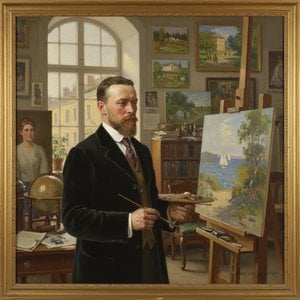
Albert Edelfelt: A Pioneer of Finnish Realism & International Impressionist Circles
Explore the life & work of Albert Edelfelt, a pioneering Finnish Realist painter who bridged Impressionism & national identity. Discover his masterpieces and lasting influence on art history.

Echoes of Society: Exploring Social Realism's Enduring Legacy in Art
Explore the powerful world of Social Realism art! Discover key artists, masterpieces & its profound social commentary. Expert insights into this influential movement's history and enduring legacy.

The Poetic Truth of Observation: Exploring 19th-Century Realism in Painting
Explore the captivating world of 19th-century Realism! Discover key artists like Courbet & Millet, masterpieces, and the powerful social commentary behind this influential art movement. Expert insights at ArtsDot.
