


 Переглянути в інтер'єрі
 Надіслати як листівку
 Поділитися
 Детальніше

 Завантажити
 Схожі експонати
 Рентгенівське дослідження
 Слайд-шоу
Crucifixion
 Олія на твердій основі
- Gothic Revival
 1390
1390 57.0 x 77.0 cm
 Галерея Уффіці
 Читати далі
Гікле / Художній принт
Музейна якість друку جيкле або на полотні з оперативним виготовленням та різноманітними варіантами фінішної обробки. ( Замовити репродукцію ручної роботи Купити цифрове зображення)




P118B $10

P118H $10

P118W $10

P438Z $10

P508JH $12

P508YH $12

P805H $10

P805Z $10

P919BZ $10

P919G $10

P919XJ $10

P959ZH $10

P968JZ $12

W106C $8

W218G $10

W218JH $8

W218Y $10

W307PJ $10

W316G $10

W316PJ $8

W316Y $10

W398PJ $8

W4111J $10

W500HY $15

W500JH $15

W692G $12

W849H $8

W940BG $15

W953PJ $8




Обирайте з наших стандартних розмірів, що відповідають оригінальним пропорціям твору мистецтва.

Ви можете вказати власні розміри, щоб репродукція ідеально підійшла до конкретної рами або інтер'єру. Якщо обраний вами розмір не відповідає пропорціям оригіналу, ми або обріжемо полотно, або розширимо зображення за допомогою дзеркального відображення чи суцільної заливки країв. Перед початком виробництва вам буде надіслано цифровий макет для затвердження.
Будь ласка, зверніть увагу, що попередній перегляд на екрані не відображає фактичне обрізання або розширення. Тільки макет точно покаже фінальну композицію.
Хоча можливість замовлення індивідуальних розмірів доступна, ми рекомендуємо обирати формат із попередньо визначеного списку, щоб зберегти оригінальні пропорції.
Доставка по всьому світу () за 2 тижні замість стандартних 4/5 тижнів. (3 Вересень)

Безкоштовна експрес-доставка по всьому світу

Високоякісне лляне полотно

Повне страхове покриття доставки

Гарантія відшкодування митних зборів

Гарантія точного відтворення кольорів

Політика повернення протягом 60 днів (лише у разі виявлення дефектів)

Гарантія повернення 100% коштів

Пропозиція на оптові замовлення
 Скляний варіант доступний лише для розмірів до 110 см

Crucifixion
Гікле / Художній принт
Розмір репродукції
-


Підсумкова вартість
$ 62
The Crucifixion by Agnolo Gaddi: A Window into Florentine Gothic
The painting “Crucifixion” by Agnolo Gaddi, created in 1390, is more than just a depiction of a pivotal moment in Christian history; it’s a vibrant testament to the burgeoning artistic spirit of Florence during the late Medieval period. Housed within the hallowed halls of the Galleria degli Uffizi, this tempera painting offers a profound glimpse into the evolving style of a master craftsman – Gaddi himself – and his deep connection to the legacy of Giotto di Bondone. Measuring just 57 x 77 cm, its intimate scale belies the emotional weight it carries, inviting viewers to contemplate the suffering and sacrifice at its core.
Gaddi’s work immediately distinguishes itself within the Gothic tradition, yet subtly anticipates the stylistic shifts that would define the Early Renaissance. The composition is remarkably balanced, a careful orchestration of figures arranged around the central image of Christ on the cross. Notice the deliberate positioning – soldiers and mourners cluster at the base, creating a sense of earthly sorrow, while angels ascend above, representing divine compassion. A striking detail is the presence of a horse to the right, adding depth and dynamism to the scene, a touch uncommon in purely religious depictions of this era. The artist’s skill lies not just in anatomical accuracy – though it's evident – but in conveying a palpable sense of drama and emotional intensity.
A Glimpse into Technique and Materials
The painting is executed in tempera, a medium favored by artists during the Gothic period due to its luminosity and ability to create rich colors. Observe how Gaddi masterfully layered the pigments, building up textures and creating subtle gradations of light and shadow. The use of gold leaf, particularly around Christ’s figure and the haloed angels, further enhances the painting's spiritual aura and draws the eye towards these focal points. The attention to detail is remarkable; from the folds of Christ’s garments to the expressions on the faces of the onlookers, every element contributes to a sense of realism and immediacy.
Furthermore, Gaddi demonstrates an understanding of perspective – though it's not fully developed as in later Renaissance works. The figures are arranged in a shallow space, creating a sense of depth that is both engaging and emotionally resonant. The overall effect is one of controlled chaos, reflecting the dramatic nature of the event being depicted while maintaining a formal, balanced composition.
Historical Context: Florence at the Dawn of a New Era
To fully appreciate “Crucifixion,” it’s essential to understand the historical context in which it was created. Florence during the 14th century was a crucible of artistic innovation, fueled by wealth, political stability, and a renewed interest in classical antiquity. Giotto di Bondone, who had revolutionized painting with his naturalistic style, exerted a profound influence on subsequent generations of artists, including Gaddi. Gaddi’s work represents a direct continuation of Giotto's legacy, yet he subtly departs from it, introducing elements that foreshadow the stylistic developments of the Renaissance.
Agnolo Gaddi himself was deeply connected to this artistic lineage; he was the son of Taddeo Gaddi, who had been a devoted pupil of Giotto. This familial connection placed him at the heart of Florence’s artistic community and ensured that he remained immersed in the innovative spirit of the time. His work reflects not only his own talent but also the collective artistic consciousness of his era.
Symbolism and Emotional Resonance
The painting is laden with symbolism, inviting viewers to contemplate profound theological themes. The crucifixion itself represents sacrifice, redemption, and the promise of salvation. The figures surrounding Christ – soldiers, mourners, and angels – embody a range of human emotions: grief, despair, compassion, and hope. The horse, often associated with royalty and power, may symbolize the suffering of the Roman Empire under Christ’s rule.
Ultimately, “Crucifixion” is not merely a historical depiction; it's an emotionally charged meditation on faith, suffering, and redemption. It invites viewers to connect with the human drama at its core and to contemplate the enduring significance of this central event in Christian theology. Reproductions of this masterpiece offer a tangible connection to this remarkable artistic achievement, allowing us to experience its beauty and power firsthand.
Схожі твори мистецтва


Біографія митця
A Florentine Legacy: The Life and Art of Agnolo Gaddi
Agnolo Gaddi, born in Florence around 1350, occupies a fascinating, pivotal position in the history of Italian painting. He wasn’t merely an artist; he was the inheritor of a powerful lineage, the son of Taddeo Gaddi, himself a devoted and gifted pupil of the revolutionary Giotto di Bondone. This familial connection immediately placed Agnolo within the epicenter of artistic innovation that Florence had become in the 14th century. While often described as the last great Florentine painter directly descended from Giotto’s style, to label him simply as an imitator would be a profound disservice. Gaddi wasn't just continuing a tradition; he was subtly transforming it, bridging the gap between the late Gothic sensibilities and the burgeoning promise of the Early Renaissance. His life, though relatively undocumented compared to some of his contemporaries, reveals a man deeply embedded in the artistic and commercial fabric of Florence, a city brimming with creative energy and economic prosperity. He wasn’t solely dedicated to painting; records suggest he engaged in mercantile pursuits as well, particularly later in life, demonstrating a pragmatic side often unseen in the biographies of celebrated artists.From Giotto's Shadow: Artistic Development and Influences
The influence of Giotto is undeniable in Gaddi’s early work. The monumental figures, the emotional resonance, and the narrative clarity that characterized Giotto’s frescoes are all present in Agnolo’s initial paintings. However, Gaddi quickly developed a style distinctly his own. Where Giotto often favored robust simplicity, Gaddi embraced a more refined elegance, incorporating intricate details and a heightened sense of decorative flourish. The Gothic influence is particularly noticeable in his work – a love for dramatic lighting effects, richly textured fabrics, and an overall emphasis on ornate beauty. This isn’t to say he abandoned the naturalism pioneered by Giotto; rather, he layered it with a sophisticated aesthetic sensibility that reflected the evolving tastes of Florentine society. He wasn't afraid to experiment with color, employing vibrant hues and delicate gradations to create visually arresting compositions. Consider *The Last Supper*, painted in 1395 – a scene imbued with both solemnity and exquisite detail. It stands as a testament to Gaddi’s mastery of Giottesque principles while simultaneously elevating them to new heights of artistic expression. His training under his father also instilled in him a profound understanding of fresco technique, which would become central to many of his most enduring commissions.Masterpieces in Stone and Paint: Key Works and Commissions
Agnolo Gaddi’s artistic reputation rests largely on his monumental frescoes within the Basilica di Santa Croce in Florence. These ambitious undertakings represent the pinnacle of Florentine Gothic art and showcase Gaddi's unparalleled skill as a narrative painter. The *Legend of the True Cross* cycle spans eight canvases, meticulously depicting pivotal moments from Christ’s journey to Jerusalem and culminating in the crucifixion itself. Each fresco is populated with figures rendered with remarkable anatomical accuracy and imbued with palpable emotion – a hallmark of Giotto’s legacy that Gaddi skillfully perpetuated. Beyond Santa Croce, Gaddi undertook commissions for altarpieces and devotional panels that further solidified his artistic prowess. Notably, *The Coronation of the Virgin*, housed in the National Gallery of Art in Washington D.C., exemplifies Gaddi's ability to synthesize Gothic grandeur with Early Renaissance refinement. The luminous depiction of Mary accepting the crown from angels is executed with breathtaking precision and imbued with a serene spiritual atmosphere. Furthermore, his involvement in designing trefoils for the Loggia dei Lanzi demonstrates his versatility as an artist extending beyond painting into decorative arts—a reflection of Florence’s flourishing artistic environment during his lifetime.A Teacher and a Legacy: Gaddi’s Impact on Italian Art
Agnolo Gaddi wasn't merely a painter; he was a dedicated educator, shaping the artistic sensibilities of younger generations in Florence. Among his pupils stood Cennino Cennini – an influential art theorist whose *Il Libro dell’Arte* became a foundational text for artists throughout Italy and beyond. This mentorship underscores Gaddi’s commitment to preserving and transmitting artistic traditions—a crucial element in ensuring the continuity of Florentine artistic excellence. Although overshadowed by his father and grandfather, Taddeo and Giovanni Gaddi respectively – both equally devoted pupils of Giotto – Agnolo Gaddi nonetheless secured his place within the annals of Italian art history as a pivotal figure who skillfully navigated the transition between Gothic and Renaissance styles. His enduring influence can be seen in subsequent artists who embraced his refined aesthetic sensibilities and incorporated elements of Gothic ornamentation into their own compositions.Further Exploration
- Museums & Collections: Admire Gaddi’s masterpieces at the Lindenau-Museum (Germany), the National Gallery of Art (Washington D.C.), and the Galleria degli Uffizi (Florence).
- Online Resources: Delve deeper into his life and art through Wikipedia (https://en.wikipedia.org/wiki/Agnolo_Gaddi) and the National Gallery of Art website (https://www.nga.gov/artists/1327-agnolo-gaddi).
- Contextual Study: To fully appreciate Gaddi’s artistic achievements, investigate the broader context of Florentine art during the fourteenth century—a period characterized by unprecedented innovation and cultural dynamism.

Агноло Гадді
1350 - 1396 , Італія
Короткі факти
- Artistic Movement Or Style: Готичний, Ранній ренесанс
- Artists Or Movements Influenced By This Artist: ['Ченніно Ченніні']
- Artists Who Influenced This Artist:
- Таддео Гадді
- Джотіно ді Бондоне
- Date Of Birth: c. 1350
- Date Of Death: 1396
- Full Name: Agnolo di Taddeo Gaddi
- Nationality: Італійський
- Notable Artworks:
- Останній Сьпіс
- Свято Хрещення Богородиці
- Place Of Birth: Флоренція, Італія
Пов'язані статті

Топ-25 шедеврів Фра Анджеліко: італійське Відродження для вашого дому | ArtsDot
Відкрийте для себе 25 шедеврів Фра Анджеліко – італійського майстра Відродження! Дізнайтесь історію кожної фрески та картини, їхній духовний зміст та техніку виконання. Репродукції картин високої якості для вашого дому на ArtsDot.com.
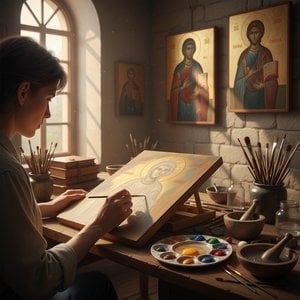
Illuminating Surfaces: A Comprehensive Exploration of Tempera on Panel Painting Techniques & Historical Significance
Explore the rich history & techniques of tempera painting! Discover Renaissance masters like Botticelli & Fra Angelico, conservation insights, and the enduring legacy of this captivating art form. Learn more now!

Illuminating History: A Comprehensive Exploration of Tempera Painting Techniques & Artistic Legacy
Explore the rich history & techniques of tempera painting! Discover Renaissance masters like Botticelli & Fra Angelico, conservation insights, and the enduring legacy of this captivating art form.

The Radiant Dusk of Medieval Vision: Exploring Late Gothic Art's Synthesis of Faith, Form & Emotionality (c. 1300-1500)
Explore the exquisite beauty & spiritual depth of Late Gothic art (c. 1300-1500). Discover key artists, symbolism, and its lasting influence on the Renaissance. Expert insights at ArtsDot.

Beyond Borders: The Spiritual & Stylistic Innovations of International Gothic Art
Explore the exquisite beauty & spiritual depth of International Gothic art. Discover key artists like Simone Martini & Pol de Limbourg, its origins, symbolism, and lasting influence on European painting. Expert insights at ArtsDot.


